Citing one author in MLA style is usually painless: add a last name, include a page number when available, and carry on with your brilliant analysis. Then a source arrives with two authors, five researchers, or a byline long enough to form its own softball team. Suddenly, a tiny parenthetical citation feels like a punctuation obstacle course.
Fortunately, citing multiple authors in MLA is much easier than it first appears. Under MLA 9 guidelines, the main rule is based on a simple head count. A source with two authors includes both names. A source with three or more authors normally uses the first-listed author followed by et al. Once that distinction becomes automatic, most of the remaining work involves matching the in-text citation to the Works Cited entry.
This guide explains how to cite multiple authors in MLA in six practical steps. It covers parenthetical citations, signal phrases, Works Cited formatting, punctuation, page numbers, online sources, and common exceptions. The examples use fictional publications so you can focus on the format rather than wondering whether Professor Pretend really published a groundbreaking study of coffee-shop Wi-Fi.
MLA Multiple-Author Citations at a Glance
Before working through the six steps, memorize this compact rule:
- One author: Use that author’s last name.
- Two authors: Use both authors’ last names joined by “and.”
- Three or more authors: Use the first author’s last name followed by “et al.”
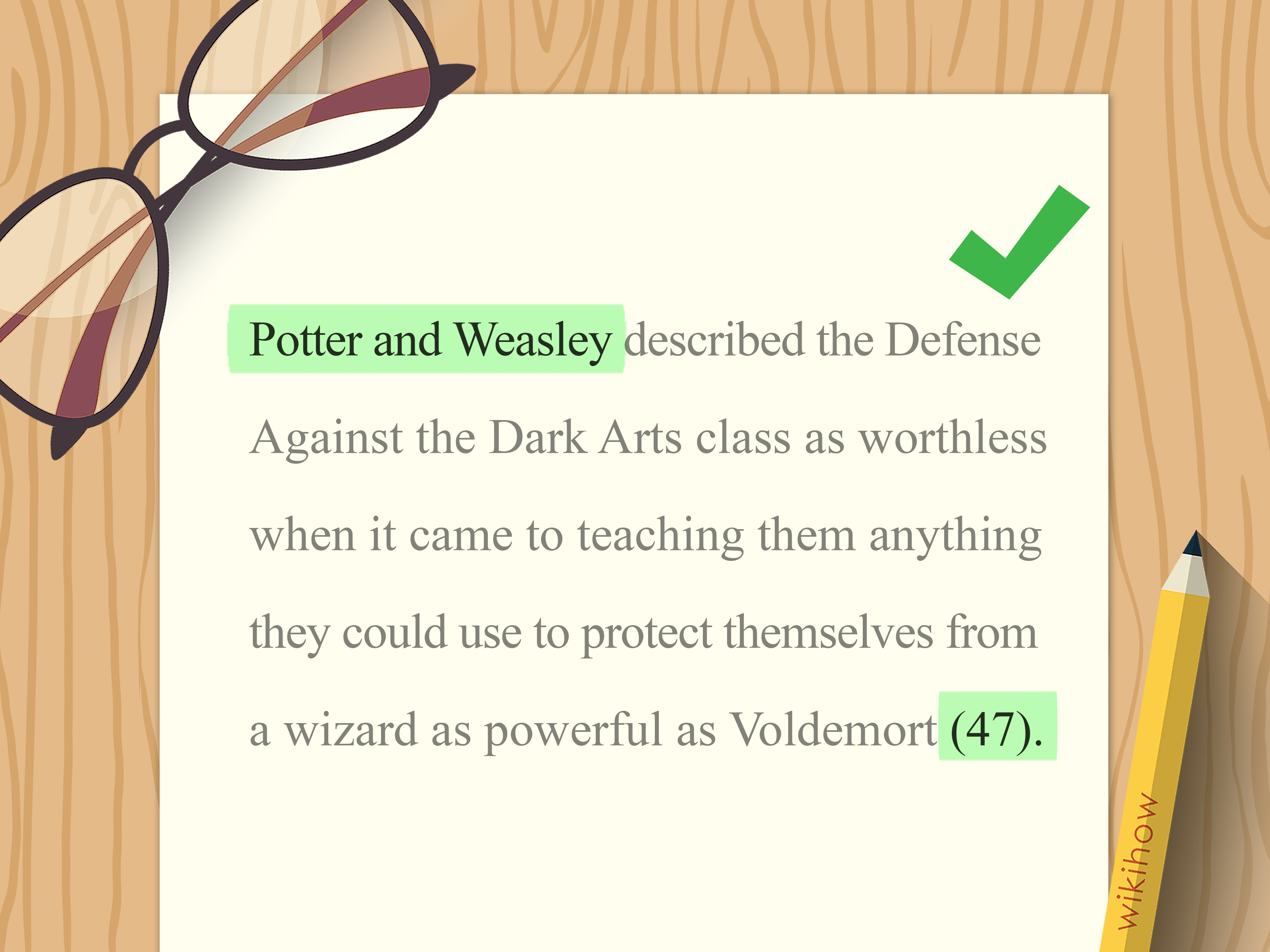
In-text citations typically pair the author information with a page number, such as (Chen and Ortega 48) or (Bennett et al. 27). MLA does not place a comma between the author name and page number, and it does not add “p.” before the number.
The Works Cited entry gives readers the publication details needed to locate the source. Your in-text citation must clearly point to the first element of that entry, which is usually the author’s name.
Step 1: Count the Authors and Check Their Order
Begin with the source itself. Look at the title page of a book, the byline of an article, or the official record in a research database. Count the named authors and copy their names in the order shown.
Author order matters. Do not alphabetize the authors within a single citation, even when alphabetical order feels tidy and responsible. The sequence may reflect the contributors’ roles, the conventions of their academic field, or an agreement among the authors. MLA preserves the order supplied by the publication.
Distinguish authors from other contributors
Be careful not to count editors, translators, illustrators, performers, or series directors as authors unless the source presents them as the creators responsible for the work you are citing. These contributors may belong elsewhere in the Works Cited entry.
For example, a book might list Maya Chen and Luis Ortega as authors and Dana Brooks as the editor. That is still a two-author work. Brooks does not become a third author merely by appearing prominently on the title page.
Use the first-listed author as your anchor
When a work has three or more authors, the first-listed name becomes especially important because it will appear before et al. in both the shortened in-text citation and the author element of the Works Cited entry.
Suppose an article lists its authors in this order:
Ava Bennett, Jordan Lee, Priya Shah, and Marcus Green
The shortened MLA form begins with Bennett, not Lee, Shah, or whichever surname happens to win an alphabetical race.
Step 2: Cite Two Authors in the Text
For a source written by exactly two authors, include both surnames every time you cite it. Connect the names with the word “and,” not an ampersand.
Parenthetical citation for two authors
Place both surnames and the page number inside parentheses:
Example: Digital annotations can encourage readers to examine a text more deliberately (Chen and Ortega 48).
Notice the important details:
- Both authors appear in the citation.
- “And” connects their names.
- No comma separates the names from the page number.
- The sentence-ending period comes after the closing parenthesis.
Narrative citation for two authors
You can also introduce the authors in your sentence. This approach is often called a signal phrase:
Example: Chen and Ortega argue that digital annotation can make students more attentive to patterns in a text (48).
Because both authors are already named in the prose, only the page number appears in parentheses. Repeating the names would produce the citation equivalent of introducing the same guests twice at one party.
What if the source has no page numbers?
Many web pages and digital articles do not include stable page numbers. In that situation, do not invent one based on your browser, printer settings, or the number displayed by a PDF viewer that is unrelated to the publication’s own pagination.
If the authors appear in your prose, no parenthetical citation may be needed:
Example: Chen and Ortega describe collaborative annotation as a tool for active reading.
If the authors are not named in the sentence, use their surnames in parentheses:
Example: Collaborative annotation may support more active reading (Chen and Ortega).
When the source supplies stable numbered sections, chapters, paragraphs, or other labeled divisions, those markers may help readers locate the passage. Use only location information that genuinely exists in the source.
Step 3: Format Two Authors on the Works Cited Page
A Works Cited entry for two authors includes both full names. Invert the first author’s name so that the surname comes first. Write the second author’s name in normal order.
Basic book template:
First Author’s Last Name, First Name, and Second Author’s First Name Last Name. Title of Book. Publisher, Year.
Example:
Chen, Maya, and Luis Ortega. Reading Together in Digital Spaces. North Valley Press, 2025.
Only Chen’s name is inverted. Writing “Chen, Maya, and Ortega, Luis” would make the citation unnecessarily stiff and would not follow standard MLA author formatting.
Example for a journal article
Chen, Maya, and Luis Ortega. “Reading Across Screens.” Journal of Digital Rhetoric, vol. 12, no. 2, 2025, pp. 41–59.
The article title appears in quotation marks, while the journal title appears in italics. The author rule remains the same regardless of whether the source is a book, journal article, website, report, film, or unusually serious podcast about semicolons.
Keep the original author order
If the publication lists Luis Ortega first and Maya Chen second, the Works Cited entry should begin with Ortega:
Ortega, Luis, and Maya Chen. Reading Together in Digital Spaces. North Valley Press, 2025.
Do not change the sequence simply to place Chen first alphabetically. Alphabetization applies to the completed entries on your Works Cited page, not to the names within an individual entry.
Step 4: Use “Et Al.” for Three or More Authors
When a source has three or more authors, MLA normally shortens the author information. Give the first-listed author’s name and replace the remaining names with et al., an abbreviation meaning “and others.”
In-text citation for three or more authors
Parenthetical example:
Shared annotation can make disagreements between readers more visible (Bennett et al. 27).
Signal-phrase example:
Bennett et al. observe that shared annotation can make disagreements between readers more visible (27).
The abbreviation has two words but only one period. The period belongs after “al.” because “al.” is abbreviated; “et” is already a complete Latin word. Do not write “et. al,” “et all,” or “and et al.” The last version effectively means “and and others,” which is one “and” too many.
In a parenthetical citation, do not place a comma between the first author’s surname and et al.:
Correct: (Bennett et al. 27)
Incorrect: (Bennett, et al. 27)
Works Cited entry for three or more authors
In the Works Cited entry, invert the first author’s full name and follow it with a comma and et al.:
Basic template:
First Author’s Last Name, First Name, et al. Title of Book. Publisher, Year.
Book example:
Bennett, Ava, et al. Collaborative Reading in the Modern Classroom. Harbor Academic, 2025.
Journal article example:
Bennett, Ava, et al. “Collaborative Annotation in First-Year Writing.” College Writing Review, vol. 18, no. 1, 2025, pp. 22–39.
Notice that the Works Cited form contains a comma before et al. because the first author’s name is presented in inverted form: “Bennett, Ava, et al.” The in-text form uses only the surname and therefore does not need that comma.
Step 5: Make Every In-Text Citation Match Its Works Cited Entry
An MLA in-text citation is not a miniature bibliography. Its job is to direct the reader to the correct entry on the Works Cited page. The wording at the beginning of the citation should therefore match the beginning of the corresponding entry.
Consider this Works Cited entry:
Bennett, Ava, et al. “Collaborative Annotation in First-Year Writing.” College Writing Review, vol. 18, no. 1, 2025, pp. 22–39.
The matching parenthetical citation is:
(Bennett et al. 27)
A citation such as (Lee et al. 27) would misdirect the reader, even if Jordan Lee is the second author. The entry is alphabetized under Bennett, so Bennett must be the in-text anchor.
Two works by the same author or author group
If you cite more than one work beginning with the same author name, add a shortened title to distinguish them. Separate the author element from the short title with a comma.
Examples:
(Bennett et al., “Collaborative Annotation” 27)
(Bennett et al., “Peer Feedback” 64)
Use quotation marks for a shortened article, chapter, or web-page title. Italicize a shortened book, journal, film, or other independently published work title.
Authors with the same surname
If your paper cites different authors who share a surname, include a first initialor a full first name when necessaryto prevent confusion:
(A. Bennett 42) and (R. Bennett 19)
When the authors are coauthors of the same work and share a surname, retain both names as distinct individuals. For example, a book by Will Durant and Ariel Durant would still list both authors rather than treating “Durant” as a two-for-one family citation.
Citing more than one source in one parenthetical reference
When one sentence draws support from multiple sources, keep each source reference distinct and separate them with semicolons:
Example: Collaborative tools may improve participation while also creating new privacy concerns (Chen and Ortega 52; Bennett et al. 31).
The order can reflect the sequence of your discussion, the relative importance of the sources, or another logical arrangement. Clarity matters more than forcing every grouped citation into a rigid mini-alphabet.
Step 6: Run a Final MLA Citation Check
Before submitting your paper, audit the citations rather than trusting that a citation generator, database export, or 1:00 a.m. burst of confidence got everything right.
Check the author count
Confirm that every two-author source lists both authors and every source with three or more authors uses the first-listed author plus et al. where appropriate.
Check punctuation and wording
- Use “and” between two authors.
- Do not use an ampersand in standard MLA author citations.
- Write et al. with a period after “al.”
- Do not place a comma between an author surname and a page number.
- Do not add “p.” or “pp.” inside an ordinary in-text citation.
- Place the sentence-ending period after the parenthetical citation.
Check the Works Cited page
Alphabetize entries by the first meaningful element, usually the first author’s surname. Apply a hanging indent so that the first line begins at the left margin and subsequent lines are indented. Keep the list double-spaced unless your instructor or publisher requires a different house format.
Compare every citation with its source
Names are metadata, not opportunities for creative spelling. Check accents, hyphens, initials, capitalization, and the order in which the authors appear. A perfectly placed comma cannot rescue the wrong author.
Review automatically generated citations
Citation tools are useful starting points, but they can import names incorrectly, confuse editors with authors, capitalize titles inconsistently, or overlook missing publication details. Compare the generated result with the original source and correct it before publication.
Common MLA Multiple-Author Mistakes
Listing all authors in every parenthetical citation
Writing four or five surnames every time may look thorough, but MLA favors a concise first-author-plus-et al. form for sources with three or more authors. Readers need a clear route to the Works Cited entry, not the entire research team squeezed between parentheses.
Using “et al.” for two authors
Two authors are always a pair in standard MLA citations. Name both. Save et al. for works with at least three authors.
Reversing every name in Works Cited
Only the first author’s name is inverted. Later names remain in normal first-name-last-name order.
Changing the author order
Preserve the source’s byline order. Do not rearrange contributors alphabetically or according to which name is easiest to spell.
Adding the publication year to every in-text citation
MLA commonly uses an author-page system, not the author-date system associated with some other citation styles. A typical citation is (Chen and Ortega 48), not (Chen and Ortega 2025, 48).
Inventing page numbers for websites
Use reliable location markers supplied by the source. If none exist, omit the page number rather than creating one that changes with every screen size.
Practical Experiences: What Writers Learn When Citing Multiple Authors
Understanding the rule is one thing; applying it throughout a ten-page paper is where the rule either becomes a habit or starts hiding under the furniture. Several practical lessons repeatedly emerge when writers work with multi-author sources.
The byline is more reliable than memory
A common drafting mistake begins when a writer remembers that an article had “several authors” but no longer remembers who appeared first. The writer guesses, types the most memorable surname, and plans to fix it later. Later, naturally, disappears into the same mysterious place that collects missing socks and unsaved browser tabs.
A safer workflow is to record the complete source information when the source is first opened. Copy the byline exactly, note the first-listed author, and create a provisional Works Cited entry before drafting. This small step prevents citations from drifting away from their sources as the paper grows.
Signal phrases often improve readability
A paragraph filled with parenthetical citations can feel like a hallway lined with speed bumps. Introducing authors naturally in the prose often creates a smoother sentence. Compare “The researchers identify three patterns (Bennett et al. 27)” with “Bennett and her colleagues identify three patterns (27).” Both approaches can direct readers to the source, but the second may fit better when the people conducting the research matter to the discussion.
Writers also discover that signal phrases make repeated citations easier to manage. Once the author has been clearly introduced, the page reference can remain brief. The result feels less mechanical while still giving appropriate credit.
A source table can prevent citation mismatches
For projects with many references, a simple research table is remarkably effective. Useful columns include the short source label, complete author list, correct in-text form, Works Cited form, page range, and notes about where the source supports the argument.
For example, the table might record “Bennett article” beside “Bennett et al.” and the page range 22–39. During revision, the writer can quickly confirm whether a quotation attributed to page 27 actually belongs to that article rather than another source with a suspiciously similar title.
Formatting problems are easiest to catch backward
Reading a paper from beginning to end encourages attention to the argument, which is good for writing but not always good for proofreading citations. A focused backward check works differently. Start with the Works Cited page, identify the correct shortened form of each entry, and search the document for that name.
This process exposes variations such as “Bennet et al.,” “Bennett, et al.,” and “Bennett and others.” It also catches orphaned Works Cited entries that never appear in the essay and in-text citations with no full entry waiting at the end.
Citation generators still need a human editor
Automated tools save time, especially when collecting journal metadata, but their output is only as accurate as the information they receive. A database may store an author’s full name in one record and initials in another. A tool may mistake the name of a research group for the publisher or place every author in inverted order.
The practical lesson is not to avoid citation software. It is to treat the software as an assistant rather than an all-knowing punctuation oracle. Generate the citation, compare it with the source, apply the multiple-author rule, and check that the in-text reference points to the beginning of the Works Cited entry.
After a few rounds of this process, the pattern becomes pleasantly boring: two authors get two names; three or more get the first name plus et al.; every in-text citation must lead readers to one clear entry. In citation work, boring is often another word for correct.
Conclusion
Citing multiple authors in MLA does not require memorizing a separate formula for every imaginable source. Start by counting the authors. Name both authors when there are two. For three or more, use the first-listed author followed by et al. Then ensure that the shortened in-text citation matches the opening of the Works Cited entry.
The most important details are consistency and traceability. Preserve the original author order, invert only the first author’s name in the Works Cited entry, use “and” rather than an ampersand, and include page numbers only when the source provides meaningful pagination. A careful final comparison between the paper and the Works Cited page will catch most remaining errors.
Note: This educational guide follows general MLA 9 conventions. Always follow any additional requirements supplied by your instructor, school, journal, or publisher.