Look up in a dense city and the usual view is a parade of practical objects: vents, ducts, antennas, elevator bulkheads, and one mysterious plastic chair that appears to have survived three mayors. Yet on a growing number of buildings, the roof is no longer dead space. It is becoming a meadow, sponge, habitat, lunchroom, and cooling systemall while continuing its original job of keeping rain out of the offices below.
A grass roof, more commonly called a green roof, living roof, vegetated roof, or eco-roof, is not simply a lawn rolled onto a building like an enormous welcome mat. It is an engineered landscape made of waterproofing, drainage, lightweight growing media, carefully selected plants, and a maintenance plan. Done well, it softens the hard edge of city life. Done badly, it becomes a very expensive rooftop weed experiment. The difference is thoughtful design.
When a Rooftop Becomes a Living Laboratory
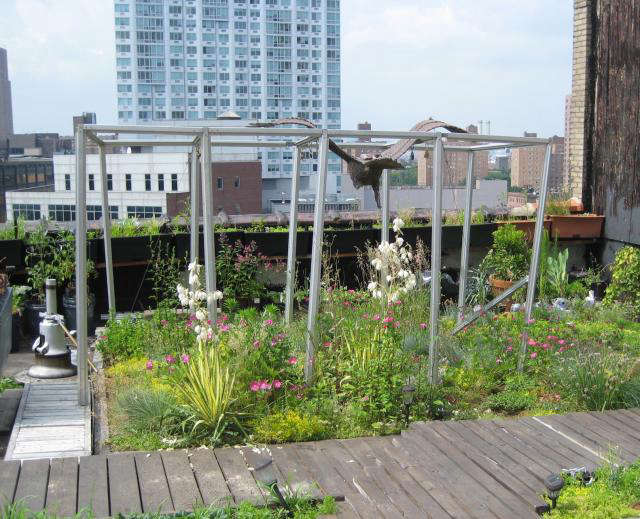
The title “A Grass Roof Grows in the City” was originally associated with a rooftop garden on a seven-story office building in downtown Brooklyn. Shared by designers, artists, makers, and environmentally minded tenants, the roof evolved from year to year rather than behaving like a polished corporate terrace. Vegetables appeared. Experimental structures arrived. A not-quite-finished sauna even joined the cast. Its changing character was part of the charm: the roof behaved less like outdoor furniture and more like an ecosystem with opinions.
The planting demonstrated an important green-roof truth: rooftops have their own climate. The Brooklyn design used growing depths of approximately four to eight inches, with small mounds where particular plants needed more root room. Drought-tolerant sedums, little bluestem, blue fescue, prickly pear, yucca, and hardy wildflowers were selected because they could tolerate sun, wind, shallow soil, and irregular moisture. On a roof, survival is the first aesthetic.
What Is a Grass Roof, Exactly?
A modern grass roof is a layered building system. Beneath the visible vegetation are components that protect the structure and manage water. A typical assembly may include the roof deck, waterproof membrane, root barrier, protection layer, drainage or water-retention layer, filter fabric, engineered growing medium, and plants. Every layer has a job. The sedum gets the glamour shots; the waterproof membrane prevents the accounting department from experiencing indoor rainfall.
Extensive Green Roofs
Extensive green roofs are relatively lightweight and shallow. They usually support low-growing, resilient plants such as sedums, small grasses, and tough perennials. Because they require less growing medium and generally less irrigation after establishment, they are often practical for commercial buildings, schools, sheds, and retrofits where structural capacity is limited.
Intensive Green Roofs
Intensive green roofs are closer to elevated parks. They have deeper growing media and may support shrubs, larger grasses, food crops, paths, seating areas, and even small trees. They can become valuable social spaces, but they also add weight, cost, irrigation needs, safety requirements, and maintenance. An intensive roof can host a picnic. It can also host a spreadsheet with many tabs.
Why “Grass Roof” Does Not Always Mean Turf
Traditional lawn grass often demands consistent moisture, fertile soil, and regular mowing. Many successful grass roofs instead use ornamental bunchgrasses, prairie species, sedges, succulents, and flowering perennials. These plants create the movement and softness of a meadow while tolerating harsher conditions than a suburban lawn. The result looks less like a golf course and more like nature finally found the elevator.
Why Cities Are Looking Up
Green Roofs Cool Hot Urban Surfaces
Dark conventional roofs absorb solar energy and can become dramatically hotter than the surrounding air. Vegetated roofs shade the surface and release moisture through evapotranspiration, reducing roof temperatures and helping moderate the urban heat island effect. The U.S. Environmental Protection Agency summarizes studies in which green-roof surfaces were substantially cooler than conventional roofs, although actual results depend on climate, plant coverage, soil moisture, roof depth, and building design. The basic physics is refreshingly straightforward: living leaves do not behave like black asphalt.
They Slow the City’s Sudden Flood of Rain
In a natural landscape, soil and plants intercept rainfall. In a city, water strikes roofs, streets, and parking lots, then rushes toward drains. A green roof temporarily stores part of that water in vegetation, growing medium, and retention layers. Some is used by plants or returned to the atmosphere; the rest drains more slowly. This delay can reduce peak flow into urban sewers, particularly when many green infrastructure projects work together.
New York City has funded green roofs as stormwater infrastructure rather than treating them as decoration. At the Brooklyn Navy Yard, one pair of intensive meadow roofs was projected to manage approximately 1.8 million gallons of stormwater annually. A nearby sedum roof was projected to manage roughly 660,000 gallons. Those figures are site-specific, but they demonstrate what is possible when rooftops become part of a city’s water-management system.
They Protect the Roof Beneath the Roof
Vegetation and growing media shield waterproofing from ultraviolet exposure and rapid temperature changes. Because sunlight, expansion, and contraction can age roofing materials, this protection may extend membrane life when the system is properly installed and maintained. Federal case studies describe planted roofs expected to lengthen waterproofing-membrane life by two or three times. That does not make a roof immortal; it gives the membrane a calmer working environment.
They Can Reduce Building Energy Demand
A green roof adds shading, thermal mass, and evaporative cooling. Its energy benefit is often strongest on buildings with large roof areas relative to their total floor space, such as warehouses, schools, and low-rise offices. Savings vary according to insulation, climate, plant health, irrigation, and season. A modern insulated tower will respond differently from a one-story building with an aging roof. Green roofs are useful technology, not magic salad.
They Create Habitat in Unexpected Places
Rooftop plantings can provide nectar, pollen, shelter, and resting space for insects and birds. Plant diversity, building height, nearby habitat, substrate depth, irrigation, and maintenance all influence ecological value. A thin carpet of one succulent species is not equivalent to a diverse native meadow, while an isolated high-rise roof may be difficult for some wildlife to reach. Networks of well-designed roofs, however, can act as habitat stepping-stones across an otherwise hard landscape.
They Give People a Place to Exhale
Accessible green roofs can become outdoor meeting rooms, gardens, classrooms, and quiet breaks from traffic. Even a roof viewed through a window can replace a glaring membrane with seasonal color and movement. A successful roof creates a different pace: grasses bend, insects investigate, rain lingers, and office workers remember that weather is more than an alert on a phone.
How to Design an Urban Grass Roof That Survives
Start With Structure, Not Seed
Growing media becomes much heavier when saturated. Snow, people, planters, pavers, equipment, and stored water add more load. Before choosing plants, a licensed structural professional must determine what the building can safely carry. Retrofitting may require reinforcement, and some roofs simply are not suitable. Optimism is lovely; gravity remains undefeated.
Treat Waterproofing as Sacred
The membrane should be compatible with the green-roof assembly, protected during construction, and tested before it disappears beneath layers of material. Root barriers, flashings, drains, overflow routes, inspection zones, and leak-detection strategies deserve more attention than the plant palette. A beautiful meadow above a hidden leak is not sustainable design. It is a future ceiling stain with branding.
Design for Water in Both Directions
A green roof must hold enough moisture for plants while safely draining excess water. Too little retention leads to drought stress; too much may suffocate roots or overload the system. A roof in Phoenix needs a different water strategy from one in Seattle, and a windy rooftop can dry much faster than a garden at street level. Temporary irrigation is commonly needed during establishment, while permanent irrigation may be appropriate for deeper or more ornamental designs.
Choose Plants for the Rooftop Microclimate
Plant selection should respond to heat, wind, sun exposure, winter cold, salt, reflected light, shallow roots, and maintenance capacity. Sedums remain popular because many are drought tolerant and quick to cover bare areas. Native grasses and perennials can add habitat and seasonal interest when the substrate depth and water plan support them. Diversity also provides insurance: when one species struggles during an extreme season, others may continue performing.
Use Changes in Depth to Create More Life
A uniformly shallow planting bed is efficient, but ecological variety often improves when designers create modest differences in growing depth, moisture, shade, and shelter. Deeper pockets may support larger grasses or flowering plants. Stones, woody material, and carefully positioned features can create insect habitat. Every variation must still be coordinated with structural limits, drainage, fire codes, and maintenance access.
Plan for People Without Sacrificing Plants
If occupants will use the roof, safe access, guardrails, lighting, walking surfaces, accessibility, emergency routes, and protection around mechanical equipment must be designed from the beginning. Paths prevent visitors from compacting growing media or crushing plants. Seating should account for wind and shade. Unless the design goal is “paperwork migration,” lightweight objects should also be secured.
The Maintenance Myth: Low Does Not Mean No
Extensive green roofs are often described as low maintenance, which is accurate only when compared with more elaborate gardens. They still require inspection, especially during the establishment period. Crews may need to weed, replace failed plants, clear drains, check erosion, inspect edges and flashings, adjust irrigation, remove woody seedlings, and repair bare patches.
A simple sedum roof that is closed to the public may need only periodic professional visits once established. A rooftop meadow with varied perennials, public access, irrigation, and a formal appearance will require more care. Budgeting for maintenance before construction is one of the least glamorous and most important decisions. Plants do not accept payment in press releases.
Real U.S. Examples Show the Range
Urban green roofs are not one-size-fits-all. Chicago used its City Hall roof as a test site and helped popularize vegetated roofs as an urban cooling strategy. Michigan State University developed a long-running research program around plant selection, growing media, stormwater, energy, habitat, and rooftop food production. Its researchers also contributed to the enormous planted roof at Ford’s assembly plant in Dearborn, Michigan.
Federal projects demonstrate another scale. The U.S. Coast Guard Headquarters in Washington, D.C., includes approximately 557,000 square feet of green roofing with sedums, ornamental grasses, hardy plants, and some trees. Portions of the landscape help the building blend into its hillside setting, while planted courtyards give occupants places to walk, meet, and eat lunch.
The lesson across these examples is simple: successful roofs begin with a clear purpose. Some prioritize stormwater. Others focus on cooling, roof protection, habitat, food production, public space, or solar-panel performance. The sharper the purpose, the easier it becomes to choose the correct depth, plants, access, and maintenance plan.
Is a Grass Roof Right for Every Building?
No. A reflective cool roof may be more appropriate when budget, structural capacity, water availability, or maintenance access is limited. Solar panels may deliver a better return where renewable-energy generation is the dominant goal. Green roofs and solar arrays can sometimes share space, but the combined system must address shading, access, wind, fire safety, and structural loads.
The best decision comes from lifecycle thinking rather than rooftop envy. Owners should compare installation costs, roof replacement timing, stormwater fees, incentives, energy performance, maintenance, public use, and biodiversity goals. Some cities offer grants, tax benefits, or regulatory incentives that alter the financial equation. Those programs and local building codes should be checked before anyone orders 4,000 trays of sedum.
A 500-Word Rooftop Experience: What the City Feels Like From a Living Roof
The first surprise is usually the sound. At street level, the city arrives as engines, brakes, voices, construction, horns, and the metallic complaint of a delivery cart that has seen things. On a planted roof, those noises remain, but they lose their authority. Wind moves through the grasses with a softer vocabulary. Seed heads tap one another. A bee lands on a flower with the confidence of someone who owns the place.
Then comes the strange visual contradiction. Beyond the parapet are brick walls, glass towers, water tanks, traffic, and rooftop machinery. In the foreground, little bluestem leans in the breeze. Sedums spread in red, green, and gold patches. A wildflower opens beside a vent pipe. The roof does not hide the city; it reframes it. Nature and infrastructure stop behaving like rival teams and begin sharing a very expensive piece of real estate.
After rain, the contrast becomes even clearer. A conventional roof sheds water almost immediately, sending it toward gutters and drains. A living roof darkens, absorbs, and pauses. Drops cling to leaves. The growing medium holds moisture. Small channels carry overflow toward protected drains, but the rush is slower. Standing there, it becomes easy to understand stormwater management without a diagram. The roof is buying the sewer system time.
On a hot afternoon, the planted area also feels different from nearby exposed paving. The air above the vegetation is not air-conditioned, and no one should pretend a few sedums can negotiate with August. Still, the surface is less punishing. Leaves shade the growing medium, moisture evaporates, and the meadow avoids some of the fierce heat radiated by a dark membrane. A visitor instinctively steps toward the plants, much as people cross a sunny sidewalk to walk beneath a street tree.
The roof changes through the year, which is another way of saying it refuses to remain camera-ready. Spring brings fresh growth and hopeful gaps. Summer produces flowers, insects, and occasional drama around irrigation. Fall turns grasses copper and gold. Winter exposes structure: stems, seed heads, stones, paths, drains, and the honest geometry of survival. A good green roof is not a permanent green carpet. It is a working landscape with seasons, failures, repairs, and comebacks.
Maintenance visits reveal the less romantic side. Weeds arrive without invitations. Wind relocates loose material. A plant thriving in one corner sulks six feet away. Drains must remain clear, bare areas need attention, and volunteer tree seedlings must be removed before they begin planning a forest. Yet these tasks also make the roof legible. Caretakers learn where snow lingers, where water disappears fastest, which flowers attract pollinators, and which plants are all résumé and no performance.
The most memorable experience, however, is social. People who rarely speak in an elevator will discuss a butterfly. Coworkers point out the first flower of spring. A designer notices how the grasses move. A building engineer notices how the drains perform. Someone asks whether tomatoes would grow there, and someone else immediately forms a committee. The roof becomes common ground in the most literal possible sense.
That is why a grass roof matters beyond its technical benefits. It turns an unused surface into an active landscape and makes urban systems visible. Heat, rainfall, habitat, architecture, and human behavior meet in one place. The city does not become rural, nor should it. Instead, it becomes more responsive, more textured, and slightly less certain that every horizontal surface must be paved.
A grass roof grows in the city because someone decides the skyline has room for lifeand because engineers make sure that life does not leak into the conference room.