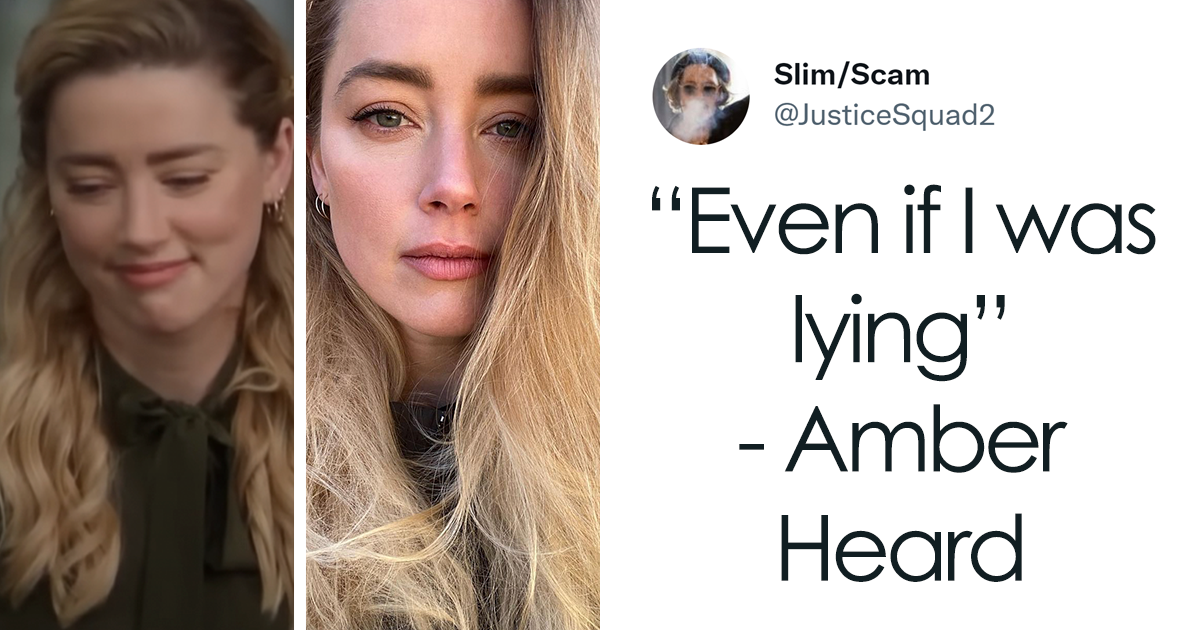
When Amber Heard sat down for her first major interview after the Johnny Depp defamation trial, the internet did what the internet does best: it pulled up a chair, opened ten tabs, formed twelve opinions, and somehow turned a serious legal and cultural moment into a full-contact commentary sport.
The interview, conducted by Savannah Guthrie for NBC, arrived shortly after the June 2022 verdict in the highly publicized Depp v. Heard trial. By then, the case had already become more than a courtroom dispute. It was a media event, a social media storm, a celebrity spectacle, and, depending on whom you asked, either a victory lap, a warning sign, or a cultural headache with Wi-Fi.
Heard used the interview to discuss the verdict, the role of social media, her experience on the witness stand, and the intense public criticism she faced. She said she understood why jurors might have been influenced by Depp’s fame and charm, while also arguing that the online conversation around the trial had not been balanced. That combination sparked another wave of reactions: supportive, skeptical, exhausted, analytical, furious, and occasionally so dramatic they probably needed their own courtroom stenographer.
This article breaks down the biggest themes behind those reactions, why the interview mattered, and what the public response says about celebrity trials, social media judgment, and the strange modern habit of treating legal proceedings like binge-worthy reality TV.
Why Amber Heard’s First Post-Trial Interview Became A Major Media Moment
The trial itself was already massive. Johnny Depp sued Amber Heard for defamation over her 2018 Washington Post op-ed in which she described becoming a public figure representing domestic abuse. Depp argued that the piece damaged his reputation and career, even though he was not named in the article. Heard countersued over statements made by Depp’s former attorney.
After weeks of testimony in Fairfax County, Virginia, the jury found Heard liable for defamation on three statements and awarded Depp $10 million in compensatory damages and $5 million in punitive damages, with the punitive award reduced under Virginia law. The jury also found Depp liable on one of Heard’s counterclaims and awarded her $2 million in compensatory damages. Later, the parties settled their appeals, bringing the legal fight to a close.
But the court of public opinion had been working overtime long before the verdict. Clips from the trial circulated on TikTok, YouTube, Instagram, Twitter, and Facebook. Hashtags supporting Depp were far more visible than those supporting Heard. Trial commentary channels grew quickly. Legal analysts, entertainment reporters, body language influencers, meme pages, and people who had never voluntarily read a court document in their lives suddenly became self-appointed experts.
So when Heard spoke publicly after the verdict, the interview did not land in a quiet media landscape. It landed in a thunderstorm wearing tap shoes.
35 Reactions To Amber Heard Speaking Out
The reactions below are not copied from individual social media posts. Instead, they summarize major public response patterns that appeared across entertainment coverage, commentary, social platforms, and broader cultural debate.
1. “She should have stayed silent.”
One common reaction was that Heard’s interview came too soon after the verdict. Some viewers felt a post-trial interview risked reopening public anger rather than helping her explain her perspective.
2. “She had every right to speak.”
Others argued that losing a case does not mean losing the right to talk about one’s own experience. To these viewers, Heard speaking out was not a public relations mistake but an act of self-defense.
3. “The timing was risky.”
Even some neutral observers said the timing was difficult. Public emotions were still hot, trial clips were still everywhere, and many people had already formed firm opinions.
4. “Savannah Guthrie asked tough questions.”
Many viewers noticed that the interview was not soft. Guthrie pressed Heard on evidence, audio recordings, credibility, the jury, and Depp’s witnesses. The exchange felt less like a celebrity chat and more like a careful post-verdict cross-examination.
5. “Social media absolutely shaped the atmosphere.”
A major reaction focused on Heard’s criticism of online commentary. Even people who disagreed with her noted that the trial’s social media environment was unusually intense, heavily meme-driven, and often hostile.
6. “The jury was instructed not to follow online coverage.”
Skeptics responded that jurors were told to avoid media coverage, so blaming social media seemed unfair. Their point: the legal verdict should be separated from TikTok trends and YouTube thumbnails.
7. “But jurors are still human.”
Others countered that even with instructions, total isolation from a global media storm is difficult. The trial was everywhere, and the atmosphere around it may have influenced how the public interpreted every detail.
8. “Depp’s popularity mattered.”
Heard suggested Depp’s beloved screen persona played a role in public sympathy. Many viewers agreed that decades of fame, iconic film roles, and fan loyalty gave Depp a powerful advantage outside the courtroom.
9. “Being famous does not automatically make someone wrong.”
Depp supporters pushed back, arguing that public affection did not create the verdict. To them, the jury responded to evidence, witness testimony, and credibility issues, not just Captain Jack Sparrow nostalgia.
10. “The interview changed nothing.”
For many people, the interview simply confirmed what they already believed. Supporters remained supportive. Critics remained critical. The internet, shockingly, did not gather in a circle and agree to be reasonable.
11. “She sounded composed under pressure.”
Some viewers praised Heard for appearing calm while discussing a painful and globally scrutinized trial. They saw the interview as controlled, serious, and emotionally restrained.
12. “She still seemed defensive.”
Others felt she did not take enough responsibility. They wanted more acknowledgment of the jury’s findings and less focus on public hostility.
13. “The public wanted a perfect victim.”
One cultural reaction argued that Heard was judged against an impossible standard. In this view, the public expects alleged abuse victims to be flawless, soft-spoken, consistent, likable, and never angry which is not how real people work.
14. “Credibility matters.”
Another reaction emphasized that courts must evaluate evidence and credibility. Supporters of the verdict argued that the issue was not whether someone was perfect, but whether the jury believed the specific claims at issue.
15. “The trial became entertainment.”
Many critics of the media circus said the public treated painful testimony like a Netflix finale. Reaction videos, memes, and courtroom edits turned serious allegations into shareable content.
16. “People were tired of being told what to think.”
Some viewers saw the backlash against Heard as part of a larger distrust of celebrity messaging, mainstream media framing, and public relations narratives.
17. “The memes went too far.”
Even some people who sided with Depp felt the jokes, insults, and mockery directed at Heard became excessive. There is a difference between criticism and turning someone’s testimony into a carnival game.
18. “The interview was a PR gamble.”
Public relations observers debated whether the interview could rebuild Heard’s image. Some thought it humanized her. Others thought it extended a negative news cycle she desperately needed to escape.
19. “NBC knew exactly what it had.”
Viewers also recognized the interview’s ratings value. After weeks of viral trial coverage, Heard’s first sit-down interview was guaranteed to attract attention.
20. “The case exposed how polarized audiences have become.”
The reaction split showed how quickly celebrity news can turn into team sports. Many people were not just following the story; they were choosing sides, defending players, and booing from the digital bleachers.
21. “The legal system and the internet are not the same thing.”
Some commentators stressed that a jury verdict is not the same as a trending hashtag. A courtroom uses rules of evidence. The internet uses vibes, clips, captions, and occasionally a suspicious amount of confidence.
22. “The interview highlighted the cost of public trials.”
Because the trial was televised and clipped endlessly, many viewers questioned whether cameras in court helped transparency or fueled spectacle.
23. “Heard’s comments about motherhood softened the tone.”
When Heard discussed wanting to focus on her daughter and life beyond legal battles, some viewers responded with sympathy. It reminded audiences that behind the headlines was a person trying to move forward.
24. “People wanted more legal clarity.”
Many viewers were confused by the split verdict: Depp won on his claims, but Heard also won on one counterclaim. The interview revived questions about what the verdict did and did not legally prove.
25. “The interview became a second trial online.”
Within hours, clips were dissected sentence by sentence. Facial expressions, pauses, word choices, and tone were analyzed as if everyone watching had suddenly graduated from law school and psychology school during lunch.
26. “Some survivors felt discouraged.”
Advocates worried that the reaction to Heard could make survivors of abuse more afraid to come forward, especially if their stories are complicated or their behavior is imperfect.
27. “Male survivors felt seen by the verdict.”
Another group saw Depp’s win as meaningful for male abuse survivors, arguing that men’s experiences are often dismissed or mocked.
28. “The conversation was bigger than two celebrities.”
The interview reopened larger debates about domestic violence, defamation law, gender expectations, media bias, fame, and online cruelty.
29. “Some people were simply exhausted.”
After weeks of coverage, a portion of the audience reacted with pure fatigue. Their position was basically: please let this story leave the group chat.
30. “The interview showed how hard image repair can be.”
Once public opinion hardens, changing minds is difficult. Heard’s interview showed that a single sit-down cannot easily undo weeks of viral narratives.
31. “People debated whether emotion equals honesty.”
Some viewers judged Heard’s emotional presentation. Others criticized that instinct, noting that people express stress, trauma, anger, and grief in different ways.
32. “The trial revealed the power of edited clips.”
Many people watched the trial through short clips rather than full testimony. The interview reminded audiences that short-form content can shape strong opinions from incomplete context.
33. “Both celebrities lost something.”
While Depp won the larger legal victory, some observers argued that both stars experienced reputational damage, career disruption, and years of public exposure.
34. “The settlement made people revisit the interview.”
When the appeals were later settled, audiences looked back at the interview differently. Some saw it as part of Heard’s attempt to reclaim her voice; others saw it as a chapter in a legal battle that had finally run out of oxygen.
35. “The internet still has not learned subtlety.”
The final reaction may be the most obvious: online culture struggles with nuance. The interview became another reminder that complicated stories rarely fit neatly into hero, villain, winner, loser, liar, saint, or meme template.
What The Reactions Reveal About Celebrity Trials
The Amber Heard interview mattered because it exposed a major shift in how the public consumes legal drama. In the past, people waited for newspaper summaries or evening news segments. Today, millions watch trials in fragments: a thirty-second clip here, a reaction video there, a viral caption somewhere else, and suddenly everyone is a forensic expert with a ring light.
This creates a strange problem. Legal cases require context, patience, and rules. Social media rewards speed, emotion, and certainty. The Depp-Heard trial sat directly at that intersection. The interview extended that same conflict: was Heard offering necessary context, or was she refusing to accept the verdict? Was she criticizing online cruelty, or trying to blame the internet? The answer depended largely on the viewer’s starting point.
Search interest around the Amber Heard interview, Johnny Depp trial reaction, NBC interview clips, and defamation verdict remained strong because audiences were not only interested in the facts. They were interested in what the facts meant. For some, the interview was about accountability. For others, it was about misogyny, media bias, survivor credibility, celebrity privilege, or the rise of trial-by-TikTok culture.
The Role Of Social Media In The Amber Heard Interview Reaction
Heard’s comments about social media were among the most discussed parts of the interview. She argued that online commentary had been overwhelmingly hostile and unfair. That claim resonated with people who had seen hashtags, memes, and viral videos mocking her testimony. It also irritated those who believed she was using online backlash to distract from the jury’s conclusions.
The truth is that both things can be discussed separately. A jury reached a legal decision. At the same time, the social media environment around the trial was unusually aggressive. Recognizing online hostility does not erase the verdict. Recognizing the verdict does not require pretending the online circus was healthy.
That distinction matters for anyone analyzing public relations, SEO trends, entertainment news, and digital culture. The interview became a case study in how quickly a celebrity narrative can become sticky. Once a public image is attached to memes, hashtags, and emotional audience investment, every new statement is filtered through the story people already believe.
Why The Interview Still Gets Attention
Years later, the interview still draws interest because it captured a turning point. Heard was no longer speaking from inside the courtroom. She was speaking after a verdict, after weeks of public judgment, and after becoming one of the most discussed women on the internet. The interview was not just about what happened in a marriage or a trial. It was about what happens when personal conflict becomes mass entertainment.
For publishers, the topic remains searchable because it combines evergreen celebrity interest with legal drama, media analysis, social media behavior, and public opinion. Keywords like “Amber Heard first interview,” “Johnny Depp trial reaction,” “Amber Heard NBC interview,” “Depp Heard verdict,” and “social media reaction to Amber Heard” continue to reflect curiosity about the case and its cultural aftermath.
Experience-Based Reflections: What We Can Learn From The Public Reaction
Watching the reaction to Amber Heard’s first interview after the trial offers a useful lesson for anyone who spends time online: the internet is fast, loud, emotionally persuasive, and not always careful. It can make people feel informed before they have actually absorbed the full story. A clip can feel like proof. A meme can feel like analysis. A trending hashtag can feel like a verdict. But none of those things are the same as context.
One experience many viewers shared was the feeling of being pulled into the case almost accidentally. People who had no plan to follow a defamation trial suddenly saw clips on their feeds every day. A courtroom exchange appeared between recipe videos and dog grooming tips. A legal analyst popped up after a dance trend. Before long, casual viewers felt like they knew the personalities, the timeline, the evidence, and the emotional temperature of the room. That is the power of algorithmic storytelling: it does not ask whether you want the whole picture; it serves you the most engaging pieces.
Another experience was the pressure to pick a side. Online spaces often punish uncertainty. Saying “this is complicated” can be treated like weakness. Saying “I need more information” can sound boring next to a confident hot take. During the interview reaction, many people seemed less interested in exploring what Heard said than in proving that their previous opinion had been correct all along. That is very human, but it is not always very wise.
The interview also shows why tone matters in public communication. Heard had to speak in a nearly impossible environment. If she sounded emotional, critics could call it performance. If she sounded calm, critics could call it cold. If she challenged the verdict, critics could say she lacked accountability. If she accepted too much blame, supporters might feel she had been pressured into silence. Public figures in crisis often face this no-win communication trap, where every sentence becomes a mirror reflecting the audience’s existing bias.
For readers, the practical lesson is simple: slow down. Before joining a digital pile-on, ask what you actually know. Did you watch the full interview or only clips? Did you read reliable reporting or only captions? Are you reacting to evidence, or to someone else’s emotional edit of the evidence? The internet rewards instant judgment, but serious topics deserve more patience.
For writers and publishers, the lesson is equally important. Covering a topic like “35 reactions to Amber Heard speaking out” should not mean recycling insults or amplifying harassment. A stronger article identifies patterns, explains context, and treats the subject with enough seriousness to be useful. Humor can make a heavy topic readable, but it should not turn real people into props.
Ultimately, the interview reaction reminds us that celebrity culture is no longer separate from legal culture, media culture, and social media culture. They all collide in the same feed. And when they do, audiences need more than jokes, outrage, and team loyalty. They need context, balance, and the rarest online skill of all: the ability to admit that complicated stories are, in fact, complicated.
Conclusion
Amber Heard’s first interview after the Johnny Depp trial did not settle the public debate. If anything, it proved how deeply divided audiences had become. Some saw the interview as brave, others as poorly timed, and many as another chapter in a media saga that had already consumed far too much oxygen.
The 35 reactions above show that the story was never only about one interview. It was about fame, trust, gender, evidence, social media influence, legal complexity, and the modern appetite for turning serious disputes into viral entertainment. The interview remains important because it captured the moment when the courtroom conversation moved fully into the culture messy, emotional, and impossible to fit into a single headline.
Note: This article is based on publicly reported information about the Depp v. Heard defamation trial, Amber Heard’s NBC interview, the verdict, the later settlement, and widely documented public reaction patterns. It summarizes reaction themes without reproducing private social media posts or presenting online commentary as legal fact.