Someone says, “See you later, alligator,” and suddenly you are standing at the edge of a tiny comedy cliff. Do you go with the classic “After a while, crocodile”? Do you invent something so weird everyone pauses, blinks, and respects your commitment to nonsense? Or do you panic and say, “Okay, bye,” like a person who brings plain toast to a confetti party?
This playful goodbye phrase has been around for decades, and it remains popular because it is simple, rhyming, memorable, and just the right amount of ridiculous. It works for kids, friends, coworkers, family texts, social media captions, classroom routines, and those moments when a normal farewell feels too boring. The best answer to “See you later, alligator” depends on your mood: cute, sarcastic, clever, chaotic, wholesome, or full-on Saturday-morning-cartoon energy.
Below, you will find more than 75 funny and creative responses, plus tips on when to use them, how to make your own rhyming replies, and why this tiny animal pun still refuses to retire.
What Does “See You Later, Alligator” Mean?
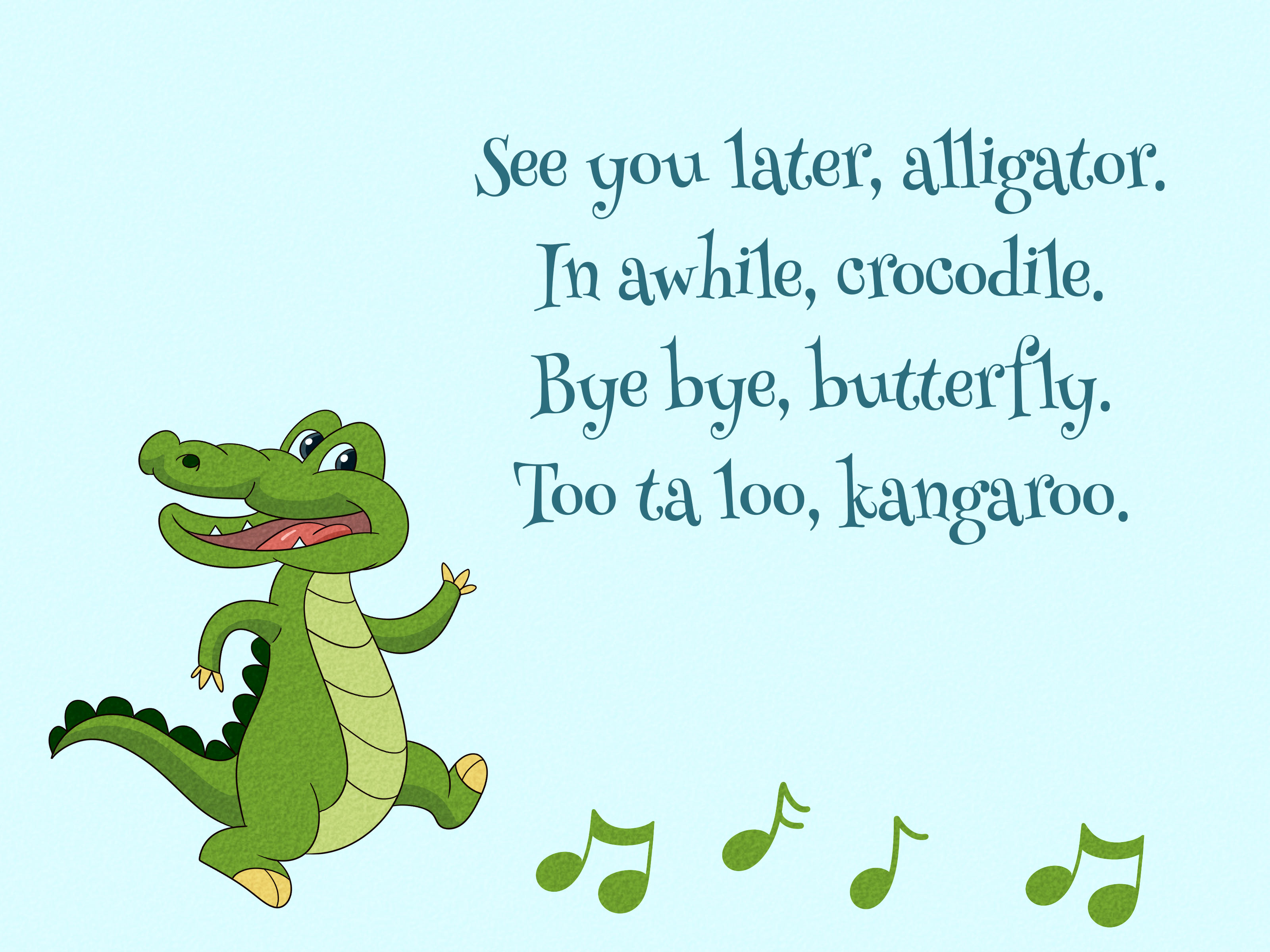
“See you later, alligator” is a lighthearted way to say goodbye. The line is usually followed by the traditional reply, “After a while, crocodile” or “In a while, crocodile.” It is a call-and-response phrase, meaning one person says the setup and the other person answers with the expected rhyme.
The charm is not in the literal meaning. No one expects an actual alligator to check its calendar. The fun comes from rhyme, rhythm, and shared silliness. It turns a plain goodbye into a tiny performance, which is probably why it has survived in classrooms, families, songs, jokes, and everyday conversation.
The Classic Answer
If you want the timeless response, use this:
1. After a while, crocodile.
This is the standard answer. It is familiar, friendly, and works almost anywhere.
2. In a while, crocodile.
This variation is also common. It feels slightly more conversational and rolls off the tongue easily.
Both versions are correct in casual speech. Choose the one that sounds natural to you. Nobody should be holding a grammar trial over a reptile rhyme.
75+ Funny & Creative Answers to “See You Later, Alligator”
Classic Animal Rhymes
- After a while, crocodile.
- In a while, crocodile.
- See you soon, raccoon.
- Take care, polar bear.
- Bye-bye, butterfly.
- Give a hug, ladybug.
- Blow a kiss, jellyfish.
- Out the door, dinosaur.
- Gotta go, buffalo.
- Toodle-oo, kangaroo.
- Peace out, trout.
- See you then, penguin.
- Farewell, gazelle.
- Later, skater-gator.
- Stay loose, moose.
- Be sweet, parakeet.
- Don’t be late, primate.
- Until next time, porcupine.
- So long, King Kong.
- Adios, armadillos.
Cute Responses for Kids
- See you soon, little baboon.
- Time to scoot, newt.
- Night-night, termite.
- Sleep tight, firefly light.
- Be kind, porcupine.
- Stay bright, little kite.
- Off you go, flamingo.
- Hurry back, ducky quack.
- Wave goodbye, dragonfly.
- Snuggle later, tiny gator.
- Dream big, guinea pig.
- Smile wide, beetle bride.
- Hop along, little frog song.
- Catch you soon, cartoon raccoon.
- Be brave, ocean wave.
Silly and Weird Answers
- Not too soon, angry spoon.
- Gotta dash, mustache.
- Later, mashed-potater.
- Smell you later, elevator.
- Goodbye, French fry.
- Take a bow, purple cow.
- Off I slide, banana peel ride.
- Catch you round, sandwich hound.
- I’m gone, lawn.
- Zoom zoom, mushroom.
- Fare thee well, taco shell.
- I must flee, cup of tea.
- Stay crispy, chicken strip-y.
- See you there, folding chair.
- Bye for now, eyebrow.
Funny Responses for Friends
- Don’t be shady, swamp lady.
- Text me later, chaos creator.
- Stay iconic, hedgehog sonic.
- Catch you later, snack invader.
- Don’t disappear, root beer.
- Be cool, tide pool.
- Keep it classy, sassy lassie.
- Later, drama curator.
- Don’t be strange, free-range.
- Stay magical, tactical popsicle.
- Go be great, paper plate.
- Peace and fries, wise guy.
- Call me maybe, tiny baby.
- Don’t trip, potato chip.
- Catch you soon, human cartoon.
Witty Replies for Adults
- After this meeting, I’ll need healing.
- In a while, spreadsheet crocodile.
- Later, calendar negotiator.
- Take care, office chair.
- Goodbye, Wi-Fi.
- See you soon, conference room.
- Gotta roll, payroll.
- Off I go, inbox overflow.
- Stay sane, coffee vein.
- Until the next email, paper trail.
- Bye for now, quarterly wow.
- Catch you later, deadline hater.
- Time to cruise, Monday blues.
- Don’t delay, PTO ray.
- Talk soon, budget raccoon.
Creative One-Liners for Texts and Captions
- Later, gatordon’t forget your translator.
- After a while, crocodile with style.
- See you soon, under the moon.
- Bye for now, tiny wow.
- Peace out, no doubt.
- Catch you later, digital skater.
- Until then, my amphibious friend.
- Gotta glide, swamp-side.
- Stay wild, reptile child.
- Later days, swampy ways.
- Bye-bye, reptile guy.
- Snap back later, friendly gator.
- Don’t be vile, crocodile.
- Smile awhile, crocodile.
- See you when the swamp clock strikes ten.
Best Answers by Situation
For a Casual Conversation
Use “After a while, crocodile” when you want a simple, familiar answer. It is perfect for a friend, neighbor, sibling, or anyone who enjoys old-school wordplay.
For Kids or Classroom Goodbyes
Try “Take care, polar bear,” “Bye-bye, butterfly,” or “Out the door, dinosaur.” Children love repetition, rhyme, and animal imagery. These replies also make transitions feel less abrupt, which is helpful when ending story time, playtime, or a lesson.
For Text Messages
Short and punchy works best in texts. “Peace out, trout,” “Gotta go, buffalo,” and “Later, skater-gator” are easy to send and hard to misread. Add an emoji if your style allows it, but do not overdo it unless your goal is to look like a zoo escaped into your keyboard.
For Work
Keep it light but not too absurd. “See you soon, conference room” may work with a playful team. “Take care, office chair” is goofy but safe. “Smell you later, elevator” is probably best saved for friends unless your workplace has unusually strong sitcom energy.
How to Create Your Own Funny Reply
The easiest formula is simple:
Goodbye phrase + rhyming animal, object, or silly noun.
For example, “Take care” can become “Take care, polar bear.” “Gotta go” becomes “Gotta go, buffalo.” “See you soon” becomes “See you soon, raccoon.” Once you understand the pattern, you can create endless variations.
Step 1: Pick a Farewell Phrase
Start with common goodbye phrases like “see you soon,” “take care,” “bye for now,” “gotta go,” “talk later,” or “peace out.” These give your reply a clear meaning before the rhyme arrives wearing a party hat.
Step 2: Choose a Rhyme
Look for animals or objects that rhyme with your farewell. “Soon” pairs with raccoon, baboon, moon, spoon, and balloon. “Care” pairs with bear, hare, chair, and pear. “Go” pairs with buffalo, flamingo, and domino.
Step 3: Add Personality
A plain rhyme is cute. A specific rhyme is memorable. Compare “See you soon, raccoon” with “See you soon, snack-stealing raccoon.” The second one has a tiny story built in, which makes it funnier.
Why This Phrase Still Works
“See you later, alligator” works because it does three things quickly. First, it signals goodbye. Second, it invites a response. Third, it creates a shared joke. That tiny structure makes it more interactive than a standard farewell.
It also has nostalgia power. Many adults remember hearing it from parents, teachers, cartoons, songs, or childhood friends. When someone says it, the phrase can feel both familiar and funny. It is the verbal equivalent of finding a sticker on an old lunchbox: small, cheerful, and weirdly durable.
Common Mistakes to Avoid
Using It in the Wrong Tone
This phrase is playful. It is great for friendly settings but not ideal for serious moments. If someone is leaving a tense meeting, do not chase them with “After a while, crocodile” unless you are absolutely sure they will laugh.
Forcing Too Many Rhymes
One clever reply is funny. Twelve replies in a row can feel like being trapped in a children’s book during a thunderstorm. Use your best line, then let the moment breathe.
Making It Too Complicated
The best answers are easy to understand. If your rhyme needs a footnote, a map, and emotional support, simplify it. “Peace out, trout” beats “Farewell for the foreseeable duration, semi-aquatic punctuation.”
Experience Notes: Using “See You Later, Alligator” in Real Life
One of the best things about “See you later, alligator” is that it makes a goodbye feel warmer without making it dramatic. In everyday life, farewells can be awkward. People hover near doors, repeat “okay, well,” check their phones, and perform the ancient social dance known as “trying to leave without seeming rude.” A playful line gives the moment a clean ending. It says, “We are done here, but in a friendly way.”
In family settings, rhyming goodbyes often become little traditions. A parent might say it while dropping a child off at school. A grandparent may use it at the end of a phone call. Siblings may turn it into a competition, trying to invent the strangest possible reply. Over time, the phrase becomes more than a joke. It becomes a tiny ritual, and rituals are powerful because they make ordinary moments feel familiar and safe.
For children, these phrases can also support language play. Rhymes help kids hear sound patterns, remember words, and experiment with humor. A child who answers “After a while, crocodile” is not just being cute; they are practicing rhythm, prediction, and social response. That is a lot of brain activity for one crocodile.
Among friends, the phrase works best when everyone understands the playful tone. It can soften the end of a hangout, make a group chat more lively, or turn a boring sign-off into a running gag. Once a friend group starts inventing replies, things can escalate quickly. “Take care, polar bear” becomes “Goodbye, emotional support French fry,” and before long, everyone is speaking fluent nonsense. Honestly, civilization has survived worse.
At work, the phrase should be used with taste. In a relaxed team, a funny goodbye can make people smile after a long meeting. In a formal setting, it may feel out of place. The trick is to match the room. If your team already jokes around, “In a while, crocodile” is harmless fun. If everyone communicates exclusively in bullet points and calendar invites, maybe save the swamp poetry for Slack.
On social media, these responses make excellent captions because they are short, visual, and easy to understand. A vacation photo might use “Later, gator.” A classroom post might use “Bye-bye, butterfly.” A pet photo could use “See you soon, raccoon,” even if the pet is clearly a dog and has never paid rent. The phrase gives captions a playful hook without needing a long explanation.
The real magic is flexibility. You can make the answer sweet, sarcastic, nostalgic, silly, or oddly poetic. You can keep the classic reply or invent your own. The phrase survives because it invites participation. It turns goodbye into a game, and most people enjoy being handed a game that takes two seconds and requires no batteries.
Conclusion
“See you later, alligator” may be old-school, but it still has plenty of bite. The classic answer, “After a while, crocodile,” remains the safest and most recognizable response, while creative alternatives like “Peace out, trout,” “Take care, polar bear,” and “Gotta go, buffalo” keep the tradition fresh. Whether you are writing a text, ending a classroom activity, saying goodbye to family, or adding a goofy caption to a post, these funny goodbye rhymes make everyday conversation more memorable.
The best response is the one that fits your personality. Keep it simple, make it rhyme, and do not be afraid to sound a little silly. After all, a boring goodbye leaves quietly. A good animal rhyme waddles out wearing sunglasses.
SEO Tags
Note: This article is written in original wording for web publication and is based on real usage patterns, language history, and common American English farewell rhymes.