When a headache arrives with all the subtlety of a marching band inside your skull, reaching for somethinganythingthat might help is understandable. For people who experience migraine, the situation can be even more disruptive: throbbing pain may arrive alongside nausea, vomiting, light sensitivity, sound sensitivity, fatigue, and the overwhelming desire to negotiate a temporary cease-fire with the universe.
One natural remedy that keeps appearing in conversations about headache relief is ginger. Best known as the spicy root hiding in stir-fries, tea, and the occasional aggressively flavored cookie, ginger has a long history of traditional medicinal use. Modern researchers have also examined ginger for nausea, inflammation, pain, and, more recently, migraine.
So, can ginger help relieve headaches and migraine? The short answer is possiblyespecially during an acute migraine attackbut the evidence is still limited. A few clinical trials have produced encouraging results, including improvements in migraine pain and nausea. However, ginger should not be considered a proven replacement for established migraine treatments, and research does not currently show that taking ginger regularly prevents migraine attacks.
Why Migraine Is More Than Just a Bad Headache
Before discussing ginger, it helps to distinguish migraine from the garden-variety headache that appears after too much screen time, too little water, or discovering that your meeting could indeed have been an email.
Migraine is a neurological disorder. Head pain is common, but it is only one possible part of an attack. Symptoms may include:
- Moderate to severe throbbing or pulsating head pain
- Pain commonly affecting one side of the head
- Nausea or vomiting
- Sensitivity to light, noise, or smells
- Fatigue and difficulty concentrating
- Visual disturbances or other aura symptoms in some people
An untreated migraine attack can last for hours or even days. Genetics, nerve signaling, the trigeminal pain pathway, and chemical messengers such as calcitonin gene-related peptide, or CGRP, are among the factors involved.
Triggers differ dramatically from person to person. Common examples include stress, irregular sleep, skipped meals, dehydration, hormonal changes, alcohol, excessive caffeine, strong odors, bright light, and changes in weather or barometric pressure.
Why Researchers Are Interested in Ginger for Migraine
Ginger comes from Zingiber officinale, a flowering plant whose underground rhizome contains numerous biologically active compounds. Among the best known are gingerols and shogaols.
Laboratory and clinical research suggests that components of ginger can influence pathways related to inflammation, pain, digestion, and nausea. These properties make ginger particularly interesting for migraine because an attack may involve both pain and significant gastrointestinal symptoms.
Ginger may influence inflammatory pathways
Ginger is frequently described as having anti-inflammatory properties. Compounds found in ginger appear to interact with biochemical pathways involved in the body’s inflammatory response. Researchers have studied possible effects on enzymes and signaling molecules associated with pain and inflammation.
That does not mean migraine is simply an inflammatory headache or that ginger switches inflammation off like a kitchen light. Migraine biology is much more complicated. Still, these effects provide one plausible reason researchers have explored ginger as an additional migraine treatment.
Ginger may have pain-relieving properties
Ginger has been investigated for several types of pain, including menstrual pain, muscle soreness, arthritis-related discomfort, and migraine. Its exact pain-relieving mechanism in humans is not completely established, but its effects on inflammatory and neurological signaling are areas of ongoing research.
Ginger is especially interesting for migraine-related nausea
This may be ginger’s most practical advantage.
Nausea is extremely common during migraine attacks, and some people vomit badly enough that swallowing or keeping down medication becomes difficult. Ginger has much better-established recognition as a remedy for certain types of nausea than it does as a headache cure.
Therefore, even when ginger does not completely stop migraine pain, easing the queasy, stomach-churning portion of an attack could still make someone considerably more comfortable.
What Does the Research Say About Ginger for Migraine?
Clinical research remains fairly small, which is important to remember when headlines make ginger sound like it has defeated migraine in single combat.
Ginger versus sumatriptan
One frequently discussed randomized, double-blind study involved 100 people with migraine without aura. Participants received either ginger powder or sumatriptan, a prescription triptan medication commonly used for acute migraine.
After two hours, headache severity decreased substantially in both groups, and the researchers reported statistically comparable treatment effectiveness. Participants receiving ginger also reported fewer clinical adverse effects.
The study is certainly intriguing. However, one relatively small trial is not enough to conclude that ginger works as well as sumatriptan for everyone. Sumatriptan and other triptans have been investigated in much larger clinical programs and remain established migraine therapies.
In other words, the study gives ginger a seat at the research table. It does not hand ginger the keys to the entire migraine pharmacy.
Ginger added to an NSAID
Another randomized, double-blind, placebo-controlled study looked at 60 adults who sought medical care for an episodic migraine attack. Everyone received the anti-inflammatory medication ketoprofen, while participants additionally received either 400 milligrams of ginger extract or placebo.
The ginger group showed better clinical responses at several points during the first two hours. Researchers also observed improvements in pain severity and functional status.
This trial suggests ginger might have value as an add-on treatment rather than necessarily replacing conventional medication.
What did the meta-analysis find?
A meta-analysis pooling three randomized controlled studies found that ginger was associated with better two-hour pain outcomes than control treatment. Participants receiving ginger were more likely to be pain-free at two hours, and nausea and vomiting occurred less frequently.
That sounds encouragingand it isbut the total amount of evidence remains small. Migraine treatments are ideally evaluated in large, repeated studies involving diverse groups of patients. Ginger simply does not yet have that depth of research.
Can Ginger Prevent Migraine Attacks?
This is where expectations need a major adjustment.
A randomized placebo-controlled prevention study followed more than 100 adults with episodic migraine. Participants took ginger extract or placebo for several months. Ginger did not produce a significantly better reduction in migraine frequency than placebo.
Both groups improved on several measurements, but the difference between ginger and placebo was not significant.
Therefore, current evidence is more interesting for treating an attack after it begins than for taking ginger every day to prevent future attacks.
People seeking migraine prevention have many other evidence-based possibilities, including lifestyle changes, prescription medications, CGRP-targeted therapies, certain nutritional supplements, neuromodulation devices, Botox for qualifying chronic migraine, and other approaches chosen according to individual needs.
What About Ordinary Headaches?
Here the evidence becomes even thinner.
Most human research involving ginger and headaches has focused specifically on migraine. There is not strong clinical evidence showing that ginger reliably treats tension-type headaches, dehydration headaches, sinus-related pain, cluster headache, or headaches caused by another medical condition.
That distinction matters because the word headache describes a symptom, not a single disease.
If your headache comes from dehydration, drinking ginger tea might appear to help partly because you are finally drinking fluid. If you skipped lunch, ginger will not negotiate with your low blood sugar on your behalf. And if your headaches are actually migraine attacks, recognizing that pattern can lead to much more effective treatment.
How Can You Use Ginger During a Migraine?
Ginger is available as fresh root, dried powder, tea, candies, capsules, tablets, and concentrated extracts. Unfortunately, these forms are not equivalent. The amount of active ginger compounds can vary considerably.
Ginger tea
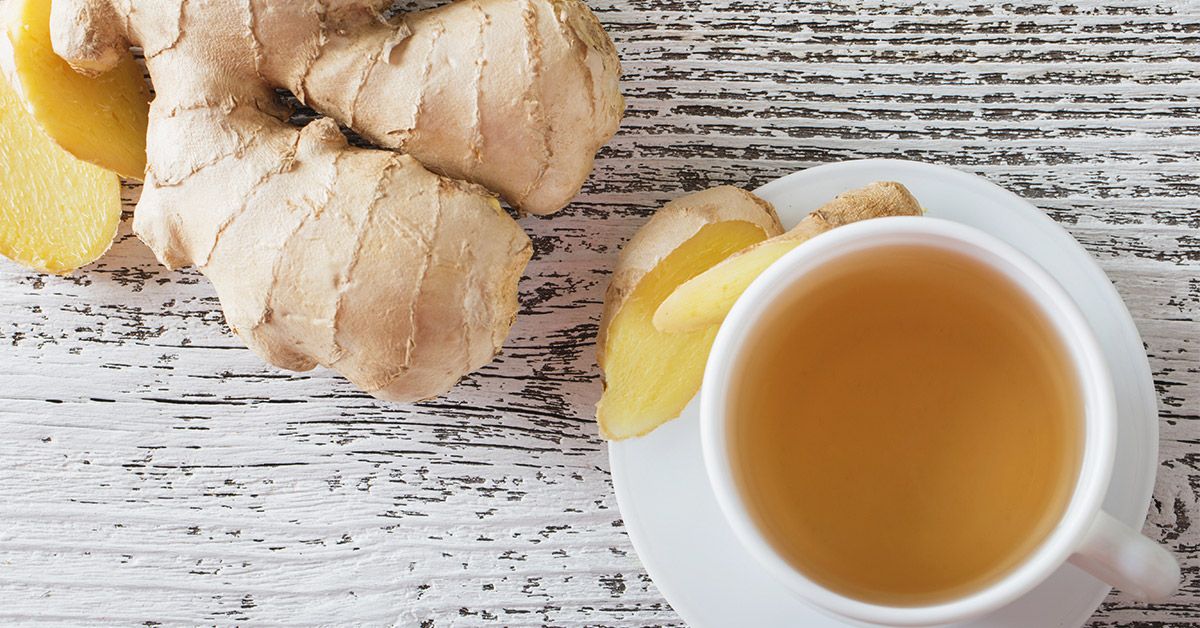
Ginger tea is one of the gentlest options. Fresh ginger can be sliced and steeped in hot water for roughly 10 minutes. Lemon or a small amount of honey can be added if desired.
Tea may be particularly appealing when nausea accompanies migraine because it provides ginger together with hydration. Just remember that a pleasantly spicy mug of tea is not necessarily delivering the same dose used in a clinical trial.
Ginger powder or capsules
Some migraine trials have used concentrated ginger powder or extracts. For example, one study compared 250 milligrams of ginger rhizome powder with sumatriptan, while another used 400 milligrams of standardized ginger extract alongside conventional acute treatment.
These numbers should not be interpreted as a universal migraine dosage. Different products contain different concentrations, and researchers have not established a standard medically recommended ginger dose for migraine.
If you plan to use concentrated ginger supplements, particularly on a regular basis, discuss the product and dosage with a health professional or pharmacist.
When Should You Take Ginger for a Migraine?
Acute migraine medicines generally work best when used early in an attack, and the ginger research has similarly evaluated treatment around the onset of symptoms.
Someone who recognizes the early stages of their migraine might drink ginger tea or use an approved ginger product at that point rather than waiting until pain has reached maximum intensity.
However, ginger should not delay medication that your doctor has prescribed. If you already have an effective migraine rescue plan involving a triptan, gepant, NSAID, anti-nausea medication, or another therapy, do not automatically replace it with ginger simply because ginger happens to live in the produce aisle.
Can Ginger Be Combined With Migraine Medication?
Sometimes, but caution is appropriate.
The clinical trial using ginger with ketoprofen suggests that ginger has been investigated as an add-on to an NSAID. That does not mean every combination is safe for every person.
Concentrated ginger supplements may affect platelet activity and theoretically increase bleeding risk, particularly when combined with anticoagulants, antiplatelet medicines, or possibly NSAIDs. Evidence about the magnitude of these interactions is not always conclusive, but the possibility deserves attention.
Ginger supplements may also affect blood glucose and can interact with certain medications.
People using prescription drugs should tell their doctor or pharmacist about herbal products rather than treating supplements as nutritionally flavored invisibility cloaks.
Is Ginger Safe?
For most healthy adults, ordinary culinary amounts of ginger are generally well tolerated. Problems are more likely with larger supplemental doses.
Possible side effects include:
- Heartburn
- Abdominal discomfort
- Diarrhea
- Gas
- Mouth or throat irritation
Extra caution may be appropriate for people who use anticoagulant or antiplatelet medications, have bleeding disorders, have gallstones, take medications that lower blood sugar, are preparing for surgery, or are considering high-dose supplementation during pregnancy.
Food amounts and concentrated extracts are not necessarily interchangeable from a safety perspective.
Other Ways to Manage Migraine Alongside Ginger
Migraine management usually works best as a complete strategy rather than a treasure hunt for one magical ingredient.
Stay hydrated
Dehydration can contribute to headaches and may make an already unpleasant migraine day even less charming. Sip fluids regularly, particularly if nausea or vomiting is occurring.
Eat consistently
Skipping meals can trigger migraine attacks in some people. Keeping regular meal times and having a simple snack available may help reduce avoidable triggers.
Protect your sleep schedule
Both insufficient sleep and major changes in sleeping patterns can trigger attacks. Consistency is often more useful than attempting to compensate for several short nights with one heroic 12-hour sleep marathon.
Use a headache diary
Record when attacks occur, possible triggers, symptoms, treatments, and how quickly those treatments work. A migraine diary can help identify patterns and makes medical appointments much more productive.
Have an evidence-based rescue plan
Depending on your diagnosis and medical history, acute migraine treatment may include NSAIDs, acetaminophen, triptans, gepants, ditans, anti-nausea medicines, neuromodulation devices, or combinations selected by a clinician.
If attacks are frequent or highly disabling, preventive treatment may be appropriate.
When a Headache Needs Medical Attention
Natural remedies should never become a reason to ignore warning signs.
Seek urgent medical care for a sudden, extremely severe headacheparticularly one that reaches maximum intensity rapidlyor a headache accompanied by weakness, paralysis, confusion, difficulty speaking, fainting, seizure, severe fever, stiff neck, or new major vision changes.
Medical evaluation is also important for headaches that begin after significant head trauma, suddenly change from your normal pattern, steadily become more severe, repeatedly wake you from sleep, or begin for the first time later in life.
Frequent headaches deserve evaluation even when they are not emergencies. A clinician can determine whether you are experiencing migraine or another headache disorder and help prevent medication-overuse headaches caused by taking certain acute pain medicines too frequently.
Real-World Experience: What Trying Ginger for Migraine May Actually Look Like
Research statistics are valuable, but managing migraine happens in bedrooms, offices, cars, airports, kitchens, and other places where nobody conveniently hands you a double-blind placebo-controlled capsule.
Imagine someone who experiences a recognizable migraine pattern. The attack often begins with neck stiffness and a vague feeling that concentration is becoming more difficult. Twenty minutes later, mild nausea appears and pain starts developing behind one eye.
Instead of waiting until the attack becomes severe, the person follows an established rescue routine: stops working, drinks water, moves into a quiet dim room, and uses the treatment recommended by their clinician. Ginger tea or an appropriately selected ginger product might be added primarily because nausea is one of the person’s dominant symptoms.
After an hour, the stomach may feel calmer. The head pain might also be improvingor it might not. This is where realistic expectations matter. Ginger does not reliably make every migraine disappear, and one successful attack does not prove that ginger caused the improvement. Migraine symptoms naturally fluctuate, and treatments used simultaneously make cause and effect difficult to separate.
A headache diary can make the experiment more useful. Instead of recording, “Ginger seemed pretty good,” write down specifics: pain was 6 out of 10 before treatment, ginger was taken 20 minutes after symptoms started, prescribed medication was taken at the same time, nausea declined within 45 minutes, pain fell to 3 out of 10 after two hours, and normal activity returned after three hours.
Repeat observations across several attacks can reveal a pattern. Perhaps ginger consistently helps nausea but barely changes pain. That is still useful. Being able to keep food, water, or oral medication down can make an enormous difference during migraine.
Another person may discover that ginger tea helps only when an attack is mild and treated early. A third might notice no benefit whatsoever. Biology has a stubborn habit of refusing to read enthusiastic wellness articles.
There is also a practical difference between forms of ginger. Fresh ginger tea may be soothing but provides an uncertain concentration of active compounds. A standardized capsule offers a more consistent amount but may produce heartburn or interact with medications. Ginger candy is convenient but can contain substantial sugar. Ginger ale may contain little actual ginger at all.
The most useful experience therefore is not simply “try ginger and hope.” It is to test ginger cautiously within a structured migraine management plan. Know what type of headache you have. Treat attacks early. Keep track of symptoms. Continue prescribed treatment unless a healthcare professional advises otherwise. Pay attention to side effects and interactions.
And judge success appropriately. If ginger changes a migraine from “cancel the entire day” to “I still need a dark room, but my stomach has stopped planning a revolt,” that may represent meaningful symptom relief even if it is not a complete cure.
Conclusion: Is Ginger Worth Trying for Headaches and Migraine?
Ginger is not a proven migraine cure, but it is more than a random internet remedy. Small randomized clinical trials and a meta-analysis suggest that ginger may reduce pain during an acute migraine attack and may be particularly useful for accompanying nausea and vomiting.
At the same time, the evidence base remains small. A clinical trial investigating ginger for migraine prevention did not find it superior to placebo, and evidence for ordinary non-migraine headaches is much less convincing.
For a generally healthy adult, ginger tea or normal food amounts are relatively low-risk ways to explore whether ginger helps during an attack. Concentrated supplements require more caution, especially for people taking blood thinners, diabetes medication, or other drugs that may interact with ginger.
The best way to think about ginger is as a possible supporting player in migraine management, not the entire cast. Combine sensible self-care with an accurate diagnosis, a headache diary, appropriate acute treatment, and professional guidance when attacks are frequent or disabling.
Your ginger root may deserve a place in the kitchen and perhaps in your migraine toolkit. Just don’t fire your neurologist and promote the ginger to department head.