Most people picture prison through movie scenes: clanging doors, tattooed tough guys, dramatic cafeteria fights, and someone inevitably whispering, “You don’t know who you’re messing with.” Real prison life can be frightening, yes, but it is also slower, smaller, louder, more boring, more bureaucratic, and far more emotionally exhausting than Hollywood usually admits.
So, how hard is it really? The honest answer is: it depends. Life in prison varies by state, facility, security level, staff culture, overcrowding, personal behavior, health, sentence length, and whether someone has outside support. A minimum-security federal prison camp is not the same universe as a high-security state prison. A short sentence is not the same as a life sentence. A person with money on their books lives differently from someone who has to choose between soap, stamps, and ramen like they are balancing the federal budget with a plastic spoon.
Still, people who have lived behind bars often describe a few common truths: prison is a place where privacy disappears, time gets heavy, small inconveniences become daily battles, and emotional survival matters as much as physical safety. It is not just “being locked up.” It is being managed, counted, watched, scheduled, searched, and separated from normal life until even a quiet cup of coffee becomes a luxury.
Prison Life Starts With Losing Control
The first shock for many inmates is not violence. It is intake. Upon arrival, people are screened, classified, photographed, searched, medically evaluated, assigned housing, and introduced to facility rules. In federal prisons, new arrivals go through an admission and orientation process where they learn about programs, policies, services, and expectations. That sounds polite on paper. In real life, it often feels like getting dropped into a city where everyone already knows the traffic laws except you.
Everything suddenly belongs to the institution: your clothes, your movement, your schedule, your meals, your mail, your phone access, and sometimes even the words you choose. A door opening is not an invitation; it is permission. A door closing is not a suggestion; it is the end of discussion.
Many inmates say the hardest adjustment is psychological. You are no longer deciding when to shower, when to eat, when to call your family, or when to go outside. You stand for count. You wait for lines. You ask before moving. You learn which officer is strict, which unit is tense, and which unwritten rules matter more than the printed handbook.
The Daily Routine: Boring, Repetitive, and Weirdly Busy
One of the biggest myths about prison is that inmates sit around doing nothing all day. Some do spend long stretches locked in cells, especially during lockdowns or staffing shortages. But a standard prison day can also be packed with movement, chores, work assignments, meals, count times, classes, recreation, medical appointments, religious services, and endless waiting.
Morning: Wake Up, Count, Chow
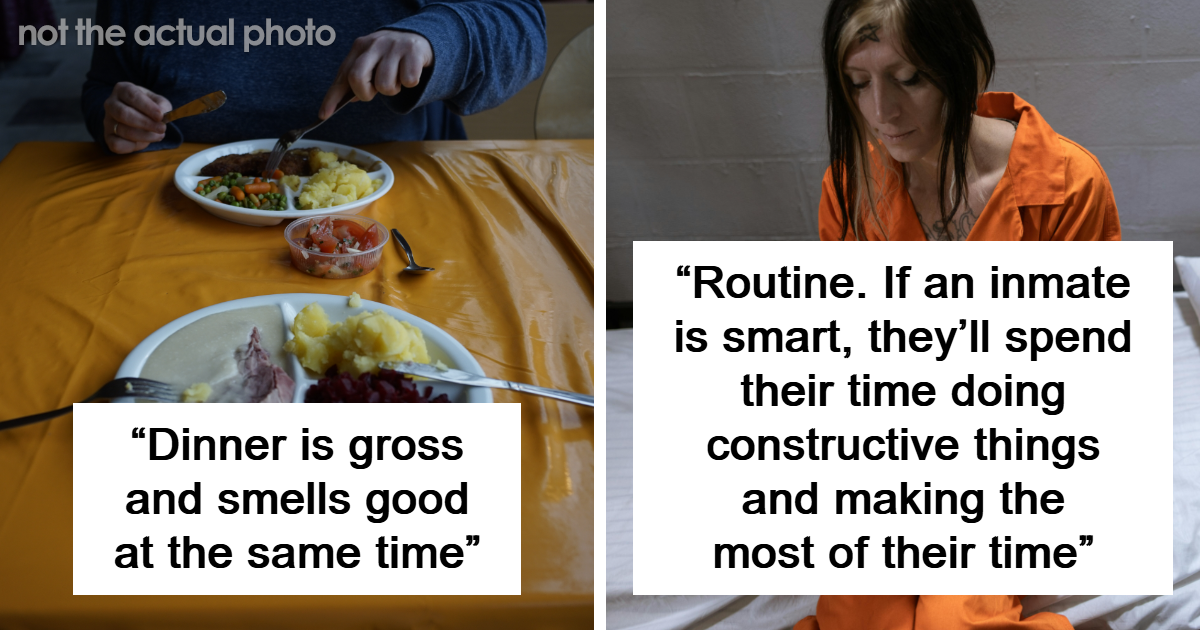
A typical day might begin before sunrise. Beds are made, cells or bunks are cleaned, uniforms are put on, and everyone prepares for count. Count is one of the sacred rituals of prison life. If count does not clear, nobody moves. Breakfast may be early, fast, and forgettable: oatmeal, eggs, grits, potatoes, bread, fruit, milk, or something that technically qualifies as food if you squint with optimism.
Inmates often joke that prison meals are proof that seasoning has constitutional rights but is being held in solitary confinement. Food quality varies widely, but complaints are common: small portions, bland menus, processed ingredients, and limited fresh produce. Commissary items become valuable because ramen, tuna, peanut butter, instant coffee, and hot sauce can turn a sad tray into something almost resembling dinner.
Daytime: Work, Programs, Waiting
Many inmates have work assignments. They may clean units, cook, do laundry, maintain grounds, assist in warehouses, or work in prison industries. Work can bring structure, a little money, better standing, and time away from the housing unit. But prison wages are usually extremely low, and in some places unpaid labor is still part of the system. That makes basic needs feel expensive. A deodorant purchase can become a financial decision. A phone call home can feel like a luxury subscription to your own family.
Programs matter too. GED classes, college courses, vocational training, substance-use treatment, religious groups, reentry workshops, and cognitive behavioral programs can help people prepare for life after release. Research on correctional education has found strong links between education and lower recidivism. In plain English: teaching people useful skills works better than letting them rot while pretending boredom is a rehabilitation plan.
Evening: Recreation, Calls, Lock-In
Evenings may include recreation, television, card games, reading, exercise, showers, phone calls, emails through monitored systems, and another count. Then comes lock-in. For some, night is peaceful. For others, it is when anxiety gets louder. Prison is noisy even when nothing is happening: metal doors, toilets, shouting, radios, arguments, coughing, officers’ keys, and people trying to sleep two feet away from someone they did not choose as a roommate.
Privacy Is Almost Gone
Ask former inmates what they missed most, and privacy comes up again and again. Prison is not designed for solitude. Cells may be shared. Dorms may hold dozens or even hundreds of people. Toilets can be exposed. Showers may offer little dignity. Personal conversations can be overheard. Mail and calls may be monitored. Even emotions become public because there is no easy place to fall apart.
That lack of privacy changes behavior. People learn to keep their faces neutral, their routines predictable, and their personal business limited. Complaining too much can make someone a target. Being too friendly can be misread. Being too quiet can invite curiosity. Prison teaches social calculation at an exhausting level. You are not just living; you are constantly reading the room.
Safety Is About More Than Fights
Violence can happen in prison, but daily safety is more complicated than “who is the toughest?” Many inmates say survival depends on respect, boundaries, awareness, and consistency. Do not steal. Do not lie. Do not borrow what you cannot repay. Do not gamble beyond your means. Do not stare too long. Do not involve yourself in other people’s conflicts unless you enjoy paperwork, pain, or both.
There are also social rules that rarely appear in official handbooks. Who controls the TV? Who gets the lower bunk? Who cleans the shower? What happens if someone cuts the phone line? How do you enter a cell? What topics are dangerous? New inmates often learn these rules quickly because ignorance is not accepted as a charming personality trait.
But not everyone in prison is looking for trouble. Many people want to do their time, call their kids, work out, study, and go home. The problem is that tension is built into the environment. Crowding, boredom, trauma, untreated mental illness, gang politics, staff shortages, contraband, and bad news from home can turn minor problems into major ones.
The Hardest Part May Be Missing Family
For many inmates, separation from loved ones hurts more than the walls. Birthdays happen without them. Children grow taller. Parents get sick. Relationships strain under distance, money problems, jealousy, shame, and exhaustion. A missed phone call can ruin a week. A visit cancellation can feel like a small earthquake.
Prisons usually allow some form of communication, including letters, phone calls, monitored email systems, and visits. But access is never as simple as “just call home.” Calls may cost money. Visiting requires approval, travel, dress-code rules, security checks, and patience. Families often carry the hidden sentence too: long drives, hotel costs, emotional stress, and explaining to children why Mom or Dad cannot come home yet.
This is why support from the outside matters so much. A letter can become emotional oxygen. A photo can be studied like fine art. A five-minute call can keep a person steady for days. In prison, love often arrives in envelopes, prepaid minutes, and the sentence “I’m still here.”
Healthcare Exists, But Access Can Be Frustrating
Prisons are responsible for providing medical, dental, and mental health care. In practice, experiences vary widely. Some inmates receive consistent medication, chronic care, counseling, or specialist referrals. Others describe long waits, short appointments, limited privacy, and the feeling that they must prove they are truly sick before anyone takes them seriously.
Health care in prison is especially important because incarcerated populations often have higher rates of chronic illness, mental health conditions, substance-use disorders, trauma histories, and infectious disease risk. Aging prisoners may need mobility support, cancer screenings, heart care, diabetes management, or end-of-life services. When systems work, they can stabilize people. When they fail, the consequences can be severe.
Mental health is another major pressure point. Prison can intensify depression, anxiety, paranoia, grief, and trauma. Solitary confinement or long lockdowns can make symptoms worse. Even inmates who entered prison emotionally steady may struggle after months or years of isolation, uncertainty, and institutional stress.
Solitary Confinement and Lockdowns Change Everything
Regular prison is restrictive. Solitary confinement is something else entirely. People in solitary may spend 22 to 24 hours a day in a cell, with limited contact, limited property, and minimal activity. Facilities may use isolation for discipline, investigation, protection, or administrative reasons. Supporters call it necessary for safety. Critics argue that extended isolation causes serious psychological harm and should be drastically limited.
Lockdowns can also reshape prison life. During a lockdown, normal movement stops. Meals may be delivered to cells. Programs are canceled. Recreation disappears. Calls and showers may be reduced. A lockdown might last hours, days, or longer depending on the facility and the incident. To someone outside, a canceled class may sound minor. Inside, it means another day staring at the same wall while your brain starts writing bad poetry against your will.
Commissary Is the Prison Economy
Commissary is where inmates buy approved items such as snacks, hygiene products, coffee, writing supplies, clothing, and sometimes electronics. It is also where prison inequality becomes obvious. People with family support can buy extras. People without money may rely on prison-issued basics, hustle legal services like tutoring or art, or trade labor and goods within the rules when allowed.
Ramen noodles, stamps, coffee, and tuna can function like informal currency. A person who knows how to cut hair, draw cards, repair radios, write legal forms, or make creative meals from commissary ingredients can earn respect and small comforts. Prison cooking is its own cuisine: part survival, part chemistry experiment, part “please do not ask what this looked like before we added crushed chips.”
Education, Faith, and Fitness Help People Stay Human
People survive prison by building routines that protect their minds. Some read hundreds of books. Some earn GEDs, trade certificates, or college credits. Some join religious services. Some work out obsessively. Some write letters, poetry, appeals, journals, or plans for release. Some mentor younger inmates. Some simply try to make it to the next count without exploding.
These activities matter because prison can shrink a person’s world. Education expands it again. Faith can give meaning. Fitness can provide discipline. Creative work can restore identity. A person may enter prison known only by a number and a charge, but programs and personal growth can remind them they are still more than their worst decision.
What Former Inmates Say People Get Wrong
Many former inmates say outsiders underestimate the boredom. Prison is not constant action. It is repetition so intense that Tuesday and Thursday start wearing the same outfit. The same walls, same people, same announcements, same rules, same trays, same arguments, same “hurry up and wait” rhythm can wear down even strong people.
They also say people underestimate the emotional discipline required. You cannot easily walk away from disrespect, grief, fear, or frustration. You cannot drive around to clear your head. You cannot hug your child after a hard day. You cannot choose silence when the unit is loud. You have to manage yourself in a place designed to manage you.
Another misconception is that everyone adapts the same way. Some people become harder. Some become quieter. Some become religious. Some become students. Some become predators. Some become helpers. Some leave better prepared for life, while others leave more damaged than when they arrived. Prison is not one experience; it is a thousand experiences sharing the same fence.
How Hard Is It Really?
Prison is hard in obvious ways: locked doors, limited freedom, possible danger, uncomfortable housing, and separation from family. But the deeper hardship is often less visible. It is the slow erosion of normal choice. It is needing permission for basic movement. It is being treated as a security risk before being treated as a person. It is watching the world continue without you.
Still, the story is not only misery. Some inmates build meaningful friendships, repair family relationships, gain education, overcome addiction, develop discipline, and leave determined never to return. Others struggle every day and come home carrying scars nobody can see. Both realities can be true.
The best answer to “How hard is prison?” may be this: hard enough that nobody should romanticize it, simple enough that society should understand it, and important enough that we should care what happens inside. Because most incarcerated people will eventually return to their communities. What happens behind the wall does not stay behind the wall. It comes home.
Additional Experiences: What Life Behind Bars Feels Like Day After Day
One experience inmates often describe is the strange relationship with time. At first, time feels impossible. A six-month sentence sounds short until someone realizes it is not six months; it is 180 mornings, 180 nights, hundreds of counts, dozens of weekends, and countless moments when nothing meaningful happens. Longer sentences require a different mental strategy. People stop staring at the release date because it is too far away to be useful. Instead, they build smaller calendars: next visit, next commissary day, next class, next holiday meal, next letter.
Another common experience is learning the value of tiny privileges. In ordinary life, a person may not think twice about choosing shampoo, walking outside alone, opening the refrigerator, or sitting in a quiet room. In prison, tiny choices become treasures. A decent cup of coffee can improve the whole morning. A new paperback can feel like a vacation. A radio with working headphones can create a private world inside a crowded room. A clean pair of socks can honestly feel like a small act of civilization.
Many inmates also talk about the emotional math of phone calls. Calling home can be comforting, but it can also be painful. You may hear your child say they miss you. You may hear your partner sound tired. You may learn about family problems you cannot fix. Then the call ends, often abruptly, and you are back in the unit with no way to help. Some people avoid calls because the sadness afterward is too heavy. Others live for them because silence would be worse.
Roommates, or cellmates, can shape the entire prison experience. A respectful cellmate can make life manageable. A messy, loud, unstable, or aggressive one can turn every day into negotiation. People learn routines: who cleans what, when the light goes off, how property is stored, what topics are off-limits, and how to share a space smaller than many walk-in closets. There is a special kind of patience required to live inches away from another adult while both of you are under stress.
Prison also changes how people think about reputation. Outside, someone can reinvent themselves by changing jobs, moving neighborhoods, or finding new friends. Inside, rumors travel faster than official announcements. A bad debt, a careless comment, or a public argument can follow someone for months. This is why many inmates advise newcomers to be polite, quiet, observant, and slow to trust. In prison, being boring is not a character flaw. It is a survival tactic with excellent long-term reviews.
There are also moments of unexpected humanity. People share coffee with someone who got bad news. Older inmates teach younger ones how to file paperwork or avoid trouble. Someone saves a dessert from dinner for a friend’s birthday. A man who looks terrifying may spend evenings crocheting baby blankets for his grandchildren. Humor survives too. In fact, humor may be one of the strongest survival tools in prison. When people cannot control the walls, they sometimes control the punchline.
Release brings its own complicated emotions. Many people dream about freedom for years, then feel overwhelmed when it arrives. Smartphones changed. Prices changed. Children changed. Neighborhoods changed. Freedom means choices, but choices can be stressful after years of being told when to eat and where to stand. The door opens, but reentry is not magic. People need identification, housing, transportation, work, health care, support, and time to adjust. Without those, freedom can feel like being dropped into deep water and told, “Good news, you are no longer in the boat.”
That is why understanding prison life matters. It is not about excusing harm or ignoring victims. It is about seeing the full picture. A system that removes people from society should also prepare them to return safely, responsibly, and better equipped than when they entered. If prison is only punishment, it may produce fear. If it includes accountability, education, health care, family connection, and reentry planning, it has a better chance of producing change.
Conclusion
Life in prison is not one dramatic scene; it is a daily test of patience, dignity, discipline, and emotional endurance. The hardest parts are not always the ones people expect. Yes, the bars matter. So do the rules, noise, food, waiting, loneliness, social pressure, and loss of control. Yet inside those walls, people still build routines, friendships, faith, skills, humor, and hope.
When inmates describe what prison really looks like, they often reveal a world that is both harsher and more ordinary than outsiders imagine. It is a place of punishment, but also a place full of human beings counting days, missing home, making mistakes, learning lessons, and trying to survive the sentence without losing themselves.