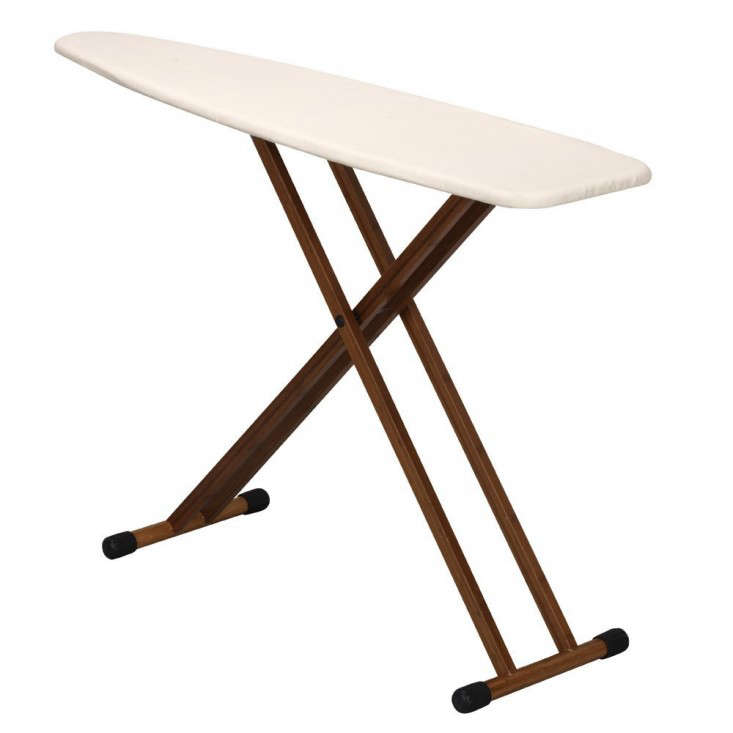
An ironing board rarely inspires dramatic conversation. Nobody unveils one at a party while guests gasp andn ironing from a wobbly, wrist-straining chore into a surprisingly efficient part of garment care. The Household Essentials Fibertech Top Ironing Board was designed with that quieter kind of usefulness in mind.
This full-size ironing board combines a plant-fiber composite pressing surface, bamboo legs, a padded cotton cover, and a folding metal lock. Its materials give it a warmer, more furniture-like appearance than the typical gray steel ironing board. More importantly, its 14-by-54-inch surface provides enough room for shirts, pants, dresses, table linens, and everyday sewing projects. The original product was marketed under item number 801454-1 and positioned as a more environmentally thoughtful alternative to boards using conventional plastic-based tops. use this is now best regarded as a legacy model, availability may vary among remaining inventory, resale listings, and specialty retailers. Buyers should verify the model number and specifications instead of assuming that every Household Essentials product using the word “FiberTech” is identical. On some newer boards, FiberTech refers to the heat-resistant cover and pad rather than the original plant-fiber board top.
Quick Verdict
The Household Essentials Fibertech Top Ironing Board is most appealing to shoppers who want a traditional full-size board with natural-looking materials and a simple, uncluttered design. Its long surface works well for routine garment pressing, while the bamboo legs make it visually more attractive than many utility-room alternatives.
Its strengths are straightforward: a generously sized surface, a cotton cover, useful padding, stable-looking bamboo supports, and a folding mechanism that does not attempt to turn laundry day into a space-shuttle launch. Its potential weaknesses are equally practical. It lacks the oversized iron rest, laundry rack, electrical outlet, and accessory tray found on some premium modern ironing stations. Replacement parts may also be harder to locate because the original model is no longer widely displayed in current mainstream catalogs.
Household Essentials Fibertech Top Ironing Board Specifications
| Product type | Full-size freestanding ironing board |
|---|---|
| Model | 801454-1 |
| Ironing surface | Approximately 14 inches wide by 54 inches long |
| Top material | Fibertech plant-fiber composite surface |
| Leg material | Bamboo, approximately 35 millimeters by 20 millimeters |
| Cover | Fitted cotton cover |
| Padding | Installed fiber pad |
| Storage mechanism | Folding legs with a metal locking component |
| Best suited for | Shirts, pants, dresses, household linens, and light sewing |
What Makes the Fibertech Top Different?
A Pressing Surface Made From Plant-Fiber Waste
The feature that originally distinguished this Household Essentials ironing board was its Fibertech top. According to the product’s launch information, the composite surface was made with natural plant-fiber waste associated with materials such as rice, wheat, bamboo, and sugar cane. It was promoted as a biodegradable alternative to conventional ironing-board tops that relied more heavily on plastic-derived materials. does not mean the entire board can be tossed into a compost pile between the tomato plants. The product also contains a metal lock, fabric, padding, and other components that would need to be separated and handled appropriately. Still, using agricultural byproducts for the main pressing platform was a meaningful design idea, particularly when the model was introduced.
The Fibertech top also offers a smooth, uninterrupted shape beneath the padding. This matters because a board with obvious ridges, broken mesh, or uneven support can transfer unwanted patterns into thin fabric. A well-padded continuous surface gives cotton shirts and lightweight garments a more uniform foundation.
Bamboo Legs Add Warmth and Character
Most ironing boards look as though they were designed by someone who deeply admires scaffolding. The Fibertech board takes a different route. Its bamboo legs soften the industrial appearance and make the board easier to leave visible in a laundry room, sewing room, guest room, or neatly organized closet.
Bamboo is not included merely for decoration. Properly constructed bamboo components can provide good rigidity without making a household item feel excessively heavy. The legs are sized to create a conventional folding stance, while the metal lock is intended to hold the board securely when opened and help control it during storage. Product descriptions list the bamboo leg dimensions at approximately 35 millimeters by 20 millimeters. ith any folding board, stability depends on proper setup. The legs should be fully opened, the lock should engage correctly, and all feet should rest on a reasonably level floor. Even an attractive bamboo frame cannot negotiate peace with a badly sloped tile floor.
Cotton Cover and Fiber Padding
The original board includes a cotton cover over an installed fiber pad. Cotton remains a popular ironing-board-cover material because it handles heat well, provides a familiar fabric surface, and can offer smooth iron movement when properly fitted. Independent ironing-board evaluations commonly prioritize a taut cover, sufficient cushioning, heat resistance, and the absence of noticeable frame impressions beneath the fabric. ing is more important than it first appears. If it is too thin, the user may feel the hard board underneath and may create unwanted pressure marks. If it is excessively soft, sharp creases become more difficult to press. The goal is supportive cushioning rather than the ironing equivalent of a pillow-top mattress.
Size and Everyday Usability
At approximately 54 inches long and 14 inches wide, the Household Essentials Fibertech Top Ironing Board falls within the traditional full-size category. Testing publications generally describe standard ironing surfaces as being roughly 15 inches wide and at least 49 inches long, making this model slightly narrow by some modern standards but comfortably long enough for routine garment care. ssing Shirts
The tapered nose is useful when ironing dress shirts. A shoulder section can be slipped over the narrow end, reducing the need to bunch fabric awkwardly in the middle of the board. The full length provides room to reposition the shirt front, back, sleeves, and collar without constantly dragging the board across the room.
A stable full-size board is particularly helpful when pressing button plackets and side seams. Instead of balancing half the shirt over a tabletop mat, the user can spread the fabric flat and work in sections. Consumer garment-care guidance similarly recommends using the narrow end for shoulders and the wider portion for larger shirt panels. ning Pants and Dresses
The 54-inch length accommodates most pant legs in one or two placements. For tailored pants, the user can align the seams, smooth the fabric, and create a deliberate crease without having the waistband fall immediately onto the floor.
Dresses require more repositioning, but the long surface still offers better support than a compact tabletop board. The tapered nose can assist with bodices, armholes, and narrow garment sections, while the middle area supports skirts and broader fabric panels.
Handling Sheets and Table Linens
The board is usable for pillowcases, table runners, napkins, and smaller tablecloths. Full-size sheets will still require folding and rotating because no conventional 14-inch board is secretly a banquet table. However, the long surface makes repeated sections easier to manage than they would be on a miniature board.
People who regularly press quilts, curtains, or extra-wide linens may prefer a modern wide-top board measuring 18 inches or more across. Wider boards reduce repositioning and provide more support for broad textiles. Current Household Essentials wide-top products, for example, are available with larger steel surfaces and built-in iron rests, though these are different designs from the original Fibertech plant-fiber model. am Performance
A steam iron works best when heat and moisture can move through the cover and padding without becoming trapped excessively. Manufacturers of steam-ironing equipment recommend using an ironing-board cover that permits steam flow. If too much moisture condenses beneath the cover, the surface may become damp and slow down the session. Fibertech board does not use the open steel mesh found on many current premium boards. That means heavy steam-generator users should watch for moisture accumulation, especially during long sessions. For ordinary household steam irons used intermittently, the cotton cover and fiber pad should provide a conventional pressing experience, assuming the pad remains dry, clean, and properly fitted.
After ironing, leave the board open until residual moisture has evaporated. Folding a damp cover into a dark closet is an excellent way to create a problem that smells far more interesting than it should.
Stability and Ergonomics
Stability is one of the most important qualities in an ironing board. Independent product testing typically evaluates wobble, resistance to tipping, ease of opening, height adjustment, iron-rest security, and the force required to move or collapse the board. Household Essentials Fibertech model uses a traditional folding-leg arrangement with a metal locking mechanism. Its bamboo construction gives it a different feel from a four-leg steel platform, but the same setup principles apply. All legs must be fully extended, and the board should not be used if the lock is bent, loose, or only partially engaged.
One limitation is that archived descriptions do not emphasize a broad range of height settings. Users who are unusually tall, prefer seated ironing, or need precise ergonomic positioning should confirm the actual adjustment range before purchasing. Modern boards frequently advertise multiple preset heights because proper working height reduces shoulder elevation and unnecessary bending.
A good rule is to set the board near hip level or slightly below the elbow when standing. The user should be able to move the iron across the fabric without raising the shoulder or bending deeply at the waist.
Advantages of the Household Essentials Fibertech Ironing Board
Distinctive, Natural Appearance
The bamboo frame and neutral cover look calmer and more residential than a typical exposed metal board. This is useful in apartments, sewing rooms, or multipurpose spaces where the board may remain visible between uses.
Full-Length Pressing Surface
The 54-inch top offers enough length for most clothing, including shirts, slacks, skirts, and dresses. It provides significantly more working room than a tabletop board or ironing mat.
Thoughtful Material Selection
The use of agricultural plant-fiber waste in the original Fibertech top was an unusual environmental design choice. While it does not make every component biodegradable, it reduces reliance on a fully plastic pressing platform.
Cotton Contact Surface
A cotton cover is familiar, heat tolerant, and suitable for detailed pressing. It also provides a less slippery surface than some highly reflective synthetic covers.
Simple Folding Design
There are no electrical cords, built-in fans, moving accessory trays, or complicated attachments. The board opens, supports fabric, folds, and returns to storage. Sometimes competence is more valuable than a board that needs its own instruction seminar.
Potential Drawbacks
No Built-In Iron Rest
The original bamboo-leg model is generally described without a large integrated iron rest. Users may need to stand the iron upright on the board or place a separate heat-safe rest nearby. A dedicated iron rest can improve convenience and reduce the chance of accidentally leaving the hot soleplate against the cover.
Not Extra Wide
Fourteen inches is adequate for clothes but less efficient for broad linens, quilting fabric, curtains, and large sewing projects. Frequent crafters may prefer a rectangular or wide-top pressing station.
Legacy Product Availability
The model appears mainly in archived product pages and occasional resale inventory. Buyers may encounter new-old-stock units, used products, replacement covers, or listings that reuse similar FiberTech terminology. Confirm the model number, condition, dimensions, cover type, and locking mechanism before placing an order.
Replacement Cover Compatibility
A replacement cover should be sized for a 14-by-54-inch ironing surface and should tighten evenly around the tapered nose and rear edge. A loose cover can bunch beneath the iron, while an undersized cover can expose padding or place unnecessary tension on the seams.
Who Should Consider Buying It?
This Household Essentials ironing board is a suitable match for people who iron conventional clothing several times a month, appreciate natural materials, and want a full-size surface without a complicated built-in workstation.
It may also appeal to vintage-home enthusiasts, environmentally conscious shoppers, light sewing hobbyists, and people who dislike the appearance of standard metal boards. Its understated construction can fit into farmhouse, Scandinavian, transitional, or minimalist laundry spaces without looking like it escaped from a hotel supply closet.
It is less ideal for professional sewists, heavy steam-generator users, commercial laundry work, or households that routinely press king-size bedding. Those users are more likely to benefit from a wider ventilated steel platform, reinforced frame, integrated iron rest, and extensive height adjustment.
Setup, Use, and Maintenance Tips
Inspect the Lock Before Every Session
Open the board fully and confirm that the metal lock is engaged. Gently press the surface before placing a hot iron on it. Any unexpected folding, twisting, or movement means the board should be taken out of service until repaired.
Keep the Cover Tight
Smooth the cotton cover before heating the iron. Tighten any drawstrings, elastic edges, or fasteners. Wrinkles in the cover can transfer into lightweight fabric and make precise pressing frustrating.
Use the Garment Care Label
Temperature should be selected according to the garment, not according to how determined the user feels. Delicate synthetics generally require lower heat, while cotton and linen can tolerate higher temperatures when their care labels permit it.
Let Moisture Evaporate
After using steam, leave the ironing board open until the cover and pad feel dry. This helps prevent odors, trapped moisture, and premature deterioration.
Clean the Iron Separately
Residue on the soleplate can transfer to the cotton cover and then to clothing. Routine iron care, including emptying the water reservoir when recommended and cleaning buildup according to the manufacturer’s directions, helps protect both garments and the board. ealistic Ownership Experience
The following scenario-based assessment reflects the product’s documented design and common household ironing routines rather than a claim of personal laboratory testing.
The first thing most owners are likely to notice is that the Household Essentials Fibertech Top Ironing Board does not look especially mechanical. The bamboo legs give it a warmer presence, which sounds like a minor benefit until the board spends three days standing in a guest room because nobody feels like folding it. A conventional gray frame tends to announce unfinished chores. Bamboo can almost pass as intentional decor, provided nobody looks too closely at the shirt hanging from one end.
Opening the board should feel familiar to anyone who has used a traditional folding model. The legs swing outward, the frame rises, and the metal lock secures the working position. Because this is an older design, an owner should resist the temptation to open it with one dramatic flourish. A slower setup provides time to confirm that the lock has engaged and that the bamboo components show no splitting, looseness, or previous damage.
For a weekly batch of two dress shirts and a pair of pants, the 54-inch surface is practical. A shirt back can be spread across the broad middle section, while the tapered end supports shoulder panels. The board’s cotton cover provides enough grip to keep fabric from sliding wildly with every pass. That controlled movement is useful when pressing collars and cuffs, where accuracy matters more than speed.
The fiber pad should make the board feel firmer than a thick foam platform but softer than an uncovered composite surface. On a well-preserved unit, the iron glides over the cotton cover without obvious hard spots. On an older or heavily used board, however, compressed padding may reveal the shape of the top underneath. Replacing the pad or adding a properly fitted underlay can restore a smoother pressing surface.
Pants are relatively easy to manage. One leg can be aligned along the length of the board, pressed in sections, and shifted without repeatedly pulling fabric off the floor. Creating a front crease requires moderate pressure, and the firm top should provide useful resistance. The narrow width is not a major disadvantage for pants because most trouser legs fit comfortably within the surface.
Large tablecloths create a less graceful experience. The 14-inch width requires repeated folding, rotating, and repositioning. The board can complete the job, but it will not make the user feel like the ruler of a highly efficient laundry kingdom. A modern 18-inch wide-top model would reduce the number of movements for oversized fabric.
Steam use is comfortable for short sessions, particularly when the iron releases moderate bursts instead of producing continuous clouds. During a longer linen session, moisture may collect within the cotton cover and fiber pad. The practical response is simple: reduce excessive steam, allow fabric to dry between sections, and leave the board open afterward.
Storage is where the board’s uncomplicated structure becomes helpful. Once cool and dry, it can be folded into a relatively slim profile and placed against a closet wall. The bamboo legs may be less tolerant of careless impacts than heavy steel tubing, so the board should not be repeatedly dropped behind a washing machine or used as a shield during household disputes over missing socks.
Over time, the most likely maintenance tasks involve the cover, padding, feet, and lock. The cover may become stained or lose tension. The padding may flatten. Protective caps may wear down. The lock may collect lint or become stiff. None of these issues is unusual for an ironing board, but replacement compatibility matters more with a legacy model. Owners should measure the top carefully rather than ordering a cover based only on a product photograph.
Overall, the experience is likely to be pleasantly traditional. This is not an ironing center built for commercial tailoring. It is a quiet household tool designed to support regular clothing care with fewer synthetic-looking materials and a more attractive frame. For someone who irons shirts, pants, pillowcases, and occasional sewing pieces, it offers enough surface area without dominating the room. Its charm lies less in advanced features and more in making a basic chore feel organized, stable, and slightly less industrial.
Final Assessment
The Household Essentials Fibertech Top Ironing Board remains an interesting example of practical household design. Its combination of a plant-fiber composite top, bamboo legs, cotton cover, fiber padding, and full-length surface distinguishes it from basic metal boards. It is especially appealing to shoppers who value natural-looking materials and straightforward function.
Buyers should approach it as a legacy product rather than a current standardized line. Inspect used units carefully, verify model 801454-1, measure the surface, and confirm that the folding lock is secure. Those who need an integrated iron rest, extensive height adjustment, maximum steam ventilation, or an extra-wide pressing area should consider a newer steel mesh workstation instead.
For ordinary garment care, however, the Fibertech board delivers the essentials: a useful surface, supportive padding, a foldable frame, and enough personality to prove that even an ironing board can avoid looking completely bored.
SEO Information
Note: Product availability, packaging, cover design, and specifications may vary because the original Fibertech model is commonly found through archived or resale listings. Verify the model number and measurements before purchasing.