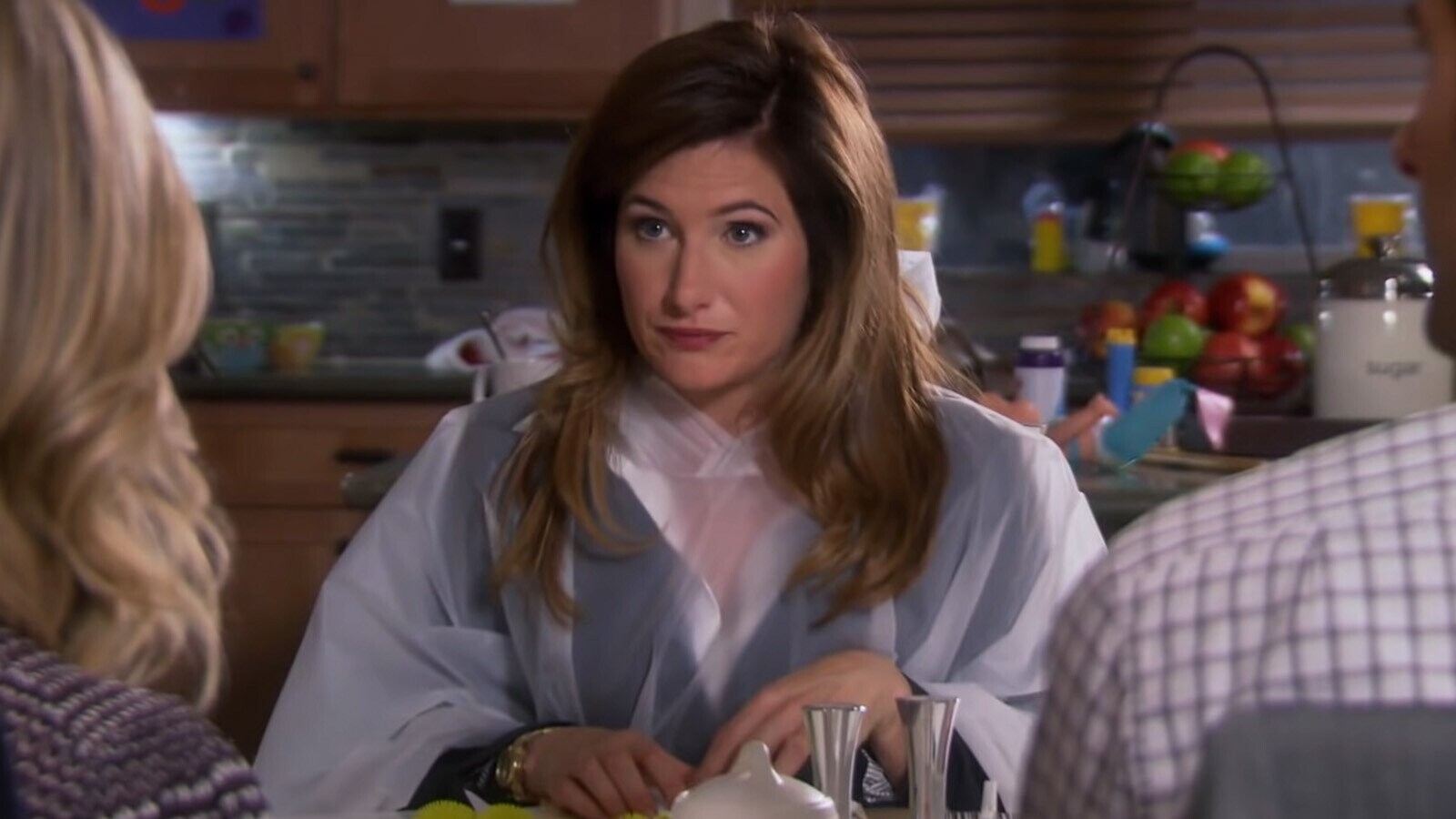
Some TV jokes arrive with fanfare. They get a big setup, a dramatic pause, and the kind of editing that practically screams, “Please turn me into a GIF.” And then there are the jokes that sneak in sideways, wearing a plastic poncho and acting like they own the room. That is exactly what happened with one of Parks and Recreation’s most replayed, re-quoted, and internet-beloved moments: Jennifer Barkley’s gloriously ridiculous “PONCHO!” reveal.
It is the kind of joke that feels too weird, too precise, and too confident to have been built in a conference room. Turns out, that instinct was right. Kathryn Hahn later explained that the now-iconic bit was improvised while filming, tossed in partly to amuse the people on set. Which, in hindsight, makes perfect sense. The scene does not feel manufactured. It feels discovered. It feels like comedy catching lightning in a Tupperware container full of finger paint and political ambition.
That little detail matters because it explains why the moment has stayed alive long after Parks and Rec wrapped. The show was already excellent at writing specific characters, but the poncho bit is something even more special: proof that when a smart comedy creates the right world, a performer can add one spontaneous flourish and suddenly make meme history.
The Moment Everyone Remembers
If you know the scene, you probably do not need a refresher. But it is worth revisiting why it lands so hard. Jennifer Barkley, the hyper-competent political consultant played by Kathryn Hahn, shows up at Ben and Leslie’s house dressed in protective plastic like she is entering a hazardous materials lab instead of a family home. Why? Because, in Jennifer’s view, children are basically adorable biohazards with sticky hands.
Then the payoff arrives. One of the kids rushes through with paint, chaos erupts for half a second, and Jennifer springs up to present her masterpiece of self-preservation: the poncho. She announces it with the triumphant flair of a runway model unveiling a couture collection no one else was advanced enough to understand. It is not just funny because she says the word. It is funny because she says it as if she has just solved parenting, sanitation, and civilization itself.
That is the core of the joke. Jennifer is not merely avoiding mess. She is taking a victory lap over having correctly predicted mess. The poncho is less outerwear and more a tiny monument to her worldview.
Why Jennifer Barkley Was Built for Meme Greatness
Jennifer Barkley was never a main cast member, yet she made the kind of impression most recurring characters would sell several ethically questionable campaign contracts to achieve. The reason is simple: she arrived on Parks and Rec fully formed. Jennifer was sharp, wealthy, aloof, and terrifyingly efficient. She did not share Leslie Knope’s starry-eyed belief in public service. She treated politics like elite-level problem solving with better tailoring.
That contrast made her instantly memorable. Leslie cares about everything. Jennifer cares about results, convenience, and possibly a decent martini. Leslie runs on civic faith. Jennifer runs on professional detachment and killer timing. Put those energies in the same frame, and sparks fly.
The poncho bit distills Jennifer down to her purest essence. She is not warm, but she is observant. She is not maternal, but she is prepared. She is not sentimental, but she is funny in that lethal, dry, I-have-already-outsmarted-this-room way that Kathryn Hahn can play better than almost anyone. The poncho does not just get a laugh; it tells the whole story of who Jennifer Barkley is.
That is a big reason the moment became so meme-friendly. Great memes are not random. They are concentrated character. A reaction image or quote survives online when it captures a recognizable attitude in one burst. Jennifer’s poncho scene communicates a whole emotional philosophy: boundaries, disdain, self-protection, and the satisfaction of being right. That is internet catnip.
Why the Improvisation Worked So Well
It was specific, not generic
Improvised comedy often fails when it tries to be bigger instead of sharper. The poncho bit works because it is absurdly specific. Not a vague complaint about children. Not a broad, wacky scream. A poncho. A plastic shield against domestic stickiness. That level of specificity gives the joke texture. You can see it, hear it, and instantly understand the kind of person who would wear one into a family home.
It honored the character
The ad-lib does not feel like Kathryn Hahn breaking the show’s reality for a cheap laugh. It feels exactly like something Jennifer would do. That is the gold standard for improvisation in a scripted series. The line does not say, “Look at me, I’m improvising.” It says, “Of course Jennifer Barkley would treat child-related mess like an avoidable geopolitical crisis.”
It added rhythm to the scene
Comedy is timing, but timing is not just speed. It is contrast. The scene is already humming along with domestic clutter and Jennifer’s discomfort. Then comes the sudden physical flourish, the arm movement, the declaration, the tiny moment of self-congratulation. The joke lands like a cymbal crash at exactly the right place in the musical phrase.
It made the cast laugh first
That may be the most important ingredient of all. Some of the best sitcom moments survive because they amused the people making them before they ever reached the audience. You can almost feel that energy in the scene. It has the charged, delighted strangeness of a take where everyone realizes, mid-moment, that something unusually good just happened.
Parks and Rec Knew How to Use Improv Without Leaning on It
There is a lazy myth about beloved workplace comedies that everything funny must have been improvised. In reality, the smartest sitcoms are usually the opposite. They are tightly written, then flexible enough to let great performers decorate the architecture.
That was one of Parks and Rec’s secret weapons. The show’s writing was polished enough to stand on its own, but the cast was talented enough to give scenes extra sparkle once the essentials were locked in. In other words, the script built the road, and the performers occasionally got to drift a little on the corners. Not enough to crash the car. Just enough to make the ride memorable.
The poncho moment is a perfect example of that balance. It works because the character dynamics, setting, and premise are already strong. Jennifer hates kid chaos. Ben and Leslie’s home is full of kid chaos. The scene does not need improvisation to function. But the improvisation turns a good scene into a tiny piece of comedy folklore.
That distinction matters because it explains why the joke aged so well. It is not a random blooper that fans decided to adopt. It is a character-perfect embellishment in a scene that was already doing its job. The ad-lib did not rescue the material. It crowned it.
How a Tiny Joke Became a Long-Term Meme
Not every funny line becomes a meme, and not every meme deserves to survive longer than a carton of milk in Pawnee. So why did this one stick?
First, it is visual. The poncho itself is funny before Jennifer even opens her mouth. In the age of looping video clips, visual comedy has a built-in advantage. Second, it is quotable. “Poncho!” is clean, short, and weirdly versatile. It can be used to signal preparedness, emotional distance, parental exhaustion, or just a desire not to get dragged into someone else’s sticky disaster.
Third, it reflects a modern social feeling. One reason people keep sharing Jennifer Barkley is that she expresses the kind of hyper-specific, slightly selfish honesty that many comedies smooth over. She is not pretending children are magical in every context. She is not lying about her discomfort. She is simply saying, with ruthless elegance, “I saw this mess coming, and I dressed accordingly.”
Online culture loves that kind of honesty. It is why Jennifer has become more than a side character. She is a reaction. A mood. A spiritual resource for anyone who has ever visited a friend’s house and silently wondered whether the couch was sticky before they sat down.
The Funniest Part Is That the Joke Also Deepens the Show
One reason Parks and Rec remains so rewatchable is that it was never just a machine for punchlines. Beneath all the waffles, cones, tiny horses, and lovingly weaponized bureaucratic nonsense, the show cared about people. Even recurring characters got clear points of view.
The poncho scene is hilarious, but it also sharpens the series’ portrait of adulthood. Ben and Leslie’s life is loving, meaningful, and chaotic. Jennifer’s life is polished, mobile, and gloriously child-free. The show does not really punish either version. It just lets them clash. The comedy comes from the collision of lifestyles, not from declaring one of them morally superior.
That is another reason the joke keeps circulating. It is not only funny; it represents a recognizable social contrast. Domestic mess versus professional polish. Family tenderness versus personal control. Sticky reality versus strategic plastic outerwear. Good comedy can turn big cultural conversations into one perfect image. This scene does exactly that.
Kathryn Hahn’s Performance Is the Whole Engine
Let’s be honest: not every actor could make this work. The line on paper is a noun. A waterproof noun, sure, but still a noun. Kathryn Hahn turns it into a full meal. She gives the moment posture, rhythm, arrogance, delight, and the exact amount of theatricality required to push it into greatness without toppling into sketch-comedy chaos.
That has always been Hahn’s gift. She can play people who are outrageous without making them feel fake. Jennifer Barkley is heightened, but she is never a cartoon. You believe she exists. You believe she has opinions about dry cleaning. You believe she has a preferred car service. And you absolutely believe she would treat a child’s paintbrush like an incoming weather event.
In that sense, the improvisation is not just a happy accident. It is the result of a performer who understands tone so well that she can add something spontaneous without breaking the world around her. That is what separates classic sitcom improv from random on-set chaos. It still has craft in it. A lot of craft, actually. It just happens to be wearing a poncho.
Why Fans Keep Coming Back to It
Fans revisit old comedy moments for different reasons. Sometimes it is nostalgia. Sometimes it is comfort. Sometimes it is because the modern internet has the attention span of a squirrel in a laser-pointer store and short clips are easier to share than full episodes. But the best reason is this: a great joke reveals something new every time.
On first watch, Jennifer’s poncho bit is funny because it is unexpected. On rewatch, it becomes funnier because you understand how perfectly it fits her. Later still, it becomes funnier because you start noticing all the machinery behind it: the setup, the movement, the confidence, the fact that the word itself should not be that funny and yet somehow becomes hilarious in her mouth.
That is the mark of durable TV comedy. The laugh does not shrink with familiarity. It gets richer. Like waffles. Or friendships. Or Ben Wyatt’s commitment to nerd culture. Some jokes burn bright and disappear. This one keeps finding new oxygen.
Experiences Related to the Topic: Why This Scene Feels So Familiar in Real Life
Part of the reason the improvised “PONCHO!” moment keeps resonating is that it mirrors a very real human experience: walking into a situation and instantly knowing you are either overdressed, underdressed, or emotionally unequipped for what is about to happen. Almost everyone has had some version of a Jennifer Barkley moment, even if they did not accessorize with translucent plastic.
Think about visiting friends who recently had kids. You arrive with good intentions, maybe a dessert, maybe a decent bottle of wine, maybe the dangerous confidence of someone wearing white. Within three minutes, there is a toy under your shoe, an applesauce pouch on the coffee table, a mystery smear on the arm of the couch, and a small child sprinting by with the energy of a caffeinated raccoon. Suddenly Jennifer’s poncho stops feeling exaggerated. It starts feeling like best practice.
There is also the workplace version of this experience. Every office has moments when one person clearly anticipated chaos before everyone else did. They brought the backup charger, the printed copies, the pain reliever, the stain stick, or the “I already fixed the spreadsheet” energy. They may not literally stand up and yell “poncho,” but spiritually, they absolutely do. The triumph is the same. Preparedness becomes performance.
The scene also captures the experience of watching comedy in a group and feeling a joke hit the room in waves. Some laughs are immediate. Others spread as people process what just happened. The poncho bit belongs to that second category. First comes the visual recognition. Then comes the word. Then comes the realization that Jennifer is somehow proud of this choice in the most theatrical way possible. That layered reaction is part of why the clip works so well in rewatch culture. It rewards repeated viewing because the timing keeps unfolding.
Another related experience is internet-era rediscovery. A lot of fans did not first encounter the poncho scene during its original broadcast. They found it later in clips, compilations, memes, captions, and reaction videos. That changes the experience in an interesting way. Instead of meeting Jennifer Barkley through the full arc of the show, many people meet her through concentrated charisma. They see one clipped moment and instantly understand the character. That is rare. Usually, sitcom personalities need buildup. Jennifer can introduce herself in one waterproof flourish.
Then there is the strangely satisfying experience of seeing an improvised joke become part of a show’s legacy. Fans love learning that a favorite line was not over-engineered. It makes the scene feel more alive. More human. More like lightning that happened to strike while the cameras were rolling. In an entertainment landscape where audiences are increasingly aware of how much work goes into every beat, there is something refreshing about hearing that a classic moment was born from playfulness and trust.
Maybe that is the deepest reason people hold onto this scene. It represents the joy of comedy as discovery. Not just performance, but discovery. A set full of professionals, a strong script, a character with a crystal-clear point of view, and then one performer adding a tiny piece of chaos that suddenly becomes unforgettable. That is the experience fans respond to, whether they know it consciously or not. The joke feels alive because, in a way, you can still sense the moment it came into existence.
Conclusion
One of the funniest things about Jennifer Barkley’s “PONCHO!” moment is how small it is. It is not a season finale twist. It is not a giant romantic speech. It is not even a long joke. It is a single improvised flourish in the middle of a scene about family mess and political lives. And yet it endures because comedy does not always need size. Sometimes it just needs precision, character, and a performer who knows exactly how far to push a bit.
That is what happened here. Parks and Recreation created the environment. Kathryn Hahn supplied the spark. The internet did the rest. Years later, the moment still works because it captures something beautifully ridiculous and weirdly true: no matter how prepared you are for life, someone is always about to run past you with wet paint. The only question is whether you brought the poncho.