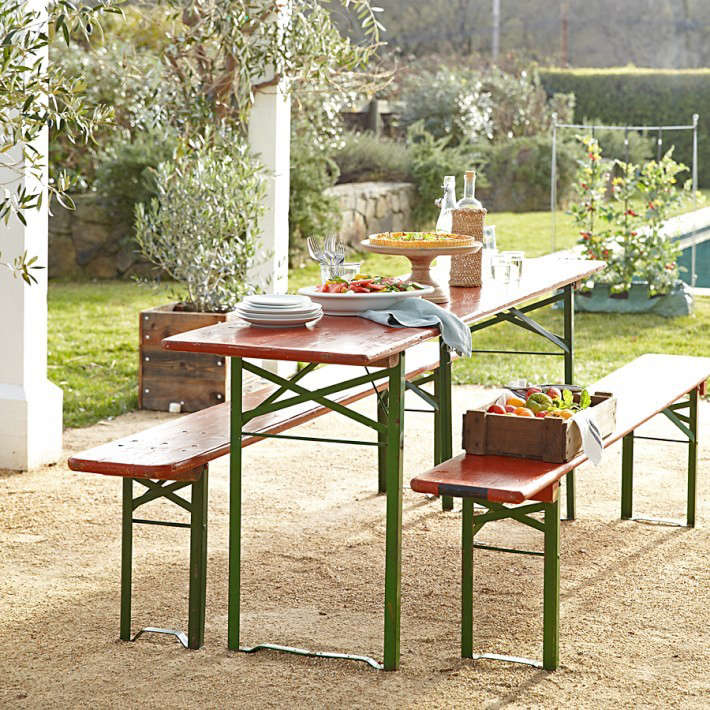
A vintage biergarten table is the rare piece of furniture that can make a backyard feel like a Bavarian courtyard, a tiny balcony feel like a neighborhood gathering spot, and a casual dinner feel as if someone should be arriving with pretzels the size of hubcaps. Practical, charming, and wonderfully unfussy, this long folding table-and-bench setup has earned its place in patios, gardens, breweries, farmhouses, event spaces, and homes where “come over for a quick drink” somehow becomes a six-hour dinner.
The classic biergarten table is simple: a narrow wooden tabletop, two matching benches, and folding metal legs that tuck flat when the party is over. But simplicity is exactly the magic. Unlike oversized patio dining sets that demand a dedicated zip code, a vintage beer garden table works hard without acting precious. It welcomes muddy shoes, paper plates, linen runners, grilled sausages, children with sticky fingers, and adults who insist they “only want a small pour.” Sure, Gary. We believe you.
This guide explores what makes a vintage biergarten table special, how to choose one, where it fits best, how to style it, and how to care for it so it continues serving good food, good drinks, and questionable jokes for years.
What Is a Vintage Biergarten Table?
A vintage biergarten table, sometimes called a German beer garden table or Oktoberfest table and bench set, is a long rectangular table traditionally paired with two benches. The most recognizable versions feature painted or stained wood tops and benches mounted on sturdy folding metal frames. Many vintage examples were used in German beer gardens, festivals, breweries, outdoor halls, or public gathering spaces before finding second lives in American homes and design shops.
Most authentic or vintage-style sets are built for communal seating. That means no assigned throne at the head of the table, no awkward corner chair, and no one pretending they are “too far away” to pass the mustard. Everyone sits shoulder to shoulder. That communal shape is the whole point.
Common Features
- Long, narrow wooden tabletop
- Two matching folding benches
- Metal legs or steel frames, often painted green, black, gray, or red
- Fold-flat construction for storage
- Painted, stained, or naturally aged wood with visible patina
- Indoor-outdoor flexibility
Vintage sets often show signs of real use: scuffs, worn paint, dents, darkened wood grain, and the kind of surface marks that say, “I have hosted more interesting conversations than your average coffee table.” For collectors and decorators, that lived-in character is not a flaw. It is the feature.
A Quick History: From Bavarian Beer Gardens to Backyard Dining
The biergarten tradition traces back to Bavaria, where brewers stored beer in cool cellars and planted broad-leafed trees to help shade the ground. Eventually, tables and benches appeared above those cellars, and people gathered outdoors to drink, eat, talk, and enjoy the shade. The formula was beautifully practical: cool beer, simple food, shared tables, and a relaxed atmosphere.
German immigrants later brought beer garden culture to the United States, where outdoor beer halls and family-friendly gathering places became part of social life in cities with strong German communities. Historic American beer gardens helped shape the way people thought about public dining: less formal than a restaurant, more sociable than a tavern, and much more cheerful than eating indoors under suspicious fluorescent lighting.
The table design followed the culture. Long communal tables made sense because they seated many people efficiently, encouraged conversation, and could be moved or stored when needed. The folding metal-leg design became especially useful for festivals, seasonal gardens, breweries, weddings, and outdoor events. In other words, the biergarten table was portable long before “flexible living” became a phrase used by people selling $900 storage baskets.
Why Vintage Biergarten Tables Are Popular Again
The renewed popularity of the vintage biergarten table comes from a happy collision of design trends: outdoor entertaining, rustic European style, flexible furniture, sustainability, and the growing love for pieces with history. A vintage table offers what many new patio sets try very hard to fake: authenticity.
They Are Built for Gathering
A biergarten table does not whisper, “Please admire me from across the room.” It says, “Sit down, scoot over, there is room for one more.” That quality makes it perfect for casual dinners, birthday parties, crab boils, garden lunches, craft nights, brewery patios, and holiday overflow seating.
They Save Space
Because the legs fold flat, many vintage biergarten tables can be stored against a wall, in a garage, under a porch, or in a shed. This makes them useful for smaller homes, seasonal patios, rental properties, and anyone who loves entertaining but does not want a permanent dining table dominating the yard year-round.
They Bring Instant Character
New furniture can be beautiful, but vintage furniture arrives with a backstory. Chipped paint, rubbed edges, and aged pine create texture that designers spend entire mood boards trying to reproduce. A vintage beer garden table looks equally at home beside a farmhouse, on a city terrace, under string lights, or in a modern kitchen that needs a little warmth.
Materials and Construction: What to Look For
When shopping for a vintage biergarten table and bench set, pay close attention to materials. These tables are simple, but their strength depends on the quality of the wood, frame, hinges, and hardware.
Wood Tops and Benches
Many traditional biergarten tables use pine or similar softwoods. Pine is relatively light, easy to work with, and comfortable for folding furniture. Vintage tops may be painted in red, green, yellow, orange, brown, or natural wood tones. Some newer premium versions use harder outdoor woods such as robinia, acacia, or teak-inspired materials, but the most recognizable vintage German sets often have painted wooden slats or solid plank tops.
Look for wood that feels sturdy rather than spongy. Small scratches and worn paint are normal. Deep rot, severe warping, soft spots, or structural cracks are not charming; they are invoices waiting to happen.
Metal Frames
The folding frame is usually steel or another metal. Check for rust, bent supports, loose hinges, missing bolts, and wobbling. Surface rust can often be cleaned and sealed, but structural corrosion near joints deserves caution. A good frame should open and close smoothly, lock securely, and hold weight without dramatic creaking. A little squeak is vintage. A loud metallic scream is a cry for help.
Size and Seating
Classic full-size beer garden tables are often around seven feet long, give or take, and roughly 20 inches wide. Some versions are wider, shorter, or custom-made. A typical set can seat six to eight adults, depending on bench length and how cozy everyone is willing to become. For American patios, measure carefully. The table itself may be narrow, but guests need room to step over benches, sit comfortably, and avoid performing yoga every time someone wants another bratwurst.
Vintage vs. Reproduction Biergarten Tables
Both vintage and reproduction biergarten tables have advantages. The best choice depends on whether you value age, convenience, budget, or absolute consistency.
Choose Vintage If You Want Character
A true vintage set is ideal if you love patina, old-world charm, and one-of-a-kind details. No two are exactly alike. Paint colors may be faded. Edges may be worn smooth. You might find old festival marks, repairs, or mismatched hardware. These details give the table soul.
Choose Reproduction If You Want Predictability
Modern reproductions often offer cleaner finishes, consistent sizing, stronger warranties, and easier bulk ordering. They are excellent for restaurants, breweries, wedding venues, and homeowners who want the look without hunting through vintage marketplaces. Many new German-style beer table sets still use the same practical formula: wood surfaces, folding frames, and matching benches.
Where to Use a Vintage Biergarten Table
One of the best things about a vintage biergarten table is its flexibility. It can be dressed up, dressed down, moved around, and stored when not needed.
Backyard Dining
Under a tree or pergola, a biergarten table creates an instant outdoor dining room. Add simple plates, a pitcher of lemonade, grilled vegetables, and a few candles, and the setup feels intentional without becoming fussy.
Porches and Patios
Because the table is narrow, it can work well on long patios and covered porches. Just be sure to leave enough room behind the benches. Guests need space to sit, stand, and gracefully escape when Uncle Mark starts explaining cryptocurrency again.
Indoor Dining Rooms
A vintage beer garden table can also work indoors, especially in casual kitchens, sunrooms, mudrooms, and creative studios. Pair it with cushions or sheepskins for comfort. In a modern space, the rustic table adds contrast. In a farmhouse space, it looks like it has been there forever.
Events and Entertaining
For weddings, Oktoberfest parties, pop-up dinners, school events, and backyard celebrations, biergarten tables are practical heroes. They seat many guests, photograph beautifully, and fold away afterward. The benches also prevent the classic event problem of someone stealing all the good chairs for one table.
How to Style a Vintage Biergarten Table
A vintage biergarten table does not need much styling. In fact, overdecorating it can make it lose its easy charm. The goal is to enhance the table, not make it look as though it wandered into a catalog shoot and panicked.
Rustic Garden Style
Use linen runners, enamelware plates, stoneware pitchers, potted herbs, and small jars of wildflowers. Keep the palette natural: cream, green, terracotta, faded red, and warm wood tones.
Modern European Style
Pair the table with black metal lanterns, simple glassware, striped cushions, and matte ceramic serving bowls. The contrast between old wood and clean accessories feels fresh but not forced.
Oktoberfest-Inspired Style
For a festive look, use blue-and-white linens, pretzel boards, mustard pots, sausages, roasted chicken, and big shared platters. Just resist the urge to turn the table into a theme park. A little Bavarian cheer goes a long way.
Buying Tips: How to Choose the Right Vintage Beer Garden Table
Before buying, decide how you plan to use the table. A decorative indoor piece has different requirements than a workhorse outdoor set for weekly parties.
Check the Fold Mechanism
Open and close the legs if possible. They should move without sticking and lock firmly in place. Replacement hardware may be possible, but complicated repairs can quickly turn a bargain into a hobby.
Inspect the Benches
Benches take more stress than the tabletop. Sit on them. Wiggle slightly. Listen. A trustworthy bench says nothing. A suspicious bench makes noises like an old pirate ship.
Measure Your Space
Measure the table, benches, and the clearance around them. For dining comfort, leave walking room on both sides. If you plan to use the table on a balcony, confirm weight limits and storage space.
Understand Shipping Costs
Vintage biergarten tables are long, heavy, and awkward to ship. A set that looks affordable online may come with freight costs that make your wallet sit down quietly. Local pickup can be a major advantage.
How to Clean and Care for a Vintage Biergarten Table
Good care keeps the table useful without erasing its character. The goal is preservation, not making a vintage piece look factory-new.
Routine Cleaning
Wipe the wood with a damp cloth or mild soapy solution. Avoid harsh cleaners that strip paint or dry out old wood. For stubborn dirt, use a soft brush and work with the grain. Dry the table thoroughly after cleaning.
Protecting the Wood
If the table will live outdoors, consider a breathable cover, covered porch, or seasonal storage. Wood furniture can handle outdoor use, but constant moisture is the enemy. If rain soaks into the surface instead of beading, the wood may need a suitable outdoor finish, oil, or sealant depending on the existing coating.
Managing Patina
Do not sand away every mark unless you truly want a refinished look. Light sanding can smooth splinters, but aggressive sanding removes history. Chippy paint, rubbed corners, and old color layers are part of the vintage appeal.
Frame Maintenance
Keep metal hinges clean and dry. Tighten loose bolts. Treat rust early with gentle cleaning and appropriate metal protection. If repainting the frame, choose a finish suitable for metal and outdoor exposure.
Restoration Ideas Without Ruining the Charm
Restoring a vintage biergarten table is a balancing act. Too little work and it may be unsafe. Too much work and it may look like a brand-new picnic table wearing a fake mustache.
Start with safety: tighten hardware, stabilize wobbly legs, smooth sharp splinters, and clean the surface. After that, choose a light-touch finish. You might wax an indoor table, apply a clear outdoor sealant, repaint only the metal frame, or refresh the underside while leaving the top beautifully worn.
If the tabletop is badly damaged, replacing one board can be better than refinishing the entire set. Use similar wood and color-match gently. Perfect matching is not necessary. Vintage furniture is allowed to have chapters.
Why Designers Love the Look
Designers often reach for vintage biergarten tables because they combine structure and softness. The long, linear shape creates order, while the worn wood relaxes the room. They also mix well with different styles: farmhouse, industrial, Scandinavian, garden rustic, modern country, and casual coastal.
In a backyard, the table becomes an anchor. In a dining room, it becomes a conversation starter. In a shop or studio, it can serve as a display surface, worktable, or communal desk. The benches tuck neatly beneath, which keeps the overall footprint visually light.
Experience Notes: Living With a Vintage Biergarten Table
The first thing you notice about living with a vintage biergarten table is that people behave differently around it. A regular dining table encourages people to claim a chair. A biergarten table encourages people to make room. Someone scoots left, someone squeezes in, someone passes a bowl, and suddenly the table is doing what it was built to do: turning separate people into one noisy, happy group.
In a backyard setting, the table is especially good at creating atmosphere without much effort. Set it under string lights and it instantly looks like you planned everything weeks in advance, even if you were still wiping pollen off the benches ten minutes before guests arrived. The narrow width keeps food within reach, which is surprisingly useful. Nobody has to stand up to grab the salad. Nobody needs a drone to deliver the bread. Platters move easily from hand to hand, and the meal feels shared rather than staged.
The folding feature becomes more valuable over time. At first, you may think, “Nice, it folds.” Later, after a storm warning, a garage cleanout, or a last-minute party, you realize folding furniture is not a minor feature. It is a lifestyle upgrade. Being able to collapse the table and benches means the set can disappear when the season changes or reappear when twelve people unexpectedly become “just a few friends.”
Comfort is the one area where expectations should be honest. A vintage biergarten bench is not a deep upholstered lounge chair. It is a bench. It supports you. It does not emotionally validate you. For longer dinners, cushions make a big difference. Thin outdoor pads, folded blankets, or sheepskins can soften the seat while preserving the casual look. The benches also encourage movement. Guests get up, refill drinks, wander to the grill, return with stories, and shift places. The furniture keeps the mood relaxed.
Maintenance becomes part of the rhythm. After a party, wipe spills before they settle. After rain, dry the surface. Before winter, clean the table and store it somewhere dry if possible. These small habits prevent bigger problems. A vintage table does not need pampering, but it does appreciate not being abandoned under a waterfall of gutter runoff from November to March.
The best part is how versatile the table becomes. It can host brunch one morning, seed trays the next week, a birthday dinner in July, and pumpkin carving in October. It can be rustic or refined depending on what you place on it. A linen runner and candles make it romantic. Enamel plates and grilled corn make it picnic-ready. A row of laptops turns it into a temporary workbench. A mountain of snacks turns it into the most popular place in the yard.
Over time, the marks become memories. A faint ring from lemonade. A scratch from a serving tray. A tiny paint chip from being folded too quickly. These are not disasters. They are proof of use. The entire appeal of a vintage biergarten table is that it does not ask life to be perfect before people gather. It simply opens, stands steady, and waits for the next round.
Final Thoughts
A vintage biergarten table is more than outdoor furniture. It is a practical piece of social architecture. Its long shape, folding frame, sturdy benches, and timeworn finish make it ideal for people who love flexible spaces and informal entertaining. Whether used in a backyard, brewery-inspired patio, farmhouse kitchen, garden party, or compact balcony, it brings people together with rare ease.
Choose carefully, inspect the frame, respect the patina, and care for the wood. Do that, and your vintage beer garden table will keep earning its keep through dinners, parties, projects, quiet coffees, loud birthdays, and all the little gatherings that make a house feel alive.
Note: This article was written in original American English and synthesized from real design, furniture marketplace, beer garden history, and outdoor furniture care information.