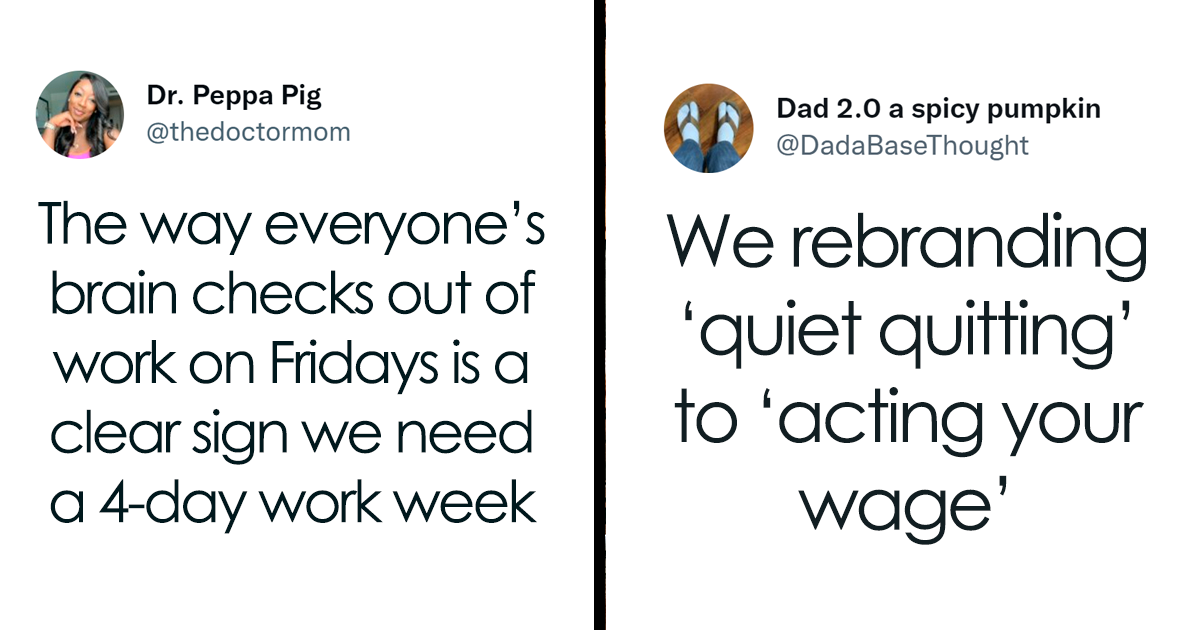
Work is where adults go to exchange their time, energy, and carefully controlled facial expressions for money. Sometimes the arrangement is fair. Sometimes it includes a decent manager, interesting projects, and coffee that does not taste like it was filtered through an old hiking boot.
Other times, work gives people an “urgent” meeting with no agenda, a customer who believes store policy is a personal attack, and a motivational email sent by an executive from a beach resort. When that happens, employees often take their frustrations to Twitter, where a miserable shift can be transformed into a one-line comedy special before the manager finishes saying, “We’re all family here.”
The funniest workplace tweets succeed because they contain recognizable truths. They expose pointless meetings, confusing job descriptions, low pay, unreasonable expectations, customer-service nightmares, remote-work contradictions, and corporate language that appears to have been assembled by a committee of cheerful robots.
The following 50 examples are original paraphrases inspired by common public conversations about working life. They capture why brutally honest work tweets, job complaints on Twitter, and workplace humor connect with so many exhausted employees.
Why Brutally Honest Work Tweets Feel So Accurate
A good workplace joke does more than complain. It translates an experience that thousands of people have endured but may not know how to describe. “I dislike meetings” is ordinary. “This meeting could have been an email, and the email could have been silence” is a tiny monument to human suffering.
Humor also gives workers a safer emotional distance from frustration. Employees may be unable to redesign the scheduling system, replace an ineffective supervisor, or convince a customer that expired coupons do not become valid through aggressive negotiation. They can, however, turn the absurdity into a joke.
Behind the laughter, many posts point toward serious workplace issues: unclear expectations, insufficient staffing, excessive workloads, lack of recognition, limited control, poor communication, and blurred boundaries between working hours and personal time. The joke is funny because the situation is real. It is also funny because crying in the supply closet requires paperwork.
50 Brutally Honest Observations About Working Life
Meetings, Management, and Corporate Confusion
-
The meeting about having fewer meetings.
One worker described attending a full-hour discussion about reducing unnecessary meetings. The final decision was to schedule a weekly follow-up meeting. -
Camera-on culture.
An employee turned on the camera, nodded thoughtfully for 40 minutes, and contributed nothing. Management called it strong engagement. -
Everything is urgent.
A manager marked every email as high priority, successfully creating a system in which absolutely nothing appeared important anymore. -
The suggestion box illusion.
Workers were encouraged to share bold ideas. Each idea was rejected because “that is not how we normally do things.” -
Mandatory fun.
The company organized a team-building activity after work, proving that even entertainment can feel threatening when attendance is monitored. -
The promotion without a raise.
An employee received a more impressive title, twice the responsibility, and the exciting opportunity to continue earning exactly the same salary. -
The reply-all disaster.
Someone asked to be removed from a group email. Forty-seven people replied to everyone, requesting the same thing. -
Spreadsheet multiplication.
A team created a spreadsheet to track another spreadsheet that existed because nobody trusted the original project-management system. -
The time-traveling deadline.
A manager assigned a project on Tuesday and casually mentioned that it should have been completed the previous Friday. -
The mysterious calendar invitation.
Nothing improves concentration like receiving a meeting request titled “Quick Chat” from your boss with no agenda or explanation.
Retail and Customer-Service Truths
-
The professional smile.
A retail worker explained that customer service is mostly saying “Of course” while every cell in your body screams “Absolutely not.” -
Policy negotiation.
A customer demanded that a cashier change a national company policy, apparently believing the employee secretly controlled the entire corporation. -
The workplace family.
A restaurant manager called the staff a family, although most families do not require written permission to attend a medical appointment. -
Bathroom analytics.
A call-center worker discovered that the company tracked restroom breaks more carefully than it tracked the causes of employee turnover. -
The disappearing tip.
A customer praised the service enthusiastically, promised an excellent tip, and then left behind several inspirational words and zero dollars. -
The closing-time explorer.
One shopper entered two minutes before closing and announced, “Don’t worry, I’m just browsing,” which employees recognized as a declaration of war. -
Weather department duties.
A customer blamed a front-desk employee for the rain, confirming that customer-service workers are apparently responsible for atmospheric conditions. -
Coupon archaeology.
A shopper presented a faded coupon from another store, another state, and possibly another century, then requested a manager. -
The managerial plot twist.
A difficult customer demanded to speak with the manager. The employee turned around, paused dramatically, and introduced themselves again. -
Holiday spirit.
Management encouraged workers to enjoy the holidays while scheduling them for every holiday, weekend, and moment traditionally associated with joy.
Pay, Promotions, and Human Resources
-
Entry-level expectations.
A job advertised as entry-level requested five years of experience, advanced technical skills, and the salary expectations of a grateful intern. -
The competitive salary mystery.
Employers love calling salaries competitive while refusing to reveal what competition the salary is currently losing. -
Pizza instead of compensation.
Employees asked for higher pay. Management ordered two pizzas and reminded everyone that appreciation comes in many forms. -
Confidentiality, corporate edition.
Human resources promised that a complaint would remain confidential, then discussed it with everyone except the employee’s houseplants. -
Unlimited paid time off.
The policy was technically unlimited, provided employees never requested it during busy periods, quiet periods, deadlines, planning cycles, or calendar years. -
The expanding job description.
A worker was hired for one role and gradually became the receptionist, technician, trainer, designer, therapist, and emergency printer specialist. -
Performance-review poetry.
The employee received vague feedback about “showing more leadership energy,” a phrase that sounded important while communicating almost nothing. -
The reward for efficiency.
Finishing work early did not create free time. It revealed that management had several additional jobs waiting nearby. -
Invisible salary ranges.
The company encouraged transparency, collaboration, and trust, except when anyone asked how much a position actually paid. -
The sudden counteroffer.
An employee was supposedly impossible to pay more until they resigned. Then, like magic, money appeared from behind the office printer.
Remote Work and Modern Office Culture
-
The remote-work stereotype.
Some managers assumed employees at home were doing laundry all day, while ignoring how much time office workers spent pretending to read emails. -
Returning for collaboration.
Employees commuted to the office, found separate desks, wore headphones, and joined the same online meeting they could have attended from home. -
The mute-button miracle.
Remote work gave employees a powerful professional tool: the ability to silently react to statements that would otherwise require facial discipline. -
Commuting builds culture.
A worker spent two unpaid hours traveling so the company could strengthen collaboration through a ten-minute hallway conversation. -
Hot desks, cold hearts.
The office removed assigned seating to encourage flexibility, leaving workers to begin each morning by hunting for a chair and emotional stability. -
The after-hours message.
A supervisor wrote, “No need to respond tonight,” creating the exact psychological conditions that made an immediate response feel necessary. -
The uninvited coworker.
During a video meeting, a cat walked across the keyboard and contributed more clearly than several scheduled participants. -
Productivity surveillance.
A company installed software to measure employee activity, forcing workers to spend time proving they were working instead of doing useful work. -
Flexible scheduling.
Employees could choose any working hours they wanted, as long as those hours were precisely 9:00 a.m. to 5:00 p.m. -
The open-office contradiction.
The company removed walls to encourage communication. Everyone responded by purchasing larger noise-canceling headphones.
Burnout, Resignation, and Career Reality
-
The quiet-quitting misunderstanding.
An employee completed every assigned responsibility but stopped donating unpaid labor. Management treated this as an alarming new trend. -
The dream-job correction.
One worker noted that even a dream job remains a job, because dreams rarely include performance reviews and password resets. -
Passion as a payment method.
Creative workers were asked to accept low compensation because they loved the work, as though landlords routinely accepted enthusiasm. -
The burnout solution.
Management responded to exhaustion by arranging a wellness webinar during lunch, thereby occupying the one break employees still possessed. -
Sick-day guilt.
A worker spent the entire sick day worrying about unfinished tasks, demonstrating that corporate conditioning can survive a fever. -
Job title versus reality.
The official title sounded strategic and sophisticated. The daily work mostly involved fixing problems created by people with higher-ranking titles. -
The farewell-card challenge.
Employees struggled to write something kind for a departing manager without accidentally producing evidence for a future investigation. -
Resigning from chaos.
A worker did not leave because the job was difficult. They left because every preventable emergency was treated as a cherished tradition. -
The professional farewell translation.
“I am grateful for everything I learned here” occasionally means “I have documented several examples for my therapist.” -
The universal work truth.
The paycheck arrives as compensation for labor, inconvenience, calendar invitations, passwords, commute delays, and not saying what you are thinking.
Why Workplace Humor Is More Than Complaining
It is easy to dismiss funny workplace tweets as ordinary grumbling. However, repeated jokes often reveal patterns. When employees across unrelated industries make similar observations about unclear priorities, excessive meetings, low recognition, and constant interruptions, the humor becomes informal workplace research.
The posts also create solidarity. A nurse, programmer, cashier, teacher, warehouse employee, and office administrator may perform completely different tasks, but all can recognize the manager who schedules a meeting to discuss why productivity has declined.
That recognition matters. Workplace problems can feel personal when experienced alone. An employee may wonder whether they are weak, disorganized, or insufficiently positive. Seeing thousands of other workers describe the same situation can reveal that the problem may be structural rather than individual.
What Employers Can Learn From Brutally Honest Work Tweets
Companies should not treat every online complaint as disloyalty. Sometimes criticism provides information that internal surveys failed to capture. Employees may avoid speaking honestly when feedback systems appear performative, managers react defensively, or previous complaints have disappeared into an administrative black hole.
The most useful response is not to identify and punish the person who made the joke. It is to ask why the joke resonated. Is the workload realistic? Are responsibilities clear? Do employees have adequate resources? Are meetings producing decisions? Can people disconnect after work? Does recognition arrive in meaningful forms rather than leftover pizza?
Workers should still think carefully before posting identifiable information about employers, customers, or coworkers. Public humor can travel far beyond its intended audience. Removing confidential details, avoiding personal attacks, and understanding workplace policies may prevent a relatable observation from becoming a career-limiting event.
Conclusion: The Shared Experience Behind Honest Work Tweets
Across these brutally honest work tweets, a recognizable employee experience begins to emerge. A person accepts a job believing the written description will resemble the actual role. During the first week, everything seems promising. The team is friendly, the manager discusses exciting opportunities, and the onboarding presentation contains photographs of suspiciously cheerful people pointing at charts.
Then reality arrives gradually. The “occasional additional duty” becomes a daily responsibility. The flexible schedule becomes flexible only for management. A project marked urgent remains untouched for three weeks, while a genuinely urgent issue waits for approval from someone who is attending an off-site leadership retreat.
At first, the employee tries to adapt. They create better systems, volunteer for assignments, answer messages quickly, and become the person everyone contacts when something breaks. Competence brings praise, but it also attracts more work. Soon, the reward for being dependable is being treated as infinitely available.
The employee may raise concerns carefully. They explain that deadlines conflict, staffing is insufficient, or responsibilities have expanded beyond the original role. A supportive manager listens and makes adjustments. A poor manager recommends time-management training, as though rearranging a calendar can produce three additional employees.
This is where workplace humor becomes valuable. A funny post converts frustration into something understandable and shareable. Instead of writing a ten-page explanation of organizational dysfunction, the employee jokes that the company has scheduled a resilience workshop to help everyone endure problems the company refuses to fix.
Other workers recognize the experience immediately. They respond with their own stories about disappearing raises, contradictory instructions, broken equipment, unnecessary reports, impossible customers, and managers who use the word “bandwidth” while assigning more work. The replies become an unofficial support group held in public.
Humor does not repair a toxic work culture by itself. It cannot increase staffing, clarify priorities, improve pay, or create psychological safety. What it can do is identify absurdity. It gives people language for experiences that organizations sometimes minimize. It reminds employees that they are not alone and that noticing dysfunction does not make them negative.
The best workplace jokes usually contain a small demand for dignity. Workers want clear expectations, fair compensation, reasonable boundaries, usable tools, respectful treatment, and leaders who understand that “doing more with less” eventually becomes “doing nothing with nobody.” These expectations are not extravagant. They are the foundation of functional work.
Ultimately, the popularity of funny workplace tweets says something hopeful as well as critical. People still care enough to imagine better workplaces. They know meetings can be shorter, communication can be clearer, managers can be trained, and employees can be treated like human beings rather than animated calendar slots.
Until every workplace reaches that standard, workers will continue transforming frustration into comedy. Somewhere, at this very moment, an employee is attending a meeting that could have been an email. Somewhere else, another employee is writing the tweet.
Note: The 50 workplace examples in this article are original paraphrases based on recurring public discussions. They are not verbatim reproductions of individual social-media posts.