Note: This article is written in standard American English, fully rewritten for web publishing, and based on real project information about Studio Strato’s Ping Pong House in Rome.
A Roman Home Where the Dining Table Has a Backhand
Some homes whisper elegance. Others announce themselves with chandeliers, marble staircases, and the architectural confidence of someone wearing sunglasses indoors. Then there is Ping Pong House in Rome, a 19th-century apartment that does something far more charming: it invites you in, offers you dinner, and quietly suggests a friendly table-tennis match before dessert.
Designed by Studio Strato, the Rome-based architecture practice founded by Martino Fraschetti and Vincenzo Tattolo, Ping Pong House is the personal residence of Fraschetti and his partner, Livia Morellini. Located in the Esquilino district, one of Rome’s most layered, multicultural, and energetic neighborhoods, the apartment sits on the first floor of a grand Umbertino-style building. The result is a home that respects history without treating it like a museum guard with a whistle.
The project is playful but not silly, serene but not sleepy, minimalist but not cold. Its most memorable feature is the architect-designed ping-pong table that doubles as a dining table. In another home, that might feel like a gimmick. Here, it feels like a manifesto: domestic life should be flexible, social, beautiful, and occasionally require a paddle.
The Story Behind Ping Pong House
Ping Pong House began as a former office divided into small, awkward rooms. Instead of forcing a modern lifestyle into a chopped-up plan, Studio Strato carefully reworked the layout to create larger, brighter, more connected spaces. The renovation did not rely on dramatic demolition for drama’s sake. Only a few walls were removed, allowing the apartment’s original dignity to remain intact while giving the rooms enough breathing space to feel contemporary.
The apartment measures about 130 square meters, or roughly 1,400 square feet. That is generous by many city standards, but the beauty of the design is not about size. It is about rhythm. High ceilings, soft light, pale plaster walls, warm wood, vintage details, and carefully chosen furniture all work together like a small orchestra that has agreed not to play too loudly before coffee.
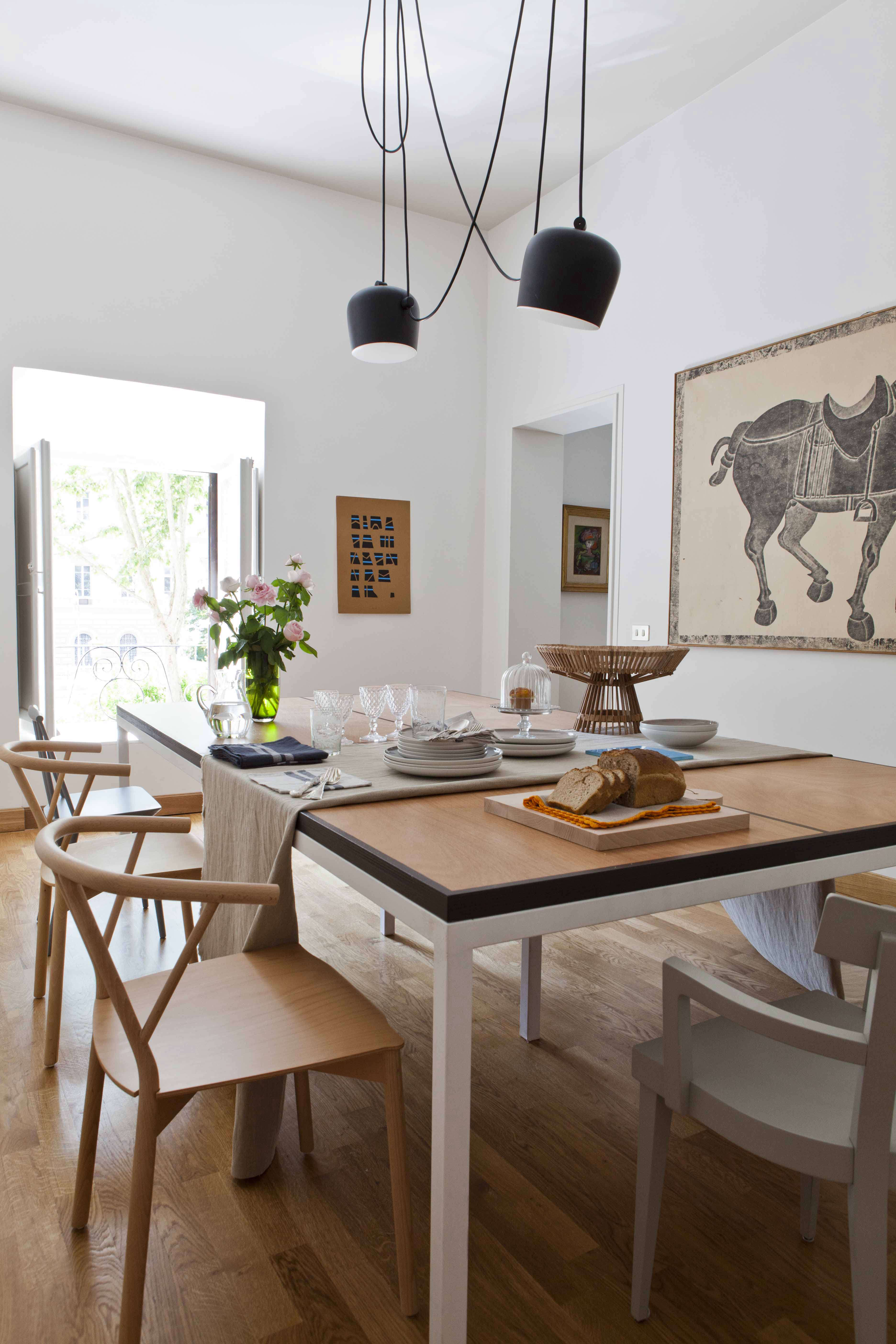
The home’s name comes from the custom ping-pong table at the heart of the living and dining area. It is not only a sports object; it is a social object. It can host a meal, a conversation, a game, or a spontaneous tournament between people who claim they are “not competitive” and then immediately become very competitive.
Why the Esquilino Neighborhood Matters
To understand Ping Pong House, you have to understand its setting. Esquilino is not the postcard version of Rome with only fountains, ruins, and tourists trying to pronounce “gnocchi.” It is a real, lived-in district near Termini Station, known for its mix of cultures, markets, historic buildings, and everyday Roman energy.
The neighborhood’s character gives the home an interesting tension. Outside, Esquilino is busy, diverse, and full of movement. Inside, Ping Pong House becomes a calm retreat. Yet it does not shut the city out completely. The living room looks toward the piazza, allowing the home to stay connected to the life of the street while filtering it through light, height, and quiet materials.
This is one reason the project feels so successful. It does not pretend that serenity means isolation. Instead, it creates a private oasis within an active urban context. That balance is especially relevant for modern city living, where the best homes often need to be both shelter and launchpad.
Umbertino Architecture Meets Contemporary Interior Design
The apartment is located in an Umbertino-style building, a type of Italian architecture associated with the late 19th century and Rome’s development after it became the capital of unified Italy. These buildings often feature grand proportions, formal facades, tall ceilings, and a sense of urban confidence. In simple terms: the bones are good. Very good. The kind of good bones that make renovators whisper, “Please don’t cover that with drywall.”
Studio Strato’s approach does not fight the apartment’s history. Instead, the design brings out its austere beauty. The high ceilings remain a major asset. The generous rooms feel elegant without being stiff. Blown-glass windows add a subtle retro quality, softening the daylight and reminding visitors that old buildings often know a few tricks modern ones forgot.
The renovation proves that contemporary interior design does not require erasing the past. In Ping Pong House, old and new do not compete. They rally. The historic shell provides atmosphere, while modern spatial planning and playful furniture bring the home into the present.
The Living Room: A Library, a Stage, and a Game Room
The living room is the emotional center of Ping Pong House. It faces the piazza and contains one of the home’s strongest design gestures: a full wall of bookshelves that acts almost like a theatrical backdrop. The shelves frame the dining area and create depth, texture, and personality.
A library wall is one of those design elements that instantly makes a room smarter. Even if half the books are cookbooks and the other half are architecture monographs large enough to injure a foot, the effect is still powerful. Here, the bookshelves do more than store objects. They organize the room visually, create intimacy, and add a sense of lived-in culture.
The color palette is soft and restrained: creamy whites, natural wood, muted blues, and gentle greens. The walls are cloud-like rather than stark, which is important. Pure white can sometimes make a room feel like a dental clinic with better furniture. Ping Pong House avoids that trap by choosing warmth over sterility.
The Famous Ping-Pong Dining Table
The ping-pong table is the project’s headline feature, and for good reason. Designed by the architect, it functions as both a game table and a dining table for seated meals. This dual purpose captures the spirit of the entire apartment: practical, elegant, and just mischievous enough to make you smile.
Multipurpose furniture is often discussed in small-space design, but Ping Pong House shows that flexibility is not only for tiny apartments. Even in a spacious historic home, adaptable pieces can make daily life more enjoyable. The table encourages movement, play, and gathering. It breaks the old rule that dining rooms must behave themselves at all times.
It also reflects a broader shift in residential design. Today’s best homes are less interested in formal rooms that wait around for special occasions. They are designed for real use: meals, work, play, hosting, reading, relaxing, and yes, occasionally losing a ping-pong match to someone who insisted they were “terrible at this.”
The Kitchen: English Charm With Roman Soul
The kitchen in Ping Pong House has an English-inspired character, but it does not feel imported or theatrical. A ceramic sink sits under the window, creating a classic domestic moment. Raw wood cabinets add texture. A long marble counter brings in a sense of permanence and craft.
What makes the kitchen special is its mix of refinement and informality. It does not chase glossy perfection. Instead, it feels practical, personal, and slightly nostalgic. Some pieces came from a family country house, giving the room a sense of memory that no showroom can fake.
This is one of the project’s most useful lessons: meaningful interiors rarely come from buying everything new at once. The best rooms often include inherited objects, reused materials, and pieces with a little history. A home should not look like it was delivered in a single truck on a Tuesday.
Reclaimed Materials and Quiet Sustainability
Ping Pong House uses reclaimed materials in subtle but important ways. The bathrooms include hexagonal cement tiles and old mirrors discovered in a disused construction site on the outskirts of Rome. Raw wood doors and reused elements appear throughout the project, creating a layered interior that feels both economical and poetic.
This kind of reuse is not loud sustainability. There are no neon signs saying, “Behold, I am eco-conscious.” Instead, the materials simply belong. They reduce waste, preserve character, and add depth. In a world where many interiors look freshly shrink-wrapped, reclaimed materials bring the small imperfections that make a space feel human.
The bathroom planning also improves functionality. Rather than opening directly onto the corridor, the bathroom doors lead into a contemporary anteroom. It is a small but smart move, improving privacy and circulation without overcomplicating the layout. Good architecture often works this way: the best details are the ones you feel before you notice.
Color, Light, and the Art of Not Trying Too Hard
One of Studio Strato’s strengths is the use of materials, color, and lighting. Ping Pong House demonstrates that expertise beautifully. The home is not colorful in a loud way, yet it is far from bland. Its palette relies on plastery whites, softened neutrals, wood tones, faded blues, and gentle greens.
The effect is peaceful without becoming precious. The rooms feel edited, but not empty. They are serene, but they still have a pulse. This is harder to achieve than it looks. Many minimalist interiors become so controlled that you feel guilty setting down a coffee mug. Ping Pong House feels calmer and more generous than that.
The Roman light is another essential design material. Filtered through older windows and pale surfaces, it gives the apartment a soft glow. Instead of overwhelming the rooms with decorative gestures, Studio Strato allows the light to do some of the work. That is a very Italian move: make something look effortless after making a thousand careful decisions.
Why Ping Pong House Feels Modern Without Looking Trendy
Trends come and go. One decade wants gray everything. Another wants maximalist wallpaper. Another discovers beige and behaves as though beige has just been invented. Ping Pong House avoids trend fatigue by focusing on lasting design principles: proportion, light, utility, material honesty, and personal character.
The home feels contemporary because it supports modern life. It has open, flexible areas for socializing. It uses furniture in clever ways. It combines work, play, dining, and relaxation without making each activity feel boxed into a separate zone. At the same time, it respects the historic structure and avoids the anonymous look of many luxury renovations.
This balance is why the project remains relevant years after its completion. It is not simply a beautiful Roman apartment. It is a case study in how to renovate old homes for real life without flattening their personality.
Design Lessons From Ping Pong House
1. Let the Building Tell You What It Wants
The renovation succeeds because it listens to the existing apartment. The high ceilings, large windows, and historic proportions are not hidden. They are enhanced. Before redesigning any older home, the first step is observation. What is already working? Where does the light fall? Which walls matter? Which awkward room divisions need to go?
2. Use Playfulness as a Serious Design Tool
The ping-pong table could have been a novelty. Instead, it becomes the heart of the house because it solves a real problem: how to create a social, flexible, memorable space. Playfulness in design does not mean childishness. It means giving people permission to enjoy their home.
3. Mix New, Old, and Personal
Ping Pong House combines custom design, reclaimed materials, family pieces, and contemporary planning. That mix creates authenticity. A room filled only with new objects can look polished, but it often lacks soul. A room with history has better stories.
4. Choose Calm Colors With Texture
Soft colors work best when they are paired with texture. Plaster walls, raw wood, marble, cement tile, canvas, books, and vintage pieces prevent the pale palette from feeling flat. The lesson is simple: if the colors are quiet, let the materials speak.
5. Design for Everyday Rituals
The kitchen sink under the window, the library wall, the open living space, the game-ready dining table, and the improved bathroom circulation all support daily rituals. Great homes are not only about photographs. They are about Tuesday breakfast, rainy afternoons, friends staying too late, and finding your favorite chair without thinking about it.
How Ping Pong House Inspires Today’s Homeowners
For homeowners renovating historic apartments, brownstones, townhouses, or older city homes, Ping Pong House offers a refreshing model. It proves that you do not have to choose between preservation and personality. You can keep the dignity of an old structure while adding wit, flexibility, and contemporary comfort.
The project is especially inspiring for people who want a calm home but fear minimalism will feel too severe. Ping Pong House shows another path: reduce visual noise, but keep warmth. Edit the palette, but include character. Make space for quiet, but do not ban fun at the door.
It also encourages a more relaxed view of luxury. Luxury here is not about gold fixtures or dramatic spectacle. It is about daylight, breathing room, craft, memory, and the ability to turn dinner into a doubles match. Honestly, more luxury real estate listings should include paddle storage.
Experience Notes: Living With the Spirit of Ping Pong House
The experience of Ping Pong House is not only visual; it is emotional. Imagine stepping in from the lively streets of Esquilino, where Rome feels dense, noisy, fragrant, and constantly in motion. Then the apartment opens up. The ceilings rise. The light softens. The walls seem to exhale. Suddenly the city is still present, but it is no longer shouting.
That transition is one of the most valuable experiences a home can provide. A good city apartment should not make you feel disconnected from urban life. It should help you digest it. Ping Pong House does this through space, color, and proportion. The rooms are open enough to feel free, but not so open that they lose intimacy. The furniture is relaxed, but not careless. The palette is pale, but not timid.
One practical experience related to this project is the importance of having at least one “living magnet” in a home. In Ping Pong House, the magnet is the ping-pong dining table. In another home, it might be a giant kitchen island, a reading nook, a fireplace, a long communal table, or a courtyard garden. The point is to create a place where people naturally gather. Homes become memorable when they contain a center of gravity.
Another lesson is that flexible design changes how people behave. A formal dining table often waits for permission. A ping-pong dining table invites action. It says the room is not too precious. It says guests can relax. It says architecture is allowed to have a sense of humor. That feeling matters, because the best interiors do not only impress visitors; they make them comfortable enough to stay.
The project also offers a useful experience for anyone working with old buildings: restraint can be more powerful than transformation. When renovating, it is tempting to fix everything, replace everything, and make every surface announce the budget. Ping Pong House takes a more confident route. It changes what needs to be changed and leaves room for the existing structure to speak. This is a valuable approach for historic homes everywhere, from Rome apartments to New York brownstones to old houses in New Orleans, Boston, or San Francisco.
There is also something deeply appealing about the way the home treats imperfection. Reclaimed mirrors, raw wood, vintage pieces, and family objects add a sense of time. These details prevent the interior from feeling over-designed. In real life, homes collect evidence: books, scratches, favorite cups, slightly mysterious keys, and chairs people fight over because they are “the good chair.” Ping Pong House makes room for that kind of living.
For design lovers, the experience of studying this home is a reminder that serenity is not created by removing personality. It is created by organizing personality. The books are there. The game table is there. The old materials are there. The city is just outside. But everything has been composed with care. That is why the home feels peaceful rather than plain.
For homeowners, the takeaway is practical: start with light, circulation, and purpose. Then add materials that feel honest. Choose colors that calm the room rather than dominate it. Include something playful, because adulthood already has enough paperwork. Finally, let the home tell a story that belongs to you, not to a catalog.
Ping Pong House is memorable because it understands that architecture is not only about walls, plans, and finishes. It is about the small choreography of daily life: where people sit, how they move, what they touch, where they gather, and how a room changes when laughter enters it. In that sense, the ping-pong table is not a joke. It is the perfect symbol for a house that knows how to be beautiful without taking itself too seriously.
Conclusion: A Serene Home With a Playful Serve
Ping Pong House in Rome is a rare renovation that feels both thoughtful and joyful. Studio Strato transformed a former office inside a 19th-century Umbertino building into a warm, flexible, and deeply personal home. The project preserves historic character, improves everyday function, and adds a playful centerpiece that makes the entire apartment unforgettable.
Its success lies in balance. The apartment is elegant but not stiff, minimal but not empty, old but not dusty, playful but not chaotic. It respects Rome’s architectural past while embracing the way people actually live now. That is why Ping Pong House continues to resonate with architects, designers, homeowners, and anyone who believes a dining table should occasionally have a net.