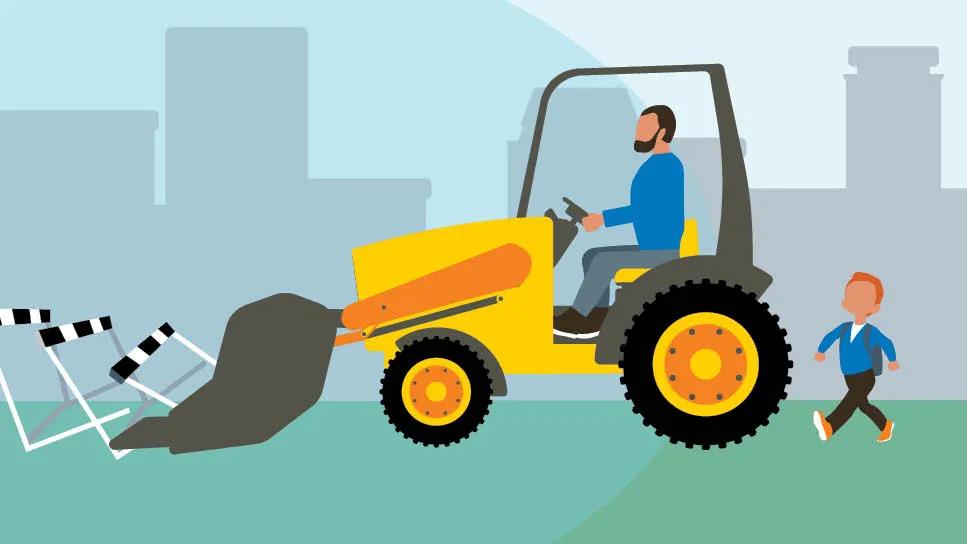
Every parent wants to protect their child. That is not just normal; it is practically written into the job description somewhere between “find missing socks” and “pretend the macaroni necklace is high fashion.” But sometimes protection quietly turns into overprotection. That is where snowplow parenting rolls in, headlights blazing, clearing every obstacle before a child even has the chance to say, “Wait, I think I can handle this.”
Snowplow parenting, sometimes called bulldozer parenting or lawnmower parenting, describes a parenting style in which adults remove difficulties, frustrations, failures, and consequences from a child’s path. The goal is loving: keep the child safe, happy, and successful. The problem? Children need age-appropriate challenges to build confidence, resilience, problem-solving skills, and emotional strength.
In other words, the occasional pothole is not always the enemy. Sometimes it is the classroom.
What Is Snowplow Parenting?
Snowplow parenting happens when parents become so focused on preventing discomfort that they step in too early, too often, or too intensely. Instead of supporting a child through a challenge, they remove the challenge entirely.
A snowplow parent might email a teacher to argue about every disappointing grade, finish a child’s project because the deadline is close, call another parent to manage a playground conflict, or arrange every activity so the child never has to face boredom, awkwardness, rejection, or uncertainty.
To be clear, helping your child is not automatically snowplow parenting. Children need guidance. They need advocacy. They need adults who step in when safety, health, bullying, discrimination, or serious emotional distress is involved. The difference is whether the parent is supporting growth or replacing growth.
Snowplow Parenting vs. Helicopter Parenting
Snowplow parenting and helicopter parenting are related, but they are not identical twins. Think of them as cousins who both show up at the school meeting with color-coded folders.
Helicopter Parenting
A helicopter parent hovers. They monitor, check, remind, worry, and supervise closely. They may ask lots of questions, track assignments, and stay highly involved in daily decisions.
Snowplow Parenting
A snowplow parent goes further. They do not just hover over the road; they clear it. They remove obstacles before the child can experience them. If helicopter parenting says, “I am watching in case you fall,” snowplow parenting says, “I removed the ground so falling is no longer possible.” Admirable? Maybe. Sustainable? Not so much.
Common Signs of Snowplow Parenting
Snowplow parenting can look different depending on the child’s age, but the pattern is usually the same: the parent takes over something the child could learn to handle with support.
Signs in Early Childhood
In younger children, snowplow parenting may include answering every question for them, never allowing them to try simple tasks independently, stepping into every small disagreement, or preventing all frustration during play. A parent may zip the coat, pack the bag, clean the mess, and solve the puzzle before the child has time to struggle productively.
Signs in School-Age Children
With elementary and middle school children, signs may include doing homework for the child, repeatedly rescuing forgotten items, negotiating grades, preventing natural consequences, or managing friendships from the command center known as the family group chat.
Signs in Teenagers
For teenagers, snowplow parenting can show up as completing college applications, contacting coaches or employers on the teen’s behalf, controlling schedules too tightly, solving every peer conflict, or making important decisions without letting the teen practice judgment.
Why Do Parents Become Snowplow Parents?
Most snowplow parents are not trying to harm their children. Quite the opposite. They are usually trying very hard to help. The behavior often comes from love, fear, pressure, or a belief that childhood success has become a competitive sport with snacks.
Fear of Failure
Many parents worry that one bad grade, one lost game, one missed opportunity, or one awkward social moment will derail their child’s future. In reality, small failures are usually not life-ending disasters. They are practice reps for adulthood.
Parental Anxiety
Sometimes a parent’s anxiety becomes the driver. When a child is uncomfortable, the parent feels uncomfortable too. Removing the child’s problem gives the parent immediate relief, but it may prevent the child from learning how to cope.
Pressure to Raise “Successful” Kids
Modern parenting can feel like a full-time performance review. Academic competition, social media, sports culture, college admissions, and constant comparison can make parents feel that they must optimize every inch of childhood. Unfortunately, children are people, not software updates.
Confusing Love With Control
Love says, “I am here with you.” Control says, “I will handle this so you never have to feel bad.” Snowplow parenting often begins when those two ideas get tangled together.
Does Snowplow Parenting Hurt Your Child?
Snowplow parenting can hurt children when it becomes a consistent pattern. The harm usually does not come from one rescued homework assignment or one extra phone call. It comes from repeatedly removing the very experiences children need to develop independence.
It Can Weaken Problem-Solving Skills
Children learn problem-solving by facing problems. That sounds obvious, but it is easy to forget when your child is crying over a science project volcano that looks more like oatmeal with ambition. When parents always step in, children may not learn how to pause, think, test options, make mistakes, and try again.
It Can Reduce Resilience
Resilience is not built by living a friction-free life. It grows when children face manageable challenges with steady support. A child who never experiences disappointment may become overwhelmed when real disappointment finally appears. And it will appear, because life does not offer parental concierge service forever.
It Can Lower Confidence
Snowplow parenting may accidentally send a painful message: “I do not think you can handle this.” Even when parents mean, “I love you and want to help,” children may hear, “You are not capable.” Over time, that can weaken self-efficacy, which is the belief that “I can do hard things.”
It Can Increase Anxiety
When children are protected from every uncomfortable feeling, discomfort starts to look dangerous. A tough conversation, a bad grade, a tryout, or a new responsibility may feel terrifying because the child has not had enough practice surviving ordinary stress.
It Can Create Entitlement
If adults repeatedly remove consequences, children may learn that rules are negotiable, effort is optional, and someone else will fix the outcome. That can create trouble later in school, friendships, work, and relationships.
What Children Actually Need Instead
Children do not need parents who disappear. They need parents who guide, coach, comfort, and teach while slowly handing responsibility back to the child. The goal is not “hands off.” The goal is “helpful, but not hijacking.”
Supportive Relationships
Children thrive when they have stable, caring adults who listen, set limits, and stay emotionally available. A warm relationship gives children the courage to try hard things because they know they are not alone.
Age-Appropriate Independence
Independence should grow gradually. A preschooler can choose between two shirts. A school-age child can pack a backpack with a checklist. A teen can email a teacher, schedule a meeting, or manage a deadline with coaching from the sidelines.
Natural Consequences
Natural consequences are powerful teachers when they are safe and reasonable. If a child forgets a library book, they may need to explain it to the librarian. If a teen misses a deadline, they may need to ask about late-credit rules. These moments are not punishments; they are life giving a pop quiz.
Emotional Coaching
Instead of removing every frustration, parents can help children name feelings, calm their bodies, think through options, and choose the next step. “You are disappointed” is more useful than “I will make sure you never feel disappointed again.”
How to Stop Snowplow Parenting Without Becoming Too Harsh
Parents often worry that if they stop snowplowing, they will become cold or careless. Not true. The healthy alternative is not neglect. It is scaffold parenting: giving enough structure for the child to climb, but not carrying them to the top.
Pause Before You Rescue
When your child faces a challenge, take a breath before jumping in. Ask yourself: Is my child unsafe, or simply uncomfortable? Is this beyond their ability, or is it a chance to practice? Am I helping them learn, or helping myself feel less anxious?
Ask Questions Instead of Taking Over
Try questions like: “What have you tried?” “What do you think your options are?” “Who could help you?” “What is the first small step?” These questions build thinking skills while still showing support.
Let Them Practice Small Responsibilities
Chores, routines, school tasks, money decisions, and social problem-solving all give children useful practice. A child who learns to make a bed, pack lunch, apologize, ask for help, and manage a calendar is building real-world muscle.
Normalize Mistakes
Talk about your own mistakes in calm, appropriate ways. Show that errors are not identity statements. A failed quiz means “study differently,” not “I am doomed.” A friendship conflict means “learn communication,” not “panic and call everyone’s parents by dinner.”
Coach the Conversation
If your child has a problem with a teacher, friend, coach, or classmate, help them plan what to say. Role-play the conversation. Write down key points. Then let the child try first when it is safe and appropriate.
Examples of Better Responses
Instead of Fixing the Grade
Snowplow response: “I will email your teacher and demand extra credit.” Better response: “Let’s look at what happened. Did you understand the material? Did you study enough? What could you ask your teacher?”
Instead of Managing Every Friendship Issue
Snowplow response: “I am calling their parent right now.” Better response: “That sounds painful. What do you want your friend to understand? Would you like to practice saying it?”
Instead of Saving Every Forgotten Item
Snowplow response: “I will bring your cleats, homework, lunch, water bottle, and possibly your entire bedroom.” Better response: “I can help you make a checklist tonight so tomorrow goes better.”
When Parents Should Step In
Stepping back does not mean ignoring serious problems. Parents should absolutely intervene when a child is facing danger, bullying, abuse, serious mental health concerns, discrimination, developmental needs, medical issues, or situations beyond their maturity level.
The question is not “Should I ever help?” The question is “What kind of help builds my child’s ability instead of replacing it?” Sometimes the right move is direct advocacy. Other times it is coaching from the passenger seat while your child learns to steer.
Real-Life Experiences: What Snowplow Parenting Looks Like in Everyday Families
Many parents first recognize snowplow parenting in small, ordinary moments. It rarely begins with dramatic scenes. It begins with a backpack. A worksheet. A forgotten permission slip. A child’s disappointed face. Suddenly, the parent’s internal alarm says, “Fix it now!” and the snowplow engine starts.
One common experience involves homework. Imagine a fourth grader who leaves a book report until the night before it is due. The parent sees the clock, the tired child, and the unfinished poster board. The temptation is powerful: cut the paper, write the title, print the pictures, arrange the glue sticks like a tiny emergency response team. The project gets done, but the lesson may disappear. The child learns that panic brings rescue, not planning. A more helpful experience would be sitting nearby, helping the child break the work into steps, and allowing the final product to look like a real child made it. Slightly crooked title? Fine. Glue smudge? Also fine. A learning experience with glitter on it? Perfect.
Another experience happens in friendships. A middle school child comes home upset because a friend did not invite them to a birthday party. A snowplow response might be to contact the other parent, demand an explanation, or try to engineer a new invitation. But social disappointment, while painful, can teach emotional regulation, perspective, and communication. A more growth-focused response might sound like: “That really hurts. Do you want to talk about what you wish had happened? What might help you feel better tonight?” The parent stays close without turning a child’s social life into a courtroom drama.
Teenagers bring even bigger opportunities for snowplowing. A high school student misses a deadline for a club application. The parent may want to email the advisor and explain that the teen was busy, stressed, or temporarily swallowed by the laundry pile known as their bedroom floor. But a teen benefits from owning the next step: writing the email, asking whether late applications are accepted, and handling the answer. That practice matters because adulthood contains deadlines, supervisors, landlords, professors, and forms that do not care how charming Mom’s email signature is.
Parents also describe snowplow instincts around sports and activities. When a child does not make the team, get the solo, win the prize, or receive the role they wanted, parents naturally feel protective. But disappointment can help children discover perseverance, humility, and flexible thinking. A child who learns to say, “I am upset, but I can practice and try again,” is developing a life skill far more valuable than one trophy.
The emotional experience for parents is real too. Letting children struggle can feel like bad parenting, especially in a culture that praises achievement and smooth outcomes. But allowing manageable struggle is not abandonment. It is trust. It says, “I believe you can grow through this, and I will be here while you do.” That message is stronger than any perfectly cleared road.
Conclusion
Snowplow parenting comes from love, but love works best when it prepares children for life rather than removing life from their path. Children need protection from true harm, but they also need room to try, fail, repair, apologize, plan, wait, struggle, and try again.
The healthiest parents are not snowplows, helicopters, or bulldozers. They are coaches, guides, guardrails, and safe landing places. They know when to step in, when to step back, and when to say, “I know this is hard. I also know you can take the next step.”
So, does snowplow parenting hurt your child? When it becomes a pattern, yes, it can. But the good news is that parents can change course. Start small. Let your child carry one more responsibility, solve one more problem, and experience one more manageable consequence. The road may be bumpier, but that is exactly where children learn how strong they can become.