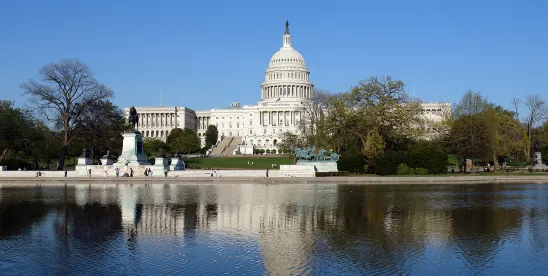
Washington’s workplace-policy machine is humming again, and employers may want to keep their compliance calendars close. Federal agencies are revisiting worker classification, joint-employer liability, overtime exemptions, union rules, workplace discrimination, noncompete agreements, contractor obligations, and heat-safety enforcement. In other words, the Beltway has found several new ways to make an employee handbook feel outdated before the ink dries.
As of early July 2026, the most important labor and employment policy developments do not all point in the same direction. Some rules are being narrowed, some older standards are returning, and several proposals remain unfinished. Meanwhile, state and local governments continue to adopt their own wage, leave, scheduling, pay-transparency, artificial intelligence, and restrictive-covenant laws.
The practical lesson is simple: distinguish between a final rule, a proposed rule, an enforcement policy, a court decision, and a political forecast. They may all produce dramatic headlines, but they do not create identical legal obligations.
The Federal Labor Policy Map Is Being Redrawn
The current federal approach generally favors clearer, narrower tests for determining employment relationships, greater emphasis on intentional discrimination, renewed scrutiny of certain diversity programs, and more targeted enforcement rather than sweeping nationwide bans. That broad direction is visible across the Department of Labor, National Labor Relations Board, Equal Employment Opportunity Commission, Federal Trade Commission, and Occupational Safety and Health Administration.
Still, employers should resist the urge to treat every Washington announcement as an immediate green light. Proposed regulations can be revised, delayed, challenged, or abandoned. Agency interpretations may change without altering the underlying statute. Courts can also send a rule back to the regulatory garage with the legal equivalent of a blinking check-engine light.
1. The Federal Overtime Salary Threshold Returns to Familiar Ground
In May 2026, the Department of Labor formally restored the regulations that were in effect before its 2024 overtime rule was vacated by a federal court. Under the restored federal standard, most employees classified under the executive, administrative, or professional exemptions must receive at least $684 per week, equivalent to $35,568 annually.
That figure is only the salary component of the exemption. Paying someone above the threshold does not automatically turn the employee into an exempt executive. The employee must generally be paid on a salary basis and perform duties that satisfy the applicable exemption test.
What employers should review
Employers should compare job descriptions with the work employees actually perform. A “manager” who spends nearly every shift preparing orders, stocking shelves, and following another manager’s instructions may not satisfy the executive duties test merely because a business card says “manager.” Titles are inexpensive; overtime litigation is not.
Multistate employers must also check state law. Several states impose salary thresholds or exemption tests that are more protective than the federal baseline. The restored federal figure is therefore a floor for federal compliance, not a universal answer for every employee in every location.
2. Independent Contractor Classification May Become More Business-Friendly
In February 2026, the Department of Labor proposed replacing the worker-classification framework adopted in 2024 with a modified version of the department’s 2021 approach. The proposal would continue using an economic-reality analysis but would place greater weight on two core considerations: the worker’s control over the work and the worker’s opportunity for profit or loss.
Other considerations would include the skill required, the permanence of the relationship, and whether the work is part of an integrated unit of production. The department also proposes emphasizing the parties’ actual practices rather than control that exists only as a theoretical possibility in a contract.
The proposal would create a more focused analysis, but it is not a permission slip to convert employees into contractors by changing the heading on an agreement. An individual who works a fixed schedule, follows detailed instructions, uses company equipment, cannot negotiate rates, and depends on one company for continuing work may still look economically dependent.
A useful classification audit
Businesses should examine who controls scheduling, pricing, customer relationships, staffing, equipment, expenses, and the manner in which services are performed. They should also determine whether workers can build an independent business, advertise to the public, hire assistants, accept or reject assignments, and experience genuine financial gain or loss through managerial decisions.
State laws may use different tests, including stricter ABC-style standards. A worker might qualify as an independent contractor under one federal law but remain an employee for state wage, unemployment, workers’ compensation, or paid-leave purposes.
3. Joint-Employer Rules Now Require a Two-Lane Analysis
Joint employment remains one of the most confusing intersections in labor policy because different agencies administer different statutes. In April 2026, the Department of Labor proposed a joint-employer framework for the Fair Labor Standards Act, Family and Medical Leave Act, and Migrant and Seasonal Agricultural Worker Protection Act.
The proposal focuses heavily on whether a potential joint employer hires or fires workers, substantially controls schedules or working conditions, determines rates or methods of payment, and maintains employment records. Reserved control could matter, although control that is actually exercised would generally carry more weight.
Separately, the National Labor Relations Board reinstated a narrower joint-employer standard in February 2026 for cases arising under the National Labor Relations Act. That standard generally requires direct and immediate control over essential employment terms before a company will be treated as a joint employer for collective-bargaining and unfair-labor-practice purposes.
A company may therefore face one analysis in an overtime dispute and another in a union matter. Franchisors, staffing clients, subcontracting companies, hospitality groups, warehouse operators, healthcare systems, and businesses using managed-service providers should avoid assuming that one agency’s test settles every issue.
4. The NLRB Is Back in Business
The National Labor Relations Board regained a quorum in January 2026 when James Murphy and Scott Mayer joined existing member David Prouty. Crystal Carey also became the agency’s general counsel. The restored quorum allows the board to decide representation disputes and unfair-labor-practice cases that accumulated during its extended period without enough members to issue decisions.
The new leadership is expected to take a more employer-friendly approach than the prior board, but major reversals do not happen simply because commentators expect them. Existing precedents generally remain operative until the board changes them in a proper case or through rulemaking.
Employers should continue monitoring rules involving union-recognition demands, workplace policies, mandatory meetings, severance agreements, employee misconduct during protected activity, bargaining obligations, and remedies for unfair labor practices. A policy that may be reconsidered tomorrow can still create liability today.
Do not forget nonunion workplaces
The National Labor Relations Act protects many nonsupervisory employees who act together regarding wages, schedules, safety, discipline, staffing, or other working conditions. Those protections can apply even when no union is present. Complaints in a group chat, a joint request for higher pay, or several employees discussing workload may qualify as protected concerted activity.
5. The EEOC Has Adopted a New Enforcement Agenda
In June 2026, the Equal Employment Opportunity Commission replaced its previous strategic enforcement plan with a National Enforcement Plan covering fiscal years 2025 through 2029. The plan emphasizes intentional discrimination, repeated or overt discrimination, discriminatory job advertisements, unlawful steering, systemic harassment, mass denials of accommodations, and employment practices that expressly use protected characteristics.
The commission has signaled particular concern about hiring, promotion, compensation, training, internships, fellowships, mentoring, layoffs, and other opportunities being allocated according to race or sex. Programs described as diversity, equity, and inclusion initiatives are not automatically unlawful, but their label will not protect them when employment decisions are intentionally based on a protected characteristic.
The EEOC also voted in January 2026 to rescind its 2024 workplace-harassment guidance. In June, it voted to withdraw affirmative-action interpretive materials that had existed for roughly four decades. Those actions change agency guidance and enforcement direction; they do not repeal Title VII, the Americans with Disabilities Act, the Age Discrimination in Employment Act, the Pregnant Workers Fairness Act, or other federal statutes.
How to evaluate inclusion programs
Employers should review eligibility requirements, demographic targets, interview rules, bonus formulas, mentorship programs, internship criteria, candidate slates, and manager incentives. The safest approach is usually to expand recruiting and remove unnecessary barriers without reserving employment opportunities for particular racial or sex-based groups.
Documentation should explain the legitimate, job-related reasons for hiring, promotion, pay, and termination decisions. Vague explanations invite suspicion. So do suspiciously perfect performance reviews followed by a sudden claim that an employee has supposedly been a disaster since the invention of the fax machine.
6. The FTC’s Nationwide Noncompete Ban Is Gone, but Enforcement Continues
The Federal Trade Commission’s broad noncompete rule is not in effect. After a federal court blocked and vacated the rule, the commission moved in 2025 to dismiss its appeals and accept the rule’s vacatur.
That did not end federal interest in restrictive employment agreements. The FTC continues pursuing individual companies when it believes noncompete or no-hire provisions are unfair methods of competition. In 2026, it announced actions requiring businesses to stop enforcing restrictions against significant groups of workers.
State law remains especially important. Some states broadly prohibit employee noncompetes, while others restrict them according to compensation, occupation, duration, geographic reach, notice, or access to trade secrets. Employers should separately assess customer nonsolicitation clauses, employee nonsolicitation terms, confidentiality provisions, repayment obligations, and no-hire arrangements.
A narrowly drafted agreement protecting real confidential information is easier to defend than a clause attempting to prevent a former receptionist from working anywhere in the Western Hemisphere until 2043.
7. OSHA Is Increasing Its Focus on Workplace Heat
OSHA’s proposed federal heat-injury and illness prevention standard has not yet become a final nationwide rule. Nevertheless, heat exposure remains an active enforcement priority. In April 2026, OSHA revised its National Emphasis Program to concentrate inspections and outreach on 55 industries with elevated indoor or outdoor heat risks.
Employers may still be cited under the Occupational Safety and Health Act’s General Duty Clause when recognized heat hazards are likely to cause serious harm and feasible protective measures are available. State-plan jurisdictions may also have specific heat standards that are more detailed than federal requirements.
Heat planning should be operational, not decorative
A credible heat program addresses water, rest, shade or cooling areas, acclimatization, emergency response, employee training, environmental monitoring, workload adjustments, and special risks affecting new or returning workers. Supervisors should know the signs of heat exhaustion and heat stroke and should not punish employees for reporting symptoms.
8. Federal Contractors Must Identify Which Wage Rules Still Apply
The 2025 revocation of Executive Order 14026 removed one federal-contractor minimum-wage framework, but it did not erase every wage obligation attached to government work. Depending on the contract, workers may remain covered by Executive Order 13658, the Davis-Bacon Act, the Service Contract Act, state or local prevailing-wage laws, collective-bargaining agreements, or specific contract clauses.
Contractors should review the actual solicitation, award, wage determination, renewal date, option period, and incorporated labor clauses. Payroll staff should not rely solely on a general announcement about an executive order. Government-contract compliance has always rewarded people who read the fine print and punished those who assume the fine print is merely decorative.
A Practical Labor and Employment Policy Checklist
- Recheck exempt classifications under both the federal duties tests and applicable state standards.
- Audit contractor relationships based on actual working conditions, not contract labels.
- Map control retained over franchisees, staffing vendors, subcontractors, and outsourced workers.
- Review handbooks, severance agreements, organizing-response plans, and manager training under current NLRB precedent.
- Examine hiring, promotion, compensation, internship, mentorship, and DEI programs for protected-class preferences.
- Update restrictive covenants for each state in which affected employees work.
- Prepare a written heat-safety program before temperatures become dangerous.
- Review government contracts individually for prevailing-wage and minimum-wage obligations.
- Track proposals separately from rules that are already effective.
Field Notes: What These Policy Changes Look Like in Practice
The following composite experiences illustrate how federal labor and employment policy changes can affect ordinary workplace decisions. They are not descriptions of particular lawsuits or clients, but they reflect recurring compliance problems encountered across industries.
The growing restaurant group
Consider a restaurant company expanding from one state into three. Its assistant managers receive salaries above the federal threshold, so leadership assumes the overtime issue has been solved. A closer review shows that several assistant managers rarely direct employees, cannot meaningfully recommend hiring or firing, and spend most of their time serving customers and closing registers.
The federal salary requirement may be satisfied, but the duties test remains shaky. One state also requires a higher salary than the federal standard. The useful experience here is that classification audits should begin with employee interviews and weekly task estimates, not job descriptions written when the company had one location and a fax-based reservation system.
The technology company with “flexible contractors”
A software business hires designers as independent contractors and proudly advertises flexibility. The designers can technically choose their hours, but they must attend daily meetings, use company systems, obtain permission before accepting competing work, and charge rates set by the company. Their assignments continue indefinitely.
Under a more focused federal contractor test, control and entrepreneurial opportunity may receive greater attention. Yet the practical facts still undermine the contractor label. The company improves its position by creating defined projects, permitting outside clients, allowing rate negotiation, removing unnecessary exclusivity, and giving contractors genuine control over how work is completed. It does not merely add the phrase “independent businessperson” to page nine of an unread agreement.
The staffing client that thought the agency handled everything
A warehouse uses hundreds of staffing-agency employees. The staffing firm issues paychecks, but warehouse supervisors assign shifts, direct daily tasks, discipline workers, approve overtime, and request removals. When wage and union questions arise, the warehouse discovers that outsourcing payroll did not necessarily outsource legal responsibility.
The experience teaches an important distinction: vendor contracts can allocate costs between companies, but they cannot conclusively determine whether a joint-employment relationship exists. Operations teams should know which entity controls each employment function, and contracts should reflect reality rather than wishful drafting.
The employer modernizing its DEI program
A national employer created several well-intentioned development programs, including a leadership cohort available only to members of selected demographic groups. The company later recognizes that limiting training and promotion pipelines according to race or sex presents significant Title VII risk.
Instead of abandoning inclusion efforts, it redesigns the program around neutral eligibility standards. It expands outreach, uses structured interviews, publishes advancement criteria, trains managers to recognize biased assumptions, and opens mentoring opportunities to all qualified employees. Participation data is monitored for barriers, but individual decisions are based on job-related qualifications.
The practical experience is that equal opportunity and broad recruiting can coexist. The legal danger usually emerges when demographic goals become instructions to prefer or exclude particular individuals.
The outdoor employer waiting for a final heat rule
A landscaping contractor decides not to create a heat plan because OSHA’s proposed regulation is not final. During an early-season heat wave, a newly hired employee becomes seriously ill. The company then learns that existing safety duties, targeted inspections, state requirements, and recognized industry practices did not disappear while federal rulemaking continued.
The better experience is preventative. Employers establish hydration schedules, acclimatization procedures, emergency communication, shaded recovery areas, and supervisor authority to slow or stop work. These measures reduce injuries while also producing better documentation if an inspection occurs.
Across all five examples, the common theme is that compliance should follow workplace reality. Agencies and courts look beyond labels, templates, and optimistic policy statements. The strongest defense is usually a system that works correctly before anyone receives a demand letter.
Conclusion: Build a Compliance System That Can Survive Washington
The latest Beltway labor and employment policy updates reflect a meaningful federal shift, but not a complete rewrite of workplace law. The overtime threshold has returned to its earlier federal level. New contractor and joint-employer tests are moving through the regulatory process. The NLRB has regained its decision-making capacity. The EEOC has adopted new enforcement priorities, and the FTC continues challenging restrictive agreements individually even without a nationwide noncompete ban.
Employers should respond with targeted reviews rather than dramatic policy purges. Preserve practices that remain legally sound, revise those that depend on outdated agency positions, and keep federal requirements separate from stricter state and local laws. Washington will continue changing lanes. A well-built compliance program should not skid across the highway every time it does.
Note: This article reflects federal developments available as of July 5, 2026. Proposed rules, agency policies, litigation, and state requirements may change. The content is general information and is not legal advice.