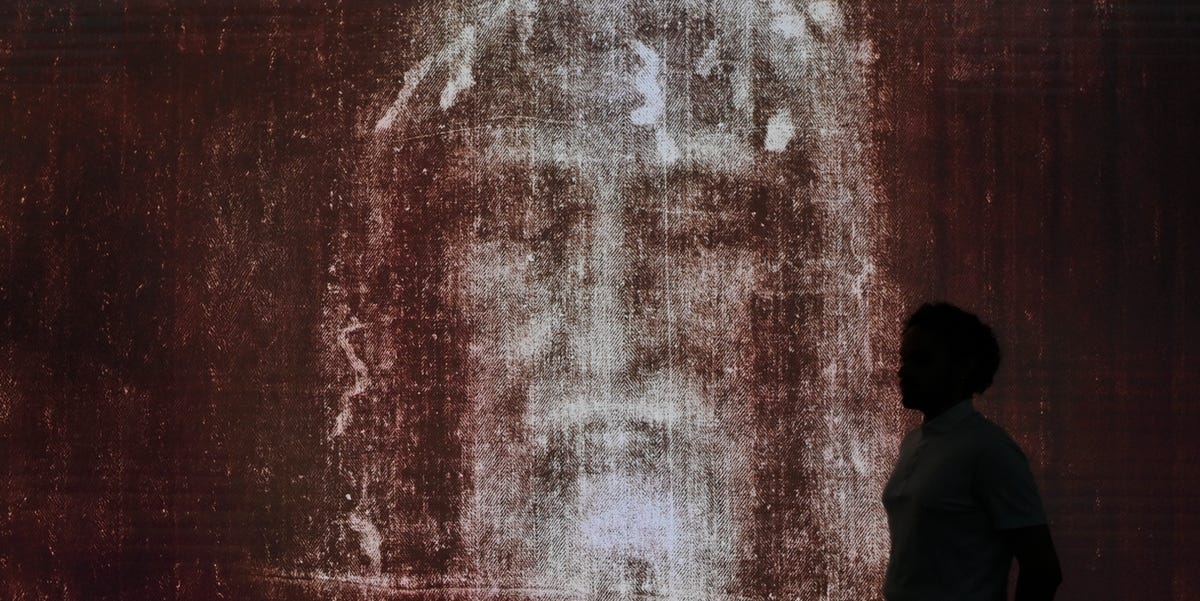
Note: This article is written for public web publishing and synthesizes established historical records, scientific studies, and recent research discussions about the Shroud of Turin.
The Shroud of Turin is the kind of object that makes historians reach for archives, scientists reach for microscopes, and everyone else reach for popcorn. A long linen cloth bearing the faint front-and-back image of a crucified man, it has been venerated by many Christians as the possible burial cloth of Jesus Christ. Others see it as a brilliant medieval artifact, a devotional image, or one of history’s most successful mystery machines.
So, is Jesus’s face really in the Shroud of Turin? The honest scientific answer is: science has not proved that the face belongs to Jesus. In fact, the strongest accepted dating evidence places the cloth in the Middle Ages, not first-century Jerusalem. But the story is not as simple as “case closed, everyone go home.” The Shroud still contains unusual image features, contested forensic claims, and enough unanswered questions to keep laboratories, theologians, and documentary producers gainfully employed.
What Is the Shroud of Turin?
The Shroud of Turin is a linen cloth measuring roughly 14 feet long and about 3.5 to 4 feet wide. It shows the faint image of a man, front and back, with marks that resemble wounds from scourging, crucifixion, and a side injury. The face is bearded, long-haired, solemn, and instantly recognizable to anyone raised around Western Christian art.
But that last part matters. The image resembles familiar Christian portrayals of Jesus, yet resemblance is not identification. A face on cloth cannot introduce itself, provide a passport, or politely say, “Yes, I am from first-century Galilee.” Science has to work with materials, chemistry, image behavior, blood traces, textile structure, historical documentation, and dating methods.
A Brief History: From Medieval France to Global Fame
The earliest secure historical records of the Shroud place it in Lirey, France, in the mid-14th century. That does not automatically prove it was created then, but it is a major historical problem for claims that the cloth can be continuously traced back to the tomb of Jesus.
In the 15th century, the cloth came into the possession of the House of Savoy. It survived a serious fire in Chambéry in 1532, which left burn marks and water stains still visible today. In 1578, it was moved to Turin, Italy, where it remains housed in the Cathedral of Saint John the Baptist.
The Shroud became globally famous in 1898 when Italian photographer Secondo Pia took the first photographs of it. When he developed the photographic negative, the faint image appeared far more detailed. Suddenly the ghostly figure on linen looked like a dramatic portrait. It was the ancient-relic equivalent of going viral, except with glass plates instead of hashtags.
The Big Question: Is the Face Really Jesus?
To answer that, we need to separate three questions that often get bundled together:
1. Is the image a real human face?
The Shroud image appears human and anatomically suggestive, but that does not prove it came directly from a corpse. Researchers have proposed many possible formation mechanisms, including contact transfer, chemical reactions, heat, artistic techniques, photographic-like processes, and low-relief models.
2. Is the cloth from the time of Jesus?
The most famous scientific test says no. Radiocarbon dating performed in 1988 by laboratories in Arizona, Oxford, and Zurich dated the sampled linen to approximately A.D. 1260–1390. That range lines up closely with the Shroud’s first firm appearance in medieval Europe.
3. Can science identify the man as Jesus?
No. Even if the image were proven to come from a crucified man, identifying that man as Jesus would require historical and biological evidence that does not currently exist. There is no verified DNA sample from Jesus for comparison, no inscription naming him, and no uninterrupted chain of custody from the tomb to Turin.
Radiocarbon Dating: The Strongest Scientific Evidence
Radiocarbon dating remains the heavyweight evidence in the Shroud debate. In 1988, a small sample was removed from the cloth and tested independently by three laboratories. Their results converged on a medieval date range of A.D. 1260–1390.
For many scientists, this is the central fact. Linen is made from flax, and flax absorbs carbon while it grows. Radiocarbon dating estimates when that plant material stopped exchanging carbon with the atmosphere. If the tested sample truly represents the original Shroud cloth, the medieval date is hard to avoid.
Supporters of authenticity have challenged the result. Some argue that the tested corner may have been contaminated, repaired, or chemically altered by centuries of handling, fire, smoke, water, and conservation. Critics respond that contamination large enough to shift a first-century date into the 13th or 14th century would need to be extreme, and that repair theories remain unproven.
In plain English: radiocarbon dating is not a casual opinion. It is the most robust scientific evidence currently available. But because the Shroud is a damaged, handled, historically complicated relic, debate continues over whether the tested sample perfectly represented the whole cloth.
STURP and the Mystery of the Image
In 1978, the Shroud of Turin Research Project, often called STURP, conducted an intensive examination of the cloth using photography, spectroscopy, microscopy, X-rays, and other techniques. Many STURP researchers concluded that the body image was not made by ordinary paint, dye, or stain. They also reported that the image is extremely superficial, affecting only the outermost fibers.
This is one reason the Shroud remains fascinating. The image is not bold like a painting. It is faint, straw-colored, and oddly delicate. It behaves somewhat like a photographic negative, and some researchers argue that its intensity contains spatial information, meaning darker and lighter areas correspond in some way to distance from the body-like form.
That does not automatically mean “miracle.” It means the image is unusual. Science loves unusual things. Science also refuses to let unusual things skip the line and declare themselves supernatural without evidence.
Was It Painted? The Pigment Debate
One of the liveliest scientific arguments concerns whether the Shroud image was produced by an artist. Microscopist Walter McCrone argued that samples from the Shroud contained red ochre and vermilion pigments, suggesting a medieval painting or painted enhancement. Other researchers disputed his conclusions, saying the image lacks normal paint characteristics such as brush strokes, binders, pigment clumping, and penetration into the fibers.
The result is not a neat courtroom ending. Some evidence supports the idea that pigments are present in certain areas. Other evidence suggests the body image itself is not a conventional painting. A reasonable middle position is that the Shroud may have been touched, contaminated, retouched, or altered over centuries, while the exact origin of the main body image remains debated.
Bloodstains, Wounds, and Forensic Claims
The Shroud shows reddish marks that many interpret as blood from crucifixion wounds. Some studies have reported chemical signs consistent with blood components, including hemoglobin-related material. The wound patterns have been compared with scourging, nail injuries, a crown or cap of thorns, and a side wound similar to the Gospel accounts of Jesus’s crucifixion.
However, forensic interpretation is tricky. A cloth wrapped around a real bleeding body should produce distortions, smears, pressure effects, and wraparound patterns. Some researchers argue that the Shroud’s blood patterns are too orderly or inconsistent with natural body-cloth contact. Others argue that the patterns are medically plausible.
In other words, the Shroud is not a simple crime scene. It is a centuries-old object that has been folded, displayed, damaged, repaired, photographed, sampled, and revered. If this were an episode of a forensic TV show, the detective would sigh dramatically and ask for a much bigger evidence board.
Newer X-Ray Dating Claims: Interesting, Not Final
In recent years, some researchers have used Wide-Angle X-ray Scattering, or WAXS, to study the aging of linen fibers. One study reported that a tiny Shroud sample showed structural aging compatible with a much older cloth, possibly around 2,000 years old.
That sounds dramatic, and it is certainly interesting. But there are important cautions. The sample was extremely small. The method depends heavily on assumptions about temperature, humidity, storage conditions, and fiber degradation over time. The Shroud has survived fire, water damage, handling, repairs, and centuries of uncertain preservation. Those are not exactly laboratory spa conditions.
For now, WAXS does not overturn the 1988 radiocarbon dating. It adds another layer to the debate and highlights the need for further testing, ideally with transparent protocols, multiple samples, and independent replication.
DNA Evidence: More Contamination Than Confirmation
Recent DNA and metagenomic discussions have added fresh headlines to the Shroud story. Researchers analyzing old samples reported traces from many plants, animals, microbes, and multiple humans. Some reports highlighted surprising signals from foods and species that point to centuries of contamination.
This does not prove the Shroud is authentic. It also does not prove exactly where it was made. DNA on a handled relic can come from pilgrims, clergy, conservators, dust, storage environments, flowers, insects, reliquaries, textiles, and modern contamination. A famous object touched and exposed across centuries becomes a biological guestbook. Unfortunately, many guests did not sign legibly.
The most cautious interpretation is that DNA evidence shows the Shroud has had a complex environmental history. It does not identify Jesus, does not date the cloth, and does not settle the authenticity debate.
3D Modeling: Body or Low-Relief Artwork?
Another recent approach uses digital 3D modeling. Researchers have compared what happens when a cloth is virtually draped over a realistic human body versus a low-relief sculpture. The low-relief model can produce a flatter, less distorted image more similar to the Shroud’s proportions. This supports the possibility that the Shroud image may have been created from a shallow artistic form rather than from a wrapped corpse.
This does not prove exactly how the Shroud was made. It does, however, challenge a common assumption: that a body-shaped image must have come from a real body. A skilled medieval artist or workshop using relief, pigment, chemical treatment, heat, or another method could possibly create a devotional image with strong emotional force.
If that is true, the Shroud may not be a fraud in the cheap sense of the word. It may be a powerful medieval icon designed to help believers contemplate the Passion of Christ. Medieval religious art was not shy. It aimed for awe, tears, repentance, and occasionally the artistic equivalent of a lightning bolt.
What About AI Images of Jesus from the Shroud?
AI-generated “true face of Jesus” images based on the Shroud have become popular online. They are visually striking, but they should not be confused with scientific reconstruction. AI systems generate images from patterns, prompts, and training data. They often reflect familiar Western art traditions: long hair, symmetrical features, pale or olive skin, calm expression, cinematic lighting, and cheekbones that seem to have their own publicist.
A historically plausible Jesus would have been a first-century Jewish man from Galilee. The Shroud face may resemble traditional Christian iconography, but AI cannot verify identity. It can only produce an interpretation of an interpretation.
So What Does Science Actually Say?
Science does not say, “This is definitely Jesus.” It also does not say, “There is nothing interesting here.” The most balanced reading is this:
- The Shroud is a real historical textile with a faint body image.
- Its secure documented history begins in medieval Europe.
- Radiocarbon dating strongly supports a medieval origin for the tested linen sample.
- The image has unusual physical and chemical features that remain debated.
- Blood, pigment, DNA, and image-formation claims are contested.
- Newer methods such as WAXS and 3D modeling add useful questions but do not settle the case.
- No scientific test has identified the face as Jesus of Nazareth.
That may sound less dramatic than a headline screaming, “Science Proves Jesus’s Face!” or “Science Destroys Ancient Relic!” But reality is often less clicky and more interesting. The Shroud sits at the intersection of faith, art, chemistry, history, textile science, and human longing.
Why the Shroud Still Matters
Even if the Shroud is medieval, it remains important. A medieval origin would not make it worthless. It would make it one of the most extraordinary devotional objects of the Christian Middle Ages. It would show how deeply medieval believers meditated on suffering, death, resurrection, and the physical reality of Christ’s Passion.
If future evidence somehow supported a first-century origin, the Shroud would become one of the most astonishing archaeological objects ever studied. But extraordinary claims require extraordinary evidence, and the current evidence does not reach that level.
Experience Notes: Encountering the Shroud in the Real World
There is a difference between reading about the Shroud and standing before an image of it. In articles, it becomes a debate: carbon dating versus contamination, pigment versus superficial fiber discoloration, relic versus artwork. In person, even through a replica or high-resolution photograph, it becomes quieter. The image is not loud. It does not shout across the room. It almost hides from you, as if daring your eyes to slow down.
Many people describe their first encounter with the Shroud as surprisingly emotional. That reaction does not prove authenticity, but it does explain why the object has endured. The face is calm, wounded, and distant. It invites projection. Believers may see the suffering Christ. Skeptics may see the genius of medieval religious imagination. Scientists may see an unresolved image-formation puzzle. Art historians may see a devotional masterpiece. Everyone brings a lens, and the Shroud quietly reflects it back.
One useful way to approach the Shroud is to treat it like a conversation rather than a verdict. Ask what the cloth can tell us, but also ask what we are hoping it will tell us. People often want the Shroud to do the work of faith, history, archaeology, and personal certainty all at once. That is a lot to ask from linen. Even very famous linen deserves reasonable office hours.
For students, museum visitors, and curious readers, the best experience is not to begin with the question, “Is it real or fake?” That can flatten the whole subject. A better starting point is: “What kinds of evidence would be needed to know?” From there, the Shroud becomes a lesson in scientific thinking. You learn why dating methods matter, why contamination is a serious issue, why historical documentation counts, why image analysis can be suggestive but not definitive, and why a beautiful theory still needs testing.
The Shroud also offers a healthy warning about viral certainty. Every few years, a new headline announces that the mystery has finally been solved. A new scan, a new AI face, a new DNA result, a new modeling studyeach arrives dressed like the final chapter. Then specialists read the fine print, and the mystery becomes complicated again. That is not failure. That is how knowledge works. Science advances by narrowing possibilities, challenging assumptions, and refusing to crown a conclusion too early.
For people of faith, the Shroud can remain spiritually meaningful without being scientifically proven authentic. For skeptics, it can remain historically fascinating without being dismissed as silly. The most rewarding experience is to stand between wonder and caution. Wonder keeps the question alive. Caution keeps the answer honest.
Conclusion: Is Jesus’s Face Really There?
The Shroud of Turin may contain one of the most famous faces in religious history, but science cannot confirm that it is the face of Jesus. The strongest dating evidence points to the medieval period, while image studies, blood analyses, DNA findings, and newer tests continue to generate debate. The face on the cloth remains powerful, mysterious, and culturally enormousbut not scientifically identified.
Perhaps that is why the Shroud refuses to fade from public imagination. It stands at the edge of what people can measure and what people hope. Whether relic, artwork, icon, or mystery, it keeps asking a question that is bigger than linen: how do we recognize truth when faith, history, and science all meet in the same room?