Every bowler has dreamed the same dream: the ball floats off the hand, glides through the oil like it has a secret GPS, turns the corner at exactly the right moment, and then boomthe pins explode like they owed you money. Then reality shows up. You yank one at the head pin, miss a baby split, and suddenly your “best game ever” is hiding under a rental shoe rack.
Here’s the good news: your best bowling game is rarely the result of luck, cosmic alignment, or a nacho-fueled miracle. It usually comes down to a few repeatable habits. Great bowlers don’t magically become accurate, balanced, and clutch. They build a shot they can trust, they target with purpose, and they practice like score matters. If you want to bowl your highest game yet, you do not need to become a trick-shot wizard. You need to become wonderfully, beautifully, almost suspiciously consistent.
This guide breaks the process into three practical ways to bowl your best game ever. These ideas work whether you are trying to crack 150, break 200, or finally string together enough strikes to make your league friends stop giving you “helpful” advice after every frame. Let’s roll.
1. Build a Bowling Shot You Can Repeat
If your approach looks different every frame, your scorecard is going to look like abstract art. The first step toward bowling your best game ever is building a motion you can repeat under pressure. Not a flashy motion. Not a dramatic TV-final motion. A repeatable one.
Start Balanced Before the Ball Even Moves
A great shot usually begins before the backswing. Start with a balanced stance, soft knees, relaxed shoulders, and a setup that feels athletic instead of stiff. You want to look like someone ready to move smoothly, not like someone waiting for a family photo at a wedding they did not want to attend.
Balance matters because bowling is a chain reaction. If your setup is unstable, your steps get rushed. If your steps get rushed, your swing gets late or early. If your swing gets weird, your release starts improvising. And improvisation is fun in jazz, not so much at the foul line.
Choose a starting position you can return to every time. Put your feet in the same place. Hold the ball the same way. Look at the same target zone before you begin. The more your pre-shot setup repeats, the more your body learns the motion without having to negotiate with your brain on every frame.
Make Timing Your Best Friend
Timing is the quiet hero of bowling. When your pushaway, footsteps, swing, and slide all work together, the shot feels easy. When timing is off, bowling starts to feel like carrying groceries up icy stairs. You may still survive, but it won’t be pretty.
A smooth four-step or five-step approach is not just tradition. It creates rhythm. Rhythm creates consistency. And consistency creates scores that make you casually check whether anyone nearby noticed. Focus on moving the ball and your feet together at the start of the approach, then let the swing flow naturally instead of forcing it.
One of the biggest mistakes bowlers make is trying to throw the ball hard with the upper body. That usually leads to muscling the swing, grabbing at the release, and losing both direction and power. Ironically, the harder many people try to throw, the worse the shot gets. Your goal is not to bully the bowling ball. Your goal is to send it on a clean mission.
Think smooth, not violent. Let your steps match your swing. Let your slide finish under control. When your shot feels easier, that is often a sign you are doing it better.
Finish the Shot Like You Mean It
Lots of bowlers obsess over the release and then completely abandon the shot one split second later. Do not do that. Your finish position tells the truth about what happened. If you fall off to the side, pop up too early, or twist out of the shot, your ball probably did not get the clean direction you thought it did.
Try to hold your finish for a beat. Stay balanced. Let your trail leg move naturally behind you. Keep your eyes on your target path. A steady finish reinforces direction, keeps your body from bailing out early, and gives you instant feedback. If you cannot hold the finish, that frame just gave you useful information.
And yes, this will feel a little dramatic at first. Embrace it. Bowlers who hold their finish look like they know things.
Fix the Fit Before You Blame the Form
Sometimes the problem is not your technique. Sometimes your ball fit is quietly sabotaging your game. If the thumb sticks, the fingers feel jammed, or you have to squeeze the life out of the ball just to hang on, good luck repeating anything.
A proper fit helps you release the ball cleanly and confidently. A poor fit creates tension, and tension is the enemy of touch. If your hand position changes from shot to shot because the ball never feels the same, your scores will wobble right along with it.
Even small details matter. Tape, a clean thumb hole, a towel for the ball, and shoes that let you slide predictably can make a bigger difference than most casual bowlers realize. The truth is boring but powerful: comfort creates repeatability.
2. Target Smarter and Turn Spares into Free Money
If you want your best game ever, stop bowling “at the pins” like they personally offended you. Smart bowlers target the lane. Great scoring comes from using the lane markings, controlling entry angle, and turning spare shooting into a habit instead of a panic attack.
Aim at the Lane, Not the Pin Deck
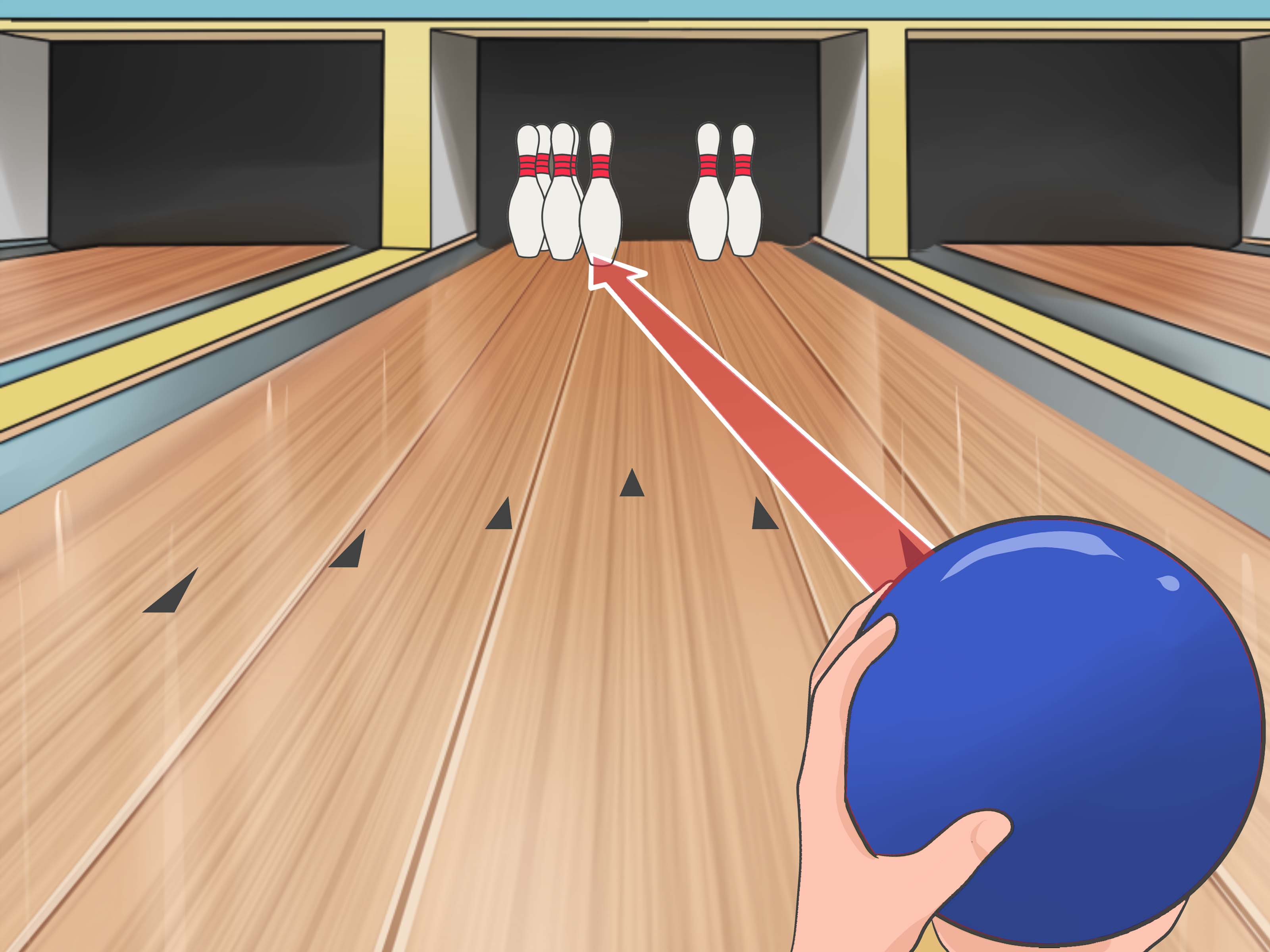
The pins are the destination, but the arrows and boards are your road map. Looking all the way down at the pins can make your target feel vague and distant. Looking at a closer target on the lane gives your eyes something specific to organize around.
For many bowlers on a typical house condition, a line near the second arrow is a reliable starting point. That does not mean it is the perfect target forever. It means it is a smart reference. From there, you can adjust based on how the ball reacts.
If the ball hooks too early and goes high, move your feet and target together in a controlled way. If it skids too long and misses the pocket weak, make the opposite adjustment. Good bowlers do not guess wildly after every miss. They make measured changes and read the lane like a puzzle instead of a personal insult.
Own the Pocket, but Respect the Spare
Everybody loves strikes. Strikes are glamorous. Strikes get applause. Strikes make you walk back from the lane like a movie character who definitely does not look at explosions. But spares are what build big games.
You can survive a stubborn carry issue. You can survive a ringing 10-pin. What destroys big scores are open frames. Miss enough single-pin spares and even six beautiful strikes start feeling like expensive decorations.
The smartest bowlers treat spare shooting like part of their identity. They have a plan for corner pins. They know where to stand. They know what target they like. They do not wander up to the approach and invent geometry in real time.
Use a Straighter Spare Shot
For many bowlers, the easiest way to improve scores fast is using a straighter ball path on spares. Hook is wonderful for creating entry angle into the pocket. Hook is less wonderful when you just want to remove the 10-pin and go back to living peacefully.
A straighter release lets you take lane condition and overreaction out of the equation. Keep your hand more behind the ball, let the ball roll end-over-end more cleanly, and simplify the task. Some bowlers use their strike ball with a hand-position adjustment. Others use a plastic spare ball to keep the reaction extra calm. Either way, the goal is the same: fewer surprises, more conversions.
And if you have never committed to a spare system, now is the time. The classic 3-6-9 concept remains popular because it gives bowlers a repeatable way to move for common spare leaves without reinventing the shot every frame.
Read Misses Like Clues, Not Tragedies
The lane is constantly talking to you. Sometimes it whispers. Sometimes it shouts by leaving a bucket, a flat 10, or a split that makes you stare into the middle distance. The bowlers who score best are the ones who listen.
A high hit can suggest early hook, too much friction, or a pull. A weak 10 can suggest late reaction, deflection, or lack of entry angle. Repeated misses in the same shape are data. Use them. Bowling is not only about throwing the shot; it is about interpreting the result.
That means your best game ever may not come from throwing every ball perfectly. It may come from noticing the lane transition before everyone else does and adjusting one frame sooner. Bowling rewards awareness almost as much as execution.
3. Practice Like a Serious Bowler, Not Like a Tourist with a Slice of Pizza
The third way to bowl your best game ever is the least glamorous and the most effective: practice with intention. Rolling ball after ball without a plan may feel productive, but it is often just cardio with sound effects.
Practice One Skill at a Time
Do not use every practice session like a random buffet. Pick one priority. Maybe it is balance at the line. Maybe it is hitting the same target ten shots in a row. Maybe it is converting 10-pins until the 10-pin files a complaint.
Focused practice builds real improvement because it gives your brain a clear assignment. Instead of thinking, “I hope I bowl better today,” you can think, “Today I am fixing my timing,” or “Today I am building a reliable spare routine.” That creates measurable progress.
A simple practice session might look like this:
- Ten shots focusing only on your finish position
- Ten shots at the same strike target
- Ten corner-pin spares cross-lane
- Five shots experimenting with one small move on a changing lane
That is how improvement becomes visible instead of theoretical.
Build a Repeatable Between-Shot Routine
Your best game ever is not only about physical execution. It is also about what happens between shots. Great bowlers settle themselves the same way before each frame. They wipe the ball. They check the target. They breathe. They step up with one decision, not six.
A routine protects you from emotional bowling, which is a very real and very annoying thing. Emotional bowling happens after a bad break, a missed spare, or that moment when your opponent suddenly discovers the front seven and turns into a legend. A routine helps you reset. It reminds you that the next shot does not care about the previous frame’s drama.
If your mind tends to sprint in ten directions, keep the routine simple. One deep breath. One clear target. One swing thought. Then go.
Learn to Play What the Lane Gives You
No bowling lane stays exactly the same. Oil moves. Angles change. Friction builds. Carrydown shows up. Your best game ever usually belongs to the bowler who adapts fastest, not the one who started hottest.
This is where many bowlers get stubborn. They throw two great strikes early and decide that line is now sacred scripture. Then the lane changes, the ball reacts differently, and they keep firing the same shot like repetition alone will shame physics into cooperating.
Be willing to adjust. Maybe you move your feet two boards. Maybe you change your target a touch. Maybe you wipe the ball more carefully. Maybe you switch to equipment that blends the lane better. The point is not to panic. The point is to respond.
Understanding your own game helps here, too. Some bowlers are more speed dominant. Others create more revs and shape. Some need help getting the ball to read sooner. Others need to keep it from overreacting. Your best scoring strategy should fit your ball motion, not the guy two lanes over throwing moon balls from the next zip code.
What the Best Games Usually Have in Common
When bowlers describe their highest games, they often talk less about “trying harder” and more about feeling in sync. The ball came off the hand clean. The feet stayed under control. Spare shots looked simple. Adjustments felt obvious. The game slowed down.
That is the real goal. Not perfection. Synchronization.
Your best game ever probably will not begin with a magical speech or a sudden transformation into a bowling monk. It will begin with an ordinary frame where you hit your target. Then another. Then you make a spare you used to miss. Then you stay patient when the lane changes. Then you avoid giving away frames. Then, somewhere around the seventh or eighth, you realize something dangerous:
You are bowling really, really well.
At that point, the mission is simple. Do not get heroic. Do not suddenly throw harder. Do not start thinking about score every three seconds. Stay in the routine. Trust the line. Respect the spare. Keep making one good decision at a time.
Conclusion
If you want to bowl your best game ever, focus on three things: build a repeatable physical game, target smarter while protecting your spare percentage, and practice with purpose. That combination is not flashy, but it is deadly effective.
Bowling rewards bowlers who make the game simpler. Repeat the setup. Trust the timing. Stay balanced. Use the arrows. Convert the spares. Adjust without drama. Practice one skill at a time. Do that often enough, and your ceiling starts to rise.
And when that big game finally arrives, enjoy every frame of it. Smile a little. Act casual if you want. But inside, know the truth: it was not magic. It was built shot by shot, spare by spare, and frame by frame. That is how bowlers earn their best game ever.
Experiences from the Lanes: What “Bowling Your Best Game Ever” Really Feels Like
One of the most interesting things about bowling your best game ever is that it usually does not feel heroic at first. It feels calm. The first couple of frames are ordinary. You make a good shot, maybe leave a single pin, maybe trip one out, and nothing seems dramatic. But then something subtle happens: the ball starts coming off your hand the same way over and over. Your feet are not racing. Your shoulders are not flying open. You are not guessing. You are just repeating.
That is when confidence starts to grow in a useful way. Not the loud kind that makes you announce to your friends that you are “locked in.” More like the quiet kind that says, “I know where to stand, I know where to look, and I know what I am trying to do.” That feeling is powerful because it makes the lane seem smaller. The target zone gets clearer. Even your misses become easier to understand. A high hit is not a disaster; it is a message. A lazy corner pin is not betrayal; it is information.
There is also a mental shift that comes with a great bowling set. You stop chasing strikes and start protecting frames. That may sound less exciting, but it is exactly why good scores happen. A bowler who stays clean through the first five frames often feels more dangerous than a bowler who starts with four strikes and two opens. In real bowling life, the spare is often the adult in the room. It keeps the game stable while everything else gets emotional.
Another common experience is discovering how much easier the game gets when you accept small adjustments. Many bowlers ruin good nights by being stubborn. They throw a strike on one line and cling to it like a family heirloom. Better bowlers notice transition and move before the lane fully forces them to. That tiny adjustmenttwo boards with the feet, one board with the eyes, a cleaner release on the spare shotcan be the difference between a 187 and a 236.
Then there is late-game pressure, which deserves its own dramatic soundtrack. The front part of the game is physical. The back part becomes emotional. Suddenly you know exactly what you are shooting. Your teammates get quieter. Somebody starts doing fake math. You become aware of your own heartbeat, which is rude, honestly. This is where routine matters most. The bowlers who finish big games are usually the ones who shrink the moment back down to one shot. One breath. One target. One smooth swing. Not “I need three more strikes.” Just this ball, right now.
And whether the game ends in a personal best, a near miss, or a score that is “great but annoyingly not the great one,” the experience teaches the same lesson: your best bowling shows up when your decisions get clear. Less forcing. Less guessing. More balance, more spare shooting, more trust. The spectacular scores come from surprisingly unglamorous habits. Which is perfect, really. Because habits can be practiced, and that means your best game ever does not have to stay a once-in-a-lifetime accident.