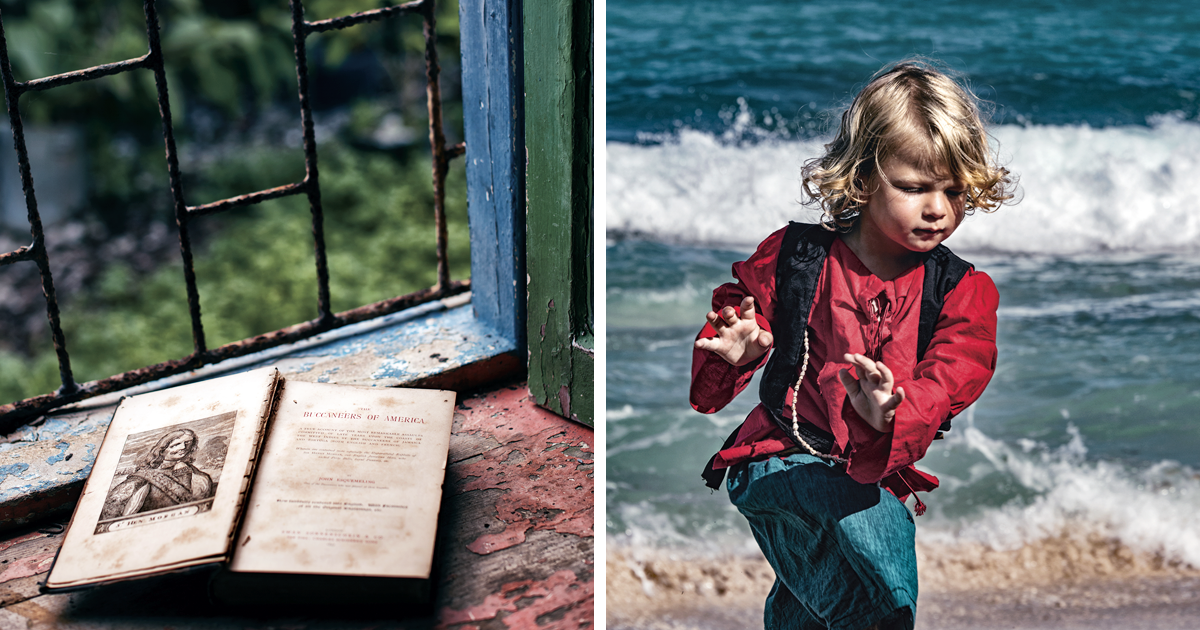
Some stories begin with a blank page. Mine often begin with sand in my shoes, a camera strap across my shoulder, and a child-sized straw hat that refuses to sit still in the breeze. Photographing Caribbean-inspired adventures for children book illustrations is not just about capturing pretty beaches, bright fruit, and postcard sunsetsalthough, let’s be honest, the sunsets do a lot of heavy lifting. It is about building a visual world where children can feel the warmth of a place, hear the rhythm of a street, smell the sweetness of ripe mango, and believe that adventure might be waiting just beyond the next painted gate.
Children’s book illustration has always relied on imagination, but photography adds a delicious layer of reality. A photograph can catch the way sunlight dances on a turquoise wall, the proud tilt of a child’s chin during a make-believe parade, or the tiny details that an illustrator can later transform into magic. In Caribbean-inspired storytelling, those details matter. The Caribbean is not one single culture, color palette, or vacation brochure. It is a vibrant region shaped by Indigenous heritage, African traditions, European histories, Asian influences, migration, music, food, language, family, and everyday joy.
That is why my work begins with respect. Before I stage a scene, choose a prop, or ask a child model to run down a sandy path with a wooden toy boat, I ask one question: does this image feel alive, honest, and worthy of the children who may see themselves in it?
Why Caribbean-Inspired Children’s Book Illustrations Matter
Children’s books are small objects with enormous power. They sit quietly on shelves, then suddenly become passports, mirrors, windows, and rocket ships before bedtime. When a child sees a character who looks like them, speaks like their family, eats familiar foods, or lives in a place that feels close to home, the story becomes personal. When another child discovers a world different from their own, the book becomes a bridge.
Caribbean-inspired children book illustrations can do both. They can celebrate island life without flattening it into clichés. They can show children fishing with grandparents, helping in a market, dancing at a community celebration, exploring rainforests, listening to folktales, or watching clouds gather before a sudden tropical rain. These scenes offer color and wonder, but they also offer dignity. They say, “This life belongs in books.”
In modern children’s publishing, readers, parents, teachers, and librarians increasingly look for stories that reflect diverse families and cultures. Caribbean children’s stories deserve more room on that shelf. Not only stories about beaches, pirates, or vacations, but stories about school mornings, cousins, festivals, missing home, loving home, moving away, coming back, and discovering identity one tiny adventure at a time.
The Art of Photographing Adventure Before It Becomes Illustration
My photographs are rarely meant to stand alone as final book art. Instead, they often serve as visual references for children’s book illustrations. Think of them as the bones, breeze, and sparkle behind the final artwork. An illustrator may use the curve of a child’s running pose, the pattern of a market basket, the folds of a cotton dress, or the shadow of a palm leaf across a porch. Then the image becomes something new: softer, brighter, more whimsical, and perfectly suited for young readers.
Finding the Story Inside the Scene
A strong children’s illustration does not simply show what something looks like. It shows what is happening emotionally. A child standing by the sea is a picture. A child standing by the sea holding a bottle with a secret map inside is a story. A child standing by the sea while a crab steals the map is comedy, and comedy is very important because children are excellent judges of nonsense.
When I photograph Caribbean-inspired adventures, I look for movement and possibility. A narrow lane lined with colorful houses can become the road to a hidden bakery. A fishing dock can become the launch site for a moonlit quest. A backyard mango tree can become a jungle tower. The goal is not to make the Caribbean look like a fantasy world. The goal is to reveal the fantasy already tucked inside real places.
Choosing Color With Care
Caribbean-inspired visuals often use rich color: ocean blue, hibiscus red, banana yellow, papaya orange, coral pink, rainforest green, and the deep indigo of evening skies. But color should never be random confetti thrown at the page. It should support the mood of the story.
For a joyful adventure, I may photograph children near bright walls, patterned fabrics, or sunlit fruit stalls. For a quieter story about memory or homesickness, I may use softer morning light, sea mist, or the muted tones of old family photographs. Color is emotional weather. Use it wisely, and the reader feels the story before they finish the sentence.
Authenticity Is More Than Palm Trees
One of the biggest mistakes in Caribbean-inspired children’s book art is treating the region as a decorative theme rather than a living culture. A palm tree does not automatically make a story Caribbean. Neither does a coconut with a straw in it, although the coconut is doing its best.
Authenticity comes from specificity. Which island or community inspires the story? What language or dialect might be heard at home? What foods appear at family gatherings? What games do children play? What music floats from a neighbor’s radio? What does the school uniform look like? What does rain smell like when it hits warm pavement? These details are not background clutter. They are cultural texture.
Because the Caribbean includes many nations, territories, and diasporic communities, research is essential. A scene inspired by Jamaica should not casually borrow details from Trinidad, Puerto Rico, Barbados, Haiti, or the Dominican Republic as if all islands were interchangeable. There may be shared histories and regional rhythms, but there are also distinct languages, traditions, landscapes, and ways of life. Good photography respects those differences before the illustrator ever picks up a pencil.
Popular Caribbean-Inspired Adventure Themes for Children’s Books
The best children’s adventures are usually built from simple questions: What if the kite flies too far? What if Grandma’s recipe goes missing? What if the sea turtle needs help? What if the parade starts and the drummer is late? Caribbean-inspired settings are full of story sparks that can become charming, meaningful picture books.
Island Treasure Hunts
Treasure hunts are classics because children understand the thrill of looking for something important. In a Caribbean-inspired book, treasure does not have to mean gold coins. It can be a lost shell necklace, a family recipe, a festival costume button, a grandfather’s fishing charm, or the perfect guava for a birthday cake. Photographing these scenes means focusing on clues: footprints in sand, folded paper maps, hand-painted signs, and curious children peeking around corners.
Market Day Adventures
Markets are visual playgrounds. They offer color, sound, texture, and character all in one place. A child might count mangoes, search for a missing shopping list, help an auntie sell spices, or discover that a very suspicious chicken has stolen the spotlight. For illustration references, I photograph baskets, fabric awnings, handwritten signs, fruit piles, busy hands, and the joyful chaos of community commerce.
Festival and Carnival Stories
Caribbean festivals are rich with music, costume, dance, and history. For children’s books, festival scenes can be exciting, but they should be handled thoughtfully. Carnival, Junkanoo, heritage festivals, and local celebrations are not just “big colorful parties.” They often carry deep cultural memory, creativity, resistance, spirituality, and community pride. My photographs focus on preparation as much as performance: sewing, practicing, painting, waiting, laughing, and the tiny nervous moment before a child steps into the parade.
Nature and Ocean Adventures
The Caribbean offers beaches, coral reefs, mountains, rivers, caves, mangroves, rainforests, and wildlife. Nature-based children’s stories can introduce environmental themes without sounding like a classroom worksheet wearing flip-flops. A story about protecting a turtle nest, cleaning a beach, following a hummingbird, or learning why coral reefs matter can feel adventurous and heartfelt. Photography helps capture the scale of nature from a child’s point of view: a giant leaf, a tiny crab, a wave that looks enormous when you are six.
How Photography Helps Illustrators Create Better Children’s Book Art
Photography gives illustrators a reference library filled with real gestures, lighting, clothing folds, architectural details, and facial expressions. Children move in wonderfully unpredictable ways. They squat, wiggle, sprint, flop, point, lean, and invent poses no adult would consider structurally reasonable. Capturing those movements helps illustrations feel natural rather than stiff.
For Caribbean-inspired children book illustrations, photography also supports accuracy. It documents how a veranda railing casts shadows, how school shoes look after walking a dusty road, how sunlight bounces off painted walls, or how a festival costume moves when a child spins. These details make illustrated worlds believable. Young readers may not know why a scene feels real, but they can sense when it does.
Working With Child Models
Photographing children requires patience, humor, and snacks. Mostly snacks. I never expect children to behave like tiny professional actors. Instead, I create playful prompts. “Pretend the mango is whispering a secret.” “Run like your cousin just challenged you to a race.” “Look at the crab as if it owes you money.” These prompts create expressions that feel spontaneous and age-appropriate.
Safety and consent are always central. Children should feel comfortable, parents or guardians should understand the project, and the shoot should allow breaks. A relaxed child gives a better photograph than a perfectly posed child who would rather be anywhere else, including the dentist.
Props That Tell a Story
Props in children’s book photography should feel useful, not decorative. A woven basket, a handmade kite, a drum, a shell, a recipe card, a toy boat, a school bag, or a pair of muddy sandals can reveal character and plot. The best prop looks like it belongs to the child, not like it was panic-purchased five minutes before the shoot.
I prefer objects with texture and history. A slightly faded tin cup, a well-loved book, or a patched costume can say more than something shiny and new. Children’s stories often live in the small beloved things adults overlook.
Creating a Visual Style: Real, Whimsical, and Warm
Caribbean-inspired children’s book illustrations often shine when they balance realism and wonder. Too much realism can feel documentary. Too much fantasy can erase the cultural grounding. Photography helps hold the two together. I may photograph a real child standing beside a real breadfruit tree, but the illustrator might later add a trail of glowing fireflies, a mischievous lizard narrator, or clouds shaped like dancing grandparents.
Lighting is especially important. Morning light feels hopeful. Afternoon light feels adventurous. Golden-hour light feels magical, as if the whole island has been brushed with honey. Overcast light can be beautiful too, especially for emotional scenes. Not every Caribbean-inspired image needs blazing sun. Rain, shade, and twilight are part of island life as well.
Writing and Photographing With Cultural Sensitivity
Anyone creating Caribbean-inspired children’s content should approach the work with humility. If the story draws from a culture outside your own lived experience, research is not optional. Speak with cultural consultants, read books by Caribbean authors, study local history, and listen more than you decorate. Avoid turning dialect into comedy. Avoid using poverty as scenery. Avoid making every adult a vendor, musician, or background character with no interior life.
Children deserve stories full of adventure, but they also deserve truth. A Caribbean-inspired book can be funny, magical, and bright while still honoring real people and places. The goal is not perfection. The goal is care.
Behind the Camera: My Experience Photographing Caribbean-Inspired Adventures
The first thing I learned is that children do not care about your shot list. You may arrive with twelve carefully planned scenes, three backup concepts, and a clipboard that makes you feel very official. Then a child finds a beetle, names it Captain Pickle, and suddenly Captain Pickle is the emotional center of the entire production. Honestly, sometimes Captain Pickle improves the story.
One of my favorite shoots involved a simple idea: a child delivering a basket of fruit across a colorful village street before a family celebration. On paper, it sounded easy. In real life, the basket was too heavy, the wind kept flipping the scarf, and one orange escaped dramatically down the road like it had a train to catch. But that runaway orange gave us the best image of the day: the child laughing, one sandal half-off, arms stretched forward, completely alive in the moment. That photograph later inspired an illustration full of motion and humor.
Another memorable session took place near the water at the end of the afternoon. The story concept involved two cousins searching for a “singing shell.” We photographed them listening to shells, arguing over which one sounded most magical, and tiptoeing around small tide pools. The important part was not the shell. It was the relationship between the cousinsthe older one pretending to know everything, the younger one clearly not convinced. That tiny emotional tug-of-war became the heart of the visual sequence.
I have also learned that Caribbean-inspired photography works best when the camera slows down. It is tempting to chase the biggest colors and loudest scenes, but the quiet moments often carry the deepest story. A child watching an elder knead dough. A hand brushing sand from a book cover. A grandmother tying a ribbon. A boy pausing before joining a dance. These are the images that give an illustrator emotional material, not just visual material.
Food has been another wonderful teacher. Photographing Caribbean-inspired children’s stories often means working around kitchens, markets, fruit trees, and family tables. Food is never just food. It can represent memory, pride, migration, teasing, competition, comfort, or celebration. A bowl of rice, a slice of coconut, a spoonful of stew, or a mango cut over the sink can tell a story about home faster than a paragraph of explanation.
The biggest challenge is avoiding the “tourist gaze.” A camera can easily turn a living place into a pretty object. To avoid that, I focus on children as active heroes, not accessories in a tropical setting. They solve problems, ask questions, make mistakes, help elders, protect animals, get muddy, feel shy, become brave, and occasionally chase fruit down the road. The Caribbean-inspired setting enriches the adventure, but the child carries the story.
Every shoot reminds me that children’s book illustration is not only about beauty. It is about belonging. Somewhere, a young reader may open a book and recognize a courtyard like their auntie’s, a festival costume like the one in a family photo, or a sea wall like the place where they once ate ice cream too quickly and regretted nothing. Another reader may see those same images and discover a new world with curiosity and respect. That is the magic I am chasing every time I lift the camera.
Conclusion: Turning Real Places Into Storybook Wonder
Photographing Caribbean-inspired adventures for children book illustrations is a joyful blend of research, imagination, cultural respect, and creative play. It asks the photographer to notice both the grand and the tiny: the festival parade and the loose button, the turquoise sea and the child afraid to dip one toe in it, the bright market and the shy smile behind a fruit basket.
The best images do not simply say, “Look how beautiful this place is.” They say, “A child lives, dreams, laughs, learns, and becomes brave here.” That is the heart of meaningful children’s book art. Whether the final illustration is realistic, painterly, whimsical, or wildly magical, it begins with honest observation. It begins with listening. It begins with seeing the Caribbean not as a backdrop, but as a world of stories waiting for children to enter.
And if a crab steals the map along the way? Take the picture. That crab may be the breakout character.