The headline sounds like a movie trailer voice-over: In a world where the Taiwan Strait never gets a day off… But the real story is more serious, more strategic, and frankly more important than the chest-thumping headline style suggests.
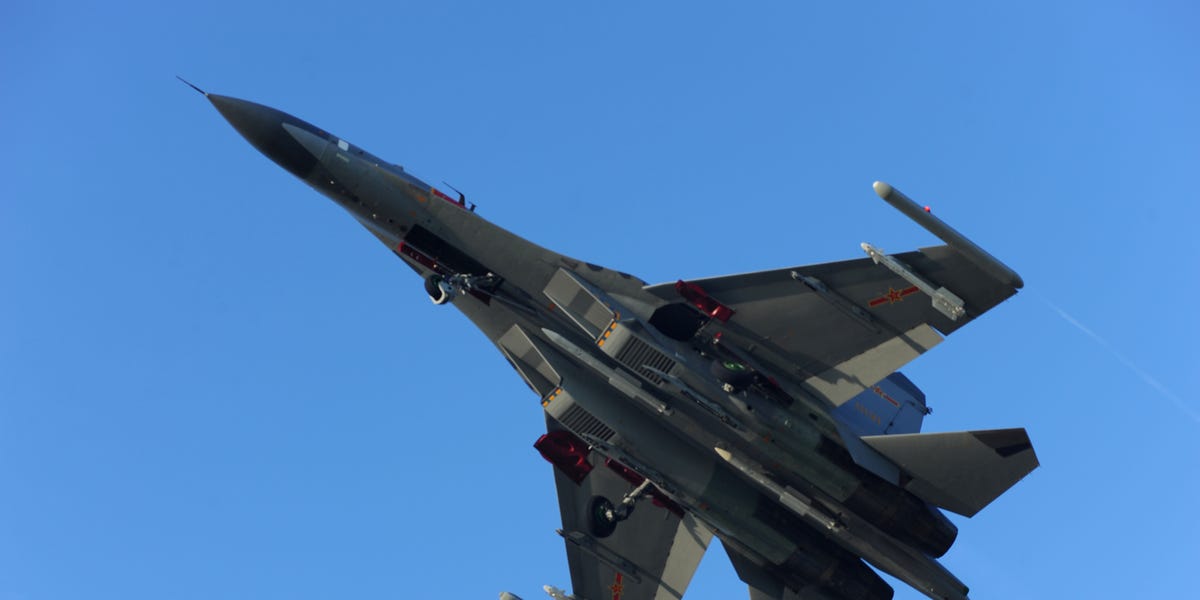
When China sent a record number of military aircraft around Taiwan during major drills, it was not just flexing for the cameras. It was sending a layered message to Taipei, Washington, and everyone else with a navy, a trading portfolio, or a semiconductor dependency. The point was not merely to frighten Taiwan for a news cycle. The point was to normalize pressure, rehearse coercion, and make ever-larger military activity around the island feel routine.
That is the big story here. Yes, the numbers matter. Yes, the visuals matter. But the deeper issue is that Beijing keeps expanding the scale, tempo, and sophistication of military operations near Taiwan while trying to blur the line between an intimidating drill and the early stages of something far more dangerous.
What Actually Happened
The most dramatic recent benchmark came during China’s October 2024 military exercises around Taiwan, known as Joint Sword-2024B. Taiwan first reported 125 Chinese aircraft during the operation itself, then later said it detected 153 military aircraft over roughly a 24-to-25-hour period, setting a new record. That made the episode a standout moment in an already tense pattern of PLA air and naval activity around the island.
Important detail, because details keep international crises from turning into internet fan fiction: this did not mean 153 warplanes flew directly over downtown Taipei like they were circling for parking. Many of the aircraft operated around Taiwan, with large numbers crossing the median line in the Taiwan Strait or entering Taiwan’s air defense identification zone, also known as the ADIZ. That is provocative, risky, and strategically meaningful. It is not the same thing as entering Taiwan’s sovereign airspace.
China framed the drills as punishment for what it called separatist behavior after Taiwanese President Lai Ching-te’s National Day speech. Taiwan, meanwhile, condemned the exercises as destabilizing and dangerous. Washington and other observers viewed the drill as part of a familiar pattern: Beijing reacts to political moments in Taiwan with military demonstrations designed to raise costs, signal dominance, and remind the island that the PLA can show up in force with very little notice.
And the pressure did not stop there. In April 2025, Taiwan reported 76 Chinese military aircraft and 15 ships around the island during another round of war games. In June 2025, AP reported that China sent 74 warplanes toward Taiwan in a large-scale display, with 61 crossing the median line in the strait. By 2026, Reuters was still describing Chinese warships and warplanes around Taiwan as a near-daily reality. In other words, the record day was dramatic, but it was also part of a broader campaign rather than a one-off tantrum with jet fuel.
Why This Matters More Than the Headline
1. Beijing Is Turning Pressure Into a Habit
One of the smartest and most unsettling things China has done is make military pressure around Taiwan feel less like a singular crisis and more like background weather. Not hurricane weather. More like “oh look, another low-pressure system over the strait.” That normalization matters.
Experts increasingly describe this as gray-zone coercion: aggressive activity below the threshold of full-scale war. It includes aircraft sorties, naval patrols, coast guard operations, military exercises, declared airspace restrictions, and maritime activity that steadily squeezes Taiwan without triggering the sort of unmistakable event that would force an immediate international response.
This strategy works on several levels. It tests Taiwan’s readiness. It strains maintenance cycles. It forces repeated scrambles and surveillance responses. It creates uncertainty for shipping and air traffic planners. It also sends a message to Taiwan’s public: We can show up whenever we want, in larger numbers than before, and the world will mostly issue statements and keep refreshing stock indexes.
2. The Numbers Show a Rising Baseline, Not Just a Spiky Crisis
The October 2024 record was eye-catching, but the broader trend may be even more important. CSIS has reported that 2025 brought a record overall level of PLA activity around Taiwan, including thousands of air incursions into Taiwan’s de facto ADIZ and a much higher monthly baseline of operations than in earlier years. That matters because sustained pressure often tells us more than a single spectacular day.
A one-day record can be theater. A permanently elevated tempo is policy.
That distinction helps explain why defense analysts do not treat these sorties as isolated incidents. They see them as building blocks in a longer campaign: one that conditions the region to larger PLA presence, improves Chinese military familiarity with the operating environment, and gradually shifts expectations about what is “normal” near Taiwan.
3. A Drill Can Also Be a Rehearsal
When China surrounds Taiwan with aircraft, ships, and coast guard vessels, it is not merely doing military jazz hands. These operations can simulate blockade conditions, test joint command and control, evaluate response times, and practice the choreography needed for a real crisis. Even when the PLA is not launching an invasion, it may still be learning how to choke, isolate, or overwhelm Taiwan in stages.
That possibility has made U.S. and Taiwanese officials increasingly wary of large-scale exercises. The concern is simple: if military drills become frequent enough, it becomes harder to tell where signaling ends and genuine escalation begins. A region can get used to the alarm bell just in time to miss the fire.
ADIZ, Median Line, and Sovereign Airspace: The Geography Everyone Argues About
Cross-strait coverage often gets messy because different terms get tossed into the blender. So here is the plain-English version.
An air defense identification zone is not the same as sovereign airspace. It is a self-declared area in which aircraft are expected to identify themselves for security monitoring. Entering an ADIZ is serious, but it is not the same as violating national airspace.
The median line in the Taiwan Strait is another important concept. It is an unofficial dividing line that for many years helped reduce risks between the two sides. China has increasingly ignored it. When large numbers of PLA aircraft cross that line, the political message is obvious: Beijing does not accept limits it did not design.
Then there is sovereign airspace, generally the 12 nautical miles off a state’s coast. During the record-setting October 2024 episode, reports indicated that Chinese aircraft did not enter Taiwan’s sovereign airspace. That distinction matters legally and militarily, but nobody in the region is treating these operations as harmless simply because they stop short of that threshold.
Think of it this way: somebody pounding on your front door is not the same as somebody standing in your living room. But it is still not the behavior of a chill neighbor borrowing sugar.
Why Washington and the Rest of the World Care
Taiwan is not just a local flashpoint. It sits at the center of a much larger strategic map involving U.S.-China rivalry, Indo-Pacific security, freedom of navigation, and global technology supply chains.
First, Taiwan matters militarily. A conflict there would pull in questions about U.S. alliances, Japanese security, Philippine geography, and the credibility of American deterrence. That is why military movements around Taiwan are watched not just in Taipei and Beijing, but in Washington, Tokyo, Canberra, and beyond.
Second, Taiwan matters economically. A major crisis in the Taiwan Strait would threaten global shipping, investor confidence, and semiconductor supply chains. Taiwan’s role in advanced chip production means any serious disruption would hit far beyond East Asia. If the island sneezes under blockade pressure, the global tech economy could catch a very expensive cold.
Third, Taiwan matters politically. Beijing treats the issue as tied to sovereignty and national rejuvenation. Taiwan’s government rejects Beijing’s claim and insists the island’s future can only be decided by its people. The United States maintains its long-standing “One China” policy while opposing unilateral changes to the status quo by force. That triangle of positions is stable enough to avoid instant collapse, but tense enough to ruin everyone’s week on short notice.
Does This Mean War Is Imminent?
Not necessarily, and serious analysis needs to resist the temptation to shout “this is it” every time the sortie count jumps. Even U.S. intelligence assessments in 2026 said Chinese leaders do not currently have a fixed timeline to execute an invasion in 2027, despite years of commentary around that date. The broader view is more nuanced: Beijing prefers unification without force if possible, but it continues building the military capabilities needed to use force if it chooses to do so.
That means the danger is real, but the timeline is not a countdown clock blinking red over a map.
The bigger near-term risk may be coercion short of invasion: expanded exercises, blockade rehearsals, maritime pressure, cyber activity, or attempts to exhaust Taiwan psychologically and operationally. A future crisis could begin not with a dramatic declaration of war, but with a flood of “routine” activity that suddenly is not routine anymore.
How Taiwan Is Responding
Taiwan has not responded to this pressure by pretending none of it is happening. It has been working to improve readiness, harden infrastructure, invest in more resilient defense planning, and debate bigger defense budgets. Taiwanese leaders increasingly argue that peace requires preparedness, not wishful thinking wrapped in polite press releases.
There is also a growing conversation about asymmetric defense. That means relying less on shiny prestige systems alone and more on survivable, mobile, harder-to-target capabilities that can complicate any Chinese operation. Analysts have argued that Taiwan must avoid burning through resources in ways that mainly help Beijing’s coercion campaign. If gray-zone pressure is designed partly to wear Taiwan down, then Taiwan’s response has to be sustainable as well as credible.
In practical terms, that includes better dispersal, stockpiles, civil resilience, training, and command systems that can keep functioning under pressure. No glamorous movie montage required. Just stubborn, organized preparation.
What to Watch Next
The next phase of this story will likely not hinge on one number alone. Instead, there are several signals worth watching closely.
The first is scale. Are the aircraft counts rising again after each political trigger? Bigger surges suggest the PLA is still testing how far it can push without provoking a sharper counterreaction.
The second is proximity. Drills that move closer to Taiwan’s key ports, sea lanes, or air corridors matter more than headline totals alone. Geography can be more revealing than raw volume.
The third is integration. When aircraft, navy ships, coast guard vessels, and restricted airspace notices all appear together, the message becomes more operational and less symbolic.
The fourth is duration. A short burst is one thing. A longer effort that stresses logistics, commercial traffic, and command endurance is another. The longer the pressure lasts, the more it starts looking like a real-world test run.
Experiences Related to the Topic: What Constant Military Pressure Feels Like
To understand this issue, it helps to step away from maps, briefings, and fighter-jet spreadsheets for a moment and think about experience. Not the dramatic Hollywood version where everybody is sprinting through flashing red hallways, but the slower, stranger experience of living under recurring military pressure that is serious enough to matter and common enough to become familiar.
For many people in Taiwan, the tension is not always cinematic. It can be oddly ordinary. A morning begins with coffee, work messages, school runs, and then a fresh news alert about Chinese aircraft, ships, or new exercise zones. Daily life goes on, because daily life has to go on. Offices open. Trains run. Markets stay busy. People still worry about rent, exams, job interviews, and whether the weather will ruin the weekend. That contrast is one of the most striking realities: extraordinary military pressure unfolding alongside routine civilian life.
But normal does not mean unaffected. For military personnel and defense officials, repeated PLA activity means constant monitoring, repeated decisions, and long stretches of operational attention. Fatigue is part of the story. Maintenance is part of the story. The emotional burden of always being alert, but not always being in a declared crisis, is part of the story too.
For business leaders, the experience is different but no less real. Every major spike in cross-strait tension raises questions that no spreadsheet enjoys answering. Will shipping routes face disruption? Will insurers worry more? Will investors get nervous? Will clients start asking uncomfortable supply-chain questions with the energy of people who suddenly discovered geography yesterday?
For families, the pressure often lives in the background. It is there in news conversations, in school discussions, in debates about military service, in the growing emphasis on resilience, and in the unspoken understanding that the island’s security environment is not abstract. The threat may not be immediate on a given day, but it is persistent enough to shape how people think about the future.
There is also a psychological experience that outsiders sometimes miss. Repeated military intimidation can create two opposite reactions at once: anxiety and numbness. Some people become more worried. Others become desensitized. Both responses are understandable. And both can be strategically useful to Beijing if the goal is to make Taiwan feel pressured, divided, exhausted, or doubtful about whether the outside world would truly step up in a real emergency.
That is why the experience of this issue is not only about warplanes. It is about endurance. It is about maintaining democratic confidence while living next to a much larger power that keeps using military presence as political communication. It is about refusing to let every sortie dictate the national mood, while also refusing to shrug off real danger.
In that sense, the lived experience behind the headlines may be the most important part of the story. The jets make the noise. The strategy creates the pressure. But the real contest is over whether a society can stay calm, prepared, and clear-eyed while that pressure keeps coming back.
Conclusion
China’s record-setting warplane activity around Taiwan was not just a flashy military statistic. It was a vivid example of how Beijing is turning coercion into routine strategy. The PLA’s flights, ship deployments, and exercises are designed to signal power, test responses, and make larger operations near Taiwan feel normal. That should worry policymakers, businesses, and anyone who prefers global supply chains without a side of geopolitical panic.
Still, the right takeaway is not “war tomorrow.” It is “pressure today, pressure tomorrow, and pressure by design.” The real danger lies in how sustained coercion can wear down defenses, distort public expectations, and blur the line between demonstration and escalation. The record number mattered. The pattern matters more.