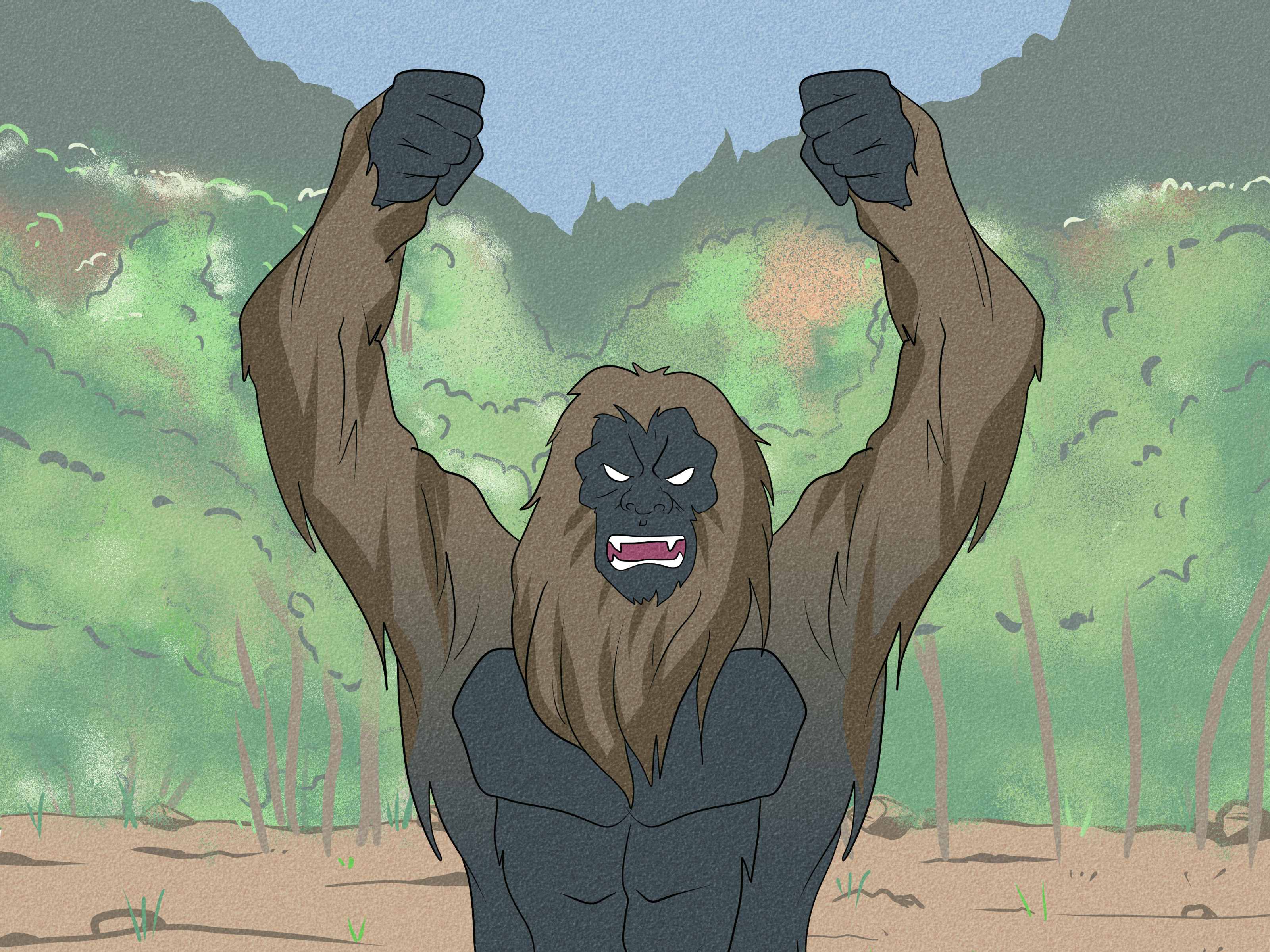
If you have ever stared into a dark forest and thought, “That stump looks suspiciously judgmental,” congratulations: you already understand part of the Sasquatch experience. If you have ever seen a snowy mountain photo and thought, “Something large, hairy, and underdressed might live there,” welcome to Team Yeti. These two famous cryptids are often treated like cousins in the global family tree of mysterious hairy bipeds. But while Sasquatch and Yeti share a talent for avoiding photographers with functioning focus, they come from very different landscapes, traditions, and cultural histories.
That distinction matters. “Sasquatch” is tied to North American Indigenous traditions and the forests of the Pacific Northwest, while “Yeti” belongs to the Himalayas and to a long history of local stories, mountaineering lore, and Western fascination with the so-called Abominable Snowman. In modern pop culture, they often get blended into one shaggy mystery. In reality, they play different roles in the human imagination.
This guide breaks down the seven biggest differences between Sasquatch and Yeti, explains why people keep comparing them, and answers the question that always stomps in last: are they real, or are we all just very committed to being spooked by footprints?
What Are Sasquatch and Yeti, Exactly?
Sasquatch, often called Bigfoot, is the legendary large, hairy, humanlike creature said to inhabit the forests of western Canada and the northwestern United States. The name itself is associated with Salish-language traditions, and the figure has long appeared in regional stories that predate modern tourism, documentaries, and blurry footage that somehow always looks like it was filmed by a potato.
Yeti, by contrast, is the legendary Himalayan “wild man,” often associated with Nepal, Tibet, Bhutan, and nearby mountain regions. In Western culture, Yeti is frequently packaged as the Abominable Snowman, a dramatic label that sounds like it was invented by a tabloid editor who had just discovered adjectives. The result is one of the world’s most enduring mountain mysteries: a creature described at times as apelike, at times as humanlike, and very often as the owner of suspiciously large footprints in snow.
Both are typically classified as cryptids, meaning creatures that are rumored or reported but not scientifically confirmed. That puts them in the same conversational neighborhood as lake monsters, giant birds, and every “absolutely not a raccoon” story ever told at 2:00 a.m.
7 Key Differences Between Sasquatch and Yeti
1. Their Home Turf Is Completely Different
The first and biggest difference is geography. Sasquatch is a creature of North America, especially the Pacific Northwest. Think dense forests, misty valleys, river corridors, cedar groves, and mountains wrapped in enough fog to make every branch look guilty. Washington, Oregon, British Columbia, Northern California, and nearby regions dominate the Sasquatch map.
Yeti belongs to the Himalayas. Its legendary range is linked to Nepal, Tibet, Bhutan, and high-altitude areas around Mount Everest and other major peaks. Instead of dark evergreen forests and logging roads, the Yeti’s stage is glaciers, snowfields, rock faces, and remote alpine terrain. In other words, Sasquatch is “forest mystery,” while Yeti is “mountain mystery.” One lurks where you lose cell service. The other lurks where you lose oxygen.
2. Their Climate and Terrain Shape the Legend
Sasquatch stories are deeply tied to wilderness that is wet, wooded, and difficult to search. This matters because thick forests are fantastic for legends. A sound in the brush could be a deer, a bear, a branch snapping, or your imagination putting on a full Broadway production.
Yeti lore grows in almost the opposite environment: high, cold, snowy country where tracks can appear dramatically and then become even more dramatic after wind, melt, and refreezing distort them. That is one reason Yeti evidence often centers on footprints in snow, while Sasquatch evidence more often involves tracks in mud, eyewitness accounts in wooded areas, or the occasional shaky film clip that launches a thousand arguments.
3. Their Cultural Roots Are Not the Same
Sasquatch is not just “an American monster.” Its deeper roots are connected to Indigenous and First Nations traditions in the Pacific Northwest and western Canada. Those traditions are older, richer, and more varied than the cartoon version sold on novelty T-shirts. In some tellings, the being is a wild man of the woods. In others, it occupies a more spiritual or cautionary place. The important point is that Sasquatch did not begin as a modern internet meme with feet the size of snowboards.
Yeti emerges from a different cultural world: Himalayan communities, Sherpa traditions, Tibetan and Nepali storytelling, and mountain travel lore. Western climbers later amplified the legend during the twentieth century, especially as Everest exploration became global news. So while both creatures are “hairy mystery bipeds,” their cultural DNA is different. Sasquatch grows from North American Indigenous tradition and frontier folklore. Yeti grows from Himalayan belief, mountain storytelling, and expedition-era fascination.
4. Even Their Names Tell Different Stories
The name “Sasquatch” has roots in a Salish-derived term often translated along the lines of “wild men,” which fits the creature’s forest identity. “Bigfoot,” meanwhile, is the flashy nickname that became popular in the modern era and basically did all the branding work. It is simple, memorable, and sounds exactly like what a witness would blurt out while backpedaling into a pickup truck.
“Yeti” is the better-known local-style name, but in English-language pop culture the creature became famous as the “Abominable Snowman.” That phrase is one of the great glow-ups in monster marketing. It sounds bigger, stranger, and much more cinematic than “possibly misunderstood mountain animal.” The title helped turn the Yeti into an international celebrity, even if it also flattened a more complex regional tradition into one frosty headline.
5. The “Evidence” Usually Looks Different
With Sasquatch, the most famous modern evidence is the 1967 Patterson-Gimlin film, which appears to show a large hairy biped walking through Bluff Creek in Northern California. Believers call it the gold standard of Bigfoot evidence. Skeptics call it a remarkably durable argument in fur form. Either way, it remains the most famous Sasquatch footage ever recorded.
Yeti’s signature evidence is usually not film. It is footprints, especially the famous 1951 photographs taken by mountaineer Eric Shipton near Everest. Those images became central to Yeti lore because they seemed to show large, humanlike impressions in snow at high altitude. The trouble is that snow is a terrible courtroom witness. Tracks can stretch, blur, merge, and distort, and several scientific discussions have pointed to bears and environmental effects as far more likely explanations than a hidden Himalayan hominid.
So if Sasquatch is the king of blurry forest cinema, Yeti is the emperor of suspicious snow prints.
6. Their Usual Look in Pop Culture Is Different
Sasquatch is usually depicted as a dark, broad, muscular forest giant with long arms, a hunched gait, and a general vibe of “I would prefer not to be perceived.” The standard image is brown, black, or reddish-brown hair, not bright white fur. He is the patron saint of the Pacific Northwest bumper sticker.
Yeti, on the other hand, is often shown as white or pale because Western pop culture fused the creature with snow itself. That visual is powerful, but it is not the only way the Yeti has been described. Across stories and retellings, appearance varies. Still, the branding stuck: if Sasquatch is “forest ape-man,” Yeti is “snow giant.” One belongs on a campground mug; the other belongs on a movie poster next to a blizzard and a doomed expedition leader.
7. They Play Different Roles in Modern Culture
Sasquatch has become deeply woven into North American roadside culture. He appears on jerky bags, coffee shop murals, craft beer cans, local festivals, highway souvenir stores, and enough T-shirts to clothe a small cryptid militia. He is spooky, yes, but he is also funny, local, and weirdly lovable.
Yeti feels more remote and dramatic. In modern storytelling, it is linked to Everest-era mystery, ancient footprints, icy silence, remote monasteries, and the idea that the mountains still hold secrets humans cannot quite name. Sasquatch feels like a neighbor you never catch. Yeti feels like a legend the mountain tells about itself.
So, Are Sasquatch and Yeti Real?
This is where the music gets serious and the flashlight batteries start to fail.
The best evidence available today does not confirm that Sasquatch or Yeti are real undiscovered ape-men or hidden human relatives. That does not mean every witness is lying. It does mean that eyewitness stories, footprints, and fuzzy images have not produced the kind of repeatable, physical proof science requires.
For Sasquatch, the biggest problem is the same one it has always had: no verified body, no bones, no confirmed tissue, no accepted DNA, and no clear biological trail for an animal supposedly large enough to leave giant tracks across a continent. Even the FBI’s once-famous analysis of supposed Bigfoot hair ended in the world’s least cinematic twist: deer hair. That is not exactly the ending believers were hoping for.
For Yeti, modern DNA work has been especially rough on the legend. In one widely cited study, alleged Yeti samples turned out to come mostly from Himalayan or Tibetan bears, with one sample matching a dog. Add in the fact that snow tracks can distort dramatically and that high-altitude bear encounters can already be confusing, and the “mystery primate” case becomes much weaker.
There is also an ecological problem. Large mammals leave evidence. They die. They shed. They breed. They create feeding traces, droppings, carcasses, and stable populations that eventually show up in ways wildlife biology can document. A giant bipedal primate cannot remain forever invisible while also apparently wandering around producing dramatic sightings whenever a documentary crew needs a cold open.
So are they real? As literal, undocumented species of giant hairy humanoids, there is no convincing scientific proof. As legends, cultural symbols, and engines of human imagination, absolutely yes. They are real in the way stories can be real: powerful, persistent, adaptable, and weirdly difficult to evict from the brain.
Why People Still Love the Sasquatch vs Yeti Debate
Because the debate is secretly doing several jobs at once.
It is part folklore, part travel fantasy, part wilderness romance, and part rebellion against the idea that every corner of the world has already been mapped, scanned, tagged, and turned into a location pin. Sasquatch and Yeti let us imagine that there are still blank spaces left. Not blank on a satellite image, maybe, but blank in the emotional sense: places where mystery survives.
They also give different cultures different kinds of monster. Sasquatch belongs to giant trees, wet trails, and the old unease of the North American wild. Yeti belongs to the vertigo of snow, altitude, and mountain silence. Both creatures reflect the environments that spawned them, which is one reason they remain so memorable. We do not just remember the beast. We remember the setting, and the setting does half the haunting.
Experiences Around the Legend: What This Mystery Feels Like in Real Life
One reason the Sasquatch versus Yeti debate never really dies is that the experience around these legends is bigger than the evidence. Very few people go into the woods or the mountains expecting to produce a peer-reviewed paper. What they want, more often, is the feeling. And honestly, the feeling is excellent.
In Sasquatch country, that feeling begins with landscape. You drive into the Pacific Northwest and the scenery starts acting like it knows a secret. The trees rise like cathedral columns. Fog drifts across the road. Every turnout has a creek that sounds louder than it should. You stop for coffee in a small town and find a wooden Bigfoot statue outside a gift shop, which is funny until sunset, when it becomes just unsettling enough to earn its rent. Then you hit a trail, hear one branch crack somewhere behind you, and immediately become the world’s leading expert in walking faster without technically jogging.
The Yeti experience is different. It is less campfire and more awe. In mountain regions linked to Yeti stories, the environment does not merely suggest mystery; it practically charges admission for it. Huge walls of rock, long fields of snow, thin air, and silence that feels almost physical create a setting where any unfamiliar print can seem important. A shadow moving across a distant slope becomes a question mark. A set of tracks that might be ordinary at lower elevation suddenly feels myth-sized when it appears in a place where everything already seems larger than your vocabulary.
And then there is the social experience. Sasquatch stories tend to be traded with a grin, a raised eyebrow, and the possibility that someone might be kidding, half-kidding, or not kidding at all. Yeti stories often carry a different tone: more reverence, more mountain gravity, more sense that the legend belongs to a place before it belongs to outsiders. In both cases, the experience is not just about seeing something strange. It is about stepping into a story that existed before you arrived.
That is why museums, roadside attractions, travel articles, documentaries, and local festivals keep returning to these creatures. They are not simply asking, “Did it exist?” They are asking, “What does it feel like to be in a place where it could exist?” That question is much stickier. It turns a hiking trail into a narrative. It turns a footprint into a conversation. It turns one unexplained noise into a family story that gets told for twenty years, usually with the volume increasing each time.
There is also something deeply human in chasing a legend without necessarily catching it. If Sasquatch were found tomorrow, some of the fun would vanish instantly. The same is true of Yeti. The mystery is not just a bug in the system. It is the feature. People like standing on the edge of certainty and peering over. They like the possibility that not every dark patch in the woods is just a stump and not every print in snow belongs to an especially dramatic bear.
So the real experience of Sasquatch and Yeti is not just fear or belief. It is atmosphere. It is imagination with scenery. It is that delicious, irrational, totally enjoyable sensation that the world may still contain one more surprise than you expected. And for many people, that is more satisfying than a final answer. A solved mystery is a fact. An unsolved one is an invitation.
Final Verdict
Sasquatch and Yeti are not the same creature wearing different weather. They come from different continents, different climates, different cultural traditions, and different styles of alleged evidence. Sasquatch is the forest giant of the Pacific Northwest; Yeti is the mountain mystery of the Himalayas. One walks through cedar shadows. The other leaves headlines in snow.
As for whether they are real, the current evidence points away from a hidden giant primate and toward a mix of folklore, misidentification, hoaxes, environmental distortion, and very human storytelling instincts. But that does not make the subject boring. Quite the opposite. It makes it revealing. When people compare Sasquatch and Yeti, they are not only comparing monsters. They are comparing landscapes, anxieties, traditions, and the ways humans keep wonder alive even in an age of satellites and smartphones.
And honestly, if mystery wants to put on a shaggy coat and stomp around a forest or a glacier once in a while, who are we to ruin the performance?