The water jug riddle from Die Hard 3 is one of those movie moments that sneaks into your brain, rents a room, and refuses to leave. In Die Hard with a Vengeance, John McClane and Zeus Carver face a classic logic puzzle under serious pressure: they have a 5-gallon jug, a 3-gallon jug, a water source, and they need to measure exactly 4 gallons. No measuring cup. No helpful kitchen scale. No “just eyeball it, buddy” option.
At first, the riddle feels like something designed by a math teacher who also moonlights as a villain. But once you understand the pattern, it becomes surprisingly simple. This guide breaks down the Die Hard 3 water jug puzzle step by step, explains the logic behind it, shows why the solution works, and gives you practical ways to think through similar riddles without needing Bruce Willis levels of stress sweat.
What Is the Water Jug Riddle from Die Hard 3?
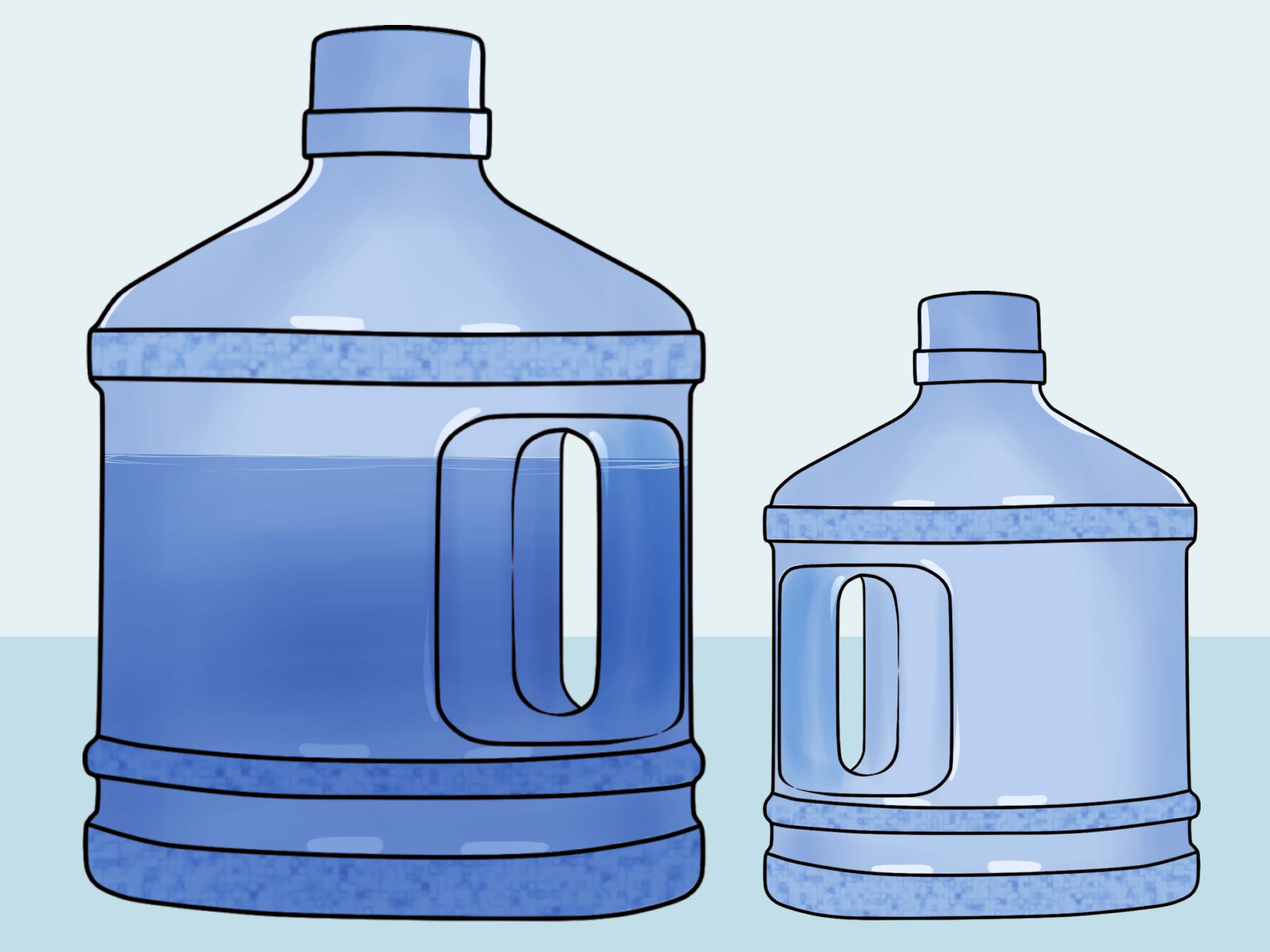
The famous riddle appears in Die Hard with a Vengeance, the 1995 action thriller starring Bruce Willis as John McClane and Samuel L. Jackson as Zeus Carver. The two characters must solve a measuring problem using only two jugs: one that holds 5 gallons and one that holds 3 gallons. Their goal is to end with exactly 4 gallons of water.
The rules are simple:
- You have a 5-gallon jug.
- You have a 3-gallon jug.
- You can fill either jug completely.
- You can empty either jug completely.
- You can pour water from one jug into the other until one jug is full or the other is empty.
- You must measure exactly 4 gallons.
Simple rules, tricky result. That is the magic of the 5-gallon 3-gallon water jug problem. It is not about guessing. It is about using the limits of the containers to create a new measurement.
The Quick Answer: How to Get Exactly 4 Gallons
Here is the cleanest solution to the Die Hard 3 water jug riddle:
- Fill the 5-gallon jug completely.
- Pour water from the 5-gallon jug into the 3-gallon jug until the 3-gallon jug is full.
- The 5-gallon jug now has 2 gallons left.
- Empty the 3-gallon jug.
- Pour the 2 gallons from the 5-gallon jug into the 3-gallon jug.
- Fill the 5-gallon jug again.
- Pour water from the 5-gallon jug into the 3-gallon jug until the 3-gallon jug is full.
- Because the 3-gallon jug already contains 2 gallons, it only needs 1 more gallon.
- After pouring 1 gallon out of the 5-gallon jug, exactly 4 gallons remain in the 5-gallon jug.
And there it is: 4 gallons. No calculator, no magic, no tiny graduation marks hidden on the side of the jug. Just logic doing its job in a very dramatic workplace environment.
Step-by-Step Breakdown of the Die Hard 3 Water Jug Solution
Step 1: Fill the 5-Gallon Jug
Start with the larger jug because it gives you more water to work with. Fill the 5-gallon jug all the way to the top. At this point, the 5-gallon jug contains 5 gallons, and the 3-gallon jug contains 0 gallons.
Current state: 5-gallon jug = 5, 3-gallon jug = 0
Step 2: Pour into the 3-Gallon Jug
Now pour water from the 5-gallon jug into the 3-gallon jug. Since the smaller jug can hold only 3 gallons, you stop when it is full. That removes 3 gallons from the larger jug.
Current state: 5-gallon jug = 2, 3-gallon jug = 3
This is the first important moment. You have created exactly 2 gallons in the 5-gallon jug, even though there is no 2-gallon jug. The containers are measuring each other. Very polite, very mathematical.
Step 3: Empty the 3-Gallon Jug
Empty the 3-gallon jug completely. This gives you a clean container while keeping the 2 gallons in the 5-gallon jug.
Current state: 5-gallon jug = 2, 3-gallon jug = 0
Step 4: Transfer the 2 Gallons
Pour the 2 gallons from the 5-gallon jug into the empty 3-gallon jug. Now the 3-gallon jug has 2 gallons inside, leaving exactly 1 gallon of empty space.
Current state: 5-gallon jug = 0, 3-gallon jug = 2
Step 5: Fill the 5-Gallon Jug Again
Fill the 5-gallon jug completely one more time. Now you have a full 5-gallon jug and a 3-gallon jug that already contains 2 gallons.
Current state: 5-gallon jug = 5, 3-gallon jug = 2
Step 6: Top Off the 3-Gallon Jug
Pour water from the 5-gallon jug into the 3-gallon jug until the 3-gallon jug is full. Since the 3-gallon jug already has 2 gallons, it only needs 1 more gallon. That means only 1 gallon leaves the 5-gallon jug.
Final state: 5-gallon jug = 4, 3-gallon jug = 3
Mission accomplished. The 5-gallon jug now contains exactly 4 gallons.
Why the Water Jug Riddle Works
The trick behind the water jug puzzle solution is that you are not trying to “see” 4 gallons. You are forcing the jugs to create it through capacity limits. A full 3-gallon jug subtracts 3 from 5, giving you 2. Then that 2 creates a 1-gallon gap inside the 3-gallon jug. When you fill that gap from a full 5-gallon jug, you remove exactly 1 gallon, leaving 4.
In plain English, the puzzle works like this:
5 gallons – 1 gallon = 4 gallons
But the sneaky part is that you do not have a 1-gallon jug. You manufacture a 1-gallon space by putting 2 gallons into a 3-gallon jug. That empty space becomes your measuring tool.
The Math Behind the 5-Gallon and 3-Gallon Jug Problem
The Die Hard riddle is a classic example of a water jug problem, often used in logic puzzles, computer science, and math lessons. The broader idea is connected to the greatest common divisor, also called the GCD.
For two jugs with capacities A and B, a target amount is usually possible if the target is a multiple of the GCD of A and B and does not exceed the capacity you can reasonably hold. In this case, the jug sizes are 5 and 3. The greatest common divisor of 5 and 3 is 1. Since 4 is a multiple of 1, the puzzle is solvable.
That sounds fancy, but here is the snack-size version: because 5 and 3 do not share a larger common factor, they can be combined through filling, emptying, and pouring to create several whole-gallon measurements, including 4.
An Alternate Solution Using the 3-Gallon Jug First
There is another way to solve the riddle, and some people find it easier because it builds upward instead of subtracting downward.
- Fill the 3-gallon jug.
- Pour it into the 5-gallon jug.
- Fill the 3-gallon jug again.
- Pour from the 3-gallon jug into the 5-gallon jug until the 5-gallon jug is full.
- The 5-gallon jug already had 3 gallons, so it only needs 2 more gallons.
- That leaves exactly 1 gallon in the 3-gallon jug.
- Empty the 5-gallon jug.
- Pour the 1 gallon from the 3-gallon jug into the 5-gallon jug.
- Fill the 3-gallon jug again.
- Pour those 3 gallons into the 5-gallon jug.
- The 5-gallon jug now contains exactly 4 gallons.
This method takes a few more moves, but it uses the same logic: create a 1-gallon remainder, then combine it with 3 gallons to make 4. Think of it as the scenic route. You still arrive at the answer, but you get more steps and possibly more splashing.
Common Mistakes People Make
Trying to Estimate by Eye
The most common mistake is trying to visually guess 4 gallons in the 5-gallon jug. That is not allowed in the pure version of the riddle. You cannot assume the jug has markings, and you cannot rely on “close enough.” In logic puzzles, close enough is where wrong answers go to wear sunglasses and pretend they are correct.
Forgetting That Pouring Stops Automatically
Another mistake is not using the built-in stop point. When you pour from one jug to another, you stop when the receiving jug is full or the pouring jug is empty. That rule creates exact measurements without markings.
Emptying the Wrong Jug
If you empty the 5-gallon jug after creating 2 gallons, you lose your progress. The key is to preserve useful remainders. In this puzzle, the 2-gallon remainder is the stepping stone that creates the 1-gallon gap.
How to Think Through Similar Water Jug Riddles
Once you understand the Die Hard 3 riddle, you can solve many similar measuring puzzles. The trick is to stop thinking, “How do I get the target immediately?” and start thinking, “What useful remainder can I create?”
Here is a simple strategy:
- Start by filling one jug completely.
- Pour it into the other jug until one container reaches a limit.
- Track the remainder carefully.
- Use empty space as a measuring tool.
- Repeat the process until the target amount appears.
For example, if you have a 7-gallon jug and a 4-gallon jug and need 3 gallons, you can fill the 7-gallon jug, pour into the 4-gallon jug, and you will have 3 gallons left in the 7-gallon jug. That one is easier than the Die Hard puzzle, which is nice because not every riddle needs to arrive wearing combat boots.
Why This Riddle Became So Memorable
The Die Hard 3 jug riddle works so well because it blends suspense with a puzzle that viewers can actually solve at home. You do not need advanced math. You do not need movie-character bravery. You only need patience, attention, and the ability to count past three while everyone around you is yelling.
It is also memorable because it turns a school-style brain teaser into a high-pressure action scene. On paper, the riddle is a tidy logic exercise. In the movie, it becomes a race against time. That contrast makes the puzzle stick. It feels practical, visual, and just difficult enough to make people pause the movie and argue with the couch.
Real-Life Lessons from the Water Jug Puzzle
The water jug riddle teaches more than just how to measure 4 gallons. It shows how constraints can become tools. The 3-gallon jug seems limiting, but its limit is exactly what makes the solution possible. The 5-gallon jug seems too large, but when paired with the smaller jug, it becomes precise.
That is a useful lesson beyond puzzles. Sometimes the thing that looks like an obstacle is actually the measuring edge you need. Limited resources can force smarter thinking. A small container can reveal a big answer. And occasionally, a 1990s action movie can accidentally become your math tutor.
Experience-Based Tips for Solving the Die Hard 3 Water Jug Riddle
One of the best ways to understand the water jug riddle from Die Hard 3 is to physically act it out. You do not need actual gallon jugs. Use cups, bowls, bottles, or containers of different sizes. Label one “5” and the other “3,” then walk through the steps slowly. The puzzle becomes much clearer when you can see the water moving. Your brain stops treating it like abstract math and starts treating it like a kitchen experiment that may or may not annoy whoever just cleaned the counter.
When practicing, write down the amount in each jug after every move. A simple table helps. Start with “5-gallon jug: 0” and “3-gallon jug: 0.” After filling, pouring, and emptying, update the numbers. This prevents the classic mistake of losing track halfway through and declaring, with great confidence, that the answer is “some water.” The key to the riddle is not speed; it is accurate tracking.
Another helpful experience is to solve it backward. Ask yourself: “How could I leave 4 gallons in the 5-gallon jug?” The answer is: remove exactly 1 gallon from a full 5-gallon jug. Then ask: “How do I measure 1 gallon with a 3-gallon jug?” You create a 1-gallon empty space by putting 2 gallons into the 3-gallon jug. Then ask: “How do I get 2 gallons?” Fill the 5-gallon jug and pour 3 gallons into the smaller jug. Suddenly, the entire solution unfolds in reverse like a detective explaining the case at the end of a mystery movie.
It also helps to remember that water jug puzzles are about states, not guesses. A state is simply the amount of water in each jug at one moment. In this riddle, useful states include 5 and 0, then 2 and 3, then 2 and 0, then 0 and 2, then 5 and 2, and finally 4 and 3. Once you see those states as stepping stones, the riddle feels less like a trick and more like a path.
If you are explaining the puzzle to someone else, avoid starting with the full answer. Give them the first clue: “Try to create 2 gallons first.” That hint is powerful without spoiling everything. If they get stuck again, ask, “What does 2 gallons inside a 3-gallon jug leave?” Most people will spot the 1-gallon gap from there. Watching that little light bulb turn on is half the fun.
Finally, do not be embarrassed if the puzzle stumps you the first time. It has stumped plenty of smart people because the answer depends on using empty space as a measurement. That is not how we usually think. We normally measure what is present, not what is missing. The genius of the Die Hard 3 riddle is that the missing gallon becomes the hero. John McClane gets the movie poster, but honestly, the empty space deserves a supporting actor nomination.
Conclusion
To solve the water jug riddle from Die Hard 3, fill the 5-gallon jug, pour into the 3-gallon jug, keep the 2-gallon remainder, use it to create a 1-gallon gap, then pour from a full 5-gallon jug until that gap is filled. What remains is exactly 4 gallons. The solution is elegant because it turns container limits into measuring tools.
The riddle remains popular because it is simple to state, tricky to solve, and satisfying once the logic clicks. Whether you are a movie fan, a puzzle lover, or someone who just wants to win the next family brain-teaser battle, this classic 5-gallon and 3-gallon jug puzzle is worth knowing. Plus, it gives you a fantastic excuse to say, “Actually, the answer is in the empty space,” which sounds deep enough to put on a mug.