Note: This article is written as original web content, based on widely discussed movie trope analysis, screenwriting advice, and real audience conversations about overused film clichés.
Every movie fan has that one scene that makes them squint at the screen and whisper, “Absolutely not.” Maybe it’s the hacker who breaks into a government database by typing very fast. Maybe it’s the villain who explains the entire plan instead of, you know, finishing the plan. Or maybe it’s the romantic lead sprinting through an airport as if TSA exists only in documentaries.
Movie clichés are part of the fun of watching films. They are familiar, dramatic, easy to recognize, and sometimes useful. A good trope can help audiences understand a story quickly. But when a cliché becomes too obvious, too lazy, or too divorced from reality, it turns into comedy gold. That is why people love sharing the most ridiculous movie clichés online: once you notice them, you can never unsee them.
From action heroes with unlimited ammunition to families living in suspiciously enormous houses on suspiciously ordinary salaries, these overused movie tropes have become their own unofficial genre. Let’s roll the camera, cue the dramatic thunderstorm, and laugh at the cinematic habits that refuse to retire.
What Makes a Movie Cliché So Funny?
A movie cliché is usually a familiar storytelling shortcut that has been used so many times it feels predictable. Tropes are not automatically bad. A “chosen one,” a “training montage,” or a “meet-cute” can still work beautifully when handled with personality. The problem begins when a movie uses a cliché without adding anything fresh.
The funniest movie clichés are often funny because they act like normal life has been replaced by Movie Logic. In Movie Logic, nobody says “goodbye” before hanging up the phone. A single cough means someone has three scenes left to live. The protagonist can park directly in front of any building in New York City. A computer genius can enhance blurry security footage until it reveals the villain’s reflection in a spoon.
Real life is messy, slow, awkward, and full of forms. Movies prefer urgency, glamour, and dramatic lighting. That gap is where the comedy lives.
The Most Ridiculous Movie Clichés People Love to Roast
Some clichés are so common that audiences have turned them into inside jokes. They show up in thrillers, romantic comedies, horror films, superhero blockbusters, and family dramas with the confidence of an actor walking away from an explosion without looking back.
1. The Tiny Cough of Doom
In movies, nobody coughs casually. There is no such thing as dust, allergies, or drinking water too fast. If a character coughs once, especially into a handkerchief, the audience immediately knows trouble is coming. The soundtrack might as well whisper, “Prepare the emotional violin.”
This cliché is hilarious because it treats the human respiratory system like a plot alarm. One tiny cough can carry more narrative weight than a courtroom confession. The character may insist, “I’m fine,” but we know better. Nobody in cinema is ever “fine” after coughing gently near a window.
2. The Villain Who Gives a Full PowerPoint Presentation
One of the most beloved ridiculous movie clichés is the villain monologue. The hero is trapped. The villain has won. All that remains is to push a button, leave the room, or stop talking. Naturally, the villain chooses option four: explain everything.
They explain the childhood trauma, the master plan, the secret weakness of the device, the backup plan, the backup backup plan, and occasionally the Wi-Fi password. This gives the hero enough time to escape, call for help, or discover the conveniently located self-destruct lever.
As storytelling, it provides exposition. As life advice for villains, it is terrible. If evil masterminds had better time management, half of Hollywood’s heroes would be unemployed.
3. The Hacker Who Defeats Security by Typing Loudly
Movie hacking deserves its own museum. A character sits in front of six glowing monitors, types like a caffeinated pianist, and announces, “I’m in.” No waiting, no two-factor authentication, no forgotten password reset email hiding in a spam folder.
Even better, the screen usually displays giant flashing words such as ACCESS GRANTED, because apparently secure systems are designed by game-show producers. The hacker may also say things like “I’m bypassing the firewall” while several animated cubes rotate in cyberspace.
This cliché is funny because real computer work is often quiet, frustrating, and full of updates that arrive at the worst possible moment. Movie hacking, meanwhile, looks like a dance battle between a keyboard and national security.
4. The Action Hero With Infinite Ammunition
In action movies, bullets are less like physical objects and more like dramatic punctuation. The hero fires for several minutes without reloading, never runs out, and somehow hits every bad guy except the one important enough to survive until the sequel.
Meanwhile, villains often miss from a distance that would embarrass a lawn sprinkler. They spray bullets everywhere while the hero slides across a table, jumps through a window, and lands with only one artistic scratch on the cheek.
It is absurd, but it is also part of the thrill. Audiences know the hero is protected by the strongest armor in fiction: being listed first on the poster.
5. The Character Who Refuses to Turn on a Light
Horror movies are especially guilty of this one. A character hears a strange noise in the basement, attic, barn, abandoned hospital, or suspiciously foggy hallway. Do they call someone? Leave? Turn on every light in the building? Of course not.
They whisper, “Hello?” and walk toward the danger with the confidence of a person who has never seen a horror movie. The flashlight flickers. The door creaks. The audience becomes a committee of unpaid safety consultants yelling, “Please make one good decision.”
This cliché works because it creates tension, but it also makes viewers question whether survival instincts were cut from the script for pacing.
6. The Perfect Parking Spot
Movie characters in major cities always find parking directly in front of their destination. A detective pulls up outside a crime scene. A romantic lead stops outside a café. A lawyer parks outside the courthouse. Nobody circles the block for twenty minutes, argues with a parking meter, or pays an amount that feels like a small mortgage.
This cliché is small but deeply funny because it reveals how films compress everyday inconvenience. Realistic parking would destroy pacing. Imagine a thriller where the hero loses the villain because the only available spot is seven blocks away next to a hydrant. Actually, that might be a masterpiece.
7. The “Enhance!” Button
Few clichés are more magical than the blurry photo enhancement scene. Detectives stare at a pixelated image from a security camera. Someone says, “Zoom in.” The tech expert zooms in. Someone says, “Enhance.” Suddenly, a reflection on a window reveals a license plate, a tattoo, and possibly the suspect’s childhood nickname.
In reality, blurry images do not contain unlimited hidden detail. In movies, every low-resolution photo is secretly a treasure chest. This cliché is basically digital archaeology performed by people with very serious faces.
8. The Romantic Airport Sprint
Romantic comedies adore the airport sprint. Someone realizes true love at the last possible second and races through the terminal to stop the other person from boarding a plane. Security guards are apparently charmed by emotional urgency. Gate agents become supporting characters in destiny.
Today, this cliché feels especially funny because modern airports are not designed for spontaneous love declarations. They are designed for lines, rules, shoe removal, and overpriced sandwiches. A real airport sprint would likely end with a missed flight, a stern conversation, and a $14 bottle of water.
9. The Average Person With a Luxury Apartment
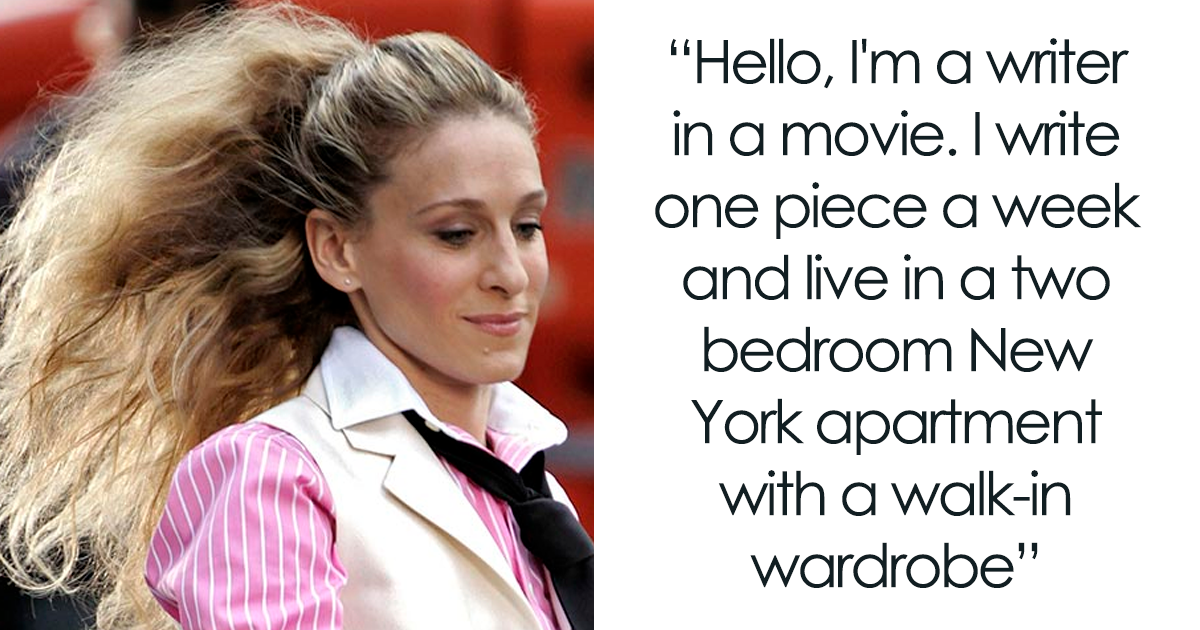
One of the most quietly ridiculous movie clichés is the character with a normal job and a home that looks like it belongs to a retired tech billionaire. Freelance writers, junior assistants, struggling artists, and part-time bookstore employees somehow live in spacious apartments with brick walls, giant windows, and kitchens large enough to host a cooking show.
Audiences love mocking this because housing costs are not exactly a mystery. When a supposedly broke character has a walk-in closet bigger than a real studio apartment, the film stops being a drama and becomes fantasy.
10. The Convenient News Broadcast
Movie TVs have incredible timing. A character turns on the television at the exact second a reporter explains the plot. No commercials, no weather segment, no awkward banter between anchors. Just pure exposition, delivered on schedule.
This cliché is useful because it quickly gives information to both the character and the audience. Still, it is funny because real broadcasts rarely wait politely for the main character to enter the room. Movie news has the punctuality of a butler.
11. The Disguise That Should Fool Absolutely No One
Characters in movies can hide in plain sight with a baseball cap, sunglasses, and possibly a newspaper held at nose level. Nobody recognizes them, even if they are famous, wanted, or standing three feet away from someone who knows them intimately.
Superhero movies have their own version of this. A tiny change in clothing or posture can apparently protect an identity from close friends, coworkers, and world-class investigators. The audience accepts it because genre rules are genre rules, but the comedy remains. Sometimes the greatest superpower is people not noticing obvious things.
12. The Emotional Rainstorm
When a character is heartbroken, betrayed, or dramatically introspective, rain often appears like a moody production assistant with a hose. The timing is impeccable. Nobody has a tiny umbrella. Nobody checks the forecast. The sky simply understands the assignment.
Rain can be beautiful on screen, and filmmakers use it for mood, texture, and symbolism. But when every breakup happens in a downpour, it starts to feel like weather has joined the Screen Actors Guild.
Why Filmmakers Keep Using These Clichés
It is easy to laugh at movie clichés, but there is a reason they survive. They are efficient. A cliché can communicate danger, romance, grief, urgency, or character type in seconds. Viewers immediately understand what is happening because they have seen the pattern before.
Screenwriters also face pressure to keep stories moving. Real life includes paperwork, awkward pauses, legal procedures, bathroom breaks, and people saying, “Sorry, can you repeat that?” Movies usually remove those details unless they serve the story. The result is a cleaner, faster, more exaggerated version of life.
The problem is not familiarity itself. The problem is laziness. A familiar setup can still feel fresh if the writer twists it, deepens it, or uses it with self-awareness. A training montage can be exciting. A villain speech can be chilling. A romantic airport scene can still work if the emotions feel earned. The cliché becomes ridiculous when the movie expects the audience not to notice the shortcut.
When Movie Clichés Become Part of the Fun
Some genres practically invite clichés. Slasher films need suspicious noises. Action movies need last-second escapes. Romantic comedies need misunderstandings, meaningful glances, and at least one scene where someone makes a life-changing decision while wearing a coat.
Parody films and smart comedies turn these habits into jokes. They work because audiences already know the language of cinema. A spoof does not need to explain why a slow-motion explosion walk is funny. We have seen it enough times to understand the target immediately.
That shared knowledge is powerful. Movie clichés become a kind of cultural shorthand. We laugh because we recognize them. We laugh harder because we secretly enjoy them. Even the silliest cliché can feel comforting when used with charm.
How Audiences Turn Clichés Into Comedy
Online discussions about ridiculous movie clichés are popular because they transform private irritation into group entertainment. One person mentions the character who never closes the refrigerator. Another adds the detective who solves a case by staring at a wall of photos. Someone else brings up the classic line, “You just don’t get it, do you?” Suddenly, everyone is laughing at the same invisible rulebook.
These conversations also reveal how media-literate audiences have become. Viewers understand structure, genre patterns, visual shortcuts, and lazy exposition. They may not use formal film-school language, but they know when a scene feels too convenient. In other words, audiences are not just watching movies anymore. They are watching movies watch themselves.
Personal Viewing Experiences: The Clichés That Always Get Me
After years of watching films, I have developed a strange affection for ridiculous movie clichés. They annoy me, yes, but they also feel like old friends who show up uninvited and eat all the snacks. I know I should roll my eyes when the hero says, “I have a bad feeling about this,” but part of me respects the commitment. Cinema has traditions, and apparently one of them is announcing danger five seconds before danger politely arrives.
The cliché that always makes me laugh is the dramatic phone hang-up. In real life, people say “bye,” then sometimes say “okay, bye,” then occasionally restart the conversation because they remembered one more thing. In movies, people simply finish the important sentence and hang up with the confidence of a person who has never accidentally offended a relative. No goodbye. No confirmation. Just emotional efficiency. It is rude, but cinematic.
Another personal favorite is the “research montage.” A character must solve a mystery, so they spread newspapers, photographs, sticky notes, maps, and red string across a wall. Nobody ever worries about damaging the paint. Nobody’s landlord enters and asks why the living room looks like a conspiracy-themed craft project. The montage usually ends when the character circles one word and gasps. I love it every time. Is it realistic? Not remotely. Is it visually satisfying? Absolutely.
I also have a soft spot for the undercover character who is terrible at being undercover but somehow succeeds. They wear sunglasses indoors, speak in a fake accent, and choose a name like “John Normalman.” Everyone accepts this. In real life, they would be discovered before finishing the first sentence. In movies, confidence is apparently a valid form of identification.
Family movie nights make these clichés even funnier because everyone starts predicting them out loud. Someone says, “The car won’t start,” and then the car refuses to start. Someone predicts, “The best friend is secretly the villain,” and suddenly the best friend looks suspiciously well-lit. The fun is not always in being surprised. Sometimes the fun is in watching the movie march proudly toward the obvious outcome like it invented the concept.
What I appreciate most is that ridiculous movie clichés remind us that movies are not reality; they are reality wearing a cape, sprinting through traffic, and delivering a perfect comeback under pressure. Real life rarely gives us clean endings, dramatic lighting, or background music that knows our emotional state. Movies do. Sometimes they do it badly. Sometimes they do it brilliantly. And sometimes they do it so ridiculously that the cliché becomes the best part of the experience.
That is why people keep sharing and laughing at these tropes. Movie clichés are not just mistakes. They are a shared language between filmmakers and audiences. We complain about them because we notice them, and we notice them because we have watched enough movies to become unofficial experts from the comfort of our couches. Honestly, that may be the greatest cliché of all: the viewer who says, “I could write a better ending,” while eating popcorn and fully enjoying the chaos.
Conclusion: Movie Clichés Are Ridiculous, but We Love Them Anyway
The most ridiculous movie clichés survive because they are useful, familiar, and strangely comforting. They help stories move quickly, create instant emotions, and give audiences recognizable patterns to enjoy or mock. When used poorly, they feel lazy. When used cleverly, they become part of the entertainment.
Whether it is the villain who talks too much, the hacker who types reality into submission, or the romantic lead who treats airport security like a minor suggestion, these clichés remind us why movies are so fun to discuss. They are bigger, cleaner, louder, and sillier than real life. And sometimes, that is exactly what we came to see.