Note: This article is for general educational purposes and is not a substitute for medical advice from a pediatrician or qualified healthcare professional.
Roseola is one of those childhood illnesses that likes to make a dramatic entrance and then leave before everyone has finished panicking. One minute, a baby or toddler is running a high fever and parents are mentally packing for the emergency room. A few days later, the fever suddenly disappears, a pink rash pops up, and the child may be acting like nothing happened. Classic roseola. It is basically the toddler version of “surprise, I was viral all along.”
Medically, roseola is a common contagious viral infection, usually affecting babies and young children, especially those under age two. It is most often caused by human herpesvirus 6, also called HHV-6, and sometimes by human herpesvirus 7. Despite the word “herpesvirus,” roseola is not the same thing as cold sores or genital herpes. The virus family is large, and roseola is its own very common childhood chapter.
The illness is also known as roseola infantum, sixth disease, or exanthem subitum. Those names sound like something a wizard might shout while waving a thermometer, but they all point to the same basic pattern: sudden fever first, rash later.
What Is Roseola?
Roseola is a mild viral illness that commonly affects infants and toddlers. Many children get it between 6 months and 3 years old, although it can happen outside that age range. In many cases, roseola goes away on its own within about a week. The main job of parents and caregivers is not to “cure” it with a magic medicine, but to keep the child comfortable, hydrated, and watched for warning signs.
The most recognizable feature of roseola is its unusual timing. Unlike many rashes that arrive with the fever, roseola often waits until the fever breaks. Then, just when parents are ready to celebrate, the rash appears like an uninvited party guest wearing pink polka dots.
That timing is actually helpful. A high fever followed by a pink rash on the trunk, neck, and sometimes the face, arms, or legs is one of the biggest clues that the illness may be roseola.
What Causes Roseola?
Roseola is usually caused by human herpesvirus 6, especially HHV-6B. Human herpesvirus 7 can also cause a similar illness. These viruses spread from person to person, commonly through saliva or respiratory droplets. A child may pick it up from another child or adult who carries the virus, even if that person does not seem very sick.
After exposure, symptoms may take about one to two weeks to appear. Some children become infected and show obvious symptoms. Others may have such mild signs that no one realizes roseola was ever in the building. The virus is sneaky like that.
Is Roseola Contagious?
Yes, roseola is contagious. It can spread through coughing, sneezing, shared cups, close contact, and saliva. Children are generally considered most contagious during the fever stage, before the rash appears. By the time the rash shows up, the fever has often gone away and the child may already be feeling much better.
This is one reason roseola can spread easily in daycare settings. A child may look like they simply have a fever or mild cold symptoms at first. The “aha!” rash often arrives later, after the most contagious period has already done its social networking.
Roseola Symptoms: What Parents Usually Notice First
The symptoms of roseola can vary, but the illness often follows a fairly predictable pattern.
Sudden High Fever
The first major symptom is usually a sudden high fever. The temperature may climb quickly and can sometimes reach 103°F to 105°F. This can look frightening, especially when the child was playing normally earlier in the day and suddenly feels hot enough to warm a sandwich. The fever typically lasts three to five days.
During this time, some children remain surprisingly alert, while others become tired, fussy, clingy, or less interested in food. A fever alone does not automatically mean roseola, but in roseola, the fever is often the opening act.
Mild Cold-Like Symptoms
Some children with roseola may also have symptoms that look like a mild cold or stomach bug. These can include:
- Runny nose
- Mild cough
- Sore throat
- Swollen glands in the neck
- Irritability
- Tiredness
- Decreased appetite
- Mild diarrhea
- Puffy eyelids in some cases
These symptoms are not always dramatic. In fact, roseola sometimes looks like “mystery fever with a side of crankiness” until the rash appears.
The Roseola Rash
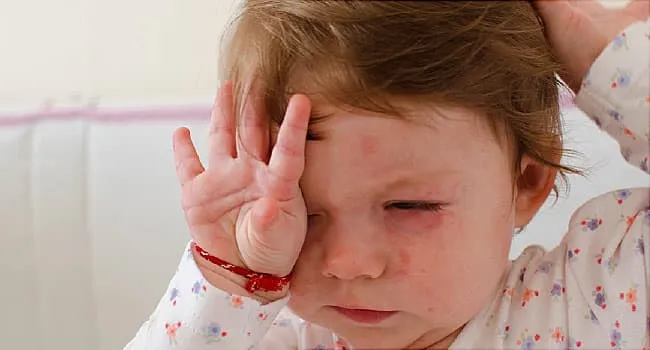
The roseola rash usually appears after the fever breaks. It often starts on the chest, back, or belly, then may spread to the neck, face, arms, or legs. The rash is typically pink or rosy and may be made up of small flat or slightly raised spots.
One comforting detail: the rash usually does not itch or hurt. It may look alarming, but it is generally harmless and fades within one to three days. No fancy cream, no dramatic ointment ceremony, no medical confetti required.
On darker skin tones, the rash may be harder to see. Instead of bright pink spots, caregivers may notice subtle changes in skin texture or areas that look slightly different from the child’s usual skin tone. Good lighting can help, but the child’s overall behavior and fever history are just as important.
How Is Roseola Different From Measles, Scarlet Fever, or Other Rashes?
Many childhood illnesses come with rashes, which is deeply unfair to parents who are not dermatologists with a magnifying glass in their diaper bag. Roseola has a few clues that help separate it from other conditions.
The biggest clue is the sequence: high fever first, rash after the fever improves. In measles, children often look much sicker and may have cough, red eyes, runny nose, and a rash that spreads in a different pattern. Scarlet fever is linked to strep throat and often causes a sandpaper-like rash. Hand, foot, and mouth disease usually involves sores in the mouth and spots on the hands and feet.
Still, rashes can be confusing. If a child has a rash with breathing trouble, unusual sleepiness, a stiff neck, purple spots that do not fade when pressed, dehydration, or a fever that concerns you, medical care should not wait for an internet article to finish loading.
Can Roseola Cause Febrile Seizures?
Roseola can sometimes trigger febrile seizures because the fever may rise quickly. A febrile seizure is a seizure related to fever in young children. It can be terrifying to watch, but many febrile seizures are brief and do not cause long-term harm.
That said, any seizure in a child should be taken seriously. Parents should seek urgent medical guidance, especially if it is the child’s first seizure, lasts more than a few minutes, involves breathing problems, or the child does not recover normally afterward.
How Doctors Diagnose Roseola
Doctors usually diagnose roseola based on the child’s age, symptoms, fever pattern, and rash. Most children do not need lab tests. The “fever breaks, rash appears” pattern is often enough to make roseola a strong possibility.
However, during the fever stage, roseola can look like many other infections. A healthcare provider may check for ear infections, strep throat, urinary tract infections, flu, COVID-19, or other causes of fever depending on the child’s age, symptoms, and exam findings.
How Do You Treat Roseola?
There is no specific cure for roseola in healthy children. Because roseola is caused by a virus, antibiotics do not help. Antibiotics fight bacteria, not viruses. Giving antibiotics for roseola would be like bringing a snow shovel to a beach day: impressive commitment, wrong problem.
Treatment focuses on comfort and fever care while the illness runs its course.
Keep Your Child Hydrated
Fluids are important during any fever. Babies may need more frequent breast milk or formula. Older babies and toddlers can sip water, oral rehydration solution, diluted juice if recommended, or other age-appropriate fluids. Small, frequent sips may work better than asking a fussy toddler to drink a full cup like a tiny professional athlete.
Watch for signs of dehydration, such as fewer wet diapers, very dark urine, dry mouth, no tears when crying, unusual sleepiness, or sunken eyes. These signs deserve medical attention.
Use Fever Reducers Safely
Acetaminophen or ibuprofen may be recommended to reduce fever and discomfort, depending on the child’s age and health history. Dosing should be based on the child’s weight and the product instructions or a pediatrician’s advice.
Never give aspirin to children or teenagers for a viral illness because of the risk of Reye’s syndrome, a rare but serious condition. Also, ibuprofen is generally not used for very young infants unless a healthcare professional says it is appropriate.
Dress Lightly and Avoid Overheating
Light clothing can help a feverish child feel more comfortable. Heavy blankets, extra layers, and “sweat it out” strategies are not helpful and may make the child hotter. A lukewarm bath or cool cloth may help some children feel better, but avoid cold baths or alcohol rubs.
Let the Rash Be
The roseola rash usually does not need treatment. It typically fades on its own within a few days. Creams, ointments, and lotions are usually unnecessary unless a doctor recommends them for another reason. The rash is not a sign that the illness is getting worse. In many cases, it is a sign that the fever phase is ending.
When Should You Call a Doctor?
Parents should contact a healthcare professional if the child is younger than 3 months and has a fever, has a fever over 103°F, has a fever lasting more than three to five days, seems very sleepy or difficult to wake, has trouble breathing, shows signs of dehydration, has a seizure, or has a rash that looks purple, bruised, blistered, or does not fade when pressed.
You should also seek medical advice if the child has a weakened immune system, because roseola can be more serious for children whose immune defenses are reduced by illness, medication, or medical treatment.
Can Adults Get Roseola?
Adults can get roseola, but it is much less common because many people are exposed during childhood. When adults do become infected, symptoms may be mild or may include fever, fatigue, sore throat, swollen glands, or a rash. Adults with weakened immune systems should be more cautious and consult a healthcare provider if symptoms appear.
How Long Does Roseola Last?
Roseola usually lasts about a week. The fever often lasts three to five days. Once the fever breaks, the rash may appear and fade within one to three days. Many children feel much better by the time the rash shows up, which can feel confusing for parents: the child is bouncing around the living room while wearing a rash like a polka-dot onesie.
Can Roseola Be Prevented?
There is no vaccine for roseola. Prevention is mostly about everyday hygiene. Wash hands often, teach children to cover coughs and sneezes when they are old enough, avoid sharing cups or utensils, and clean commonly touched surfaces during illness.
Because roseola can spread before the rash appears, prevention is not perfect. Parents should not blame themselves if a child gets it. Viruses are tiny, determined, and apparently excellent at networking.
Can a Child Go to Daycare With Roseola?
Rules can vary by daycare, school, and pediatrician guidance. In general, children should stay home while they have a fever. Many pediatric resources advise that a child can return once they have been fever-free for 24 hours without fever-reducing medicine and feel well enough to participate. By the time the rash appears, the child is often no longer considered highly contagious.
Roseola Home Care Checklist
For most healthy children, roseola care is simple and supportive. Parents can focus on these steps:
- Offer fluids often.
- Use fever medicine only as directed.
- Keep clothing light and comfortable.
- Let the child rest.
- Monitor wet diapers or bathroom trips.
- Watch for warning signs.
- Avoid antibiotics unless prescribed for a confirmed bacterial infection.
- Do not use aspirin for children or teenagers.
Experience-Based Tips for Parents Dealing With Roseola
Roseola can be emotionally exhausting because it often starts with the scariest symptom: a high fever in a small child. Many parents describe the same roller coaster. Day one begins with a warm forehead. Day two becomes a thermometer marathon. Day three involves searching symptoms online while whispering, “Please just be something normal.” Then the fever breaks, the rash appears, and everyone wonders why childhood illnesses come with plot twists.
One practical experience-based tip is to track the fever pattern. Write down the temperature, time, medicine given, and how the child is behaving. This helps you avoid guessing later and gives the pediatrician useful information if you call. A child’s behavior often matters as much as the number on the thermometer. A toddler with a fever who still drinks, responds, and has wet diapers may be less concerning than a child with a lower fever who is unusually weak, dehydrated, or difficult to wake.
Another helpful approach is to prepare a “fever station.” Keep a digital thermometer, age-appropriate fever medicine, dosing instructions, tissues, water, oral rehydration solution, and light pajamas nearby. This prevents the classic midnight treasure hunt where one parent is searching for the medicine cup while the other is trying to convince a crying toddler that thermometers are not medieval devices.
Hydration is often easier when offered creatively. Some children refuse a full drink but accept tiny sips from a special cup, spoon, straw, or oral syringe. Popsicles may help older toddlers if appropriate. The goal is not a perfect meal plan. During roseola, “some fluids and a few bites” can be a victory worthy of applause.
Parents also learn quickly that the rash can look more dramatic than it feels. Many children are cheerful when the rash appears because the fever has finally ended. That can be reassuring. Take a photo of the rash in good lighting if you plan to message or visit the pediatrician. Rashes can fade, shift, or look different by appointment time, and photos help tell the story.
Sleep may be messy for a few nights. A feverish child may wake more often, want extra comfort, or cling like a tiny koala with strong opinions. Keep the room comfortably cool, use light clothing, and follow safe sleep guidance for babies. Comfort matters, but safety still comes first.
It is also wise to manage your own stress. High fevers are unsettling, especially for first-time parents. Calling the pediatrician is not “overreacting.” It is part of caring for a child. At the same time, roseola is usually mild and self-limited. Once you understand the typical fever-then-rash pattern, the whole experience becomes less mysterious. Still annoying, yes. But less mysterious.
Finally, give the household a reset after the illness. Wash hands, clean high-touch surfaces, launder bedding if needed, and let everyone catch up on rest. Roseola may be common, but common does not mean convenient. It tends to arrive when work is busy, laundry is behind, and the only clean sippy cup has vanished into another dimension. The good news is that most children recover quickly and return to their usual busy schedule of snack requests, toy negotiations, and placing crackers in places crackers should never go.
Conclusion
Roseola is a common viral infection in babies and young children that usually causes a sudden high fever followed by a pink rash after the fever improves. Although the fever can be alarming, roseola is usually mild and goes away on its own. Treatment focuses on fluids, rest, comfort, and safe fever management. Antibiotics do not treat roseola because it is viral. Parents should watch for warning signs such as dehydration, breathing trouble, extreme sleepiness, seizures, or unusual rashes and contact a healthcare professional when concerned.
In plain parent language: roseola is scary at first, spotty at the end, and usually temporary. With careful home care and good medical guidance when needed, most children bounce back quicklyoften faster than the adults who spent three nights checking the thermometer.