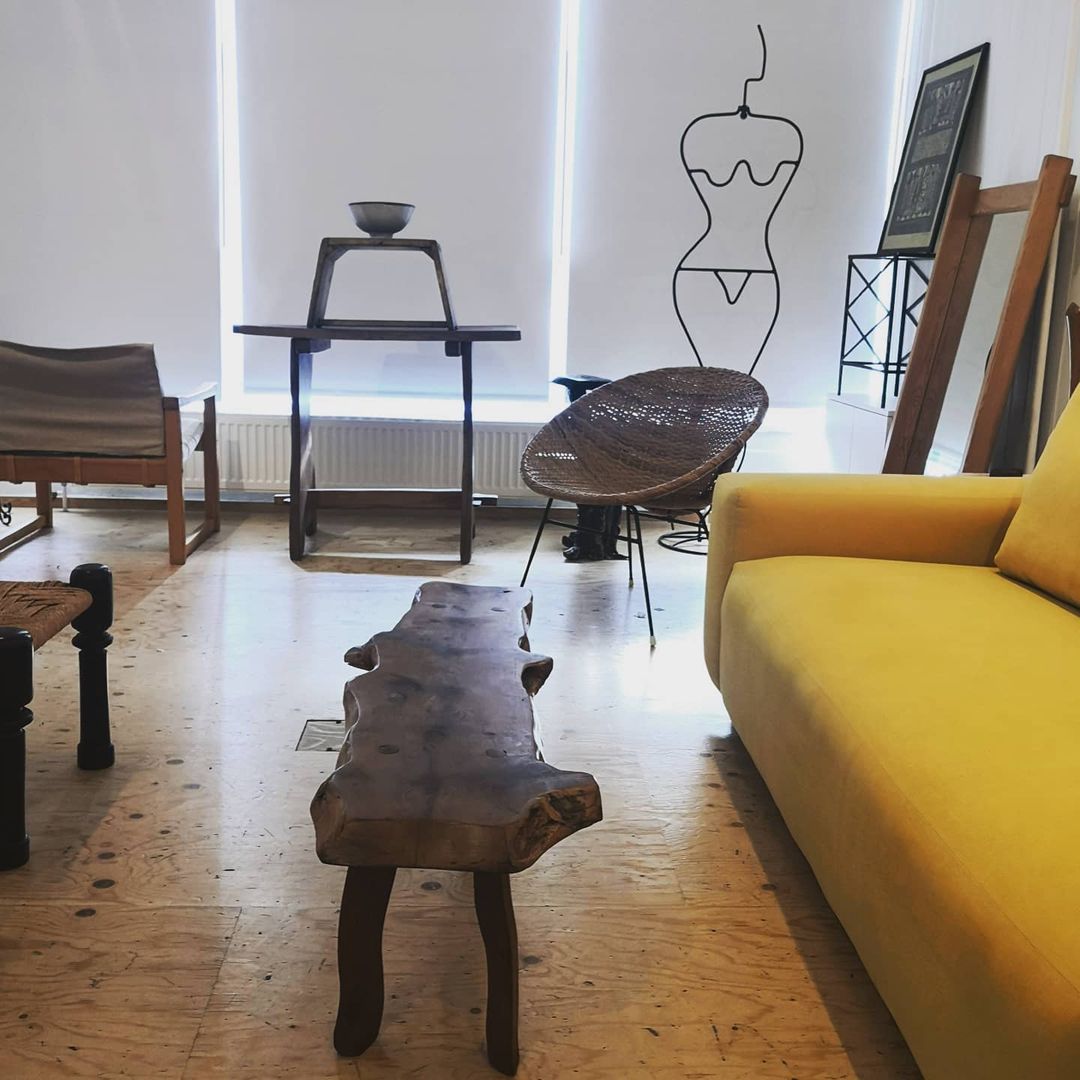
Some design shops sell furniture. Push//Pull feels more like a well-edited conversation between eras, materials, and moods. One minute you are looking at a sculptural vintage lamp that seems to have wandered in from a 1970s architect’s studio; the next, you are considering a modular sofa with the kind of relaxed confidence that says, “Yes, I am comfortable, but I also read design magazines.” That is the quiet magic of Push//Pull, an East London destination for people who want their homes to feel collected rather than copied.
Based in East London, Push//Pull specializes in 20th-century vintage design, unusual one-off pieces, esoteric antiques, and contemporary handmade sofas. Its appeal is not about shiny showroom perfection. It is about character, usefulness, and the thrill of discovering something that does not look as if it came flat-packed with an Allen key and a mild identity crisis.
For homeowners, renters, interior designers, stylists, and curious design lovers, Push//Pull offers something more valuable than a product list: it offers a point of view. The shop understands that great interiors need tension. Old beside new. Soft beside sharp. Brutalist wood against a pillowy sofa. A practical cabinet that also looks like it might have a secret.
What Is Push//Pull?
Push//Pull is an East London design shop and studio known for carefully sourced vintage furniture, 20th-century design, decorative objects, lighting, and its own contemporary sofa range. The business presents itself around two strong ideas: an evolving vintage collection sourced from across Europe and handmade contemporary sofas designed for modern living.
The shop’s listed store is at 1 The Pavement, Hainault Road, London E11 1EG, while its studio is listed at Unit 25, Fairways Business Park, Lammas Road, London E10 7QB. That local East London footprint matters. Push//Pull does not feel like a faceless online marketplace. It feels connected to a neighborhood where creative people, collectors, and design obsessives are happy to mix periods, styles, and textures with fearless energy.
The brand is associated with founder James Watkins, whose eye for vintage furniture has helped Push//Pull gain attention from design-focused publications and local design communities. The shop has been described as a place for timeless vintage furniture that can sit comfortably in many interiors without feeling stiff or museum-like.
Why Push//Pull Stands Out in East London
East London has long been fertile ground for independent interiors shops, creative studios, vintage dealers, makers, artists, and people who treat their homes like living mood boards. Push//Pull fits naturally into that world because it does not chase one narrow aesthetic. Instead, it embraces the “push” and the “pull” of design: rough and refined, functional and sculptural, playful and serious.
That balance is exactly what many modern interiors need. A room filled only with new furniture can feel too polished, like a hotel lobby that has learned to make sourdough. A room filled only with antiques can feel heavy or overly nostalgic. Push//Pull sits in the middle, showing how vintage design can make a contemporary home feel warmer, smarter, and more personal.
A Curated Vintage Collection, Not a Random Treasure Pile
Vintage shopping can be thrilling, but it can also be chaotic. One person’s “rare collectible” is another person’s “why is there a chair with three legs and no explanation?” Push//Pull avoids that problem through curation. Its vintage collection focuses on well-designed, well-made pieces, with stock updated regularly and an emphasis on one-off finds.
The shop’s selection has included items such as sculptural lamps, metal coffee tables, modernist objects, cabinets, mirrors, planters, shelves, chairs, stools, and decorative pieces. The common thread is not one period or one country. It is a sense of design integrity. The objects feel chosen, not merely acquired.
This is important for anyone trying to build a room with personality. A single strong vintage piece can change the entire atmosphere of a space. A carved wooden mirror can soften a white wall. A geometric drawer unit can wake up a quiet hallway. A ceramic lamp can make a basic side table look intentional, as if the table has finally found its life coach.
The Design Philosophy: Built to Last, Chosen to Matter
The best vintage furniture is not only beautiful; it is evidence. It tells you that someone designed it, someone made it, someone used it, and somehow it survived long enough to be useful again. That history gives a room depth that brand-new furniture often has to fake with marketing words like “heritage-inspired.”
Push//Pull’s strength lies in pieces that feel durable, tactile, and visually interesting. The shop’s world includes modernist forms, brutalist textures, postmodern shapes, folk-art charm, Italian and Scandinavian influences, and unusual objects that resist easy labeling. This is design for people who like a little friction in a room. Not mess. Not clutter. Friction.
That friction is what makes a home memorable. A clean-lined sofa looks better with a rough-hewn stool. A minimalist room becomes more human with a strange little sculpture. A contemporary kitchen gains soul when a vintage cabinet or lamp interrupts the perfection. Push//Pull understands that the best interiors are not assembled in one shopping trip. They accumulate.
The PP//01 Modular Sofa: Contemporary Comfort with Vintage Manners
Push//Pull is not only about vintage. The shop also offers a contemporary modular sofa range, including the PP//01 modular sofa designed by Matthew Long for Push//Pull. The sofa is described as tactile, squidgy, and luxurious, with pillowy feather-filled back cushions. It is designed in East London and handmade in Derbyshire by a small team of craftspeople.
That combination gives the sofa an interesting role in the Push//Pull universe. It is new, but it does not clash with vintage. It has the relaxed proportions and modular flexibility that modern homes need, while still feeling warm enough to sit beside 20th-century furniture and decorative antiques.
Modular sofas are especially useful for city homes, where rooms often need to do several jobs. A living room may also be a workspace, a guest room, a movie theater, a reading cave, and, occasionally, the place where laundry waits in a basket pretending to be a lifestyle installation. A modular sofa can adapt to those shifting needs without sacrificing style.
Why Vintage Design Is Having a Major Moment
The popularity of shops like Push//Pull is part of a larger design movement. Homeowners are increasingly looking for interiors that feel personal, sustainable, and layered. Vintage furniture answers all three desires at once.
First, vintage pieces bring individuality. When you buy a one-off cabinet, lamp, mirror, or chair, you are less likely to walk into a friend’s house and discover the same object staring back at you like an awkward furniture twin.
Second, vintage shopping supports more sustainable decorating. Reusing existing furniture helps extend the life of materials and reduces demand for disposable “fast furniture.” In an era when furniture waste is a serious environmental concern, choosing secondhand or long-lasting pieces is not just stylish; it is sensible.
Third, vintage design often offers better construction. Many older pieces were made with solid wood, repairable joints, honest materials, and proportions shaped by human use. That does not mean every old chair is a masterpiece. Some old chairs are just old chairs, and some are plotting against your lower back. But a well-chosen vintage piece often has a quality that mass-produced furniture struggles to match.
How Push//Pull Inspires Better Interiors
Push//Pull is useful even if you are not ready to buy a cabinet, lamp, or sofa today. Browsing the shop can help you understand how to think like a curator rather than a consumer. That shift can transform the way you decorate.
1. Mix Periods Without Panic
One of the strongest lessons from Push//Pull is that your home does not need to obey one decade. A 1960s chair can live with a contemporary sofa. A brutalist mirror can work in a Victorian terrace. A postmodern table can sit beside a simple linen curtain. The trick is to create conversation between pieces rather than force everything to match.
2. Use Texture as Decoration
Many interiors rely too heavily on color and forget texture. Push//Pull’s world reminds us that wood grain, patinated metal, ceramic glaze, woven rush, carved surfaces, and aged leather can all add visual richness. A neutral room does not have to be boring if the materials are doing enough work.
3. Let One Odd Piece Lead the Room
Every great room needs a little oddness. Not “haunted doll in the corner” oddness, ideally, but a piece with personality. A sculptural lamp, unusual shelf, carved stool, or bold mirror can become the design anchor that makes the room feel alive.
4. Buy Slowly and Edit Ruthlessly
Push//Pull’s slow, curated approach is a refreshing alternative to impulse decorating. Instead of filling a room in one weekend, the better strategy is to live with the space, notice what it needs, and wait for pieces that genuinely improve it. Your home is not a race. There is no trophy for fastest console table purchase.
Design Ideas Inspired by Push//Pull
If you want to bring the Push//Pull spirit into your own home, start with contrast. Pair a soft modern sofa with a sculptural vintage coffee table. Add a ceramic lamp to a clean-lined desk. Place a rough wooden stool beside a polished bath. Use a dramatic mirror in a hallway where people expect nothing more exciting than coats and mild regret.
For small apartments, vintage pieces can be especially effective because many older items have lighter proportions than bulky contemporary furniture. A slim cabinet, compact chair, or wall-mounted shelf can bring storage and character without overwhelming the room.
For larger homes, the Push//Pull approach can prevent spaces from feeling too coordinated. If your room already has a matching sofa, rug, and coffee table, add something with age or irregularity. A vintage lamp, abstract artwork, or unusual side chair can break the showroom spell.
Push//Pull and the Slow Design Movement
Push//Pull also connects with the broader idea of slow design. Slow design values longevity, craftsmanship, reuse, and emotional connection. It asks a simple question: will this piece still matter to me later?
That question is powerful because decorating culture often pushes speed. Buy the trend. Copy the room. Replace it next season. Push//Pull offers a different rhythm. Its vintage collections, handmade sofas, and connection to local design markets suggest a more patient way to build a home.
The shop has also been linked with Slow Century, a pop-up vintage design market in East London that brings together contemporary design dealers, modernist furniture, sculptural homeware, and unusual one-off pieces. That local market culture strengthens the idea that design inspiration is not only found online. Sometimes it is found by walking into a room full of objects and letting your taste wake up.
Who Should Visit Push//Pull?
Push//Pull is a strong fit for interior designers looking for pieces with character, homeowners who want their rooms to feel less generic, collectors interested in 20th-century design, and renters who need portable personality. It is also useful for people who do not yet know their style but can recognize a good object when it gives them that small electric “oh, hello” feeling.
If your taste leans toward modernist furniture, brutalist forms, sculptural homeware, vintage lighting, handmade sofas, or interiors that look collected over time, Push//Pull should be on your radar. It is not the place for people who want everything to match perfectly. It is the place for people who understand that the best rooms often have a raised eyebrow.
What Makes Push//Pull SEO-Worthy and Design-Worthy?
From a search perspective, Push//Pull sits at the intersection of several strong topics: East London design shop, vintage furniture London, 20th-century design, handmade modular sofas, sustainable interiors, and design inspiration. From a human perspective, it is much simpler: the shop helps people imagine better rooms.
That is the difference between a store and a source of inspiration. A store says, “Here are things to buy.” A source of inspiration says, “Here is a better way to see.” Push//Pull does the latter by showing how a single object can shift a room’s mood, how vintage can feel modern, and how comfort can coexist with artistic edge.
Experience Notes: How to Get the Most Inspiration from Push//Pull
To understand Push//Pull properly, approach it less like a typical shopping trip and more like a design field study. The goal is not simply to find something that fits an empty corner. The goal is to sharpen your eye. Before you browse, think about the feeling your home is missing. Is it warmth? Structure? Humor? Texture? A sense that an adult lives there and not just someone with a Wi-Fi password and three mugs?
Start by looking at silhouettes. Push//Pull’s pieces often stand out because of shape: a mirror with a carved frame, a low table with sculptural presence, a chair with confident angles, or a lamp that looks interesting even before it is switched on. Shape is one of the easiest ways to add design impact without adding clutter. A strong silhouette can make even a quiet room feel intentional.
Next, study materials. Vintage interiors work best when materials create depth. Wood, metal, ceramic, glass, fabric, and stone all age differently. A room that combines several honest materials will usually feel richer than one that relies on flat, identical surfaces. Push//Pull is a useful reminder that patina is not a flaw. Sometimes it is the entire point. A small mark, softened edge, or aged finish can make a piece feel human.
Pay attention to scale, too. Many people buy furniture that is too large because oversized pieces look impressive online. In real rooms, especially city rooms, scale is everything. A compact vintage side table, narrow cabinet, or visually light chair can make a space feel more open while still adding style. Push//Pull’s mix of furniture and objects can help you see how smaller pieces carry personality without shouting.
Another good exercise is to imagine each object in three different settings. Could that brutalist mirror work in a hallway, above a fireplace, or in a bathroom? Could a ceramic lamp warm up a bedroom, office, or reading corner? Could a modular sofa support family life, entertaining, and the sacred modern ritual of lying down while pretending to watch a documentary? If a piece can live multiple lives, it is often a smarter buy.
Finally, do not rush the decision. The Push//Pull mindset rewards patience. Take notes, save images, measure your space, and think about what the piece will do for the room. Good design is not about owning the most interesting objects. It is about choosing the right interesting objects and giving them enough breathing room to matter.
The best experience of Push//Pull is not only discovering furniture. It is discovering permission: permission to mix old and new, permission to prefer character over perfection, permission to let a room evolve slowly, and permission to buy the strange lamp if the strange lamp is clearly the main character.
Conclusion
Push//Pull has earned its place as one of East London’s most compelling destinations for design inspiration because it understands what many modern homes are missing: soul, texture, history, and a little bit of mischief. Its mix of 20th-century vintage furniture, unusual one-off objects, contemporary handmade sofas, and local design energy makes it more than a shop. It is a practical mood board for anyone who wants a home with depth.
In a design world often dominated by quick trends and matching sets, Push//Pull offers a more lasting idea. Choose pieces that are well made. Let different eras talk to each other. Buy slowly. Trust your eye. And never underestimate the power of one excellent chair to make an entire room behave better.