If your home has reached that charming stage where every flat surface is now a “temporary holding zone,” welcome. You are among friends. The good news is that getting organized does not always require a cart full of matching acrylic bins, a celebrity organizer, or a sudden personality change. Sometimes the smartest storage solutions are already hanging around your house, hiding in plain sight between the pasta jars, extra baskets, and that suspicious pile of shoe boxes you swore you were saving for a reason.
These affordable storage ideas using everyday items are practical, flexible, and refreshingly realistic. They work in small apartments, family homes, dorm rooms, and anywhere else clutter likes to throw little parties. The trick is to stop thinking of common household items as “stuff” and start seeing them as storage tools with untapped potential. A glass jar can become pantry order. A magazine holder can tame the chaos under your sink. A tension rod can suddenly turn dead space into useful space. It is basically a home makeover, minus the dramatic soundtrack.
Below, you will find 12 budget-friendly ways to create more storage using things you may already own or can pick up cheaply. Each idea is simple, functional, and easy to adapt to your space, whether you are organizing a kitchen, bedroom, bathroom, entryway, or the mysterious junk drawer that has somehow achieved legendary status.
Why Everyday-Item Storage Works So Well
The best organizing systems are not always the fanciest ones. They are the ones you will actually use. Everyday items tend to work because they are affordable, familiar, and easy to replace. They also help you avoid the classic mistake of buying storage before understanding what you need to store. When you repurpose what you have first, you naturally sort by category, size, and frequency of use. In other words, your house gets tidier, and your wallet gets to keep its dignity.
Another bonus: these ideas are flexible. You can test a solution, live with it for a week, and adjust without feeling like you just invested in a tiny plastic monument to a bad decision. That kind of low-risk organizing is ideal for real life.
12 Affordable Storage Ideas Using Everyday Items
1. Turn Glass Jars Into Clear, Good-Looking Catchalls
Glass jars are the overachievers of affordable home organization. They work in the pantry for dry goods, in the bathroom for cotton balls and bath salts, on a desk for pens and clips, and in a craft area for beads, thread, or paintbrushes. Because they are clear, you can see what you have without digging around like a raccoon in a snack drawer.
Use matching jars if you want a more polished look, or embrace the collected style with reused pasta sauce, salsa, or jam jars. Add a simple label and suddenly your shelves look intentional instead of “midweek survival mode.” Wide-mouth jars work best for items you reach for often, while smaller jars are perfect for little bits that tend to disappear into clutter.
2. Reuse Shoe Boxes and Gift Boxes as Drawer Dividers
Shoe boxes are not glamorous, but they are shockingly useful. Cut the lids off, trim the boxes to size, and use them to divide dresser drawers, office drawers, or bathroom cabinets. They are especially helpful for socks, undergarments, chargers, stationery, and all those small items that somehow blend into one giant mess by Thursday.
Gift boxes, tech boxes, and subscription boxes also work beautifully because many of them are sturdier than bargain-store organizers. Cover them with contact paper, fabric, or leftover wrapping paper if you want them to look less “I saved this from the hallway closet” and more “custom solution.”
3. Use Baskets to Corral the Stuff That Roams
Every home has drifters: throw blankets, dog toys, extra toilet paper, magazines, board games, scarves, and random chargers with a deep commitment to wandering. Baskets are ideal for gathering those categories into one portable home. A woven basket by the sofa can hold blankets and books. A wire basket in the pantry can group snacks or potatoes. A handled basket in the bathroom can store guest towels or backup toiletries.
The beauty of baskets is that they make clutter look calmer. Instead of seeing twelve separate items, your eye sees one contained unit. That visual simplicity matters, especially in smaller spaces where even neat belongings can start to feel busy.
4. Repurpose an Over-the-Door Shoe Organizer for More Than Shoes
This is one of the smartest cheap storage ideas around because it uses vertical space that usually goes ignored. A hanging shoe organizer can store far more than footwear. Try it in the pantry for snack bags, seasoning packets, and drink mixes. Hang one in the bathroom for hair tools, lotions, and extra soap. Use it in a kid’s room for art supplies, stuffed animals, or small toys with suspiciously tiny accessories.
Clear-pocket styles make it easy to see everything at a glance, which means fewer duplicate purchases and less rummaging. It is the kind of storage hack that feels almost unfair.
5. Add a Tension Rod Where Space Goes to Waste
Tension rods are inexpensive, renter-friendly, and surprisingly talented. Under the sink, install one to hang spray bottles and free up the cabinet floor for bins or paper towels. In a drawer, use a short tension rod to help separate trays, cutting boards, or lids. In a closet, add a second low rod for scarves, handbags, or cleaning bottles with hooks.
What makes this idea so effective is that it creates storage in awkward spots instead of just stuffing more things into them. That is the difference between organized and merely hidden.
6. Give Magazine Holders a Second Career
Magazine files are excellent for storing items that need to stand upright. In the kitchen, use them for cutting boards, foil, parchment paper, water bottles, or rolled placemats. In a home office, they can still hold papers, of course, but they are also handy for notebooks, tablets, and mail that needs attention. In a bathroom cabinet, they can organize hair tools or backup cleaning supplies.
Stand them vertically or lay them on their sides depending on the shelf depth. If you already have a few collecting dust from your last “I am definitely becoming a paperless person” phase, this is their redemption arc.
7. Use Ice Cube Trays, Muffin Tins, and Small Baking Pans for Tiny Items
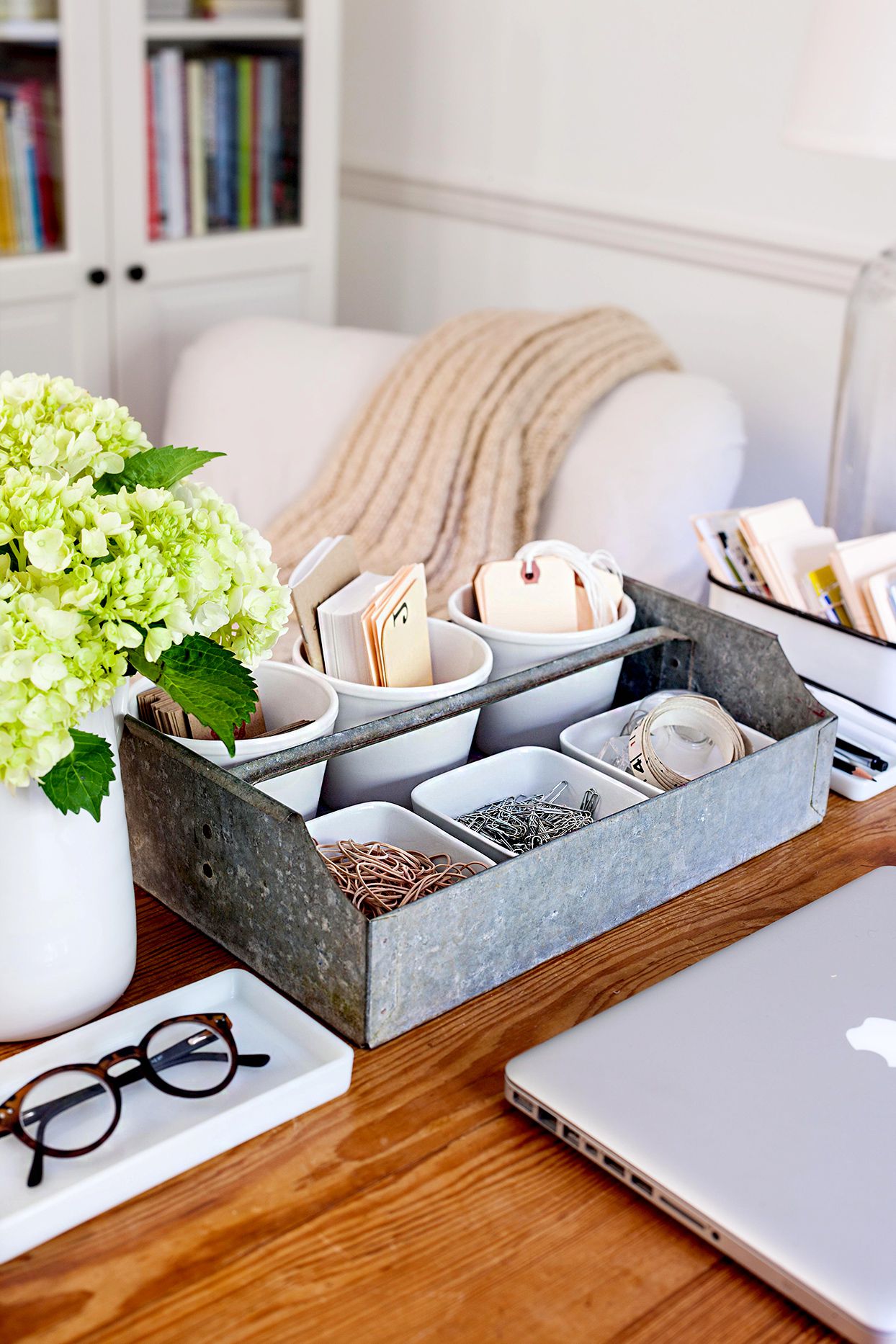
Small compartments are magic for little things. Ice cube trays, muffin tins, loaf pans, and mini prep bowls can transform drawers full of jumbled odds and ends into organized zones. Use them for jewelry, screws, thumbtacks, batteries, paper clips, sewing notions, or spare change. In a vanity drawer, they make it easy to separate lip products, hair ties, and bobby pins before they form a tiny metallic nest.
This works especially well in junk drawers, where the goal is not perfection. The goal is to keep the flashlight, rubber bands, and mystery keys from becoming one fused life form.
8. Put Tin Cans to Work on Desks, Vanities, and Workbenches
Clean tin cans are simple, sturdy storage containers for tools, utensils, and office supplies. Use them to hold wooden spoons in the kitchen, markers in a homework area, or screwdrivers in the garage. Group a few together on a tray and they instantly become a functional station rather than a collection of loose items.
You can leave them plain for a utilitarian look or wrap them in paper, paint, or twine if you want them to blend with your decor. Just make sure the edges are smooth and safe before using them. Low budget, high usefulness, zero drama.
9. Try Trays and Bowls as Clutter Boundaries
Not all storage has to be hidden. Sometimes the smartest move is giving everyday items a defined landing zone. A tray on an entry console can hold keys, sunglasses, and mail. A shallow bowl on a nightstand can catch jewelry and earbuds. A tray on a coffee table can gather remotes, coasters, and candles so the surface looks styled instead of randomly occupied.
This is one of the easiest ways to make a room feel more organized without changing much at all. Small items look less messy when they are intentionally grouped. Think of trays as polite boundaries for your stuff.
10. Make Laundry Baskets and Totes Do More Than Laundry
Laundry baskets are roomy, durable, and easy to carry, which makes them ideal for more than dirty clothes. Use one in a mudroom for sports gear, in a playroom for oversized toys, or in a linen closet for spare bedding. Reusable shopping totes can also be hung on hooks to store wrapping paper, cleaning cloths, extra toilet paper, or seasonal accessories.
This is especially useful for families because these containers are forgiving. You do not need to fold items like they are auditioning for a department store display. You just need a place where things belong.
11. Save Small Boxes and Food Trays for Office and Vanity Storage
Those sturdy little boxes from phones, jewelry, candles, and gift sets are excellent for organizing drawers and shelves. Plastic food trays from packaged fruit, cookies, or takeout containers can also separate makeup, craft supplies, or desk tools. They are lightweight, easy to wipe clean, and often the perfect size for shallow drawers.
This idea works best when you group like items together. One box for chargers, one for sticky notes, one for hand creams, one for spare cords you are keeping because maybe someday they will match something. We both know that is optimistic, but at least now it is organized optimism.
12. Use Under-Bed Space With Low Containers, Suitcases, or Lidded Boxes
Under-bed storage is prime real estate, especially in small homes. Shallow bins, old suitcases, rolling trays, or low cardboard boxes can hold off-season clothes, extra linens, wrapping supplies, or keepsakes. If you do not want to buy specialty organizers, use what fits and add labels so you are not conducting archaeological digs every time you need a spare blanket.
The key is storing items you do not need daily. Under-bed space should support your life, not become a black hole of questionable decisions and lonely extension cords.
How to Make These Cheap Storage Ideas Look Intentional
Affordable storage does not have to look random. A few simple choices can make repurposed items feel cohesive. Stick to one label style. Repeat a material, such as glass, wicker, or white cardboard, within the same room. Group similar containers together instead of scattering them all over the house. Most importantly, match the storage method to the way you actually live.
If you have kids, pets, or a schedule that laughs in the face of perfection, choose open containers and easy drop zones. If you love a clean, minimal look, go with uniform jars, matching baskets, and lidded boxes. Good organization is not about copying a photo. It is about creating a system that still works when life is busy.
Common Mistakes to Avoid
The biggest mistake is organizing without decluttering first. Storage is not a magic trick. If you are keeping too much, even clever containers will just help you hide the problem more attractively. Another common mistake is using deep containers for small items without dividers. That is how you end up with a beautifully styled bin full of chaos.
It also helps to avoid storing frequently used items in hard-to-reach spots. Keep daily essentials at eye level or within easy reach, and reserve upper shelves, under-bed zones, or back-of-door storage for things you use less often. Your future self will be grateful, and probably much less annoyed.
Conclusion
The best affordable storage ideas using everyday items are not about making your home look like a showroom. They are about making it easier to live in. When jars become organizers, baskets become clutter catchers, and forgotten boxes become drawer systems, you create order without spending much money. That is a win for small spaces, busy households, and anyone who wants less mess without turning home organization into a second career.
Start with one trouble spot: the pantry, the bathroom cabinet, the entry table, or the junk drawer with a minor villain arc. Repurpose what you have, group similar items together, label where helpful, and keep adjusting until the setup feels natural. Organization does not need to be expensive to be effective. Sometimes the smartest storage solution is already sitting in your recycling bin, quietly waiting for its moment.
Real-Life Experience: What These Storage Ideas Actually Feel Like at Home
One of the most interesting things about using everyday items for storage is how quickly your house starts to feel more manageable, even before it looks magazine-ready. That may sound dramatic, but it is true. There is a noticeable difference between a room that is technically full of the same stuff and a room where that stuff has a place to go. Once I started using simple items like jars, trays, baskets, and small boxes instead of chasing the “perfect” organizing product, I realized the biggest improvement was not visual. It was mental.
For example, a kitchen counter can feel chaotic when snack bags, tea packets, rubber bands, mail, and loose batteries are all sharing the same square foot like awkward party guests. But put the tea in a jar, the snacks in a basket, the batteries in a little box, and the mail on a tray, and suddenly the counter feels usable again. Nothing magical happened. The number of items did not change. The stress level did.
The same thing happens in bedrooms and bathrooms. A drawer that used to swallow socks, chargers, lip balm, receipts, and hair ties becomes much easier to deal with when old gift boxes divide it into sections. You stop wasting time digging. You stop rebuying things you already own but cannot find. You also start noticing patterns in your habits. Maybe you always drop your keys in the same spot, which means you need a bowl there. Maybe your kids leave art supplies in the dining room every afternoon, which means that room needs one grab-and-go basket. These little observations help you organize for real life instead of for fantasy life.
Another surprising benefit is that repurposed storage often feels less precious. If you spent a lot of money on organizers, you may feel pressure to make everything look perfect. But when you are using a cleaned-out jar and a reused box, you are more willing to experiment. If the jar works better in the bathroom than the pantry, great. If the box is too deep for the drawer, trim it or move it. That flexibility makes the system stronger because it evolves with your home instead of locking you into one neat-looking mistake.
There is also a quiet satisfaction in solving a problem with what you already have. It feels resourceful, practical, and oddly empowering. A tension rod under the sink can buy back usable space. A laundry basket in the mudroom can stop shoes and sports gear from colonizing the hallway. A shoe organizer on a pantry door can rescue you from the black hole of sauce packets and snack bars. These are not glamorous victories, but they are real ones, and they add up fast.
Most of all, these storage ideas are sustainable because they are easy to maintain. That is the part people often forget. The best organizing method is not the one that looks perfect on day one. It is the one your household will still use three weeks later when everyone is tired, busy, and not especially interested in folding washcloths into decorative origami. Everyday-item storage works because it is simple. It asks for less money, less pressure, and less perfection. In return, it gives you a home that feels calmer, works better, and finally stops eating your scissors.