When the Pentagon says a missile defense test succeeded, the headline sounds simple: target launched, interceptor fired, threat destroyed, everyone exhales. In reality, the story is far more interestingand much more complicated. The U.S. missile defense system is not a magic force field, a science-fiction dome, or a giant invisible umbrella labeled “America, do not disturb.” It is a layered network of radars, sensors, command systems, interceptors, software, crews, test ranges, and very expensive engineering bets.
The missile defense test that drew major attention was Flight Test Ground-based Midcourse Defense-11, commonly called FTG-11. Conducted by the U.S. Missile Defense Agency, the test was important because it used two Ground Based Interceptors against one threat-representative intercontinental ballistic missile target. In plain English: the Pentagon practiced firing more than one defensive missile at a mock long-range missile threat, a tactic known as a salvo engagement.
That matters because real-world missile defense is not a tidy classroom quiz. If an incoming missile were headed toward the United States, commanders would want more than one chance to stop it. Missile defense is less like swatting a fly and more like trying to hit a bullet with another bullet in space while the clock is screaming at you. Dramatic? Yes. Technically accurate enough? Also yes.
What Happened in the Missile Defense Test?
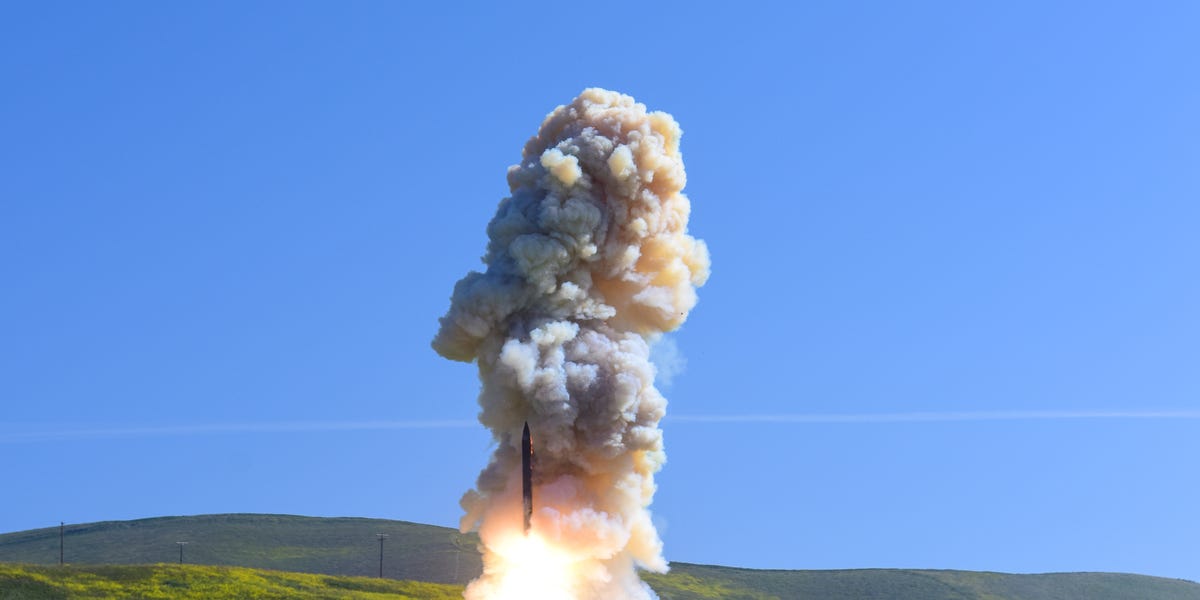
During FTG-11, a threat-representative ICBM target was launched from the Reagan Test Site on Kwajalein Atoll in the Republic of the Marshall Islands. More than 4,000 miles away, two Ground Based Interceptors were launched from Vandenberg Air Force Base in California. The goal was to test whether the Ground-based Midcourse Defense system could detect, track, discriminate, and engage the target complex in space.
The first interceptor, often described as the “lead” GBI, destroyed the reentry vehicle. The second interceptor, the “trail” GBI, examined the remaining debris and objects. Since it did not find another reentry vehicle, it selected what the system judged to be the next most dangerous object and struck it. According to the Missile Defense Agency, the test worked as designed and met initial requirements.
That second interceptor is what made the test especially interesting. A single successful intercept is valuable, but a salvo test explores a more realistic operational question: what happens when commanders fire more than one interceptor to increase the probability of stopping an incoming missile? The answer from the Pentagon was optimistic: the system demonstrated the practical use of salvo doctrine.
The Short Version: Two Shots, One Big Message
The test was not just about destroying a target. It was about proving that multiple interceptors could operate in a coordinated way. The first interceptor did the main job by hitting the mock warhead. The second showed that the system could continue evaluating the scene after the initial strike. That is important because a real missile attack may involve debris, decoys, countermeasures, or multiple objects that sensors must sort through quickly.
Think of it like airport security for outer space, except the line is moving at thousands of miles per hour and nobody is taking off their shoes.
How the Ground-based Midcourse Defense System Works
The Ground-based Midcourse Defense system, or GMD, is designed to protect the U.S. homeland from limited intermediate-range and intercontinental ballistic missile threats. It is not built to defeat a massive nuclear strike from a major power. Instead, it focuses on smaller attacks, historically discussed in relation to threats from countries such as North Korea and Iran.
GMD works during the midcourse phase of a ballistic missile’s flight. That is the portion after the missile has launched and moved outside the atmosphere, but before the warhead reenters the atmosphere near its target. This phase provides a wider engagement window, but it also creates a difficult technical challenge: the system must identify the real threat among objects moving through space.
Key Parts of the System
The system includes ground-based interceptors, exoatmospheric kill vehicles, radars, space-based sensors, fire-control systems, and a command network known as Command, Control, Battle Management and Communications, or C2BMC. The interceptor boosts the kill vehicle into space. The kill vehicle then separates, uses sensor data and onboard guidance, and attempts to destroy the target by direct collision.
This is called hit-to-kill technology. There is no explosive warhead in the traditional sense. The interceptor destroys the target through kinetic energy. In other words, it hits the threat very hard, very fast, and with absolutely no interest in having a polite conversation first.
Why the Pentagon Called the Test a Success
The Pentagon’s success claim rested on several points. First, the system detected and tracked the target. Second, the command-and-control network processed data from space, ground, and sea-based sensors. Third, the interceptors launched and engaged the target complex. Fourth, the lead interceptor destroyed the reentry vehicle, while the second interceptor performed its follow-up role.
For missile defense planners, this was a milestone because it showed that the system could handle a more complicated engagement than a single interceptor fired at a single target. The test also supported the Pentagon’s argument that GMD provides a credible deterrent against limited long-range missile threats.
Deterrence is not only about having weapons. It is about convincing an adversary that an attack may fail, cost too much, or produce no useful result. If an opponent believes a missile might be intercepted, the political and military calculation changes. That is why even one successful test can echo far beyond the test range.
The Fine Print: A Successful Test Is Not a Perfect Shield
Now comes the part that keeps defense analysts employed: a successful missile defense test does not mean the United States has an impenetrable shield. Testing is controlled, instrumented, and designed around specific objectives. Real attacks can be messier. They may involve surprise, countermeasures, multiple missiles, electronic warfare, cyber operations, or attempts to confuse sensors.
The GMD program has also had a mixed testing history. Over the years, some intercept tests have succeeded, while others have failed because of hardware, software, kill vehicle, or booster-related problems. That does not make the system useless, but it does mean every success should be read carefully. Missile defense is a field where confidence is built slowly, test by test, upgrade by upgrade, and sometimes headache by headache.
Why Critics Remain Cautious
Critics often point out that real-world missile attacks may be more complex than planned tests. They also question whether the system’s cost matches its demonstrated capability. Supporters respond that the threat is real, the technology is improving, and the United States cannot wait for a perfect system before fielding a defensive one. Both sides have a point, which is annoying but common in national security debates.
The best way to understand missile defense is not as a yes-or-no question. It is a probability problem. The goal is to increase the chance of defeating an attack, strengthen deterrence, and give national leaders more options in a crisis. No responsible analyst should describe it as flawless. No serious planner should dismiss it as meaningless.
Why Salvo Doctrine Matters
Salvo doctrine is the practice of firing more than one interceptor at a target to improve the probability of a successful intercept. This is not wasteful by default; it is a risk-management strategy. When the stakes include a possible nuclear or conventional strike against a city, military base, or critical infrastructure, commanders are unlikely to say, “Let’s save the second interceptor and hope the first one has a great day.”
FTG-11 gave the Missile Defense Agency a chance to test how two interceptors behave in the same engagement. The lead interceptor’s job was to destroy the reentry vehicle. The trailing interceptor’s job was to assess the remaining objects and engage what it identified as the most dangerous. That is a much richer test than simply launching one interceptor and celebrating if it connects.
In operational terms, salvo firing can create a layered opportunity within a single defensive window. If one interceptor fails, another may still have a chance. If the first succeeds, the second may help address uncertainty in the target scene. That logic is central to missile defense planning because uncertainty is the enemy of clean decision-making.
How This Fits Into Broader U.S. Missile Defense
The Pentagon’s missile defense architecture is not limited to GMD. The United States also uses systems such as Aegis Ballistic Missile Defense, Standard Missile interceptors, THAAD, Patriot, space-based sensors, forward-based radars, and regional defense networks. Each system is designed for different threats, ranges, and phases of flight.
For example, the Aegis system and SM-3 interceptors have become increasingly important in both regional and homeland defense discussions. In 2020, the United States demonstrated that an Aegis-equipped ship firing an SM-3 Block IIA interceptor could engage an ICBM-class target. In 2024, the Pentagon also reported a successful ballistic missile intercept test from Guam using the Aegis Guam System, an AN/TPY-6 radar, a vertical launching system, and an SM-3 Block IIA interceptor.
These examples show a trend: the United States is trying to move toward a more layered and flexible missile defense posture. Instead of relying on one system to do everything, planners want overlapping sensors and interceptors that can create multiple chances to detect, track, and defeat incoming threats.
Guam, North Korea, Iran, China, and the Strategic Map
Missile defense is inseparable from geography. Guam is a good example. The island is a U.S. territory and a major military hub in the Western Pacific. It sits much closer to China than Hawaii does, making it strategically valuable and potentially vulnerable. A successful intercept test off Guam was therefore not just a technical event; it was a signal that the Pentagon is serious about protecting forward bases that would matter in any Indo-Pacific crisis.
North Korea’s long-range missile development has long shaped homeland missile defense planning. Iran’s missile programs influence U.S. regional defense planning in the Middle East and Europe. China and Russia, meanwhile, present a different level of challenge because they possess larger and more advanced arsenals. That is why U.S. officials often describe systems like GMD as defenses against limited attacks, not as shields against a full-scale strategic exchange with a peer nuclear power.
In short: missile defense is useful, but it does not repeal physics, strategy, or arithmetic. A handful of interceptors cannot solve every missile threat on Earth. They can, however, complicate an adversary’s plans and protect against limited attacks.
The Next Generation Interceptor and the Future of GMD
The Pentagon is already working on the next chapter: the Next Generation Interceptor, or NGI. The NGI program is intended to modernize the Ground-based Midcourse Defense system and provide a more advanced interceptor for future threats. Lockheed Martin won a major contract to develop the system, and U.S. plans have called for new interceptors to be deployed at Fort Greely, Alaska.
The reason for NGI is straightforward. Missile threats are becoming more complex. Adversaries are improving range, accuracy, mobility, countermeasures, and launch options. The older GBI fleet was designed for a different era, and upgrading the kill vehicle, booster, sensors, and software is essential if the United States wants the system to remain credible.
However, watchdogs have warned that the NGI schedule is ambitious. Speed can be useful in defense acquisition, but moving too quickly can create cost, design, and testing risks. The Pentagon wants capability fast; engineers still have to obey reality. Reality, unfortunately, does not care about PowerPoint slides.
Golden Dome and the Big Missile Defense Debate
The missile defense conversation has grown even bigger with the proposed Golden Dome initiative, a broader concept intended to expand U.S. missile defense with ground-based and space-based elements. Supporters argue that modern missile threats require a more ambitious architecture, including better tracking, faster intercept opportunities, and possibly space-based interceptors. Critics warn about cost, feasibility, escalation risks, and whether such a system could realistically handle advanced attacks.
Recent cost estimates have pushed the debate into eye-popping territory, with projections running far beyond earlier public price tags. That does not automatically mean the concept is impossible, but it does mean taxpayers, lawmakers, and defense leaders will demand clear answers: What threats will it defeat? How many missiles can it handle? What is the timeline? What happens if costs rise? And perhaps most important: how will success be measured?
The FTG-11 test is useful in this larger debate because it shows both the promise and the limits of missile defense. The promise is that hit-to-kill technology can work under demanding conditions. The limit is that every success comes inside a specific test design, not a guarantee of battlefield perfection.
What the Test Means for Ordinary Americans
For most people, missile defense is not a daily concern. There are groceries to buy, emails to ignore, and mysterious subscription charges to cancel. But homeland missile defense matters because it sits at the intersection of national security, technology, taxes, and foreign policy.
A successful test can reassure the public that the United States is investing in protection against limited missile threats. It can also reassure allies who depend on American defense commitments. At the same time, the public deserves plain-language honesty. Missile defense reduces risk; it does not eliminate risk. It strengthens deterrence; it does not make diplomacy irrelevant. It creates options; it does not create miracles.
Analysis: The Real Meaning of the Pentagon’s Success Claim
The most balanced reading of the Pentagon’s claim is this: FTG-11 was a genuine technical success and an important operational milestone, but it should not be oversold as proof of a perfect national shield. The test demonstrated that two Ground Based Interceptors could be used in a coordinated salvo against a threat-representative ICBM target. That is a meaningful achievement.
At the same time, missile defense remains one of the hardest missions in modern military technology. The system must work quickly, accurately, and under extreme pressure. It depends on sensors, communications, software, mechanical reliability, and human command decisions. A failure in any part of the chain can affect the outcome.
So, did the Pentagon have reason to claim success? Yes. Did that success end the debate? Not even close. Missile defense is a continuing race between offensive missile technology and defensive innovation. Every successful test answers some questions and raises others. That is not a flaw in the story; that is the story.
Conclusion
The Pentagon’s successful missile defense test was more than a fireworks show over the Pacific. It was a carefully planned demonstration of a critical homeland defense capability, especially the use of salvo doctrine within the Ground-based Midcourse Defense system. By launching two interceptors against a threat-representative ICBM target, the Missile Defense Agency showed that the system could handle a more complex engagement than earlier tests.
But the smartest takeaway is neither blind celebration nor automatic skepticism. Missile defense is valuable because it can increase the odds of stopping a limited missile attack and strengthen deterrence. It is also expensive, technically difficult, and still evolving. The FTG-11 test gave the Pentagon a win. The future will require more testing, better interceptors, improved sensors, disciplined spending, and clear public explanations that do not sound like they were assembled in a classified jargon blender.
In the end, missile defense is about buying time, options, and protection in the worst moments imaginable. A successful test does not make the world safe by itself. But it can make a dangerous world a little harder for an attacker to exploitand in national defense, a little harder can matter a lot.
Experiences and Practical Reflections on the Missile Defense Test
For anyone who has followed missile defense tests over the years, the FTG-11 event feels like one of those moments where engineering, strategy, and public communication collide. On paper, the test is a sequence of technical steps: launch target, detect target, track target, launch interceptors, guide kill vehicles, confirm intercept. In human terms, it is a high-pressure rehearsal for a scenario nobody wants to experience for real.
The first experience many readers have with this topic is confusion. Missile defense headlines often sound absolute: “success” or “failure.” But the truth sits in the details. A test may succeed in hitting a target but still reveal issues in communications, discrimination, timing, or reliability. Another test may fail to intercept but still provide useful data that improves the next version of the system. That is why engineers love telemetry and journalists love simple verbs. Unfortunately, telemetry does not fit neatly into a headline.
A second experience is surprise at the scale. The target in FTG-11 traveled across thousands of miles of ocean. Sensors from different domains fed information into command systems. Interceptors launched from California. Kill vehicles operated outside the atmosphere. This is not one machine doing one job. It is a national-scale network trying to make a split-second decision at extreme speed. If your home Wi-Fi struggles when someone microwaves soup, the coordination required here starts to look almost absurdly impressive.
A third experience is the tension between reassurance and realism. It is reassuring to know that the United States can intercept certain ballistic missile targets in tests. It is equally important to understand that missile defense is not a guarantee. A realistic public conversation must hold both ideas at once. Citizens should not panic about every missile headline, but they also should not imagine that technology has solved the nuclear age like an app update.
For defense professionals, tests like this are learning events. They validate procedures, expose weaknesses, build operator confidence, and support future funding decisions. For policymakers, they become evidence in budget debates. For allies, they send a signal of American commitment. For adversaries, they complicate planning. For the average reader, they offer a rare glimpse into a hidden world where physics, software, and strategy all have to shake hands at hypersonic speed.
The most useful personal takeaway is simple: missile defense should be judged with mature expectations. Celebrate the achievement, ask hard questions, and demand continued testing. The Pentagon’s claim of success matters, but the bigger story is the long-term effort to make missile defense more reliable, layered, and transparent. A single test can be a milestone. A safer defense posture requires many milestones, honest analysis, and the humility to know that the next challenge is already on the radar.