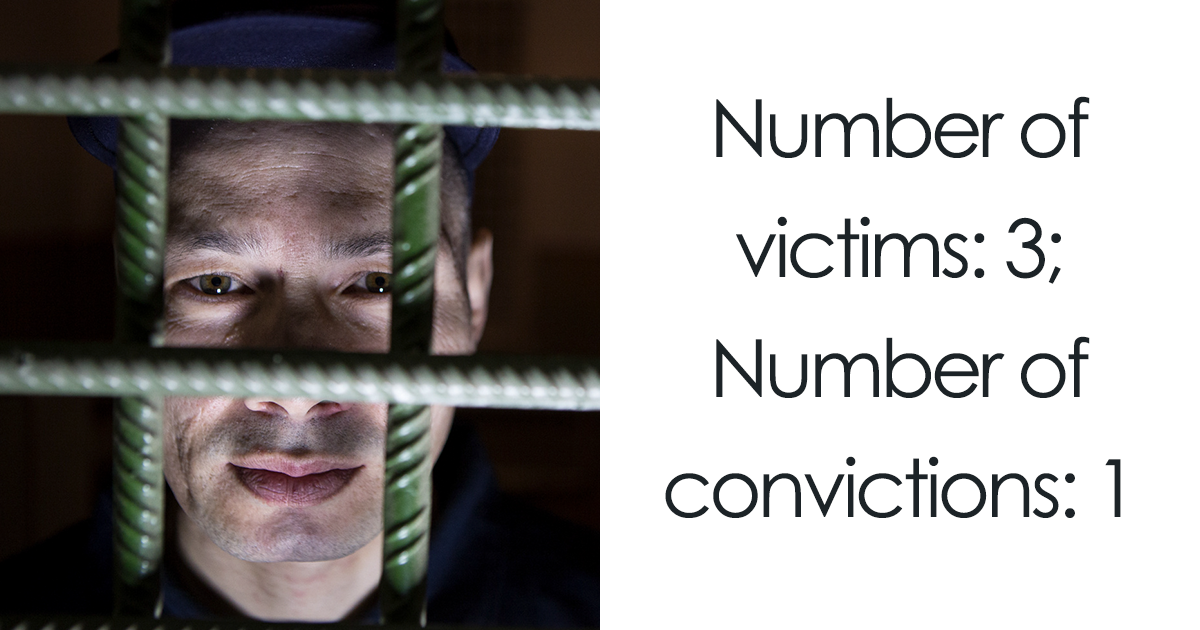
There are places where silence does not feel empty. It feels crowded. A life-sentence prison in Kharkiv, Ukraine, is one of those places. The corridors have doors that do not simply close; they conclude. Behind them are men and women convicted of murder, some for multiple killings, some described in case captions as among the most severe criminal offenders in the country. And then there is the gaze: direct, guarded, ordinary, blank, suspicious, tired, curious, sometimes almost polite. The camera does not solve it. It records the riddle.
The portrait series that inspired this article was created by Prague-born documentary photographer David Tesinsky, known for photographing subcultures, street stories, and lives pushed to the margins. In Kharkiv, he photographed women and men serving life sentences, including inmates whose captions describe convictions for one to 29 murders. The result is not a horror gallery, even though the internet loves that kind of thing the way raccoons love an unsecured trash can. It is something more uncomfortable: a visual confrontation with people who have done terrible things and still look, unmistakably, human.
That tension is exactly why the series matters. We want monsters to look like monsters. We want evil to arrive with dramatic lighting, violin screeches, and maybe a suspiciously long black coat. Real life is less cooperative. In prison portraiture, the face becomes a battlefield between judgment and recognition. You can stare at a portrait for a long time and still not know what you are seeing: remorse, performance, boredom, pride, numbness, fear, or simply a person trying to survive another day in a locked room.
The Story Behind The Kharkiv Prison Portraits
Tesinsky’s project focuses on prisoners convicted for life in eastern Ukraine. His own captions identify inmates from facilities referred to as prison or colony numbers #100 and #54. Among them is Ruslan Khudoliy, captioned as convicted in 2004 of robbery, thefts, and willful brutal murders, with 29 victims listed. Others include Kateryna Schuka, Valentina Luchaninova, Tamara Shulga, Lilia Chizhyk, Maryna Hovor, Aider Reshitov, Dmytro Suchkov, and Volodymyr Kyrylenko, each presented with brief details about convictions, victim counts, and life sentences.
Those captions are stark. They do not invite cozy interpretation. Yet the photographs themselves often resist the neatness of the captions. A person stands near a painted wall. Another sits in a room that looks strangely domestic. Someone looks at wedding photographs. Someone else stands outdoors with another inmate. There are hands, eyes, clothing, posture, fluorescent light, and the quiet administrative order of confinement. The setting is prison, but not every frame screams prison. That is part of the shock.
Many viewers expect maximum-security spaces to look like cinematic dungeons: damp stone, dripping pipes, and a villain practicing a monologue. Instead, some images and descriptions from the series show ordinary objects: televisions, clean rooms, showers, and spaces where family visits can occur. This does not soften the crimes. It complicates the setting. A life sentence is not one endless dramatic scene; it is thousands of dull mornings, scheduled movements, watched hands, institutional meals, and conversations that may never leave the walls.
Why The “Gaze” Feels So Powerful
The word “gaze” does a lot of work here. It suggests the eyes are not merely visible but active. They look back. They refuse to remain evidence. When we look at a portrait of a convicted murderer, we often imagine we are examining them. But a strong portrait reverses the situation. Suddenly, the viewer is also on trial. Why are we looking? What are we hoping to find? Proof? Fear? A moral shortcut?
Popular culture has trained audiences to search for the so-called “serial killer stare.” Crime dramas and thrillers love the idea that danger can be detected in a cold pair of eyes. It is convenient. It is also misleading. Psychopathy, antisocial behavior, and violent offending cannot be diagnosed from a stare. Experts repeatedly caution that eyes alone do not reveal whether someone is dangerous, remorseful, manipulative, or mentally ill. A photograph can show expression, but it cannot provide a full psychological evaluation.
This is why the Kharkiv portraits are most interesting when they frustrate easy conclusions. Some subjects look calm. Some look hardened. Some look like tired neighbors waiting at a government office. That ordinariness can be more disturbing than theatrical menace. It reminds us that violence is not always accompanied by a visible sign. The face does not always confess what the court record says.
Serial Killers, Myths, And The Problem With Easy Labels
Serial murder attracts a disproportionate amount of attention. The FBI has noted that serial killings represent less than one percent of all murders, yet they dominate public imagination. That gap between rarity and fascination has created a cottage industry of myths: that all serial killers are loners, all are male, all are motivated by sex, all are criminal geniuses, all want to be caught, or all can be identified by a chilling look. Real cases are messier.
In the context of Tesinsky’s series, “serial killer” is a phrase that draws clicks, but the broader reality includes multiple categories of homicide: robbery-related murders, domestic violence, gang involvement, arson, and other violent crimes. Some prisoners were convicted of multiple murders; others were serving life sentences for fewer victims but under circumstances severe enough to receive the harshest punishment available. Reducing every subject to a single sensational label can flatten the legal and human reality.
That does not mean we should soften language or excuse harm. Murder is not a plot twist; it is a permanent absence in someone else’s family. The ethical challenge is to write and photograph without glamorizing offenders. The victims must not disappear behind the visual magnetism of the convicted. A responsible article about prison portraits should keep that balance: the portraits are compelling, but the crimes are not decorative background information.
Inside A Life-Sentence Prison: Order, Routine, And Control
One striking detail from the series is that prisoners are required to show their hands when an officer or prison worker enters a workroom. It is a small rule with a large meaning. Hands can hold tools, weapons, notes, food, or nothing at all. In a prison built around risk management, the body is constantly read: where the hands are, where the eyes go, how close one person stands to another, whether a door is locked, whether an object is missing.
Life imprisonment is not only about the length of punishment. It is about the architecture of control. The prisoner’s world becomes narrower, scheduled, supervised, and repetitive. Every privilege has a rule attached. Every private moment is partly public because the institution must monitor risk. Even ordinary gestures become charged. Looking at a wedding photograph inside prison is not the same as looking at one at home. Sitting on a bed is not the same when the room is searched. Laughing outdoors is not the same when the horizon is unavailable.
Ukraine’s prison system has also faced scrutiny from human-rights monitors. Reports over the years have described poor conditions in many detention facilities, concerns about ill-treatment, and the continuing challenge of bringing institutions closer to international standards. The war has added further pressure to detention systems across the region, especially regarding prisoners of war, occupied territories, and facilities affected by displacement or security risks. That wider context makes any prison image from Ukraine feel heavier today than it may have felt when first published.
Documentary Photography Is Not A Mugshot
A mugshot is made for identification. A documentary portrait is made for attention. That difference matters. A mugshot says, “This is the person processed by the system.” A portrait asks, “What does it mean to look at this person?” Tesinsky’s images sit closer to the second category. They are not neutral, because no photograph is neutral. Framing, light, distance, posture, caption, and publication context all shape meaning.
Good documentary photography does not pretend the camera is invisible. The photographer chooses where to stand. The subject chooses, or is allowed, a way to face the lens. The viewer brings fear, curiosity, disgust, sympathy, or suspicion. In prison photography, all of these forces are intensified. The subject has limited freedom. The institution controls access. The crime shapes interpretation before the viewer even studies the image.
That is why ethical visual journalism emphasizes accuracy, context, and respect for subjects without staging or manipulating reality. When the subject is a convicted murderer, “respect” does not mean admiration. It means refusing to lie with the camera. It means not turning a person into a prop, not inventing drama, not hiding relevant facts, and not pretending that a face can explain the suffering behind a case file.
The Strange Domestic Details That Make The Photos Unsettling
Some of the most unsettling prison portraits are not the harshest ones. They are the ones with normal objects. A television. A patterned wall. A clean shower. A room for family visits. A wedding album. These details are almost comically ordinary, which is exactly why they stick. Viewers expect a visual punishment that matches the moral horror of murder. Instead, they may see a room that looks like a budget hostel with stricter checkout policies.
But ordinary details do not erase punishment. They reveal its duration. A life sentence must be lived somewhere. People serving that sentence still brush their teeth, watch programs, receive letters, argue, age, and remember. The discomfort comes from realizing that the people in the photographs are not frozen at the moment of crime. They continue after it. Their victims do not. That imbalance is the moral wound at the center of every image.
In one caption, Kateryna Schuka is shown looking at photographs from a wedding that took place inside prison. The detail is almost unbelievable, yet it is also deeply human. Marriage, intimacy, longing, and ritual do not disappear because a person is incarcerated. But when they occur inside a prison for people convicted of murder, they force viewers to wrestle with a difficult question: how much humanity remains available to someone who has denied it to others?
Why Viewers Cannot Look Away
True-crime audiences often say they want to understand. Sometimes that is true. Sometimes they want to feel safely frightened. A prison portrait offers both temptation and resistance. It gives the viewer proximity without danger. You can look into the face of a person convicted of murder while sitting at home with coffee, tabs open, and the cheerful illusion that your browser history is a personality.
But the best images do not let curiosity remain comfortable. They ask whether looking is a form of learning or consumption. Are we thinking about justice, prison conditions, psychology, and victims? Or are we collecting chills? That question is not meant to shame the viewer. Curiosity about extreme human behavior is normal. The problem begins when curiosity becomes entertainment without responsibility.
Tesinsky’s series works because it does not provide a single emotional instruction. It does not say, “Fear them,” “pity them,” or “forgive them.” It simply places the viewer in front of people society has locked away permanently. The rest is up to us, and that is why the images linger.
The Ethics Of Photographing People Who Have Done Terrible Things
Photographing convicted killers requires more than courage. It requires restraint. The easiest version of this project would be sensational: dark captions, dramatic edits, horror-movie language, and a promise that the eyes reveal evil. That version would probably go viral, because the internet sometimes behaves like a raccoon with Wi-Fi. But it would be dishonest.
The harder version is to show the person without making the person larger than the crime. That means acknowledging the victims, using precise language, avoiding amateur diagnosis, and resisting the glamour that can attach to infamous offenders. It also means remembering that the prison itself is part of the story. Institutions shape bodies, routines, and expressions. A person photographed after years of confinement is not only showing character; they are showing adaptation.
There is also the question of consent. Incarcerated people are not free in the ordinary sense, so consent inside prison is complicated. Access is mediated by officials. Subjects may feel pressure to cooperate, or they may welcome visibility. Ethical photographers must be aware of that imbalance. The camera can dignify, expose, simplify, or exploit. Sometimes it can do all four before lunch.
Additional Experience: What It Feels Like To Photograph The Gaze Of Killers
Walking into a life-sentence prison with a camera is not like walking into a studio. In a studio, the awkward part is usually small talk, lighting, and whether the subject wants the left side of their face because “it has more personality.” In prison, the awkward part is everything. The air feels accounted for. Doors open with a sound that reminds you they can close with the same confidence. Officers watch the photographer, the prisoners watch the officers, and everyone watches the camera because the camera is the only object in the room allowed to leave.
The first lesson is that fear is noisy inside your own body. You hear your shoes too loudly. You check your equipment twice. You suddenly become aware that a lens cap is a ridiculous little object to be worried about in a room where people have been convicted of ending lives. Then the subject steps in, and the fantasy collapses. They are not a movie monster. They are shorter or taller than expected. Their shirt is ordinary. Their hands are visible. Their eyes do not come with subtitles.
That is when the real work begins. A portrait session depends on a fragile exchange: the photographer asks for stillness, and the subject decides what kind of stillness to give. Some people offer defiance. Some offer blankness. Some perform normality with almost painful effort. Some seem bored, as if the camera is just another inspection. The photographer must notice without pretending to know too much. A blink is not a confession. A stare is not a diagnosis. A smile is not remorse. The camera records surfaces, and surfaces are tricky little devils.
The most difficult part is not fear of the prisoner. It is fear of making a false image. Too much drama, and the portrait becomes propaganda. Too much softness, and it risks insulting the victims. Too much distance, and the subject becomes a specimen. Too much intimacy, and the viewer may forget the crime. The ethical line is not painted on the floor; it moves with every frame.
Inside such a prison, small details become strangely loud. The scrape of a chair. A guard shifting weight. A prisoner adjusting sleeves. A fluorescent tube humming as if it, too, has been sentenced. You begin to understand that the gaze is not only in the eyes. It is in posture, silence, waiting, and the way a person occupies a room where every movement has consequences. The photograph captures one fraction of a second, but that second carries years of courtrooms, grief, violence, punishment, and survival.
After leaving, the outside world feels almost indecently casual. Cars move freely. People complain about slow coffee. Someone laughs at a message. The sky is suddenly huge. That contrast is part of the experience. Prison photography follows you out of the prison because it changes the way you look at ordinary freedom. A door that opens becomes a luxury. A walk without permission becomes a miracle wearing sneakers.
The gaze of convicted killers does not provide the answer people expect. It does not explain murder. It does not heal victims. It does not prove evil through the shape of an iris. What it does is force a longer, colder, more responsible look at human beings, crime, punishment, and the stories we tell ourselves to keep darkness at a comfortable distance. That may be the true power of the series: not that it lets us see into them, but that it reveals something uneasy about us.
Conclusion
“I’ve Photographed The Gaze Of Serial Killers In A Prison In Ukraine” is a title built for curiosity, but the deeper story is not about shock. It is about the limits of looking. David Tesinsky’s Kharkiv prison portraits show people convicted of brutal crimes, including multiple murders, yet the images refuse to behave like simple evidence of evil. They show faces, rooms, gestures, and routines. They show the strange continuation of life after irreversible harm.
The series also reminds us to be careful viewers. We cannot diagnose a person from their eyes. We cannot understand a murder from a portrait. We cannot let fascination with offenders erase victims. But we can use these images to ask better questions about justice, punishment, prison life, human dignity, and the uneasy relationship between seeing and knowing. In the end, the most haunting thing about the gaze is not that it reveals everything. It is that it does not.