If you came here expecting old medical photos and a quick shiver, brace yourself for something worse: context. The most disturbing pictures of lobotomy before and after are not always graphic in the horror-movie sense. Often, they are formal portraits, hospital snapshots, operating-room stills, and clinical “proof” images meant to sell a miracle cure. And that is exactly what makes them so unsettling. They show how medicine, under pressure and armed with too much confidence, can mistake quiet for recovery, obedience for wellness, and emotional flattening for success.
Lobotomy, also called prefrontal lobotomy or leucotomy, exploded into public awareness in the mid-20th century as a supposed breakthrough for severe mental illness. The procedure began in Europe, but it became a full-blown American obsession under neurologist Walter Freeman and neurosurgeon James Watts. In the United States, the operation was promoted as modern, efficient, and almost heroic. Hospitals were overcrowded. Effective psychiatric drugs did not yet exist. Families were desperate. Doctors wanted somethinganythingthat looked like action. Lobotomy arrived wearing the confident grin of a solution and carrying, metaphorically speaking, the world’s worst customer satisfaction policy.
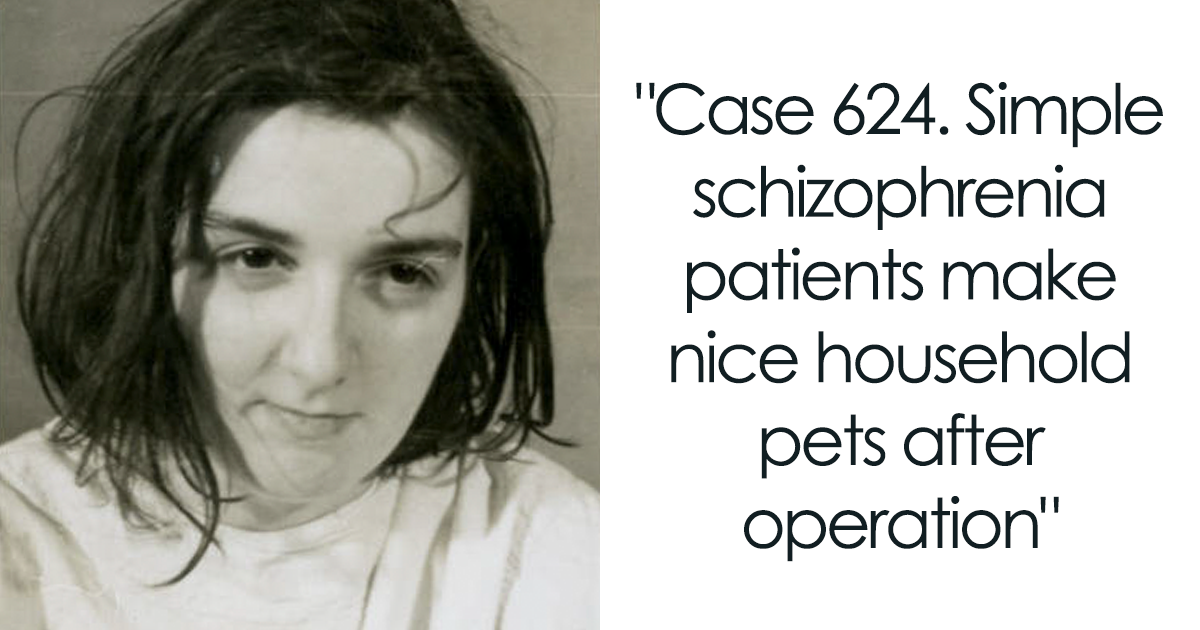
Today, when people search for lobotomy before and after pictures, they are usually looking for visual proof of that dark chapter. The real story hidden in those images is not just what changed in a patient’s face. It is what the culture chose to celebrate, ignore, or excuse. These photographs can reveal fear, exhaustion, sedation, social control, institutional neglect, and the chilling power of labels. “Before” often meant distressed, loud, depressed, resistant, or simply difficult. “After” too often meant passive, slowed, vacant, or easier to manage.
What Lobotomy Wasand Why the Images Still Haunt
The basic idea behind lobotomy was brutally simple: disrupt connections in the frontal lobes of the brain in hopes of changing mood, behavior, or psychosis. Early practitioners claimed the surgery could reduce agitation, anxiety, delusions, and severe depression. In reality, outcomes were wildly inconsistent. Some patients did seem calmer. Others were left apathetic, cognitively impaired, disabled, incontinent, childlike, epileptic, or dead. That is why archival photos from this era can feel so eerie. They were often used as evidence of success, even when the “after” image showed a person whose sparkle, independence, and initiative had clearly dimmed.
The most infamous American version was the transorbital lobotomy, introduced by Freeman in the 1940s. Instead of opening the skull in a traditional operating room, a sharp instrument was inserted through the eye socket and used to sever brain connections. Yes, it was as awful as it sounds, and no, history does not become more charming when you add vintage black-and-white film. Freeman promoted the procedure aggressively, toured hospitals, documented patients obsessively, and helped turn before-and-after photography into part medicine, part marketing, part moral warning for future generations.
21 Disturbing Pictures of Lobotomy Before and After
-
1. The Formal Intake Portrait
These images usually show a patient seated upright, staring into the camera before surgery. On paper, they look routine. In context, they are chilling. A simple portrait becomes the opening frame of a life about to be permanently altered by psychosurgery.
-
2. The “Agitated Before” Image
Many hospital photos framed a distressed patient as visual proof of illness. The subtext was clear: look how troubled this person appears. The problem, of course, is that fear, confusion, or institutional misery can also look like agitation.
-
3. The “Calm After” Portrait
Here comes the sales pitch. The patient appears quieter, more still, and less expressive. Doctors often presented that as improvement. Modern viewers see something else too: emotional blunting, fatigue, or the loss of a person’s natural force.
-
4. The Side-by-Side Contact Sheet
Nothing feels more coldly clinical than a before-and-after comparison sheet. One frame says “problem.” The next says “solution.” It reduces a complicated human life to a visual slogan, as if personality itself were a stain that needed scrubbing.
-
5. The Operating Room Demonstration
Photos of surgeons performing or demonstrating lobotomy are disturbing because of how ordinary they can seem. Staff stand nearby. Instruments are arranged. The scene feels procedural, even neat. But the act being normalized is irreversible brain injury.
-
6. The Instrument Close-Up
Some images focus on the tools rather than the patient. That can be worse. The instrument appears almost banal, yet it represents one of the most notorious shortcuts in medical history. A simple tool becomes a symbol of breathtaking overconfidence.
-
7. The Surgeon at Work Through the Eye Socket
When historical films or stills capture the transorbital method, the shock is immediate. There is no elegant science-fiction gloss herejust a deeply invasive act performed with astonishing speed and certainty. It is medicine stripped of humility.
-
8. The Recovery Ward Snapshot
These pictures can show patients in beds or chairs after surgery, often surrounded by the visual language of care. Yet what they may actually document is survival, not healing. A person can be alive, quiet, and still profoundly harmed.
-
9. The Smiling Doctor, Silent Patient Frame
One of the most unsettling image patterns from medical history is the triumphant physician standing beside a passive patient. The imbalance says everything. One subject is credited with innovation; the other becomes evidence.
-
10. The Child Patient Photograph
Images involving children are especially difficult to process. A child labeled defiant, emotional, or unmanageable could be turned into a candidate for surgery. Looking at those photos now, the question is unavoidable: who was being treated, and who was being controlled?
-
11. The Women’s Ward “Improvement” Image
Many women were described as depressed, anxious, unstable, or difficult in ways that reflected social expectations as much as medical judgment. The before-and-after pictures can feel less like treatment records and more like visual enforcement of obedience.
-
12. The Housewife After Surgery
Some post-lobotomy narratives praised women for becoming easier to live with. Read that sentence twice and let the historical alarm bells ring. A quieter wife was sometimes described as a better outcome, even when ambition, joy, or complexity had been flattened.
-
13. The Institutional Corridor Portrait
Photographs taken in hospital hallways or wards often carry a peculiar emptiness. A patient stands there, framed by institutional walls, after a procedure meant to restore function. Instead, the image can suggest isolation, dependency, and an erased future.
-
14. The “Returned Home” Family Snapshot
Some after photos show patients back at home. On the surface, that sounds hopeful. But the emotional tone can be haunting. Families sometimes got someone back physically, while losing pieces of the person they had known.
-
15. The Blank Stare Close-Up
Not every patient looked dramatically different, but some close-up portraits show a striking flattening of affect. The eyes are open, the posture is present, yet the expression feels distant. These images haunt precisely because they are so quiet.
-
16. The Doctor’s Annotated Photo
Some archival materials include notes about behavior, compliance, or prognosis attached to photographs. This mix of image and judgment is unsettling because it turns the face into a data point. The patient is seen, but not necessarily understood.
-
17. The Conference or Teaching Image
Medical education photos can be especially disturbing because they show how normalized the procedure became. A classroom tone surrounds an operation that later generations would recognize as one of psychiatry’s most notorious mistakes.
-
18. The Publicity Shot
When lobotomy entered newspapers and magazines, images sometimes borrowed the language of progress: modern hospital, confident specialist, improved patient. The horror here is not gore. It is how cleanly a catastrophe can dress itself as progress.
-
19. The Long-Term Follow-Up Portrait
Years later, some doctors sought out former patients for updated photographs. These images are deeply uneasy. They were intended to prove success, but they often raise harder questions about personality change, lost opportunity, and the cost of being made manageable.
-
20. The Image of Physical Frailty
Some post-lobotomy photographs show not dramatic mental transformation but plain physical decline: slumped posture, slowed movement, diminished vitality. They remind us that brain injury does not stay politely inside a diagnostic category. It spills into the whole body.
-
21. The Before-and-After Pair That Looks “Successful”
This may be the most disturbing of all. Sometimes the after photo does look calmer, cleaner, and more socially acceptable. That forces a hard question: successful for whom? The patient? The family? The hospital? Or the institution that wanted silence more than healing?
Why These Images Matter More Than Shock Value
A responsible article about disturbing lobotomy pictures should do more than say, “Yikes.” The real value of these images is historical and ethical. They show how medical authority can shape public emotion. A single photo can imply cure, dignity, modernity, and scientific confidence even when the underlying treatment is poorly studied, permanently damaging, or driven by desperation rather than evidence.
That is why the history of lobotomy still matters in conversations about mental health treatment, informed consent, disability, and neuroethics. The pictures are reminders that vulnerable people are often judged first by how difficult they seem to others. Patients who were noisy, suicidal, psychotic, rebellious, traumatized, disabled, or simply inconvenient could be transformed into “good outcomes” once they were less expressive and easier to supervise. It is a lesson with uncomfortable relevance even now: medicine must never confuse reduced resistance with restored well-being.
These photographs also expose the strange visual logic of the 20th century asylum era. If a patient looked more composed after surgery, the camera was invited in. If the patient lost spontaneity, initiative, humor, and autonomy, those losses could be treated as acceptable trade-offs. In some records, they were barely treated as losses at all. That is why modern readers and viewers often react so strongly. The images do not simply document suffering; they document the misreading of suffering.
The Human Stories Behind the Pictures
Every historical image of lobotomy sits on top of a human story, and those stories rarely fit neatly into a triumph-or-disaster headline. Some families were desperate for relief after years of psychosis, self-harm, mania, or institutionalization. Some physicians sincerely believed they were helping. Some patients reported reduced torment. But many were never fully informed, never meaningfully consented, or could not have understood the long-term risks because the doctors themselves did not. The result is a visual archive full of faces that seem to ask the same question across decades: who decided this was worth it?
Rosemary Kennedy’s case remains one of the best-known examples because it fused family secrecy, disability, class privilege, and irreversible damage into one devastating story. Howard Dully’s case is equally haunting for a different reason: he was a child. His later reflections pulled the procedure out of old hospital files and back into the moral present. Once you read accounts like those, a before-and-after photo stops being a historical artifact and starts feeling like a witness statement.
Experiences Related to “21 Disturbing Pictures of Lobotomy Before and After”
There is a very specific kind of unease that comes from spending time with the history of lobotomy. It is not the same as watching a scary movie or reading a sensational article. Horror fiction gives you dramatic music, villains, and a clear exit sign. The history of lobotomy gives you paperwork, case notes, hospital language, careful portraits, and doctors speaking in the calm voice of reason. That is what lingers. The experience is disturbing precisely because so much of it looks respectable at first glance. A viewer may begin by reacting to the surgery itself, but the deeper shock arrives later, when the labels start sinking in: “improved,” “manageable,” “quieter,” “less troublesome.” Those words reveal how often the procedure was judged through the comfort of other people rather than the flourishing of the patient.
Another powerful experience tied to these images is the feeling of watching personality get translated into pathology. In many historical accounts, a person is described as anxious, rebellious, emotional, paranoid, hard to supervise, or impossible at home. That description then becomes the runway for surgery. Looking at the accompanying photographs can be profoundly unsettling because the patient may appear ordinary, frightened, tired, or simply human. The image does not always scream “medical emergency.” Instead, it forces the viewer to confront how much power doctors, hospitals, and families had to define what counted as intolerable behavior. In that sense, the photographs are not just about brain surgery. They are about social control dressed in a white coat.
There is also the experience of realizing how deeply visual persuasion shaped the lobotomy era. Before-and-after pictures were not neutral records. They helped create belief. A distressed “before” and a subdued “after” could sell the impression of progress in a single glance. It is hard not to notice the old public-relations rhythm at work: isolate the symptom, photograph the patient, perform the intervention, capture the calm, and let the image do the talking. For modern readers, that produces a queasy recognition. We like to imagine that bad ideas announce themselves with sirens. History suggests they often arrive with tidy charts, confident experts, and very convincing photos.
The most emotional experience, however, comes from family testimony and survivor accounts. Once you hear adult children describe what happened to their mothers, or former patients describe feeling that something essential was taken from them, the photographs change. A blank stare is no longer a visual detail. It becomes a clue. A stiff smile becomes a question mark. A relaxed pose becomes morally unstable terrain: is this peace, sedation, resignation, injury, or all four at once? The longer you sit with the material, the less interested you become in the shock of the image itself and the more interested you become in the silence around itwhat is missing, who is speaking, and whose interpretation became official.
In the end, the lasting experience of studying disturbing lobotomy pictures is not simple disgust. It is humility. These images remind us that medicine can be brave and dangerous at the same time, compassionate and arrogant in the same breath. They challenge modern readers to ask harder questions about consent, evidence, desperation, and how society treats people whose suffering is inconvenient. That is why these photos still matter. They are not relics from a bizarre old medical sideshow. They are warnings, still staring back.
Conclusion
The disturbing power of lobotomy before-and-after pictures lies in what they reveal about medicine, not just what they show on the face of a patient. They capture a moment when severe mental illness, overcrowded institutions, weak evidence, and enormous professional ambition collided with devastating consequences. Some of the images are surgical. Some are clinical. Some barely seem frightening at all. Yet together they tell one of the most unsettling stories in psychiatric history: that a person can be visibly calmer and still profoundly harmed.
If this topic continues to fascinate people online, it is because these photographs force modern viewers to confront a brutal truth. Progress is not just about doing something new. It is about knowing when not to call damage a cure. Anyone publishing an article on lobotomy pictures should remember that the strongest storytelling does not rely on gore. The history is dark enough on its own.