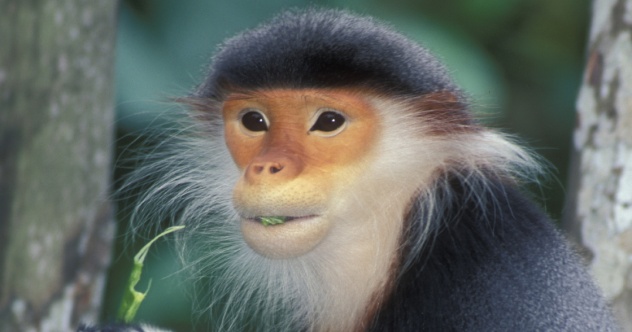
Animal heads are basically nature’s version of a Swiss Army knife. Some are built for smashing. Some are tuned for sensing. Some double as food funnels, thermal radiators, sonar launchers, or living multitools that make engineers look like they’re still doodling on a napkin. If humans had evolved even half as many head-based upgrades, hats would be wildly more complicated.
When we talk about animal adaptations, we often focus on wings, claws, tails, or speed. But the head is where evolution really starts showing off. Eyes, ears, bills, jaws, noses, horns, tusks, whiskers, and even forehead fat can all become specialized equipment. The result is a lineup of creatures that can scan mud for prey, ram rivals at high speed, chill themselves in tropical heat, or “see” with sound in dark water.
Here are 10 amazing things animals can do with their heads, along with what those abilities reveal about survival, behavior, and the absurd brilliance of evolution.
1. Owls can swivel their heads like tiny feathery security cameras
Owls are famous for their eerie, almost supernatural stare, but the real trick is what happens next: they can rotate their heads up to about 270 degrees. No, not a full horror-movie spin. Yes, still wildly impressive.
This ability helps compensate for the fact that owl eyes are not the kind you casually roll from side to side. Their eyes are more tube-shaped and fixed in their sockets, which means the bird has to move its head, not just its eyeballs, to change its view. Specialized blood vessel and bone structures help keep circulation going during these dramatic turns, allowing an owl to scan its surroundings without passing out mid-glare.
In practical terms, that head-turning ability makes owls superb hunters. They can stay still, listen carefully, and then pivot with shocking precision when prey rustles somewhere off to the side. It is stealth, surveillance, and sudden judgment all in one neck-powered package.
2. Woodpeckers can hammer trees with their heads without wrecking themselves
If you or I hit a tree face-first all afternoon, we would not end the day feeling productive. A woodpecker, meanwhile, treats that as a normal Tuesday. These birds peck at wood to excavate nests, communicate, and hunt insects hiding beneath bark.
The amazing part is not just that they peck, but how often and how forcefully they do it. Their head, bill, neck muscles, and skull work together as an impact-management system. Scientists have revised some older ideas about “shock-absorbing skulls,” but the bigger takeaway remains: woodpeckers are anatomically built to handle repeated blows that would be a terrible life choice for most animals.
Small brain size, powerful neck control, sturdy cranial structure, and efficient force distribution all play a role. In other words, the woodpecker’s head is not just a head. It is a chisel, a jackhammer, and a remarkably disciplined piece of biological engineering.
3. Star-nosed moles can identify prey by touch at ridiculous speed
The star-nosed mole looks like it lost a fight with a pink sea anemone and somehow won. Around its snout are 22 fleshy appendages packed with touch receptors, turning its nose into one of the most sensitive tactile organs in the animal kingdom.
In dark, wet habitats where eyesight is not very useful, this head adaptation is a game changer. The mole taps its star against mud and surfaces with incredible speed, rapidly deciding what is edible and what is not. It can inspect multiple spots every second and find tiny prey in what feels, to us, like no time at all.
What seems odd to human eyes is actually perfect design for a wetland predator. The star is not mainly for smelling. It is for feeling. That means the mole’s head functions like a hyper-fast touch scanner, constantly reading the world and making split-second decisions. It is less “nose” and more “living fingertip bouquet,” which is a sentence I never expected to write, yet here we are.
4. Toucans use their bills to dump excess heat
The toucan’s bill looks like a cartoonist got carried away, but it is not just decorative. That oversized bill is lightweight, strong, useful for handling fruit, and incredibly good at helping the bird regulate body temperature.
By changing blood flow to the bill, a toucan can release heat into the surrounding air. In hot conditions, the bill works like a built-in radiator. This helps the bird stay cool without relying entirely on more water-costly strategies. Nature looked at tropical heat and said, “What if the face became climate control?”
The toucan’s head, then, is doing more than eating and looking fabulous. It is participating in thermoregulation, feeding, display, and probably a little intimidation too. If you are a small rainforest creature and a giant orange bill swings your way, you are probably going to rethink your afternoon.
5. Hammerhead sharks can widen their sensory search with their strange-shaped heads
The hammerhead shark’s head is one of the most recognizable shapes in the animal kingdom. It is also one of the least likely to have happened by accident. That broad, flattened structure gives the shark a larger spread of sensory equipment across the front of the body.
Research has suggested that the widened head increases the area over which the shark can sample electrical signals produced by prey. That matters because many sharks use electroreception to detect living animals, especially when visibility is poor or prey is hidden in sand.
So the hammerhead’s bizarre face is not just a bold aesthetic commitment. It may improve hunting performance by expanding sensory coverage and helping the shark localize prey more effectively. In plain English: the weird head works, and the fish around it would probably prefer it did not.
6. Narwhals can use a head-mounted tooth as a sensor and hunting tool
Narwhals are often introduced as “the unicorns of the sea,” which is charming but undersells the science. That long spiral tusk is actually an enlarged tooth, and evidence suggests it is not merely a fancy face spear.
Researchers and wildlife observers have found support for sensory functions as well as behavioral and hunting-related roles. The tusk appears capable of detecting environmental changes, and observations have also shown narwhals tapping or striking fish with it. So the tusk may help in sensing, social signaling, and prey capture all at once.
That makes the narwhal’s head one of the most unusual sensory platforms in the ocean. It is a reminder that evolution does not always build neat, predictable gadgets. Sometimes it sticks a giant tooth out the front and somehow turns it into a useful piece of equipment.
7. Manta rays can unfurl head fins into feeding funnels
Manta rays look like underwater capes with opinions. Near their mouths, they have a pair of forward-facing structures called cephalic fins, and these are not just ornamental flourishes. When feeding, mantas roll or position these head fins to help funnel plankton-rich water straight into the mouth.
This is elegant design. Rather than simply cruising with a wide-open mouth and hoping dinner cooperates, the manta uses part of its head to channel and manage the flow of prey. Those fins act like living scoops, improving feeding efficiency while the ray glides through the water.
It is one of the best examples of a head adaptation doing fluid control in real time. Engineers build intake systems. Mantas just arrive already assembled and photogenic.
8. Platypuses can hunt by detecting electricity with their bills
The platypus has the energy of several animals awkwardly merged in a lab prank, but its bill is pure genius. While foraging underwater, platypuses can detect weak electrical signals generated by the muscle movements of prey.
That ability is especially useful in murky streams where sight is limited. In fact, when diving, platypuses close their eyes, ears, and nostrils, relying heavily on sensory information from the bill. The bill also picks up mechanical cues, giving the animal a combined system for locating food hidden in the sediment.
This means the platypus is not blindly rooting around underwater. It is reading invisible signals with its face. That may sound like science fiction, but it is very real, and it is one more reason the platypus continues to make biologists smile in exhausted disbelief.
9. Dolphins can send out sound from the front of the head and “see” with echoes
Dolphins use echolocation, one of the most famous sensory superpowers in the animal world. High-frequency clicks are produced and focused through a fatty structure in the forehead called the melon. Those clicks travel outward, bounce off objects, and return as echoes that the dolphin interprets.
That system allows a dolphin to detect prey, navigate dark or murky water, and build a detailed sense of its surroundings without relying only on vision. In effect, the front of the dolphin’s head helps project a biological sonar beam.
This is a beautiful example of a head doing computational work, not just holding a brain. The melon helps shape outgoing sound, and the lower jaw plays a role in receiving returning information. Together, the head becomes part of a living acoustic guidance system. Submarine designers, take notes.
10. Bighorn sheep can slam heads together and walk away
Bighorn rams are not exactly known for settling disagreements with a calm exchange of emails. During clashes, they rear up and slam into one another with astonishing force. The fact that they can do this repeatedly without immediately collapsing into a very regrettable life lesson is extraordinary.
Their thick skulls, powerful neck muscles, and massive horns all help manage the impact. The horns themselves are heavy and structured to help absorb force, while the skull is built to reduce the chances of catastrophic injury. That does not mean these battles are harmless, but it does mean the animals are specialized for a form of combat that would be disastrous for most mammals.
It is one of nature’s clearest examples of the head as weapon and armor at the same time. Imagine entering a contest where your strategy is “run directly at another adult male and collide face-first,” and then imagine evolution calmly saying, “All right, let’s optimize for that.”
Why these head adaptations matter
What makes these examples so fascinating is not just the spectacle. It is the pattern. Animal heads are command centers where sensing, feeding, signaling, movement, and defense all intersect. Because so much important hardware is concentrated there, even small changes can transform an animal’s lifestyle.
A wider shark head can improve prey detection. A specialized mole nose can replace vision. A bird bill can become both feeding tool and thermal radiator. A dolphin forehead can help shape sound into a navigational system. Once you start noticing these adaptations, it becomes obvious that the head is one of evolution’s favorite places to experiment.
And the results are rarely boring.
Experiences and observations: what this topic makes you notice in the real world
Spending time with the idea of “what animals can do with their heads” changes the way you watch wildlife. You stop seeing a beak as just a beak, a nose as just a nose, or horns as simple decoration. Suddenly every face looks like a toolbox. Every skull shape starts to feel like a clue.
If you have ever watched an owl turn slowly on a branch at dusk, you know the moment feels theatrical. The body stays still, the head moves, and for a second the whole bird seems less like a bird and more like a swiveling camera mounted on feathers. Once you understand why it moves that way, the experience gets even better. It is not creepy for the sake of being creepy. It is precision hunting in action.
Visit an aquarium and the same thing happens all over again. A manta ray approaching the glass no longer looks like a flat animal lazily cruising by. You start noticing the cephalic fins near the mouth and realize the head is actively shaping water flow. A dolphin surfacing nearby is not just smiling for the crowd. Its forehead is part of a biosonar system sophisticated enough to navigate a world where vision often falls short. The grin may be charming, but the real drama is the hidden engineering.
Birdwatching gets funnier too. A toucan’s bill can look absurdly oversized, like someone attached a novelty prop to a real bird. But once you know that the bill can help dump heat, the whole face becomes more impressive. The same goes for woodpeckers. What seems, at first, like a bird making terrible decisions about tree etiquette becomes a master class in anatomical specialization.
Even animals people rarely see in person become more vivid when you think about their head adaptations. The star-nosed mole, for example, is not a random oddball from the swamp. It is a reminder that evolution rewards efficiency, not beauty contests. If a nose packed with sensory organs helps you locate tiny prey in darkness faster than your competitors, congratulations: you have just become one of the weirdest and most successful insect-hunters around.
There is also something humbling about these animals. Humans tend to assume intelligence looks like a big brain solving abstract problems. But nature keeps offering other versions of brilliance. A platypus reading electrical signals with its bill is brilliant. A hammerhead expanding its sensory field with a widened skull is brilliant. A bighorn sheep surviving head-on collisions through structural design is brilliant in a way that has nothing to do with poetry, smartphones, or arguing on the internet.
That is probably the most rewarding “experience” this topic offers: it retrains attention. You begin to look more carefully. You begin to ask better questions. Why is that beak shaped that way? Why are those eyes set there? Why does that animal keep moving its head instead of its whole body? The answer is often a story about food, danger, temperature, communication, or competition. In other words, a story about life itself.
And once you start seeing heads as survival technology, the animal world feels a lot richer. Also, frankly, a lot weirder. Which is exactly how nature likes it.
Conclusion
From owl neck rotations to dolphin sonar, from platypus electroreception to bighorn impacts, animal heads are packed with extraordinary solutions to everyday survival problems. They help creatures hunt, sense, cool off, compete, navigate, and endure. Some adaptations look elegant. Some look ridiculous. All of them work.
That may be the most amazing part of all. Nature does not care whether a head looks graceful, intimidating, goofy, or like a wet pink starburst attached to a mole. If it helps the animal survive, evolution calls it a success.