Portland has a way of turning shopping into a personality test. Do you love handmade ceramics? Excellent. Do you have strong opinions about linen napkins? Welcome home. Do you believe a well-designed broom can improve society? Portland has been expecting you. That is exactly why the Remodelista Local Market in Portland, Oregon made so much sense: it gathered the city’s love of craft, home design, good coffee, practical beauty, and quietly impressive makers into one very Portland-sized event.
The original Remodelista Local Market in Portland took place on Saturday, June 4, 2011, from 11 a.m. to 4 p.m. at the Schoolhouse Electric Factory on NW Nicolai Street. Hosted by Schoolhouse Electric, the event featured a curated group of artisans, designers, food vendors, and home-focused makers. Admission was free, parking was available, and yes, coffee was involvedbecause this is Portland, and a design event without coffee would be treated as a civic emergency.
More than a pop-up sale, the market captured a specific moment in American design culture. The early 2010s were the golden age of design blogs, independent makers, and the “buy less, buy better” mindset. Remodelista, already known for its refined eye and considered-home philosophy, brought its editorial taste into the real world. Portland supplied the makers, the warehouse atmosphere, and the locally brewed confidence.
What Was the Remodelista Local Market?
The Remodelista Local Market was a curated shopping event built around handmade goods, homewares, design objects, food, flowers, ceramics, stationery, fragrance, and other beautiful everyday items. Unlike a giant convention floor where visitors need trail mix and a survival plan, this was intentionally focused. It was small enough to feel personal, but rich enough to make design lovers start mentally rearranging their homes by aisle two.
The Portland edition was part of a broader Remodelista market concept: bring together local design resources, regional makers, and readers who cared about interiors beyond the usual big-box routine. The markets offered shoppers a chance to meet the people behind the products, ask questions, touch materials, and discover objects that felt connected to place.
A Curated Event, Not a Random Craft Table Situation
The key word here is curated. Remodelista’s brand has always leaned toward the thoughtful, minimal, well-made, and quietly elegant. In Portland, that translated into a market where ceramics, printed goods, soaps, florals, furniture, home accessories, and pantry treats could coexist without visual chaos. The result was a shopping experience that felt edited rather than crowded.
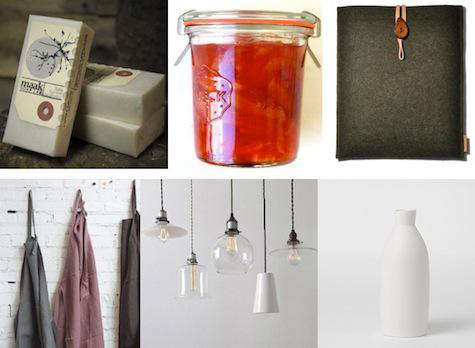
Featured vendors included names such as Lilith Rockett Ceramics, Maak Soap Lab, Bakeshop by Kim Boyce, Monograph Bookwerks, Egg Press, Canoe, Frazier & Wing, Olo Fragrance, The Joinery, Yolo Colorhouse, and others. That mix matters. It shows the Remodelista Local Market was not only about decorating a house; it was about creating a full domestic atmospherehow a room looks, smells, functions, and feels when real people live in it.
Why Portland Was the Perfect Host City
Portland did not need to pretend to understand artisan culture. It had already been living it. The city’s maker scene has long revolved around small-batch production, local supply chains, independent retail, and a deep appreciation for useful objects that do not look like they were designed during a corporate lunch break.
Travel Portland highlights the city’s maker culture through shops, workshops, terrarium studios, publishing resources, sewing spaces, and hands-on creative events. Portland Saturday Market, one of the city’s most recognizable arts-and-crafts institutions, has supported Pacific Northwest makers for decades. Crafty Wonderland brings hundreds of handmade booths to major market events. MadeHere showcases goods from Portland and Pacific Northwest makers in categories ranging from home goods to food. In other words, the Remodelista market did not land in Portland as a novelty. It landed in fertile soil.
The Local-Maker Economy Was Already Strong
Portland’s local design economy is powered by people who make things, sell things, repair things, print things, grow things, arrange things, and occasionally explain why your apartment needs “just one more” ceramic bowl. Groups like Portland Made later formalized that entrepreneurial energy, supporting local makers with education, resources, and community. Portland Bazaar, founded in 2011, also grew from the same citywide appetite for independent artists, makers, and small businesses.
This ecosystem helped make the Remodelista Local Market feel authentic. The event was not importing an aesthetic from elsewhere; it was shining a light on what Portland was already doing well. The city’s best design retail has often blended old and new, handmade and functional, humble and handsome. That balance is the secret sauceand Portland, naturally, would put the sauce in a hand-thrown jar with a letterpress label.
The Schoolhouse Electric Connection
The Portland market was hosted at the Schoolhouse Electric Factory, a location that gave the event immediate design credibility. Schoolhouse, founded in 2003, became known for lighting, furnishings, and lifestyle goods inspired by American manufacturing, heritage design, and practical beauty. Its Portland factory setting made the market feel less like a retail promotion and more like a field trip into the workshop side of home design.
Schoolhouse’s NW Nicolai building was not just a backdrop. It reflected the same values Remodelista celebrated: preservation, craftsmanship, timeless design, and the idea that everyday objects deserve care. Lighting, hardware, furniture, art, and kitchenware all fit naturally into that world. When visitors entered the market, they were not walking into a blank event hall. They were stepping into a place where design, production, and retail already spoke the same language.
Why the Venue Mattered
Location changes the way people experience design. A handmade vase looks different under fluorescent convention lighting than it does inside a brick industrial building with history in its bones. Schoolhouse gave the Remodelista Local Market a tactile environment: warehouse textures, practical displays, and the sense that objects were connected to real work.
That matters because the best home design is not just about appearance. It is about trust. When shoppers can meet the maker, learn the material, and see the object in a design-minded setting, the buying decision becomes more meaningful. You are not simply purchasing a bowl; you are buying into a story, a method, and possibly a future argument with yourself about whether you need six more.
What Shoppers Could Find at the Market
The Remodelista Local Market in Portland offered the kind of assortment that rewards slow browsing. It was not a “dash in, grab a discount candle, flee the parking lot” situation. Visitors could discover porcelain, stationery, soaps, flowers, books, small-batch food, furniture, fragrance, and home accessories. Each category supported the broader idea of the considered home: a space shaped by objects that earn their place.
Ceramics and Tabletop Pieces
Portland’s design community has a long-standing affection for ceramics, and the market reflected that love. Handmade porcelain and tabletop pieces bring softness to modern interiors. They are functional, but they also carry the mark of the maker. In a kitchen or dining room, that small human irregularity can be the difference between “nice apartment” and “I have taste and possibly know where the good coffee is.”
Paper Goods, Books, and Print Culture
Stationery and printed objects also played an important role. Portland has a strong independent publishing and print culture, and vendors such as Egg Press and Monograph Bookwerks fit the event’s tone perfectly. Letterpress cards, art books, and printed ephemera may seem small, but they add personality to a home. They also make excellent gifts for people who are impossible to shop for, which is nearly everyone after age 30.
Fragrance, Soap, and Sensory Design
Home design is not only visual. Scent, texture, and daily rituals matter. Makers such as Olo Fragrance and Maak Soap Lab showed how fragrance and personal care products can become part of a home’s atmosphere. A carefully chosen soap at the sink or a subtle fragrance in the entryway can make a space feel intentional without requiring a full renovation or a dramatic conversation with a contractor.
Furniture, Florals, and Functional Objects
The presence of furniture makers, florists, and lifestyle shops broadened the market beyond small gifts. Vendors such as The Joinery and Anna Mara Floral Design represented the structural and living elements of interiors: wood, plants, arrangements, and the practical art of making a room feel complete. Portland’s home style often succeeds because it does not treat beauty as fragile. It prefers beauty that can handle rain boots near the door.
How the Market Fits Remodelista’s Design Philosophy
Remodelista’s approach to design has always favored the “considered home.” That phrase sounds calm, but it has teeth. It means choosing fewer, better things. It means asking whether an object is useful, durable, beautiful, and compatible with real life. It means not buying a neon plastic fruit bowl just because it was on sale and you were emotionally vulnerable in aisle seven.
The Portland market translated that philosophy into a live experience. Visitors could see how different objects shared a design language: natural materials, restrained palettes, handmade details, honest utility, and a quiet confidence that did not need glitter to prove a point. The event encouraged shoppers to slow down and pay attention.
Editorial Taste Becomes a Real-World Experience
One reason Remodelista markets became memorable is that they turned online discovery into physical contact. Blog readers could finally step away from the screen and hold the objects they had been admiring. That shift from digital inspiration to in-person shopping is powerful. Online, a ceramic cup is an image. In person, it has weight, texture, balance, and the dangerous ability to convince you it belongs in your cupboard immediately.
Portland’s Design Scene After the Market
The Remodelista Local Market is now part of Portland design history, but its spirit remains visible across the city. Portland continues to support local shops, maker markets, design showrooms, vintage-meets-modern retailers, and art-focused events. Shops and markets such as MadeHere, Crafty Wonderland, Portland Bazaar, Homestead Design Market, Urbanite, Superette, and others show how deeply the city values independent retail and creative entrepreneurship.
The market also anticipated a larger national shift. Today, many shoppers want to know where products come from, who made them, whether they will last, and whether buying them supports a real community rather than a faceless supply chain. Portland was having that conversation early, sometimes over espresso, sometimes in a warehouse, and occasionally while standing very seriously in front of handmade tea towels.
Why This Event Still Matters
The Remodelista Local Market in Portland matters because it represents a bridge between editorial design culture and local creative economies. It was not just about selling beautiful things. It was about validating small makers as part of the broader design conversation. It showed that a city’s aesthetic is built not only by architects and interior designers, but also by ceramicists, printers, bakers, florists, soap makers, furniture builders, shop owners, and the people who support them.
For homeowners and design enthusiasts, the lesson is simple: a memorable home is rarely built from one showroom order. It comes together through layers. A locally made mug, a repaired chair, a thoughtfully chosen lamp, a print from an independent artist, a handmade soap in the guest baththese are small choices, but together they create a home with identity.
A Better Way to Shop for the Home
The market’s biggest takeaway is that home shopping can be slower, smarter, and more human. Instead of chasing trends, visitors could choose objects with stories. Instead of buying disposable decor, they could invest in pieces that felt grounded. Instead of copying a room from a catalog, they could build a space that reflected Portland’s practical creativity.
500-Word Experience Section: What It Feels Like to Explore a Remodelista-Style Portland Market
Imagine walking into a Portland design market on a bright late-spring day. Outside, there is probably a food cart within smelling distance. Inside, the air carries that specific blend of coffee, wood, paper, flowers, and people quietly trying not to buy everything. The first thing you notice is that nobody is shouting. This is not bargain-bin chaos. It is the calmer, better-dressed cousin of a flea marketthe kind that knows what a matte glaze is and has opinions about drawer pulls.
A Remodelista-style market invites you to browse with your hands as much as your eyes. You pick up a ceramic cup and feel the slight curve where the maker shaped it. You open a letterpress card and notice the impression in the paper. You smell a bar of soap and immediately imagine becoming the sort of person whose bathroom always has fresh eucalyptus. This is the magic of local design shopping: it lets you test-drive a better version of your domestic life without signing a mortgage document.
The best approach is to arrive without a rigid list. Yes, you may need a gift, a lamp, a vase, or a small object for that empty shelf that has been judging you since February. But markets reward openness. The piece you remember may not be the one you planned to buy. It might be a small print, a handmade bowl, or a jar of something delicious that somehow counts as home decor because it looks nice on the counter.
Conversations are part of the experience. Ask a maker how something is made, what material they use, or how they recommend caring for it. Most artisans love talking about process because process is where the personality lives. You may learn that a glaze took months to perfect, that a fragrance was inspired by Oregon forests, or that a piece of furniture uses wood selected for both durability and character. Suddenly, the object is no longer just an object. It has a biography.
There is also a practical thrill in seeing how items relate to one another. A floral arrangement makes a ceramic vase look different. A linen runner changes the mood of a wooden table. A letterpress card next to a small candle becomes an instant host gift. These combinations are the real value of a curated market. You are not only shopping; you are learning how to see.
For visitors, the experience can also become a mini design tour of Portland. Pair a market visit with a stop at a local home shop, a coffee roaster, or a walk through a design-forward neighborhood. Portland rewards slow wandering. The city’s best retail moments are often tucked into older buildings, industrial streets, and neighborhoods where a storefront can contain ceramics, plants, prints, furniture, and a shop dog who has clearly seen things.
The final tip is simple: buy the thing you keep circling back to. At a local market, inventory is often limited, and handmade objects do not always return in exactly the same form. If a piece feels useful, beautiful, and connected to your home, that is the signal. Your future self will thank you. Your shelf will stop judging you. Everyone wins.
Conclusion
The Remodelista Local Market in Portland, Oregon was more than a one-day shopping event. It was a snapshot of Portland’s creative DNA: thoughtful, practical, handmade, design-aware, and proudly local. Hosted at Schoolhouse Electric and filled with makers whose work touched nearly every part of home life, the market showed how powerful small-scale design can be when it is curated with care.
Its legacy still feels relevant because the values behind it have only grown stronger. People want homes that feel personal, durable, and connected to real makers. Portland continues to offer that through its shops, markets, studios, and creative communities. The Remodelista Local Market reminds us that good design does not have to be loud. Sometimes it looks like a perfect ceramic bowl, smells like cedar soap, arrives with a cup of local coffee, and quietly makes your home feel more like you.
Note: This article is written for web publication in original language and is based on publicly available information about Remodelista’s Portland market, Portland’s maker culture, and the city’s design retail scene.