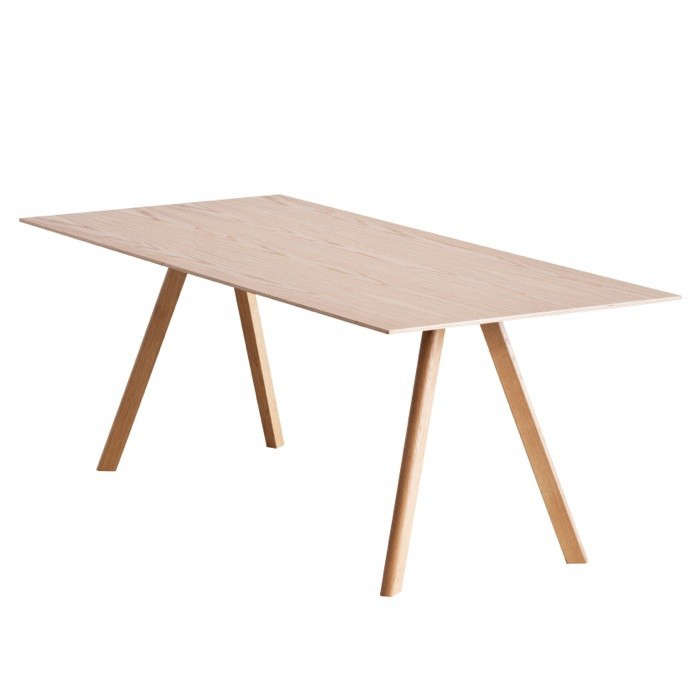
The Hay Copenhague Table CPH30 is the kind of table that looks calm, intelligent, and quietly confidentbasically the furniture version of someone who drinks black coffee, owns beautiful notebooks, and never loses their keys. Designed by French brothers Ronan and Erwan Bouroullec for HAY, the Copenhague Table CPH30 belongs to the celebrated Copenhague collection, a range originally created for the University of Copenhagen. That background matters, because this table was not born as a fragile showroom sculpture. It was designed for real use: students, meetings, meals, laptops, coffee cups, notebooks, elbows, and the occasional “just one more quick email” that turns into three hours.
At first glance, the CPH30 seems simple: a rectangular tabletop, angled wooden legs, clean edges, and a balanced Scandinavian attitude. But the more time you spend with it, the more you notice how carefully everything has been considered. The legs are not merely legs; they create rhythm. The tabletop is not merely flat; it feels generous, practical, and architectural. The proportions are not shouting for attention, yet somehow the table becomes the center of the room without behaving like a diva.
For homeowners, designers, architects, and furniture lovers searching for a modern dining table, a minimalist work table, or a flexible conference table, the Hay Copenhague Table CPH30 offers a rare mix of beauty and usefulness. It is refined enough for a carefully styled dining room, durable enough for a busy office, and warm enough for a home where real life happens. In short, it is a table that understands the assignment.
What Is the Hay Copenhague Table CPH30?
The Copenhague Table CPH30 is a rectangular table designed by Ronan and Erwan Bouroullec for HAY, the Danish design brand known for making modern furniture that feels fresh, functional, and approachable. The CPH30 is part of the broader Copenhague collection, which includes chairs, desks, tables, and other pieces created with a shared visual language. The table is especially recognizable for its angled legs and clean rectangular surface.
The collection was originally developed around 2013 for the University of Copenhagen. The university needed furniture that could handle demanding public and educational environments while still feeling welcoming. That brief shaped the soul of the CPH30. It had to be durable, easy to clean, functional, and visually warm. Many furniture designs promise “form meets function,” but the CPH30 actually looks like it attended the meeting and took good notes.
Depending on configuration, the table is available in different sizes, tabletop materials, and frame finishes. Common tabletop options include laminate, wood veneer, and linoleum, while the frame is often offered in wood finishes such as oak, black lacquered oak, soaped oak, or walnut, depending on market and retailer availability. This variety is one of the reasons the CPH30 works in so many different interiors. It can look crisp and office-ready, soft and residential, or warm and gallery-like.
The Design Story: University Roots, Everyday Brilliance
Great design often begins with a very practical problem. In this case, the problem was simple: how do you create furniture for a university that does not feel cold, institutional, or temporary? The Bouroullec brothers approached the project by blending classic furniture typologies with modern production techniques. The result was a collection that feels both familiar and contemporary.
The CPH30 has a quiet academic spirit. You can imagine it in a reading room, surrounded by books and focused minds. You can also imagine it in a sunny kitchen with a bowl of oranges, a laptop, and someone pretending they are only “checking one thing.” That flexibility is the magic trick. It does not lock itself into one category. It can be a dining table, a desk, a meeting table, a studio table, or a collaborative workspace.
Ronan and Erwan Bouroullec are known for designs that combine poetic restraint with practical intelligence. Their work often avoids unnecessary decoration, but it rarely feels cold. The CPH30 follows that philosophy beautifully. Its silhouette is minimal, but the angled legs give it personality. Its surface is simple, but the material choices add depth. It is clean without being sterile, modern without becoming trendy, and elegant without needing applause.
Why the CPH30 Stands Out in Modern Furniture
1. The Angled Legs Give It Character
The CPH30’s angled legs are one of its defining features. They create a sense of movement and stability at the same time. Straight legs would have made the table more ordinary; angled legs make it architectural. They also connect the CPH30 visually to the rest of the Copenhague collection, giving the table a recognizable identity.
This detail matters because minimalist furniture can sometimes become too plain. The CPH30 avoids that trap. It has just enough geometry to feel distinctive, but not so much that it competes with everything else in the room. It is like a well-tailored blazer: structured, useful, and quietly impressive.
2. The Rectangular Top Is Practical and Flexible
The rectangular tabletop makes the CPH30 incredibly versatile. Rectangular tables work especially well in dining rooms, conference rooms, studios, and long open-plan spaces. They provide generous surface area and make seating arrangements easy. Whether you are hosting dinner, spreading out design samples, leading a team meeting, or building a puzzle with suspiciously many sky pieces, the CPH30 offers room to work.
Its clean surface also allows it to adapt to different aesthetics. Add sculptural dining chairs and it becomes a design-forward dining table. Pair it with task chairs and it becomes a refined workspace. Place it in a meeting room and it suddenly says, “Yes, we have taste, and yes, the agenda is printed.”
3. Material Options Make a Big Difference
One of the strengths of the Hay Copenhague Table CPH30 is the range of available finishes. Laminate versions are practical and easy to clean, making them excellent for workspaces, family homes, and high-use environments. Linoleum tops offer a soft-touch matte surface that feels warm and modern, with a subtle elegance that does not scream for attention. Veneer tops bring out the natural beauty of wood, adding richness and texture.
Each material changes the table’s personality. A black linoleum top with black legs feels graphic and contemporary. Oak veneer feels warm and classic. A light laminate top with oak legs can feel airy and Scandinavian. Walnut adds a deeper, more sophisticated mood. Choosing a CPH30 is not just about size; it is about deciding what kind of atmosphere you want the room to have.
How the CPH30 Works as a Dining Table
As a dining table, the CPH30 is one of those rare pieces that can handle both everyday meals and special occasions. It has enough presence to anchor a dining area, but it does not dominate the space. The rectangular shape makes it easy to seat multiple people, and the generous proportions allow for serving dishes, plates, glasses, candles, flowers, and the one guest who insists on keeping their phone, keys, sunglasses, and emotional support lip balm on the table.
The CPH30 is especially appealing for people who like modern dining rooms that still feel warm. Some minimalist tables can look a little too severe, as if dinner conversation should be conducted in whispers. The CPH30 feels more relaxed. Its wood frame adds softness, while the tabletop options allow you to choose between crisp practicality and natural texture.
Pairing it with chairs is also easy. It works beautifully with HAY chairs, of course, but it can also sit comfortably with molded plastic chairs, upholstered dining chairs, classic wooden chairs, or even a mixed seating arrangement. Because the table’s design is clean, it allows the surrounding pieces to express themselves without visual chaos.
How the CPH30 Works as a Desk or Work Table
The modern home often asks furniture to do more than one job. A dining table may become a remote work zone by day, a homework station in the afternoon, and a dinner table by evening. The CPH30 handles this multitasking gracefully. Its broad rectangular surface is excellent for laptops, monitors, notebooks, desk lamps, and the mysterious pile of papers that appears whenever adults try to be organized.
For creative studios, the CPH30 is especially useful. Designers, architects, writers, and makers often need a surface that can support both focused work and collaborative discussion. The CPH30 offers that without looking like generic office furniture. It brings a sense of design culture to the workspace, which can subtly influence how people feel in the room. A thoughtful table can make a meeting feel less like a spreadsheet marathon and more like a productive conversation.
In office settings, larger CPH30 configurations can work as conference tables or shared work tables. The design is professional but not corporate in the boring sense. It avoids the heavy, shiny, boardroom-table look and instead offers something lighter, more human, and more contemporary.
Scandinavian Design Without the Clichés
The CPH30 is often described in relation to Scandinavian design, and for good reason. It values simplicity, function, craftsmanship, and warmth. But it avoids becoming a cliché. It is not just “light wood plus white walls equals Nordic vibes.” The table has a more nuanced identity. Its French designers brought their own sensitivity to form, while HAY’s Danish design culture shaped the product’s practicality and accessibility.
This cross-cultural design story gives the CPH30 a special quality. It is not rustic, ornate, or decorative. It is modern and restrained. Yet it still has personality. The angled legs, beveled edge, and material contrasts prevent it from feeling generic. It is a table for people who appreciate subtle detailsthe kind of details guests may not immediately name, but definitely feel.
Choosing the Right Size and Finish
When choosing a Copenhague Table CPH30, size should come first. Measure the room carefully and leave enough clearance around the table for chairs and movement. A beautiful table becomes less charming if everyone has to squeeze sideways around it like they are navigating a submarine corridor.
For dining rooms, consider how many people you usually seat and how often you entertain. A smaller version may be perfect for apartments or compact dining areas, while a longer version can support larger gatherings or open-plan homes. For offices, think about the number of users, laptops, documents, and power needs. The CPH30’s simple form makes it adaptable, but planning still matters.
Finish selection should match lifestyle as much as taste. Laminate is a smart choice for high-use areas where easy cleaning is important. Linoleum offers a refined matte feel and is well suited to workspaces or design-conscious homes. Veneer provides natural beauty but may require more mindful care, especially around moisture, heat, and staining foods. In other words, if your household includes toddlers, spaghetti sauce, and enthusiastic juice pouring, choose accordingly.
Care and Maintenance Tips
The best way to keep a CPH30 looking good is to treat it with consistent common sense. Use coasters, placemats, and trivets. Wipe spills quickly. Avoid placing hot pans directly on the surface. Clean with suitable gentle products based on the tabletop material. Do not attack the table with harsh chemicals as though it personally offended you.
Wood veneer and natural finishes may be more sensitive than laminate or certain linoleum surfaces. That sensitivity is not a flaw; it is part of living with natural materials. Over time, a well-used table may develop subtle signs of life. For some owners, that patina becomes part of the charm. For others, protective habits help preserve the showroom look longer.
Because the CPH30 is designed for real use, it is not a table that demands museum-level anxiety. Still, good care will extend its beauty and lifespan. A high-quality table is an investment, and like all investments, it appreciates being treated with respectpreferably without being used as a cutting board.
Styling Ideas for the Hay CPH30
For a Minimal Dining Room
Pair an oak or light-toned CPH30 with simple dining chairs, linen textiles, ceramic tableware, and warm lighting. Keep the palette soft: white, cream, beige, pale gray, and natural wood. Add one sculptural vase or a low centerpiece. The result is calm, modern, and welcoming.
For a Bold Contemporary Space
Choose a darker finish, such as black or walnut, and combine it with graphic chairs, statement lighting, and art on the walls. The CPH30’s clean geometry can support bolder design choices without making the room feel crowded.
For a Creative Studio
Use the CPH30 as a central work table with task lighting, storage nearby, and flexible seating. The table can become the heart of the studio: a place for sketching, reviewing samples, writing, planning, and discussing ideas. Bonus points if there is good coffee nearby. Creative work improves when coffee stops being theoretical.
Is the CPH30 Worth It?
The Hay Copenhague Table CPH30 is not usually purchased as a temporary table. It belongs in the category of furniture chosen for long-term use. Its value comes from design pedigree, material quality, versatility, and the ability to remain visually relevant over time. Trendy furniture often looks exciting for a season and then starts aging like a forgotten app icon. The CPH30 has a quieter, more durable kind of appeal.
It is especially worth considering if you want one table that can serve multiple roles. In a home, it can be a dining table and work table. In an office, it can support meetings and collaborative projects. In a studio, it can become a creative anchor. Its design is distinctive enough to feel special but restrained enough to work across changing interiors.
For buyers who care about authentic design, the connection to Ronan and Erwan Bouroullec adds another layer of appeal. This is not anonymous furniture. It is a well-developed design from respected designers and a major contemporary Danish brand. That does not mean you should buy it just for the name. Buy it because it works. The name is simply a very nice cherry on a very well-designed cake.
Real-Life Experience: Living and Working Around the CPH30
Spending time with a table like the Hay Copenhague Table CPH30 changes the way you think about furniture. At first, you may notice the obvious things: the angled legs, the smooth rectangular top, the balanced proportions. But after a while, the experience becomes less about looking at the table and more about living around it. That is where the CPH30 quietly proves its worth.
Imagine a weekday morning. The table starts as a breakfast spot, holding coffee, toast, fruit, and maybe a laptop that should not be there but absolutely is. The surface feels generous without being bulky. There is room to eat and room to think. The angled legs give the table visual lightness, so even a larger size does not feel like a wooden aircraft carrier has landed in the room.
By late morning, the same table becomes a workspace. A laptop opens, a notebook appears, and suddenly the CPH30 is no longer just furnitureit is infrastructure for getting things done. The rectangular shape makes it easy to spread out documents or sit across from someone during a discussion. Unlike many work tables, it does not feel cold or aggressively corporate. It feels focused, but human.
In the afternoon, it might become a creative surface. Fabric swatches, floor plans, books, samples, and sketches can all live comfortably on the tabletop. The CPH30’s simple design helps reduce visual noise. That matters more than people realize. When a table is too decorative or too visually busy, it competes with the work placed on it. The CPH30 steps back politely, like a good host who knows when not to interrupt.
At dinner, the table shifts again. Add plates, glasses, serving bowls, and warm lighting, and it becomes social. The clean lines make the setting feel intentional, even if the meal is takeout and the napkins are doing their best. Guests may not immediately say, “Ah yes, the angled leg geometry is excellent,” but they will likely notice that the room feels pulled together. Good design often works that way. It improves the atmosphere without demanding a speech.
The CPH30 is also forgiving in style. It can live with modern chairs, classic chairs, colorful chairs, or a carefully mismatched collection. It can handle a pendant lamp overhead or natural daylight from a nearby window. It can sit on wood floors, concrete, tile, or rugs. This adaptability makes it useful for people whose homes evolve over time. You can change the chairs, lighting, art, or wall color, and the table still belongs.
One of the most enjoyable experiences with the CPH30 is how it balances beauty and practicality. Some designer tables make owners nervous. You feel like you should approach them wearing gloves and speaking softly. The CPH30, by contrast, feels designed for use. It wants to participate in daily life. It can be elegant on Sunday evening and productive on Monday morning. That dual personality is one of its greatest strengths.
Of course, the right finish matters. A family dining space may benefit from a more practical surface, while a quiet adult dining room may welcome the richness of veneer. A studio may love linoleum for its matte feel and work-friendly character. Choosing correctly is part of the experience. The CPH30 gives you options, but it also asks you to be honest about how you live. Are you a coaster person? A careful person? A “the table is basically a second kitchen counter” person? The table can fit many lifestyles, but the finish should match the reality, not the fantasy.
In daily use, the CPH30 feels like a table that has been edited carefully. Nothing seems excessive. Nothing feels missing. It has enough design presence to make a room better and enough restraint to remain useful for years. That is why it appeals to both design enthusiasts and practical buyers. It is not just a beautiful object; it is a reliable stage for meals, work, conversation, creativity, and the ordinary rituals that make a space feel lived in.
Conclusion
The Hay Copenhague Table CPH30 by Ronan and Erwan Bouroullec is a modern design piece with uncommon range. Born from a university brief that demanded durability, function, easy maintenance, and warmth, it has become a favorite for homes, offices, studios, and dining spaces. Its angled legs, clean rectangular top, and thoughtful material options give it a distinctive but adaptable identity.
For anyone looking for a modern dining table, Scandinavian-inspired work table, or flexible conference table, the CPH30 deserves serious attention. It is practical without being dull, elegant without being fragile, and minimal without being boring. In a world full of furniture trying very hard to be noticed, the CPH30 succeeds by being quietly excellent. And honestly, that is a refreshing personality traitin furniture and in people.