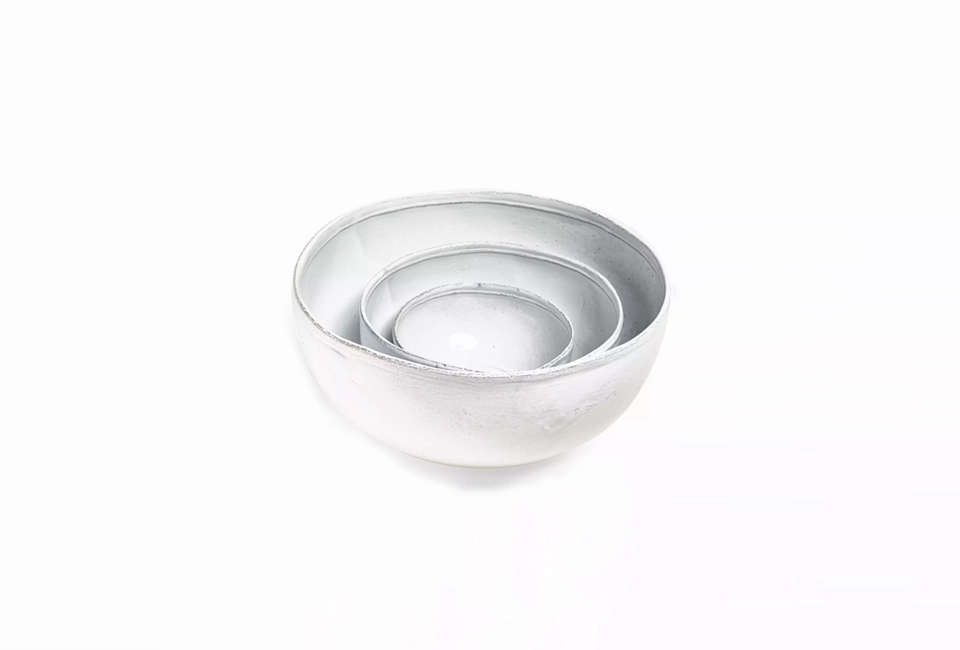
Some salad bowls are simply bowls. They hold lettuce, behave politely, and retire quietly to the cabinet. Then there are Astier de Villatte Simple Salad Bowls: handmade Parisian ceramics that somehow make arugula look like it went to art school, learned French, and started wearing linen. Elegant, irregular, charmingly imperfect, and unmistakably collectible, these bowls sit at the intersection of functional tableware and decorative art.
The Simple Salad Bowl belongs to Astier de Villatte’s beloved Simple Collection, a line known for rounded shapes, restrained profiles, softly raised borders, and a luminous white glaze over black terracotta clay. The result is not cold minimalism. It is warm minimalismthe kind that looks effortless but clearly knows what it is doing.
For shoppers searching for Astier de Villatte Simple Salad Bowls, the appeal is not just about serving greens. It is about bringing a small piece of Parisian craftsmanship to the table, whether that table is set for a dinner party, a slow Sunday lunch, or a Tuesday night salad that is trying very hard to feel less Tuesday.
What Are Astier de Villatte Simple Salad Bowls?
Astier de Villatte Simple Salad Bowls are handcrafted ceramic serving bowls made in Paris, France. They are part of the brand’s Simple Collection, which focuses on pure, rounded forms and subtle borders rather than decorative patterns. The bowls are typically made from black terracotta clay and finished with Astier de Villatte’s signature milky white glaze, allowing slight shadows of the darker clay to appear around edges, curves, and handmade irregularities.
That combination gives the bowls their instantly recognizable look: bright but not sterile, rustic but not rough, antique-inspired but still modern enough for a clean kitchen island or a contemporary dining room. Each piece is shaped by hand, stamped with the Astier de Villatte monogram, and may include the initials of the artisan who made it. This means no two bowls are exactly alike, which is excellent news for collectors and slightly dangerous news for perfectionists with measuring tools.
A Quick Look at the Sizes
The Simple Salad Bowl is available in multiple sizes depending on retailer availability. The official Astier de Villatte range has included mini, small, medium, and large versions. Common product measurements include approximately 210 x 210 x 100 mm for the small bowl, 245 x 245 x 120 mm for the standard Simple Salad Bowl, and 290 x 290 x 145 mm for the large bowl. Some U.S. retailers describe similar sizes in inches, such as about 9.5 inches wide by 4.75 inches high for the medium and about 11.5 inches wide by 5.75 inches high for the large.
For practical use, the medium size works beautifully for a side salad, berries, roasted carrots, or a grain dish for two to four people. The large size makes a stronger centerpiece and is better suited for family-style salads, citrus displays, bread, or a dramatic heap of market vegetables. The smaller versions are charming for fruit, nuts, olives, or that single lemon you bought with noble intentions.
Why the Simple Collection Feels So Special
The Simple Collection is exactly what its name promises, but “simple” here does not mean plain. It means edited. The bowls avoid heavy ornamentation and instead rely on silhouette, glaze, proportion, and hand-finished texture. The rim is gently defined, the surface has a soft shine, and the white glaze is never perfectly uniform. That small amount of visual movement is what keeps the bowl from looking mass-produced.
Astier de Villatte ceramics often feel like heirlooms from a house you wish you inherited: a little old-world, a little bohemian, and very good at making even casual food look intentional. The Simple Salad Bowl is one of the brand’s most versatile shapes because it can move from kitchen counter to dining table to mantel without looking confused about its job description.
Material and Craftsmanship
The magic starts with black terracotta clay. Unlike porcelain that aims for flawless translucence, Astier de Villatte ceramics celebrate the depth and character of darker clay beneath a white enamel-like glaze. Around rims, raised edges, and subtle curves, the black base can peek through gently, creating an aged, handmade effect.
This is not the kind of bowl that looks like it came from a factory line where every curve had to pass a geometry exam. It has slight asymmetry, small variations, and natural character. Those qualities are part of the value. Handmade ceramics are not about mechanical sameness; they are about the presence of the maker. A Simple Salad Bowl looks quiet at first, but the more you use it, the more you notice the details: the soft waviness of the rim, the weight that feels lighter than expected, and the glaze that catches light without shouting across the room.
Design Style: Minimal, Parisian, and Surprisingly Flexible
One reason Astier de Villatte Simple Salad Bowls are so desirable is that they work in many interiors. In a farmhouse kitchen, they look natural beside wood boards, linen napkins, and herbs in a chipped pot. In a modern apartment, they soften stainless steel, marble, and glass. In a maximalist home, they act as a calm white pause between color, pattern, and personality.
The bowls also mix well with other tableware. You can pair them with antique silver, modern flatware, handblown glasses, vintage plates, or plain white dinnerware. Because the glaze is milky rather than stark, it does not clash with warmer whites, creams, or natural textures. Think of it as the tableware equivalent of a great white shirt: relaxed, elegant, and somehow appropriate almost everywhere.
Best Uses for Astier de Villatte Simple Salad Bowls
Serving Fresh Salads
Of course, the obvious use is salad. The medium or large Simple Salad Bowl is excellent for leafy greens, shaved fennel, tomato salads, cucumber ribbons, roasted beet salad, or a dramatic Caesar that believes croutons are a personality trait. The white interior gives vegetables a beautiful visual lift, making greens look greener and colorful ingredients more vibrant.
Displaying Fruit
The bowl also makes an elegant fruit vessel. Lemons, pears, figs, cherries, or clementines look especially good against the soft white glaze. A large bowl full of fruit can become a centerpiece without feeling overly styled. It says, “I live beautifully,” but in a calm voice.
Serving Bread or Pastries
For brunch, use it for croissants, rolls, biscuits, or slices of rustic sourdough wrapped loosely in a linen napkin. The bowl’s handmade look suits casual abundance. It is polished enough for guests but not so formal that everyone becomes afraid to touch the bread.
Decorative Styling
When not in use, the Simple Salad Bowl can live on an open shelf, console table, kitchen island, or mantel. Fill it with seasonal objects: pinecones in winter, citrus in spring, stone fruit in summer, or mini pumpkins in fall. Yes, mini pumpkins. Even Parisian ceramics must occasionally tolerate autumn enthusiasm.
Is It Practical for Everyday Use?
Astier de Villatte pieces are often described as surprisingly durable for handmade luxury ceramics, but they still deserve thoughtful handling. Many retailers advise moderate dishwasher use for some Astier ceramics, while also noting that certain pieces should not be microwaved. Because care guidance can vary by item and retailer, the safest approach is to hand-wash the Simple Salad Bowl with a soft sponge, mild soap, and warm water.
Avoid sudden temperature changes, harsh scrubbers, and stacking heavy dishes on top of it. This is not because the bowl is too precious to use. Quite the opposite: it is best when used often. But handmade ceramics reward care. Treat it like a favorite cashmere sweater, not like a plastic mixing bowl that once survived a college apartment.
Who Should Buy Astier de Villatte Simple Salad Bowls?
The ideal buyer is someone who values craftsmanship, subtle design, and tableware with personality. If you love handmade ceramics, French interiors, classic white serving pieces, or collectible home objects, the Simple Salad Bowl makes sense. It is also a strong gift for weddings, anniversaries, housewarmings, or milestone birthdays, especially for people who already appreciate design and cooking.
However, this is luxury tableware. Prices commonly sit in the high-end range, with cost depending on size, retailer, stock, import duties, and availability. If you only need a bowl for tossing salad with aggressive tongs, a basic ceramic or wood salad bowl may be more practical. But if you want a serving piece that doubles as art, the Astier de Villatte Simple Salad Bowl earns its attention.
How It Compares with Ordinary Salad Bowls
An ordinary salad bowl is judged by capacity, durability, and how easily it fits in the dishwasher. Astier de Villatte adds another layer: emotion. The Simple Salad Bowl has a story, a maker, a material language, and a visual identity. It is not just a vessel; it is part of the table’s atmosphere.
Compared with wood bowls, it feels brighter, more refined, and easier to pair with formal settings. Compared with glass bowls, it feels warmer and more artisanal. Compared with mass-produced white ceramic bowls, it has more movement and individuality. The value is not in perfect symmetry; it is in the charm of being noticeably handmade.
Styling Ideas for a Beautiful Table
For a casual lunch, place the Simple Salad Bowl at the center of the table with linen napkins, small plates, and simple glassware. Add a loaf of bread, salted butter, and a pitcher of sparkling water. Suddenly, lunch looks less like “I assembled things from the fridge” and more like “I summer in Provence emotionally.”
For dinner, pair the bowl with roasted chicken, grilled fish, or pasta served family-style. Use it for a bitter greens salad with walnuts and pears, or a tomato salad with basil and flaky salt. The bowl’s white glaze frames the food beautifully without competing with it.
For a holiday table, use the large bowl as a centerpiece filled with pomegranates, pears, greenery, or ornaments. Its quiet shape balances more festive elements and prevents the table from tipping into department-store-window territory.
Buying Tips Before You Choose
First, decide how you want to use the bowl. If it is mainly decorative or for small sides, the small or medium size may be enough. If you host often, the large version is more useful. Second, compare retailer descriptions carefully because measurements and prices may vary. U.S. retailers sometimes list dimensions in inches, while the official brand site lists them in millimeters.
Third, expect variation. If you are buying handmade Astier de Villatte ceramics, slight differences in shape, glaze, and edge detail are not flaws. They are the reason collectors love the brand. Fourth, check return policies, shipping protection, and import fees when buying online. Handmade ceramic bowls are beautiful, but they are not known for bouncing.
Pros and Cons
Pros
The Simple Salad Bowl offers exceptional handmade character, a timeless white glaze, versatile styling, and strong collector appeal. It works for serving, display, gifting, and table styling. Its shape is understated enough for daily use but special enough for formal meals.
Cons
The main drawbacks are price, limited availability, and the need for careful handling. Because each bowl is handmade, shoppers seeking machine-perfect symmetry may prefer a different product. It is also wise to confirm care instructions before using a dishwasher or microwave.
of Real-Life Experience with Astier de Villatte Simple Salad Bowls
Living with an Astier de Villatte Simple Salad Bowl is different from owning a normal serving bowl because it slowly becomes part of the rhythm of the kitchen. At first, you may treat it like a museum object. You unwrap it carefully, place it on the counter, admire the glaze, and perhaps whisper, “Nobody touch this unless your hands are emotionally prepared.” That phase is natural. Luxury ceramics have a way of making adults behave like nervous museum guards.
But the charm of the Simple Salad Bowl appears when you begin using it. The first salad may be something easy: baby greens, lemon vinaigrette, shaved Parmesan, and cracked pepper. Nothing complicated. Yet in the Astier bowl, the dish looks restaurant-level. The soft white interior makes the greens look fresh, the irregular rim adds visual interest, and the whole table feels more considered. It is a small upgrade, but a noticeable one.
The bowl also changes how you host. Instead of hiding in the kitchen until everything is perfectly plated, you can place the bowl in the center of the table and let people serve themselves. It encourages a relaxed, generous style of dining. Guests notice it, but not in a loud way. Someone may ask, “Is this handmade?” and suddenly you are discussing Parisian ceramics over roasted vegetables, which is frankly better than discussing traffic.
In everyday life, the medium size is especially useful. It can hold a lunch salad, a pile of oranges, a batch of roasted potatoes, or a tangle of pasta for two. The large size has more drama. It looks beautiful on a kitchen island filled with lemons or on a dining table with a big green salad. The smaller sizes are less about volume and more about charm. They are perfect for cherries, olives, nuts, or little side dishes that deserve better than a random cereal bowl.
The care routine becomes simple once you stop being afraid of the bowl. Use it, wash it gently, dry it properly, and store it where it will not be crushed by heavier dishes. Hand-washing feels appropriate because the bowl itself feels personal. It was made by hands, so caring for it by hand seems right.
What stands out most is how often the bowl improves ordinary moments. A weeknight salad looks prettier. Fruit on the counter feels intentional. Leftover bread looks like part of a still life. The Astier de Villatte Simple Salad Bowl does not make dinner cook itself, sadly. But it does make the table feel warmer, calmer, and more beautiful. And some nights, that is almost as valuable as a dishwasher that unloads itself.
Final Verdict
Astier de Villatte Simple Salad Bowls are not merely serving pieces; they are collectible objects designed for people who care about atmosphere as much as utility. Handmade in Paris from black terracotta clay and finished with a milky white glaze, they combine old-world craft with quiet modern elegance. Their softly irregular forms, subtle borders, and versatile sizes make them ideal for salads, fruit, bread, side dishes, and decorative styling.
If you want the cheapest bowl for tossing romaine, this is not it. If you want a bowl that brings character, craftsmanship, and a whisper of Paris to the table, the Simple Salad Bowl is a beautiful investment. It proves that simple design can still feel rich, expressive, and memorable. In other words, it is a salad bowl with main-character energywithout being rude about it.
Note: Product prices, stock, and care instructions may vary by retailer. Always confirm current details before purchasing.