Thanksgiving crafts have a magical ability to turn an ordinary afternoon into a full-blown family memory. Add washable paint, tiny hands, wiggly toes, and one determined adult holding a stack of paper towels, and suddenly you have art, laughter, and possibly a brown footprint on the kitchen floor. That is the charm of making footprint and handprint turkeys: they are simple, personal, adorable, and just messy enough to feel like a real holiday tradition.
Footprint and handprint turkey crafts are especially popular because they work for toddlers, preschoolers, elementary-age kids, classrooms, playdates, and family Thanksgiving gatherings. They also create keepsakes that parents and grandparents actually want to save. A paper turkey is cute. A turkey made from a child’s real handprint or footprint? That is fridge-door royalty.
This guide covers three creative ways to make footprint and handprint turkeys: a classic handprint turkey, a footprint-and-handprint keepsake turkey, and a family turkey card or placemat project. Each version uses easy-to-find supplies, kid-safe materials, and flexible steps you can adjust based on age, patience level, and how brave you feel about paint before dinner.
Before You Start: Supplies, Setup, and Safety
Before the first finger meets the paint tray, prepare your craft zone. This is not the moment to trust fate. Fate has never had to scrub orange paint out of a chair cushion.
Basic Supplies You May Need
- Washable, non-toxic paint in brown, orange, red, yellow, and green
- White cardstock, construction paper, kraft paper, canvas, or paper plates
- Markers, crayons, or colored pencils
- Glue sticks or white school glue
- Child-safe scissors
- Googly eyes, stickers, feathers, or felt scraps
- Paintbrushes or foam brushes
- Paper towels, baby wipes, and a small bowl of water
- An apron, old shirt, or craft smock
- Newspaper, parchment paper, or a plastic table cover
Choose Kid-Safe Materials
For children’s crafts, choose washable, water-based, non-toxic art supplies. Look for labels such as “AP Certified,” “non-toxic,” or “conforms to ASTM D-4236.” These labels help parents and teachers identify art materials that have been reviewed for safety and appropriate labeling. Even with safe supplies, adult supervision matters, especially with toddlers who believe every object is either food, a drumstick, or both.
Smart Setup Tips
Use cardstock or heavyweight paper if you want the craft to last. Thin printer paper may wrinkle under wet paint, especially if your child enthusiastically applies enough paint to cover a small barn. Keep wipes nearby, open paint containers only when needed, and have a drying area ready before the first print is made.
Way 1: Classic Handprint Turkey Craft
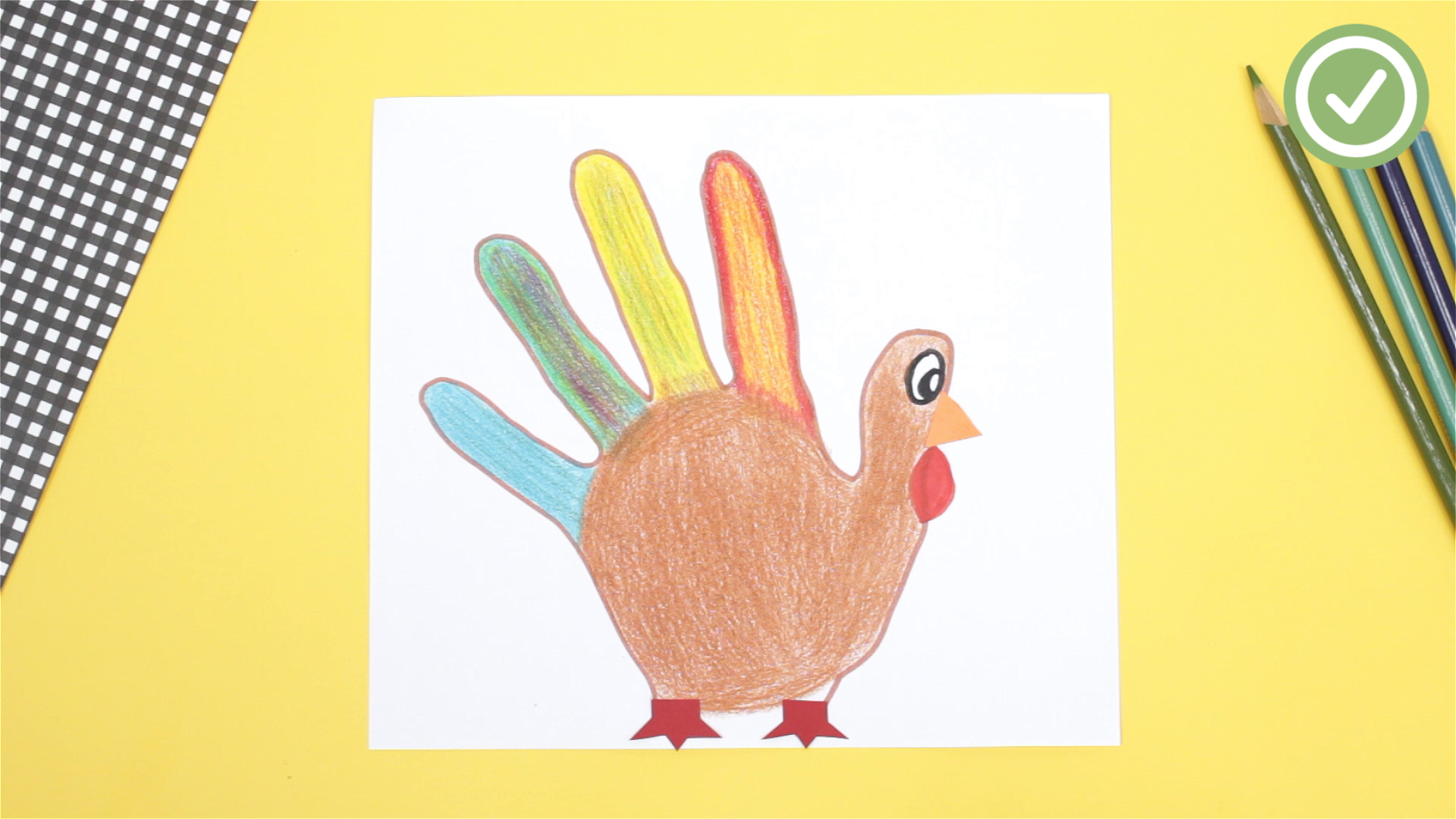
The classic handprint turkey is the Thanksgiving craft that refuses to retire. It is easy, fast, colorful, and perfect for kids who enjoy seeing their own hand become a bird with attitude. This version works well for preschool, kindergarten, Sunday school, homeschool activities, and quick family crafting after dinner.
Best For
This project is ideal for toddlers with help, preschoolers, and early elementary students. Younger children may need an adult to paint their hand and press it evenly onto the paper. Older kids can trace their hands instead of using paint if you want a cleaner option.
Materials
- White cardstock or construction paper
- Washable paint in brown, red, yellow, and orange
- Paintbrush or foam brush
- Black marker
- Orange paper or marker for the beak
- Red paper or marker for the wattle
- Googly eye or drawn eye
Step-by-Step Instructions
- Paint the palm brown. This becomes the turkey’s body. Use a foam brush for smooth coverage and fewer paint puddles.
- Paint each finger a feather color. Try red, orange, yellow, and green. If your child has five fingers, congratulations: your turkey has a deluxe feather package.
- Press the hand onto cardstock. Help your child keep fingers spread apart. Press gently on the back of the hand and each finger, then lift straight up to avoid smearing.
- Let the print dry. Give it at least 15 to 30 minutes, depending on paint thickness.
- Add turkey details. Draw legs, eyes, a beak, and a red wattle. You can glue on a googly eye for extra personality.
- Personalize it. Add the child’s name, age, and year at the bottom. This turns a cute craft into a keepsake.
Creative Variations
For a no-paint version, trace your child’s hand on brown paper and cut it out. Glue the handprint onto a background and decorate the fingers with paper feathers, stickers, or fall leaves. You can also make several handprints and layer them behind a paper turkey body to create fuller tail feathers.
Another fun twist is the “thankful feather” version. Write one thing your child is thankful for on each finger or feather. Younger children might say “Mom,” “cookies,” “dog,” “toys,” and “mac and cheese.” Honestly, that is a respectable gratitude list.
Way 2: Footprint Body and Handprint Feather Turkey
If the classic handprint turkey is cute, the footprint-and-handprint turkey is next-level keepsake material. In this version, a child’s footprint becomes the turkey’s body, while handprints become the colorful tail feathers. It is especially sweet for babies, toddlers, and preschoolers because it captures both tiny hands and tiny feet before they become not-so-tiny sneakers by the front door.
Best For
This craft is excellent for babies with adult help, toddlers, preschoolers, and parent-child keepsake projects. It also makes a thoughtful Thanksgiving gift for grandparents, babysitters, or relatives who enjoy sentimental holiday art.
Materials
- Heavy cardstock, canvas board, or watercolor paper
- Brown washable paint for the footprint
- Red, orange, yellow, and green washable paint for handprints
- Paintbrush or sponge brush
- Black marker
- Orange paper or paint for the beak
- Red paper or paint for the wattle
- Optional: ribbon, frame, or laminating sheet
Step-by-Step Instructions
- Prepare the background. Place cardstock or canvas on a flat surface. Tape the corners down if the paper slides.
- Make the footprint body. Paint the bottom of one foot brown. Press it onto the center of the page with the toes pointing downward. The heel becomes the turkey’s head, and the toes become the lower body area.
- Clean the foot immediately. This is not optional unless you want a trail of turkey evidence across the room.
- Add handprint feathers. Paint the child’s hand in fall colors and press it around or behind the footprint. Repeat with different colors until the turkey has a bright fan of feathers.
- Let everything dry. Thicker paint on canvas may take longer than paint on paper.
- Add face details. Draw or glue on eyes, a beak, and a wattle near the heel area.
- Label the keepsake. Write “My Little Turkey,” the child’s name, and the year.
Tips for Babies and Toddlers
For babies, do one print at a time. Paint the foot, press, clean, pause. Then do the handprints. Trying to complete everything in one heroic motion may result in a baby who is confused, a parent who is sweating, and a turkey that looks like modern art. Still adorable, but modern art.
For toddlers, use phrases like “high-five the paper” or “step on the paper like a tiny turkey.” Clear, playful instructions work better than long explanations. Keep expectations realistic. A slightly smudged turkey is still a turkey. In fact, it may be the most honest turkey in the room.
Display Ideas
Frame the finished print for Thanksgiving decor, laminate it as a placemat, or scan it before storing the original. If you make one every year, you can create a growth timeline that shows how your child’s hands and feet changed over time. It is a sweet tradition and a powerful reminder that children grow faster than leftover pie disappears.
Way 3: Family Handprint Turkey Cards or Thanksgiving Placemats
The third method turns the craft into a group activity. Instead of one child making one turkey, everyone contributes a handprint. This is perfect for Thanksgiving gatherings, classroom parties, family reunions, or a kids’ table activity that does not involve launching dinner rolls.
Best For
This project works well for mixed ages because toddlers, older kids, teens, parents, and grandparents can all participate. It can become a greeting card, a table placemat, a wall poster, or a “thankful turkey” display.
Materials
- Large sheet of poster board, kraft paper, or blank placemats
- Washable paint or markers
- Construction paper in fall colors
- Glue sticks
- Scissors
- Markers for names and gratitude notes
- Optional: stickers, leaf cutouts, ribbon, or washi tape
Step-by-Step Instructions for a Family Turkey Poster
- Create the turkey body. Cut a large brown oval for the body and a smaller circle for the head. Glue them near the bottom center of the poster board.
- Add handprint feathers. Each family member traces or paints one handprint on colored paper. Cut out the handprints if traced, or let painted handprints dry before cutting.
- Arrange the feathers. Glue the handprints behind the turkey body in a fan shape. Put larger adult handprints in the back and smaller child handprints in front.
- Add names. Write each person’s name on their handprint feather.
- Include gratitude notes. Ask everyone to write one thing they are thankful for on their feather.
- Finish the face. Add eyes, beak, wattle, feet, and maybe a tiny pilgrim hat if your turkey is feeling formal.
Step-by-Step Instructions for Turkey Cards
Fold cardstock in half. On the front, add one painted handprint or a traced paper handprint. Decorate it as a turkey, then write a Thanksgiving message inside. Children can give the cards to grandparents, teachers, neighbors, or dinner guests. A handmade card says, “I care about you,” and also, “Yes, I got paint on my sleeve for this.”
Step-by-Step Instructions for Thanksgiving Placemats
Use a horizontal sheet of cardstock or kraft paper. Add a handprint turkey on one side and a gratitude list on the other. Children can write or dictate what they are thankful for. After the placemat dries, cover it with clear contact paper or laminate it. These placemats make the kids’ table feel special and give adults something charming to admire between bites of stuffing.
Helpful Crafting Tips for Better Results
Use Less Paint Than You Think
Too much paint creates slippery prints and blurry turkey feathers. A thin, even layer works best. If the print looks too light, you can always add details later with markers.
Press, Do Not Wiggle
Whether you are making a handprint or footprint, press straight down and lift straight up. Wiggling creates smears. Of course, children are natural wiggle machines, so do your best and embrace the charm.
Let Kids Make Choices
Give children control over safe decisions: feather colors, sticker placement, background paper, or what to write on the turkey. The final result may include purple feathers, three eyes, and a beak that looks like a pizza slice. That is not failure. That is creative direction.
Turn the Craft Into a Learning Moment
Talk about fall colors, shapes, counting fingers, comparing hand sizes, and gratitude. You can also show pictures of real turkeys and discuss features such as feathers, beaks, feet, and wattles. This helps children connect the craft to the real world instead of simply copying a finished sample.
Common Mistakes to Avoid
Using Paper That Is Too Thin
Thin paper wrinkles quickly when paint is added. Cardstock, poster board, or watercolor paper produces a cleaner, sturdier craft.
Skipping the Drying Time
Adding marker details before paint dries can ruin the marker tip and smear the design. Let the turkey rest. Even turkeys need a spa moment.
Expecting Perfection
Children’s handprint and footprint crafts are not supposed to look like factory-made decorations. Their charm comes from crooked feathers, uneven toes, and tiny fingerprints. The imperfections are the point.
Leaving Cleanup Until the End
Clean hands and feet immediately after printing. Keep wipes, water, and towels nearby. If you are crafting with more than one child, create a “print station” and a “cleanup station” to prevent traffic jams and paint migration.
How to Preserve Footprint and Handprint Turkeys
Once your turkey craft is dry, you can preserve it in several ways. Write the child’s name, age, and year on the back or front. Store flat crafts in a memory box, scrapbook, or art portfolio. For placemats, laminate them or cover both sides with clear contact paper. For canvas prints, add a ribbon hanger or place the canvas in a frame.
If storage space is limited, take a high-quality photo or scan the artwork. You can use the digital image for holiday cards, photo books, calendars, or keepsake ornaments. This is especially helpful when your child brings home 17 Thanksgiving crafts and each one is “very important.”
Real-Life Experience: What Actually Happens When You Make These Turkeys
The first thing you learn when making footprint and handprint turkeys is that children do not experience paint the way adults do. Adults see paint as a material. Children see it as possibility, emotion, science experiment, and lotion. The second the brush touches a palm, a child may become fascinated by the texture. This is why the best turkey craft sessions begin with a calm setup and a flexible attitude.
In real family crafting, the classic handprint turkey is usually the easiest win. It gives children quick results, and they love recognizing their own hand shape on the page. The moment you add an eye and beak, the print turns from “painted hand blob” into “turkey with a personality.” Kids often start naming the turkey, giving it a job, or explaining why it has rainbow feathers. Let them. That storytelling is part of the experience.
The footprint turkey is more sentimental but also more chaotic. Feet are ticklish. Toddlers may curl their toes, kick slightly, or decide that stepping on paper is hilarious. A good trick is to have everything ready before painting the foot: paper placed, wipes open, towel nearby, and a second adult available if possible. With babies, the footprint may not be perfectly centered, but it will still be precious. Years later, nobody will care if the left toe smudged. They will care that the footprint was so tiny.
Family handprint turkeys often become the most meaningful. When everyone adds a handprint, the final piece feels like a snapshot of the household at that exact moment in time. A grandparent’s large handprint beside a toddler’s tiny one says more than a store-bought decoration ever could. If you add gratitude notes, the craft becomes a conversation starter. Children may write funny things like “I am thankful for pancakes,” while adults write about family, health, home, or time together. The mix is what makes it beautiful.
Teachers and parents also learn that children enjoy process more than perfection. They may want to paint extra feathers, add stickers everywhere, or make a turkey that looks more like a dragon. That is fine. The goal is not to produce identical crafts; it is to help children create, explore, and feel proud of what they made. When adults loosen control, the craft becomes more fun for everyone.
Cleanup is part of the tradition too. There may be paint on the table, a mysterious orange dot on the wall, and one child who somehow has brown paint on an elbow even though only hands were involved. Keep your sense of humor. These crafts are not only about the finished turkey. They are about the giggles, the tiny handprints, the “look what I made!” moment, and the memory of spending time together.
The best experience is to make footprint and handprint turkeys an annual tradition. Save one each year, label it clearly, and compare them over time. Children love seeing how much they have grown, and parents get a sweet reminder that the messy little hands making turkeys today will not stay little forever. That may sound sentimental, but Thanksgiving is the right season for it. Besides, a paper turkey with crooked feathers has a way of sneaking straight into your heart.
Conclusion
Footprint and handprint turkeys are simple Thanksgiving crafts with big memory-making power. Whether you choose a classic painted handprint turkey, a footprint-and-handprint keepsake, or a family turkey placemat or card, each project gives children a chance to create something personal and festive. These crafts are affordable, flexible, and easy to adapt for different ages and settings.
The secret is to prepare your supplies, use safe washable materials, protect your surfaces, and let the children enjoy the process. Some turkeys will be neat. Some will be wobbly. Some may look like they had a dramatic morning. All of them will be worth saving.