Note: This article is for general education only and should not replace medical advice from a doctor, physical therapist, or other qualified health professional. If your hip pain is severe, follows a fall, comes with fever, redness, major swelling, numbness, weakness, or does not improve, get medical care.
Introduction: When Your Hip Starts Acting Like a Tiny Drama Queen
Hip bursitis can make everyday life feel oddly complicated. One day you are walking, climbing stairs, or sleeping on your favorite side like a normal human. The next day, the outside of your hip is shouting, “Absolutely not.” Hip bursitis usually refers to irritation or inflammation of a small cushioning sac near the hip called a bursa. The most common type is trochanteric bursitis, which causes pain on the outside of the hip near the bony point called the greater trochanter.
The good news: many cases improve with conservative treatment. That means rest, activity changes, ice or heat, over-the-counter pain relief when appropriate, physical therapy, stretching, strengthening, and smarter movement habits. The less fun news: hip bursitis can be stubborn if you keep poking the bear, also known as running hills, sleeping directly on the sore side, or doing “just one more” painful workout because optimism is not always a treatment plan.
This guide explains how to treat bursitis in the hip, how to reduce pain, which exercises may help, what to avoid, and when to see a professional. The goal is simple: calm the irritated tissue, rebuild strength around the hip, and return to daily life without negotiating with your hip every time you stand up.
What Is Hip Bursitis?
Bursae are small fluid-filled sacs that reduce friction between bones, tendons, muscles, and skin. Think of them as the body’s built-in bubble wrap. When a bursa becomes irritated, swollen, or inflamed, it can cause bursitis. In the hip, this often happens near the greater trochanter, the bony bump on the outside of the upper thigh.
Many clinicians now use the term greater trochanteric pain syndrome because outer hip pain is not always caused by the bursa alone. Sometimes the surrounding gluteal tendons are also irritated. Translation: the pain may feel like “hip bursitis,” but the real troublemaker may be a mix of bursa inflammation, tendon overload, muscle weakness, tightness, and repeated friction.
Common Symptoms of Hip Bursitis
Hip bursitis symptoms can vary, but common signs include pain on the outside of the hip, tenderness when pressing the bony area, pain when lying on the affected side, discomfort when climbing stairs, pain after sitting for a long time, or aching that travels down the outside of the thigh. Some people notice sharp pain at first that later becomes a dull ache.
The pain may flare when walking uphill, running, getting out of a low chair, crossing the legs, or standing with more weight on one hip. If your hip complains louder than your alarm clock, it may be time to adjust your routine.
What Causes Bursitis in the Hip?
Hip bursitis often develops from repeated stress rather than one dramatic event. Common causes include overuse, sudden increases in activity, poor walking or running mechanics, weak hip muscles, tight iliotibial band tissues, direct pressure on the hip, previous injury, long periods of standing, or sleeping on the affected side.
Risk factors may include running, cycling, stair climbing, jobs that require long standing, a change in shoes, leg length differences, arthritis, spine problems, or returning to exercise too quickly after a break. In some cases, pain around the hip may actually come from the low back, hip joint arthritis, tendon problems, or another condition, which is why persistent pain deserves proper evaluation.
First Step: Calm the Pain Before You Train the Pain
The first phase of hip bursitis treatment is not about heroic exercise. It is about reducing irritation. If the bursa or surrounding tendons are angry, jumping straight into a tough workout is like trying to fix a smoke alarm by yelling at it. Start with pain control and activity modification.
1. Rest, But Do Not Become a Couch Fossil
Rest means avoiding activities that worsen symptoms, not freezing your entire life in place. Reduce running, hill walking, deep squats, stair workouts, side-lying exercises, or anything that spikes pain. Gentle walking on flat ground may be fine if it does not increase symptoms. The rule is simple: movement should feel tolerable during the activity and should not create a major flare later that day or the next morning.
2. Use Ice During Early Flares
Ice can help with early pain and swelling. Wrap an ice pack in a towel and apply it to the outside of the hip for about 15 minutes at a time. Many people use ice several times daily during the first couple of days of a flare. Never put ice directly on the skin, and do not fall asleep with an ice pack on your hip unless you want your skin to file a complaint.
3. Try Heat for Chronic Stiffness
After the first few days, or when the hip feels more stiff than hot and swollen, heat may feel better. A warm shower, heating pad, or warm compress can relax surrounding muscles before gentle stretching. Heat should be comfortable, not scorching. Your hip needs comfort, not a barbecue.
4. Consider Over-the-Counter Pain Relief Carefully
Some people use over-the-counter medications such as acetaminophen or nonsteroidal anti-inflammatory drugs like ibuprofen or naproxen. These may help with pain, but they are not right for everyone. People with stomach ulcers, kidney disease, heart conditions, blood pressure issues, bleeding disorders, medication interactions, or pregnancy concerns should ask a healthcare professional first. Do not use pain medicine to bulldoze through activities that are clearly making the problem worse.
5. Sleep Smarter
Hip bursitis often hates side sleeping. If possible, avoid lying on the painful side. If you sleep on the opposite side, place a pillow between your knees to keep the top leg from dropping across the body and tugging on the outside of the hip. If you sleep on your back, a pillow under the knees may reduce tension. Small sleep changes can make a big difference because the hip spends hours in one position while you dream about walking pain-free through a grocery store.
When to See a Doctor or Physical Therapist
See a healthcare professional if the pain is severe, follows a fall or injury, causes trouble walking, does not improve after a couple of weeks of self-care, keeps returning, or affects sleep and daily activities. Seek prompt care if you have fever, redness, warmth, major swelling, unexplained weight loss, numbness, weakness, or pain that feels unusual or rapidly worsening.
A doctor or physical therapist may check your hip movement, strength, walking pattern, tenderness, and possible causes from the back or hip joint. Imaging such as X-rays or MRI may be used when the diagnosis is unclear or when another condition is suspected. Treatment may include a customized physical therapy plan, medication guidance, corticosteroid injection, or rarely surgery. Most people do not need surgery for hip bursitis, which is excellent news for anyone who prefers their medical plans to be boring.
Best Exercises for Hip Bursitis
Exercises for hip bursitis should focus on gentle mobility, hip and core strength, and gradual return to activity. The key word is gradual. Pain should stay mild and manageable. Stop any exercise that causes sharp pain, limping, or a next-day flare.
Exercise Safety Rules
- Warm up with 5 to 10 minutes of easy walking or stationary cycling.
- Keep movements slow and controlled.
- Avoid pushing directly into sharp outer hip pain.
- Start with fewer repetitions and build slowly.
- Rest between sessions if soreness increases.
- Ask a physical therapist for guidance if pain is persistent or confusing.
1. Glute Bridge
Lie on your back with knees bent and feet flat on the floor, hip-width apart. Tighten your abdominal muscles gently, squeeze your glutes, and lift your hips until your body forms a straight line from shoulders to knees. Hold for 2 seconds, then lower slowly.
Try: 2 sets of 8 to 12 repetitions. This strengthens the glutes without putting direct pressure on the side of the hip.
2. Clamshell
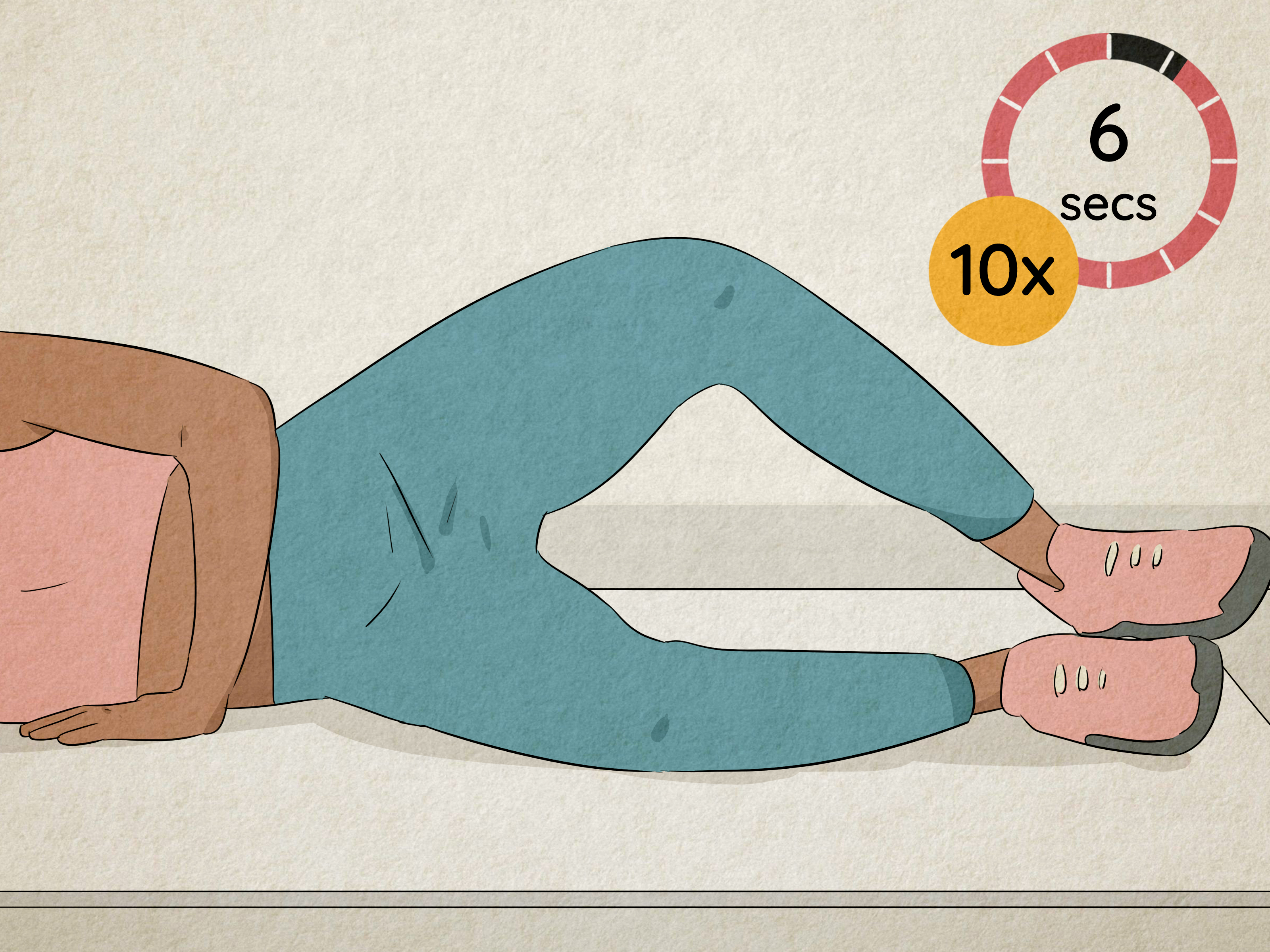
Lie on your non-painful side with knees bent and feet together. Keep your hips stacked. Slowly lift the top knee while keeping the feet touching, then lower it. Do not roll your pelvis backward. If lying on the side is uncomfortable, place a thick pillow or folded towel under the hip or skip this exercise until symptoms calm down.
Try: 1 to 2 sets of 8 to 10 repetitions. Clamshells target the hip stabilizers, especially the gluteus medius.
3. Standing Hip Abduction
Stand tall while holding a chair or wall for balance. Keeping your toes pointed forward, move one leg out to the side a short distance. Pause, then return slowly. Keep your trunk upright and avoid leaning like a tired palm tree.
Try: 2 sets of 8 to 12 repetitions per side. Add a light resistance band only when the movement is pain-free.
4. Side Steps With a Resistance Band
Place a light resistance band above the knees or around the ankles. Bend your knees slightly and take small steps sideways, keeping tension in the band. Move slowly and keep your knees aligned over your feet.
Try: 5 to 10 steps each direction for 1 to 2 rounds. This exercise builds hip control for walking and stairs.
5. Hip Flexor Stretch
Kneel on one knee with the other foot in front. Gently shift forward until you feel a stretch in the front of the hip on the kneeling side. Keep your torso tall and avoid arching your back.
Try: Hold 20 to 30 seconds, 2 times per side. Use padding under the knee for comfort.
6. Figure-Four Stretch
Lie on your back with knees bent. Cross one ankle over the opposite thigh, forming a figure-four shape. Gently pull the uncrossed leg toward your chest until you feel a stretch in the buttock or hip area. Keep the stretch mild.
Try: Hold 20 to 30 seconds, 2 times per side. Do not force the hip into a painful position.
7. Standing IT Band Stretch
Stand near a wall for support. Cross the painful-side leg behind the other leg. Gently lean your body away from the painful side until you feel a stretch along the outside of the hip and thigh. Keep it comfortable, not heroic.
Try: Hold 20 to 30 seconds, 2 times. If this stretch increases outer hip pain, stop and choose gentler mobility work.
Exercises and Habits to Avoid During a Flare
During a painful flare, avoid running on hills, aggressive side leg lifts, deep squats, stair sprints, sitting with legs crossed for long periods, standing with one hip dropped to the side, and sleeping directly on the painful hip. Also be careful with foam rolling directly over the painful bony spot. Rolling nearby muscles may help some people, but grinding directly over an irritated bursa can turn a small complaint into a full committee meeting.
Do not stretch aggressively into pain. More force is not always more healing. With hip bursitis, the winning strategy is usually controlled loading, better alignment, and consistency.
A Simple Weekly Hip Bursitis Recovery Plan
Days 1 to 3: Reduce the Flare
Focus on ice, relative rest, gentle walking if tolerated, sleep positioning, and avoiding painful triggers. Skip strengthening exercises that increase pain. Your job is to convince the hip that life is not an emergency.
Days 4 to 14: Add Gentle Mobility and Strength
Begin easy stretches and low-load exercises such as bridges, standing hip abduction, and gentle hip flexor stretching. Keep repetitions low. If symptoms improve, add clamshells or light band work. If pain increases, scale back.
Weeks 3 to 6: Build Endurance and Control
Gradually increase strengthening exercises. Add low-impact cardio such as stationary cycling, pool walking, or short flat walks. Focus on hip stability, core strength, and proper walking mechanics. Avoid sudden jumps in training volume.
After 6 Weeks: Return Carefully
If pain is much better, slowly return to more demanding activities. Runners may start with walk-run intervals on flat surfaces. Add hills, speed, and longer distances one at a time. The hip enjoys clear communication, not surprise marathons.
Home Remedies That Support Healing
Small daily changes can reduce stress on the hip. Wear supportive shoes, avoid standing on hard surfaces for long periods, use a cushioned mat if you stand at work, and consider a cane temporarily if walking is painful. A cane should be used in the hand opposite the painful hip. This reduces load on the irritated side and may help you walk more normally.
Maintaining a healthy body weight can reduce pressure on joints and soft tissues. That does not mean chasing extreme diets; it means building habits that support your body over time. Good sleep, hydration, balanced meals, and regular low-impact movement all help recovery. Your bursa may be tiny, but it apparently has strong opinions about your lifestyle.
Medical Treatments for Hip Bursitis
If home care and exercises are not enough, a healthcare provider may suggest physical therapy. Physical therapy can identify weak muscles, tight tissues, gait issues, and movement patterns that keep irritating the hip. Treatment may include strengthening, stretching, manual therapy, education, and a return-to-activity plan.
Corticosteroid injections may be used for pain and inflammation when symptoms are significant or persistent. These injections can provide relief, but they are usually combined with rehab because pain relief alone does not fix the underlying mechanics. If infection is suspected, antibiotics may be needed. Surgery to remove a bursa is rare and usually considered only after other treatments fail.
Prevention: How to Keep Hip Bursitis From Coming Back
Preventing hip bursitis is mostly about respecting load. Increase exercise gradually, warm up before workouts, strengthen the glutes and core, stretch tight muscles, avoid repetitive pressure on the outer hip, and take rest days seriously. If your body gives early warning signs, listen before it switches from whispering to yelling.
For runners, avoid sudden mileage increases and vary surfaces when possible. For desk workers, stand up and move regularly. For side sleepers, use a pillow between the knees. For gym lovers, prioritize technique over ego. Your hip does not care how impressive the workout looked on paper if it has to limp through the next morning.
Practical Experiences: What Hip Bursitis Recovery Often Feels Like in Real Life
Many people with hip bursitis describe the beginning as confusing. The pain may not feel serious at first. It might show up as a small ache after a walk, a pinch while climbing stairs, or a tender spot when lying on one side. Because it can seem minor, people often ignore it. Then comes the classic mistake: continuing the same activity with the same intensity and hoping the hip will “warm up.” Sometimes it does warm up temporarily, but later that evening the outside of the hip starts throbbing like it has written a strongly worded email.
A common experience is frustration at night. Side sleepers may feel betrayed by their favorite sleeping position. The simple fix of using a pillow between the knees can feel surprisingly helpful because it keeps the top leg from pulling across the body. Some people also discover that a softer mattress topper or changing sides during the night reduces pressure. Recovery often begins not with a fancy exercise, but with finally getting decent sleep.
Another real-world lesson is that “rest” needs balance. Complete inactivity can make the hip feel stiff and weak, while too much activity keeps the irritation alive. People often do best when they temporarily reduce painful movements but keep gentle, tolerable movement in the day. Short walks on flat ground, easy cycling, or pool exercise may feel better than sitting for hours. The body likes motion, but it prefers motion that does not arrive wearing combat boots.
Exercise progress can also feel slow at first. A person may start bridges and standing hip abduction and wonder, “Is this even doing anything?” Then, after two or three weeks of consistent work, stairs become less annoying, walking feels smoother, and the tender spot is not as dramatic. That gradual improvement is normal. Tendons and irritated soft tissues usually respond to steady loading, not one magical stretch performed under a full moon.
Many people also learn that the painful hip is not always the only problem. Weakness in the opposite hip, poor core control, tight hip flexors, or a habit of standing with one hip dropped can all contribute. A physical therapist may notice that the knee collapses inward during steps or that the pelvis tilts during walking. Once those movement patterns improve, the hip often stops flaring as easily.
Perhaps the biggest experience-based tip is to avoid the “I feel better, so I am cured” trap. Hip bursitis can improve before the tissue is fully ready for high loads. Returning to hills, speed work, heavy leg training, or long walks too quickly can restart the cycle. A smarter approach is to increase one variable at a time: distance, speed, resistance, or hills. Not all four. Your hip appreciates a polite invitation, not a surprise party.
Finally, recovery is easier when people track patterns. Write down what makes pain better or worse: sleep position, shoes, walking distance, workouts, stretches, and sitting time. Patterns reveal solutions. Maybe stairs are the trigger. Maybe crossing the legs at a desk is the sneaky villain. Maybe weekend yard work is the real culprit, standing in the background with a rake and an innocent expression. Once you understand the pattern, treatment becomes less mysterious and more manageable.
Conclusion
Hip bursitis can be painful, annoying, and weirdly skilled at ruining simple activities like sleeping, walking, and getting out of a chair. But in many cases, it improves with the right mix of rest, smart activity changes, ice or heat, gentle stretching, strengthening exercises, and better movement habits. The most effective plan is usually not extreme. It is consistent, patient, and realistic.
Start by calming the flare. Then build hip strength gradually with exercises such as glute bridges, standing hip abduction, clamshells, and controlled band walks. Avoid painful triggers during recovery, improve sleep positioning, and seek professional help if symptoms persist or worsen. With steady care, your hip can return to being a reliable body part instead of a tiny side-mounted complaint department.