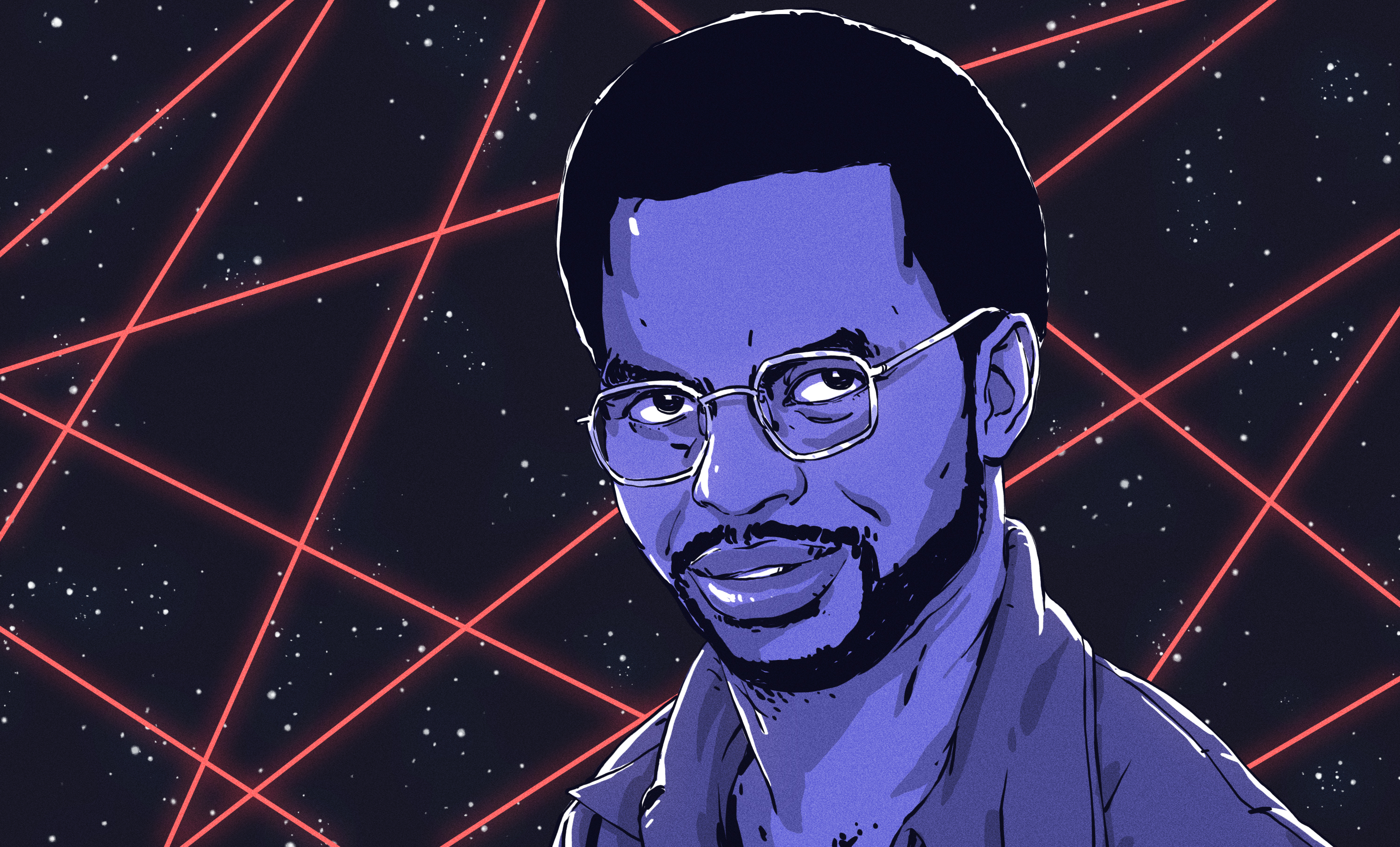
Some lives look like they were written with a telescope instead of a pen. Ronald Erwin McNair’s life was one of them. Born in Lake City, South Carolina, in 1950, he grew up in the segregated South, where the world often tried to hand him a smaller map. McNair responded by aiming for the largest map available: the universe.
He became a physicist, a NASA astronaut, a saxophonist, a karate champion, a husband, a father, and one of the most inspiring figures in American space history. His story is not just about reaching orbit. It is about the grit required to keep learning when doors are locked, to keep training when the goal seems absurdly far away, and to keep bringing your whole selfscience brain, jazz soul, and disciplined spiritinto every mission.
The astronomical grit of Ronald McNair was not loud. It did not need fireworks, although NASA eventually supplied plenty of rocket fire. His grit was steady, intelligent, and almost stubbornly calm. It began with a boy who wanted library books and grew into a man who helped expand the image of who belonged in space.
Who Was Ronald McNair?
Ronald McNair was an American physicist and NASA astronaut best remembered as the second African American to fly in space and as one of the seven crew members who died in the Space Shuttle Challenger disaster on January 28, 1986. But reducing his life to that final tragedy would be like describing a galaxy as “some shiny dots.” Technically true, emotionally useless.
McNair was born on October 21, 1950, to Pearl and Carl McNair in Lake City, South Carolina. His father worked as an automobile body repairman, and his mother was a teacher. From childhood, Ronald showed the kind of curiosity that makes adults both proud and slightly nervous. He loved machines, books, science, music, and the idea that a person could understand how the world worked by asking better questions.
He graduated as valedictorian of Carver High School in 1967, then attended North Carolina Agricultural and Technical State University, where he earned a bachelor’s degree in physics. Later, he completed doctoral work in physics at the Massachusetts Institute of Technology, focusing on laser physics and related research. Before joining NASA, he worked as a staff physicist at Hughes Research Laboratories, contributing to advanced laser and electro-optic technology.
The Library Moment That Became a Lifelong Mission
One of the most powerful stories from McNair’s childhood took place in the Lake City Public Library. As a young Black boy in the 1950s, he was not allowed to check out books from the segregated library. Ronald did not yell, run, or surrender. He simply refused to leave without the books he wanted.
The librarian called the police. His mother was called too. Imagine the scene: a child standing firm in a place designed to tell him “no,” asking for something as dangerous as knowledge. Eventually, he was allowed to check out the books. That small act of resistance has become legendary because it captured the essence of McNair’s character. He did not treat learning as a privilege someone else could casually deny. He treated it as oxygen.
Years later, that same library would become part of the Ronald E. McNair Life History Center. History, occasionally, has a flair for poetic justice. The building that once tried to limit a child’s imagination now helps preserve the legacy of a man whose imagination reached space.
From Lake City To Laser Physics
McNair’s academic path was demanding, but he made difficult work look less like punishment and more like preparation. At North Carolina A&T, he studied physics and built a foundation in mathematics, engineering principles, and scientific discipline. At MIT, he moved deeper into advanced physics, especially laser technology and quantum electronics.
Laser physics may sound like something invented by a movie villain with a dramatic chair, but in McNair’s case, it was serious science with real-world applications. Lasers mattered for communications, measurement, sensing, and space-related technology. His research helped place him among the bright young scientists working on the frontier of modern physics.
This background made McNair especially valuable to NASA. The space shuttle era needed astronauts who were not merely passengers in pressure suits. It needed scientists, engineers, problem-solvers, and people who could think clearly while strapped to a controlled explosion. McNair fit the job description beautifully.
NASA’s 1978 Astronaut Class: A Door Opens Wider
In 1978, NASA selected Ronald McNair as part of Astronaut Group 8, a historic class that included the first African American astronauts selected for the corps. This class represented a broader shift in NASA’s public face and internal talent pool. The agency was beginning to look more like the country it served, though progress, as usual, arrived wearing heavy boots.
McNair completed astronaut training and qualified as a mission specialist. That title mattered. Mission specialists were responsible for experiments, equipment, robotics, and complex operations in orbit. They were the people who helped turn spaceflight from a daring transportation stunt into a working laboratory.
McNair’s selection carried symbolic weight, but it was not symbolic charity. He had earned his place through academic excellence, research ability, physical discipline, and technical skill. He was not invited into NASA because he represented a dream. He was invited because he could do the work.
STS-41B: Ronald McNair Goes To Space
Ronald McNair first flew in space aboard Space Shuttle Challenger on mission STS-41B, launched on February 3, 1984. The mission lasted nearly eight days and included satellite deployment work, scientific experiments, and important tests of shuttle-era technology. It is also remembered for the first untethered spacewalks, performed by Bruce McCandless II and Robert Stewart using the Manned Maneuvering Unit.
McNair served as a mission specialist. He operated equipment, supported mission objectives, and helped demonstrate the shuttle’s usefulness as a platform for complex work in orbit. For many Americans watching from Earth, his presence also carried a deeper meaning. He became the second African American to fly in space, following Guion Bluford, and helped make the astronaut image wider, richer, and more honest.
Then there was the saxophone. McNair was an accomplished musician, and during STS-41B, he played saxophone aboard Challenger. Space history has many dramatic moments, but “physicist astronaut plays saxophone in orbit” deserves its own spotlight. It showed that McNair did not leave his humanity behind when he entered the spacecraft. He brought art with the science, rhythm with the robotics, and a little jazz into the machinery of orbit.
Karate, Music, And The Discipline Behind The Smile
One reason Ronald McNair’s story feels so alive is that he refused to be only one thing. He was a scientist, yes, but also a musician. He was a scholar, but also a serious martial artist. He earned recognition in karate and developed the kind of physical discipline that sharpens mental focus.
This mix matters because grit is not merely suffering with good posture. Grit is the ability to keep returning to the work with purpose. Karate taught discipline. Music taught timing, listening, and expression. Physics taught patience with complexity. Astronaut training demanded all of it at once.
In McNair, these parts did not compete. They reinforced one another. The saxophonist understood flow. The physicist understood precision. The martial artist understood controlled pressure. The astronaut needed every one of those skills, preferably before breakfast and definitely before launch.
The Challenger Tragedy And A Legacy Bigger Than Loss
On January 28, 1986, Ronald McNair launched on his second shuttle flight, STS-51L, aboard Challenger. The mission included seven crew members: Francis “Dick” Scobee, Michael Smith, Judith Resnik, Ellison Onizuka, Ronald McNair, Gregory Jarvis, and Christa McAuliffe. Just 73 seconds after liftoff, Challenger broke apart, killing everyone aboard.
The disaster stunned the United States and the world. Investigations later determined that the failure of O-ring seals in the right solid rocket booster, worsened by unusually cold launch conditions, led to the catastrophe. For a generation of students, teachers, engineers, and families watching live, it was one of those terrible moments when time seems to stop and memory takes notes in permanent ink.
Yet McNair’s legacy should not be frozen at 73 seconds. His life contained 35 years of courage, excellence, scholarship, humor, service, and ambition. The tragedy ended his mission, but it did not define the full measure of his life.
Why Ronald McNair Still Matters
Ronald McNair matters because his story connects education, civil rights, science, representation, and personal excellence. He proved that access to knowledge can change not just one life but thousands. The boy denied library books became the man whose name now appears on schools, scholarships, research programs, buildings, and a lunar crater.
The Ronald E. McNair Post-Baccalaureate Achievement Program continues that legacy by helping first-generation, low-income, and underrepresented college students prepare for doctoral study. That is not a decorative tribute. It is a working legacy. Every student who enters a lab, writes a thesis, applies to graduate school, or sees research as possible because of the McNair program is participating in the long echo of his life.
His hometown also honors him through the Ronald E. McNair Life History Center, located in the old public library building. The symbolism is almost too perfect: the site of exclusion transformed into a place of learning, memory, and inspiration. If history had a soundtrack, this is where the saxophone solo would come in.
The Meaning Of Astronomical Grit
The phrase “astronomical grit” fits Ronald McNair because his perseverance operated on more than one scale. There was the personal scale: a child insisting on books, a student mastering physics, a researcher entering elite scientific spaces. There was the national scale: a Black astronaut helping reshape NASA’s image during a period when representation carried enormous cultural significance. And there was the cosmic scale: a human being leaving Earth not as an escape, but as an extension of curiosity.
McNair’s grit was not about pretending obstacles did not exist. He knew they existed. Segregation existed. Academic pressure existed. NASA selection was brutally competitive. Spaceflight was dangerous. But he did not allow any of those facts to become the final fact about him.
That is the lesson modern readers can carry forward. Grit is not magic. It is not a motivational poster wearing sneakers. It is a pattern of decisions: read the book, take the class, practice the instrument, finish the experiment, apply anyway, train again, show up prepared. McNair’s life reminds us that greatness often looks ordinary while it is happening. It looks like studying, practicing, waiting, failing, adjusting, and trying again.
Experiences Inspired By Ronald McNair’s Astronomical Grit
To understand Ronald McNair’s impact, imagine the student sitting in the back of a classroom, quietly good at math but unsure whether science has room for them. Maybe no one in their family has gone to graduate school. Maybe college feels like a foreign country with expensive textbooks. McNair’s story speaks directly to that student. It says: your beginning is important, but it is not a cage.
There is also an experience many readers know well: walking into a room where you feel underestimated. McNair did that repeatedly, from the segregated library to elite academic spaces to NASA’s astronaut corps. His example does not suggest that confidence always feels comfortable. It suggests that confidence can be built through preparation. When you have done the work, you carry evidence inside you. That evidence can steady your voice when the room gets cold.
Another experience connected to McNair’s life is the challenge of being multi-talented in a world that loves simple labels. People often ask, “Are you a science person or an art person?” McNair’s life laughs politely at the question. He was both. He could study lasers and play saxophone. He could train in karate and conduct experiments in orbit. His example gives permission to be layered. You do not have to shrink yourself to fit someone else’s category.
For teachers, McNair’s story offers a classroom doorway into science that is human, dramatic, and deeply American. Students may forget a formula, at least temporarily, usually right before a quiz. But they remember stories: a boy refusing to leave a library, a physicist playing saxophone in space, an astronaut whose name now supports scholars across the country. Through McNair, science becomes more than facts. It becomes a life path.
For parents, his journey is a reminder that curiosity should be protected like a flame in bad weather. A child who asks too many questions may be building the mental engine they will use for extraordinary things later. The kid taking apart a radio, reading about planets, tapping rhythms on the table, or asking why the sky is blue for the fourteenth time before lunch may not be “difficult.” They may be rehearsing for discovery.
For anyone facing rejection, McNair’s life offers a practical kind of hope. He did not wait for the world to become perfect before moving forward. He kept learning inside an imperfect world. That does not excuse injustice, but it does honor resilience. His story asks us to build better doors while also preparing ourselves to walk through them.
The most personal experience his life encourages is the act of aiming higher without becoming less grounded. McNair reached space, but he remained connected to education, family, music, discipline, and community. He did not become great by abandoning where he came from. He became great by expanding what “from Lake City” could mean.
Conclusion: A Life That Still Points Upward
Ronald McNair’s life is a powerful American story of intellect, courage, discipline, and imagination. He moved from a segregated library in South Carolina to the laboratories of MIT, from laser physics to NASA, from Earth to orbit. Along the way, he showed that excellence is not a single talent but a constellation of habits.
His story deserves to be remembered not only because of how he died, but because of how he lived. Ronald McNair lived with curiosity sharp enough to cut through barriers, discipline strong enough to survive pressure, and joy broad enough to carry a saxophone into space. That is astronomical grit: the courage to keep reaching upward, even when the world tries to lower the ceiling.
Note: This article is an original, publication-ready synthesis based on verified public information from reputable U.S. sources including NASA, MIT, the Challenger Center, university McNair Scholars programs, and South Carolina historical and educational institutions.