“`
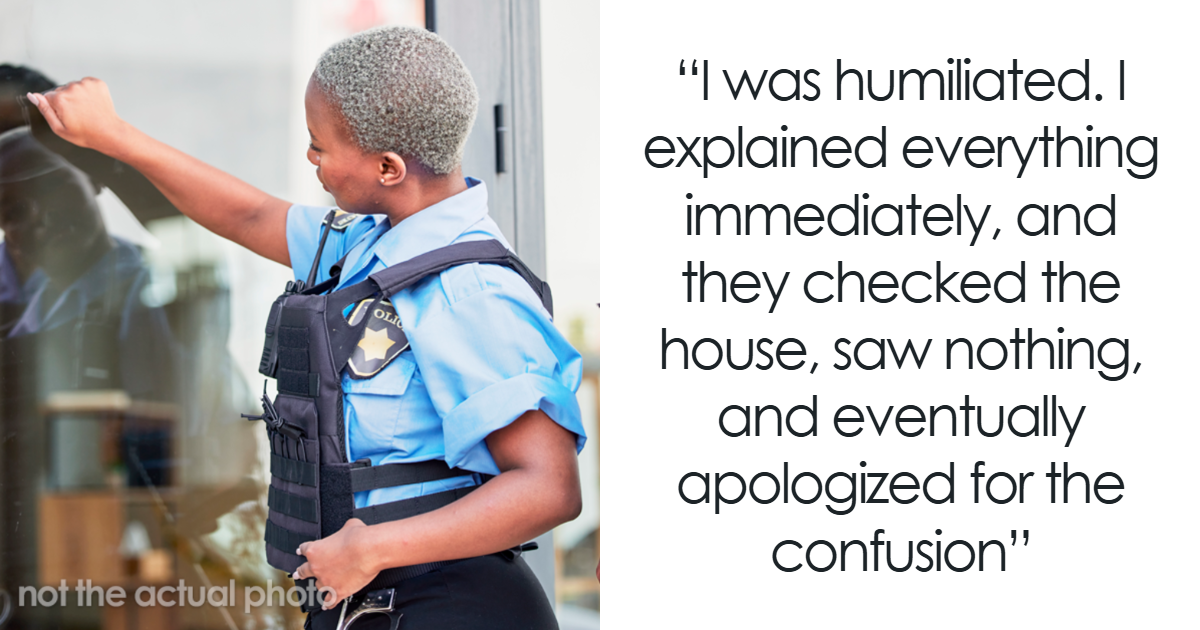
Every writer secretly fears one thing: not rejection letters, not bad reviews, not even the terrifying phrase “circle back.” The real nightmare is someone reading a messy, unfinished draft and deciding it reveals your entire soul, criminal history, childhood, moral compass, and browser tabs. That is basically the emotional earthquake behind the viral story titled, “I Was Humiliated”: The Police Show Up At A Woman’s Door After Her BF Reads Her Book.
According to the online account, a woman had been writing a dark fictional manuscript. Her boyfriend read it, became alarmed by the disturbing themes, and instead of asking calm questions or saying, “Hey, this made me uncomfortable,” he reportedly called the police. Officers then showed up at her door. No dramatic crime scene. No secret villain lair. Just a woman, her writing, and the kind of embarrassment that makes you want to crawl inside a hoodie and become furniture.
The story exploded because it sits at the uncomfortable intersection of creativity, privacy, trust, emotional safety, and relationship red flags. It also raises a surprisingly modern question: when does “I was worried about you” become an excuse for crossing a line?
Why This Story Hit a Nerve Online
At first glance, the situation sounds almost absurd. A boyfriend reads a girlfriend’s book, takes the fictional material too literally, and calls the authorities. But the reason people reacted so strongly is that the story touches a raw nerve: many people know what it feels like to have their private thoughts misunderstood, weaponized, or dragged into public view.
Writers, especially fiction writers, often explore uncomfortable ideas. Horror authors imagine monsters. Crime writers invent motives. Thriller writers build danger out of thin air. Romance writers create longing, betrayal, longing again, and possibly a cottage by the sea. None of that means the author is confessing to anything. Fiction is a playground for imagination, not a notarized statement of personal intent.
That is why readers online were less focused on the manuscript itself and more focused on the boyfriend’s response. Concern can be healthy. Panic can happen. But calling the police on a partner over a piece of creative writing is a serious escalation. It changes a private relationship concern into an official encounter, and for the person on the receiving end, that can feel humiliating, frightening, and deeply violating.
Creative Writing Is Not a Confession
One of the biggest misunderstandings in this story is the assumption that dark fiction equals a dark personal truth. That idea is not only unfair; it is also creatively suffocating. If writers were only allowed to write characters who behaved exactly like them, literature would become very boring very quickly. Most novels would be about people making coffee, answering emails, forgetting laundry in the washer, and wondering why their phone storage is full.
Fiction allows writers to explore fear, power, grief, anger, betrayal, guilt, justice, revenge, survival, and moral conflict without endorsing every action on the page. A character can do something terrible without the author supporting it. A plot can explore danger without the writer being dangerous. A story can be emotionally intense without being autobiographical.
Why Dark Stories Can Feel So Personal
Dark writing often feels intimate because it comes from emotional honesty. A writer may use fiction to process anxiety, trauma, social fears, family tension, or the general weirdness of being a human with a brain that occasionally behaves like a raccoon in a pantry. But emotional truth is not the same as literal truth.
For example, a writer may create a story about betrayal because they understand what betrayal feels like, not because they plan to betray someone. They may write about a frightening character because fear is dramatically powerful, not because they secretly admire that character. The best fiction often comes from asking, “What would happen if?” That question is not evidence. It is imagination doing push-ups.
The Real Conflict: Privacy, Trust, and Escalation
The heart of the controversy is not simply that the boyfriend disliked the book. Partners are allowed to be uncomfortable. They are allowed to say, “This surprised me,” or “Can we talk about what inspired this?” A healthy relationship does not require both people to enjoy the same art. If it did, half the population would be legally required to pretend they understand experimental jazz.
The issue is escalation. Instead of treating the manuscript as a conversation starter, the boyfriend reportedly treated it like an emergency. That decision placed the woman in a vulnerable position. She had to explain herself not to a trusted partner, but to police officers. Even if the boyfriend believed he was acting out of concern, the impact mattered. Intent does not erase consequences.
When Concern Becomes Control
A common pattern in unhealthy relationships is the use of “concern” as a polite costume for control. It can sound gentle on the surface: “I’m only worried about you,” “I just care so much,” or “I had no choice.” But if the result is humiliation, surveillance, fear, or loss of independence, the concern deserves closer inspection.
Healthy concern respects dignity. It asks questions before making accusations. It seeks context before taking drastic action. It does not turn a private creative project into a public emergency unless there is a clear, immediate safety issue. In this story, that distinction is why so many readers saw the boyfriend’s behavior as a red flag rather than a romantic act of protection.
Police at the Door: Why the Response Felt So Violating
For many people, having police show up unexpectedly is not a neutral event. It can be scary, embarrassing, and stressful, even when nothing is wrong. A welfare check or police visit may be intended to confirm that someone is safe, but the person being checked on may still feel exposed and powerless.
In the woman’s case, the humiliation came from several layers at once. First, her private writing had been judged in the harshest possible way. Second, her boyfriend had moved the issue outside the relationship without giving her a fair chance to explain. Third, strangers in uniform were now involved in something that began as a personal creative project. That is not a small emotional bump. That is a full-speed collision between privacy and public scrutiny.
It also creates a trust problem. After something like this, the writer may wonder: Can I leave my notebook open? Can I share a draft? Can I write honestly? Can I be strange, experimental, angry, funny, or intense on the page without being treated like a threat? Once that trust is broken, the relationship may not simply “go back to normal.” Normal packed a suitcase and left.
Relationship Red Flags in the Story
Not every bad decision makes someone abusive. People panic. People misunderstand art. People overreact and later realize they were wrong. However, certain behaviors should make anyone pause, especially when they involve control, shame, or outside authority.
- Bypassing communication: Calling police before having a serious conversation can suggest poor conflict skills or a desire to control the narrative.
- Public humiliation: Turning a private concern into a public confrontation can deeply damage trust.
- Refusing accountability: A sincere apology should include understanding the harm, not just explaining the panic.
- Invading creative privacy: Reading unfinished work without emotional maturity can make a writer feel unsafe.
- Using fear as justification: “I was scared” can explain behavior, but it does not automatically excuse it.
What a Healthier Partner Could Have Done
A better response would have started with curiosity. The boyfriend could have said, “I read part of your manuscript, and some of it really unsettled me. Can you help me understand what you’re working on?” That sentence would not magically solve everything, but it would preserve dignity. It invites conversation instead of launching a crisis.
He could also have asked whether the writing was part of a horror, thriller, psychological drama, or experimental project. Genre matters. A cozy mystery and a splatterpunk draft are not trying to do the same thing. Context matters, too. A first draft often contains rough edges, exaggerated emotion, and scenes the writer may later remove. Judging a draft like a finished moral manifesto is like judging a cake because you licked the flour.
If he was genuinely worried about her emotional well-being, he could have encouraged a calm conversation with a trusted friend, therapist, or family member. If there had been an immediate and specific safety concern, emergency help might be appropriate. But without that kind of clear risk, calling police can be an unnecessarily extreme move.
For Writers: Protect Your Work and Your Peace
This story is a reminder that writers need boundaries around their creative process. Not everyone deserves access to an unfinished manuscript. That does not mean writers are secretive or suspicious. It means early drafts are vulnerable. They are messy little goblins wearing plot shoes.
If you write personal, dark, or experimental material, consider setting clear expectations before sharing it. You might say, “This is fiction, it is unfinished, and I am looking for feedback on pacing, not a psychological evaluation.” That may sound obvious, but obvious things become less obvious when someone reads a shocking scene at midnight and forgets how novels work.
Writers should also back up their work, protect passwords, and think carefully about who has access to drafts. A romantic partner may be loving in many ways and still not be the right early reader. Some people are wonderful at bringing snacks and terrible at interpreting metaphor. Both things can be true.
For Partners of Writers: Read Before You React
If your partner is a writer, remember that you are not reading a diary unless they tell you it is one. You are entering a workshop, a laboratory, a haunted house, a comedy club, a courtroom, or whatever strange little structure their imagination has built. Do not assume every character is them. Do not assume every plot is a plan. Do not assume every dark paragraph is a secret confession.
Ask questions. Respect drafts. Avoid dramatic conclusions. And please, before calling anyone with a badge, consider whether you have first tried using the ancient relationship technology known as “a conversation.” It is free, portable, and rarely causes neighbors to peek through curtains.
Why Humiliation Can Hurt More Than an Argument
Arguments can be repaired when both people feel respected. Humiliation is harder. It adds shame to conflict. The woman in the story was not just upset that her boyfriend misunderstood her writing. She felt exposed. She felt judged. She felt forced to defend her imagination as though creativity itself were suspicious.
That is why apologies after public embarrassment must be deeper than “Sorry you felt that way.” A real apology sounds more like: “I overreacted. I should have talked to you first. I understand that I embarrassed you and damaged your trust. I will not do that again.” Anything less can feel like a bandage placed on a broken window.
What This Story Teaches About Modern Relationships
This viral situation is not just about one couple. It reflects a broader challenge in modern relationships: how do we balance closeness with privacy? Many couples share phones, passwords, locations, streaming accounts, grocery lists, and the sacred burden of deciding what to eat for dinner. But intimacy does not mean total access. Love does not require constant monitoring. Trust is not proven by surrendering every private corner of your mind.
A healthy relationship allows both people to have inner lives. That includes private thoughts, drafts, journals, creative projects, friendships, and emotional space. The goal is not secrecy; the goal is individuality. Two people can be deeply connected without becoming one giant merged Google account.
Experiences and Lessons Related to the Story
Many writers and creative people can recognize a softer version of this experience. Maybe police never showed up, but someone read a poem and assumed it was about them. Someone found a draft and demanded explanations for a fictional villain. Someone saw a private note and treated it like courtroom evidence. The common thread is not always malice. Sometimes it is fear. Sometimes it is insecurity. Sometimes it is plain old literary confusion wearing boots.
One common experience is the “unfinished draft disaster.” A writer shares an early chapter with a partner, hoping for encouragement. Instead, the partner reacts to the rawest, least polished version of the work as if it were the final product. The writer then spends the evening defending a scene that might not even survive revision. Lesson: early readers need emotional maturity. If someone cannot handle ambiguity, they should wait for the finished book like everyone else.
Another related experience is the “this character is obviously me” argument. A partner reads a flawed character and immediately starts connecting dots with red yarn. But fiction borrows from life the way soup borrows from vegetables: the ingredients change once they are cooked together. A character may contain a mood, a memory, a fear, a joke, and three completely invented habits. Assuming every detail is autobiographical is a fast route to unnecessary conflict.
Then there is the “concern without consent” problem. Someone may share private information with friends, family, or authorities because they claim they are worried. Sometimes outside help is necessary, especially when there is clear danger. But in ordinary relationship conflict, going around a partner instead of speaking to them can feel like betrayal. A good rule is simple: if safety is not immediate and specific, start with direct communication.
Finally, this story highlights the importance of creative safe space. Writers need room to make strange choices, write badly, revise, delete, exaggerate, and explore uncomfortable ideas. That process is not always pretty. A manuscript in progress can look dramatic, chaotic, or morally confusing because it is still becoming something. Judging a writer by a rough draft is like judging a person’s home by looking inside the junk drawer. Yes, there may be batteries, receipts, and one mysterious key. No, that is not the whole house.
The deeper lesson is that love should not make a person smaller. A healthy partner may ask hard questions, but they do not use fear to control creative expression. They may feel uncomfortable, but they do not rush to humiliation. They may misunderstand, but they try to understand before they escalate. In the end, the issue is not whether everyone should enjoy dark fiction. The issue is whether a person can be trusted with another person’s vulnerability.
Conclusion
The story of a woman feeling humiliated after police showed up because her boyfriend read her book is memorable because it sounds extreme, but the emotions underneath are familiar. We all want to be understood before we are judged. We all want private parts of ourselves to be handled with care. For writers, that need is especially intense because drafts are not just documents; they are unfinished thoughts trying to become art.
A partner who feels worried should communicate with respect. A writer who shares work should set boundaries. And everyone in a relationship should remember that trust is not built by surveillance, panic, or public embarrassment. Trust is built by asking better questions before making irreversible choices.