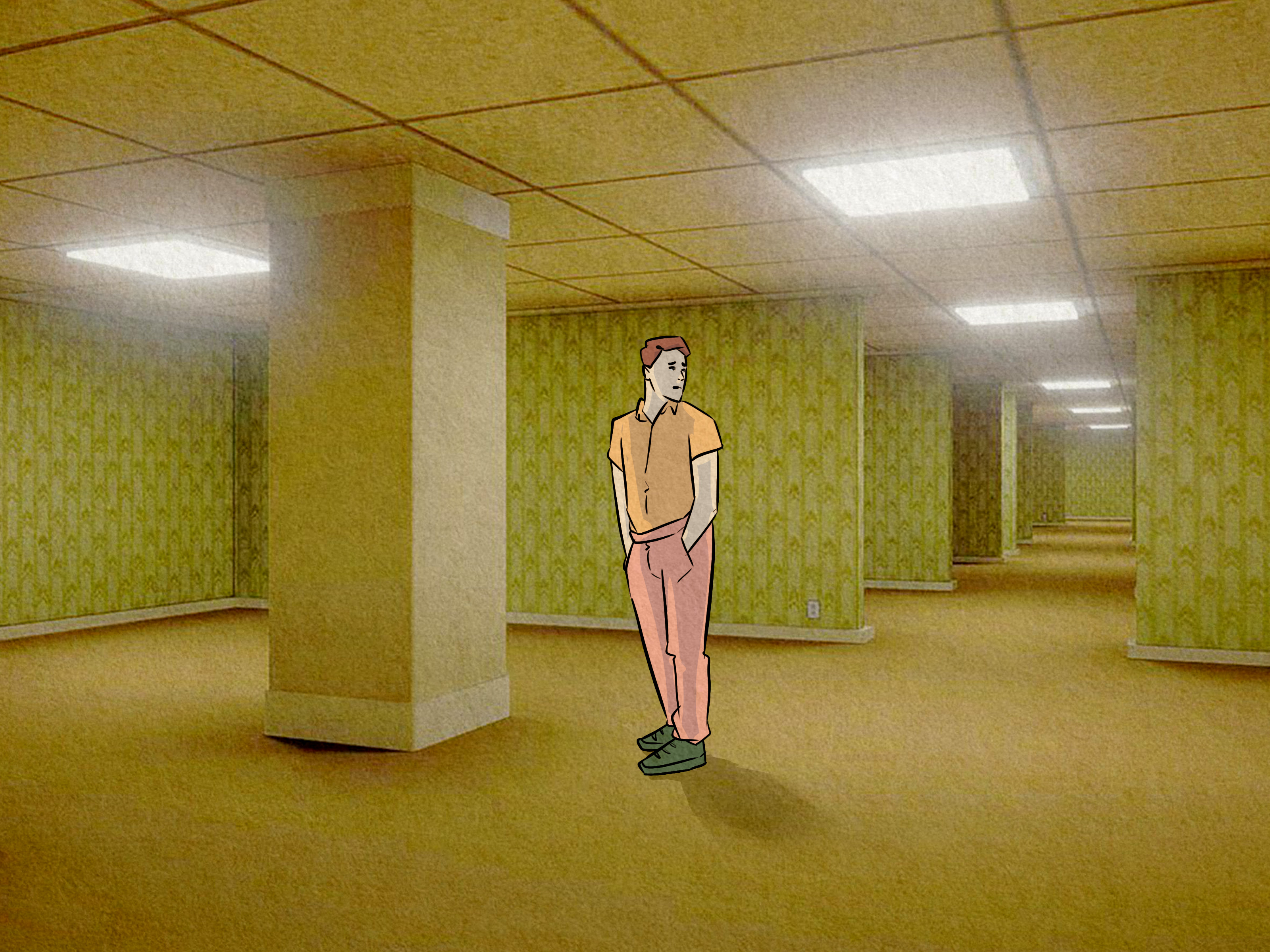
If you have spent more than five minutes on horror TikTok, YouTube, Reddit, or the stranger side of internet culture, you have probably stumbled into the Backrooms. Not literally, thankfully. Figuratively, though? Oh yes. One second you are looking at a picture of an empty yellow hallway, and the next second you are three tabs deep into liminal space lore, weird fluorescent lighting discourse, and someone yelling that Level 0 is “easy” right before being fictionalized into a cautionary tale.
That is where a Backrooms Survival Analyzer becomes useful. Think of it as a smart way to judge your odds in a place that is designed to make your brain feel like it left the stove on. Instead of treating the Backrooms like a random spooky maze, the analyzer breaks survival down into categories: orientation, resource control, noise discipline, psychological stability, environmental hazards, and entity risk. In plain English, it asks the question every horror fan secretly loves: if I got dropped into the Backrooms, how doomed would I be?
This guide explores what a Backrooms Survival Analyzer actually is, how it works, why the Backrooms remain such a powerful internet-horror idea, and what a strong survival strategy would look like in a fictional liminal nightmare. We will also get into the biggest mistake people make when talking about Backrooms survival: assuming the monster is the only problem. Sometimes the real villain is the carpet. Or the lighting. Or your own sense of direction deciding to file for divorce.
What Is a Backrooms Survival Analyzer?
A Backrooms Survival Analyzer is a fictional assessment framework for a fictional setting, but it is surprisingly useful as a storytelling and gaming tool. Instead of reducing survival to “run fast and scream less,” it measures how a person would handle the classic Backrooms conditions: endless empty rooms, uncanny repetition, sensory discomfort, isolation, uncertain rules, and the threat of either hostile entities or sheer mental burnout.
In other words, the analyzer is not just about physical survival. It is about pattern recognition, decision-making under stress, and endurance inside an environment that feels wrong in ways your brain cannot neatly label. That is what makes the Backrooms different from a normal haunted house setup. A haunted house has a door, a basement, a ghost, and some deeply regrettable wallpaper. The Backrooms have scale, ambiguity, and a special talent for making you wonder whether the hallway is changing or you are.
Why the Backrooms Work So Well as Horror
The reason the Backrooms hit so hard is simple: they feel familiar, but not safe. They resemble places many Americans recognize from childhood, old office buildings, hotel corridors, strip malls, school hallways, waiting rooms, or weirdly empty event spaces that smell faintly of carpet glue and broken dreams. The setting is plain enough to feel real and distorted enough to feel deeply off.
That combination makes the Backrooms a masterclass in liminal space horror. A liminal space is transitional by nature. It is not where life happens. It is where you pass through on your way to somewhere else. When a place like that becomes endless, sealed off, and strangely vacant, it stops feeling neutral and starts feeling predatory. The terror is not always loud. It is ambient. It hums. Literally, if the fluorescent lights are doing their job.
That is also why the best Backrooms stories do not rely only on jump scares. The atmosphere itself does the heavy lifting. Long stretches of silence, repetitive architecture, and uncertain rules create dread before any creature ever shows up. A good Backrooms Survival Analyzer understands this. It does not just ask, “Can you fight?” It asks, “Can you stay calm when nothing happens for three hours and that somehow feels worse?”
Core Categories in a Backrooms Survival Analyzer
1. Orientation Score
This measures how well you track your position, notice environmental changes, and avoid moving in meaningless loops. In a normal building, you can use windows, exits, landmarks, or a basic understanding of how architecture works. In the Backrooms, architecture behaves like it took a creative writing course and decided consistency was for cowards.
A high orientation score means you mark your path, note repeating wall patterns, monitor sound shifts, and avoid panic wandering. A low score means you walk faster every time you get nervous, make random turns, and eventually convince yourself that “I know where I am” while staring at the exact same stained corner for the fourth time.
2. Sensory Tolerance Score
The Backrooms are not always violent, but they are exhausting. Buzzing lights, stale air, damp carpet smell, visual monotony, and low-level ambient noise can grind down concentration. This score measures your ability to function under constant sensory irritation.
People with a strong sensory tolerance can regulate breathing, reduce overreaction, and keep thinking clearly. People with a weak score become agitated, distracted, and mentally foggy. Horror fans often talk about entities, but in many versions of Backrooms lore, the setting itself is the first and most reliable threat.
3. Resource Management Score
Food, water, light sources, batteries, makeshift markers, improvised tools, and rest all matter. A solid survival analyzer looks at how efficiently you use what you have. Do you ration supplies? Do you create checkpoints? Do you preserve energy? Or do you treat the first hour like a reality show challenge and burn through everything before the opening credits would even finish?
In Backrooms-inspired games, poor resource management often kills momentum faster than any enemy encounter. A player who wastes stamina, ignores routes, or travels without a plan becomes their own problem. That same logic applies to the analyzer.
4. Threat Assessment Score
Not every version of the Backrooms agrees on entities, levels, or rules. Some fans prefer the original minimal dread with almost no lore. Others enjoy sprawling ecosystems of creatures, levels, factions, and escape theories. A good analyzer works in both styles by asking one essential question: can you react appropriately when you do not know what the danger is yet?
High scorers do not run toward noises, investigate every shadow, or assume every quiet room is safe. They balance curiosity with caution. Low scorers are exactly the people horror movies are built on. They hear one weird scrape in the distance and say, “Hello?” like the universe owes them customer service.
5. Psychological Stability Score
This may be the most important category of all. The Backrooms attack certainty. Time feels unreliable. Space feels unreliable. Progress feels unreliable. If you cannot keep your mind steady, the maze does not even need to defeat you physically. It can simply wait for you to start making bad choices.
A strong psychological score means you can accept uncertainty without spiraling. You do not interpret every coincidence as a sign. You do not let isolation rewrite your priorities. You can sit, regroup, and think. In a liminal horror setting, composure is not a soft skill. It is survival equipment.
How the Analyzer Grades Your Survival Odds
Most Backrooms Survival Analyzer models would rank people into general tiers.
Green Tier: Calm, observant, conservative, and adaptable. These are the people most likely to preserve energy, track movement, and avoid preventable mistakes.
Yellow Tier: Capable, but inconsistent. These survivors may do well early on, then lose efficiency under stress or sensory fatigue.
Orange Tier: Impulsive, disorganized, or overly fearful. They react more than they plan. Their route control and resource use usually collapse first.
Red Tier: Chaotic, reckless, or mentally overwhelmed. These people are not surviving the Backrooms. They are decorating them.
The smartest analyzers do not treat this as a fixed identity. They treat it as a live reading. Your score can improve with rest, structure, and routine. It can also drop quickly if you panic, lose supplies, or convince yourself the humming lights are trying to send you a personal message. They are not. Probably.
The Best Survival Strategy for the Backrooms
Move Less Than You Want To
Panic creates wasted movement. In an endless environment, wasted movement becomes exhaustion, and exhaustion turns into sloppy decisions. One of the best rules in any Backrooms survival guide is to stop, observe, and map your immediate area before committing to a direction.
Create Artificial Order
If the environment refuses to make sense, you make sense anyway. Use markers. Count turns. Track sounds. Note room dimensions. Build repeatable habits. A notebook would be ideal. If you do not have one, improvise. Even a crude system is better than trusting memory in a place designed to scramble it.
Protect Your Mind Like a Resource
Hydration matters. Sleep matters. Calm matters too. Talk to yourself if you need to. Establish routines. Check your breathing. Repeat the facts you know. “I have water. I marked this wall. I rested ten minutes. I am not in immediate danger.” It may sound corny, but structure reduces psychological drift.
Respect Silence, But Do Not Worship It
Silence in the Backrooms is suspicious. So is noise. The point is not to treat either as automatically meaningful. Overinterpreting every sound is almost as dangerous as ignoring all of them. The analyzer rewards balanced caution, not superstition.
Do Not Chase the “Perfect Exit” Theory
One of the oldest traps in maze logic is the fantasy of the obvious way out. Backrooms survival is less about cinematic breakthroughs and more about sustained, boring competence. Glamorous? No. Effective? Very.
Backrooms Levels, Lore, and the Problem With Too Much Information
One reason the Backrooms have stayed popular is that they can be interpreted in radically different ways. Some fans love a stripped-down version where the horror comes from emptiness, repetition, and uncertainty. Others enjoy massive community-made lore with numbered levels, rules, entities, and survival myths.
From an analyzer perspective, both approaches are valid, but they produce different survival models. Minimalist Backrooms horror values patience, observation, and psychological resilience. Expanded-lore Backrooms survival adds tactical thinking, threat categorization, and environmental specialization. The first is existential dread. The second is existential dread with patch notes.
If you are building or using a Backrooms Survival Analyzer, the smartest approach is to keep the framework flexible. Focus first on universal principles: orientation, sensory load, resource control, and mental stability. Then layer in level-specific hazards only when the story or game clearly supports them.
Why Backrooms Survival Analysis Appeals to Horror Fans
The Backrooms are not just scary. They are interactive in the imagination. People love testing themselves against fictional systems, especially systems that feel half-familiar and half-impossible. A survival analyzer taps directly into that appeal. It lets readers, players, and viewers turn dread into a puzzle.
That is also why the concept translates so well across media. In short films, the analyzer becomes suspense. In games, it becomes mechanics. In articles like this, it becomes a way to discuss why liminal space horror works at all. The Backrooms are not really about monsters, walls, or levels. They are about the fear of being trapped inside a place that should make sense and absolutely does not.
A 500-Word Experience: What the Backrooms Feel Like From the Inside
Imagine stepping through a doorway that should lead to a storage room and finding yourself somewhere that feels almost correct. That is what makes the Backrooms so unnerving. At first, nothing looks dramatic. The wallpaper is bland. The carpet is ugly in a way that feels aggressively ordinary. The lights buzz overhead with the confidence of office fixtures that have never once inspired joy. It is not a castle. It is not a graveyard. It is somehow worse. It is a place your body thinks it recognizes, while your mind keeps whispering that it absolutely should not be this empty.
The first few minutes would not feel like horror in the traditional sense. They would feel like confusion with a side of denial. You would probably call out. You would expect an answer. You would turn a corner thinking there must be a receptionist desk, a service hallway, an exit sign, a vending machine, literally anything that proves this place was built for humans and still remembers the assignment. Instead, there would be more yellow walls. More carpet. More stale air. More lights humming like they are trying to bore a hole through your patience.
Then the weird details would start piling up. A corridor that looks familiar but is somehow narrower. A turn you are sure you did not make leading back to a wall you definitely already passed. The creeping suspicion that distance means nothing here. You keep walking because standing still feels wrong, but after a while walking also feels wrong. That is the Backrooms’ real trick. It makes every choice feel slightly stupid, including the one you just made.
Hours in, the experience would become less cinematic and more psychological. Hunger would matter. Thirst would matter. The sound of your own footsteps would start to feel invasive. Every small decision would become heavier than it should be. Do you keep moving? Sit down? Follow the faint sound in the distance? Ignore it? In a normal building, these are tiny questions. In the Backrooms, they start to feel philosophical, like you are defending a thesis titled Why I Turned Left and Regret Everything.
And then there is the loneliness. Not dramatic loneliness. Not “last person on Earth” loneliness. A more specific kind. The loneliness of a place that seems built for activity but has been emptied out so completely that your existence inside it feels accidental. That is why Backrooms horror sticks with people. It does not just ask whether you are afraid of being chased. It asks whether you are afraid of being misplaced. Of becoming a person in the wrong setting, at the wrong scale, with no clear rules and no audience except the lights overhead.
If there is any comfort in that imagined experience, it comes from discipline. Slow breathing. Careful observation. Small routines. The refusal to let dread become chaos. That is why the idea of a Backrooms Survival Analyzer feels so satisfying. It gives shape to a shapeless nightmare. It turns panic into categories, fear into strategy, and the endless yellow maze into something you can at least attempt to understand. No, it does not guarantee survival. But in the Backrooms, even having a system counts as a tiny miracle.
Conclusion
A Backrooms Survival Analyzer is more than a fun horror gimmick. It is a clever way to understand why the Backrooms remain one of the internet’s most effective modern nightmare concepts. The best analysis does not obsess only over creatures or fan lore. It looks at the whole survival equation: space, sound, repetition, exhaustion, uncertainty, and the slow mental erosion that comes from being trapped in a place that feels both common and impossible.
If you want to “survive” the Backrooms, at least in theory, the formula is pretty simple: move deliberately, protect your mind, conserve resources, create order, and never assume the scariest thing in the room has teeth. Sometimes it is the silence. Sometimes it is the fluorescent hum. And sometimes it is the awful realization that the hallway ahead looks exactly like the one behind you, and both of them seem a little too pleased about it.