Some cities are photographed. Some are mapped. Perth, Scotland, however, practically asks to be hand-sketchedpreferably with ink, patience, and enough coffee to make a medieval monk nervous. Set beside the River Tay and layered with royal history, church spires, bridges, closes, gardens, museums, and quietly dramatic rooftops, Perth is the kind of place that rewards anyone willing to slow down and look twice.
That is exactly the magic behind carefully hand-sketching the entire city of Perth, Scotland to the smallest detail. A hand-drawn city map is not just a technical exercise. It is part artwork, part detective work, part endurance sport, and part love letter to streets that most people hurry through while checking the weather app.
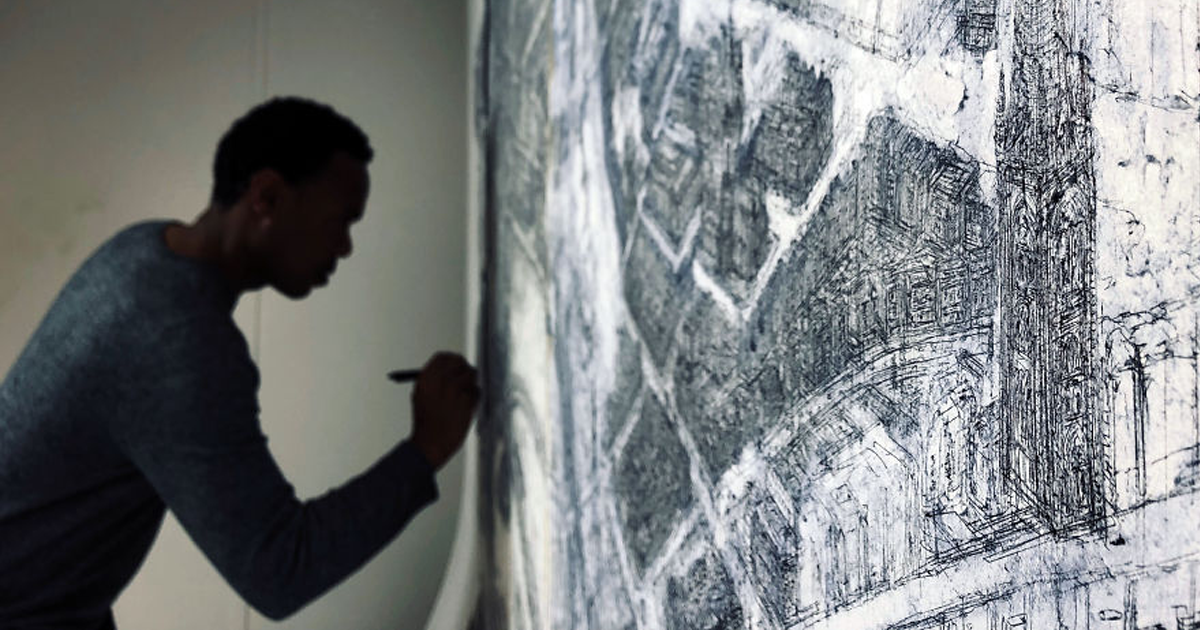
The famous hand-sketched Perth cityscape associated with Carl Lavia and Lorna Le Bredonchel’s ambitious #69Cities project captured public imagination because it treated the city not as a flat grid, but as a living portrait. From a distance, such an artwork can look like a traditional aerial map. Up close, it becomes a storm of human attention: roofs, lanes, churches, riverside curves, civic buildings, and tiny marks that whisper, “Yes, someone actually drew this.”
Why Perth, Scotland Is Perfect for a Hand-Sketched City Map
Perth is not a city that needs to shout. It has the confidence of a place that has already been a royal burgh, a major trading center, and an important seat in Scotland’s national story. Located on the banks of the River Tay, Perth has long connected landscape, commerce, culture, and power. That makes it a dream subject for detailed city illustration.
Its nickname, “The Fair City,” is not decorative fluff. Perth has a naturally picturesque setting, with the River Tay giving the city a broad, reflective spine. In a hand-drawn cityscape, the river is more than a waterway. It becomes the organizing gesture of the whole composition. Streets gather around it, bridges stitch across it, and the eye follows it like a ribbon through history.
Then there is the architecture. Perth contains the kind of built environment that makes an artist’s hand both excited and mildly concerned. St John’s Kirk brings medieval gravity. Perth Museum adds cultural renewal. Scone Palace, just outside the city, connects the area to Scotland’s coronation traditions. The Black Watch Castle and Museum adds military heritage and a powerful sense of place. These landmarks give the drawing structure, while smaller homes, shops, alleys, and rooflines provide rhythm.
The Art of Drawing a City by Hand
Hand-sketching a city is not the same as copying a map. A printed map tells you where things are. A hand-drawn city portrait tells you how a place feels when a human being has wrestled with every street, roof, bend, and building edge. That is a very different assignment. A normal map says, “Turn left.” A hand-drawn map says, “Look at this corner; it has stories hiding in its brickwork.”
Research Comes Before the Ink
Before ink touches paper, the work begins with research. Artists studying Perth must understand the city’s layout, historic center, riverside, bridges, landmarks, civic buildings, public spaces, and surrounding visual character. Walking the city matters. Photographs matter. Historical context matters. Even mistakes matter, though they are rarely invited politely.
For a detailed hand-drawn map of Perth, the artist has to balance accuracy with expression. A strict technical map may be clean but emotionally quiet. A loose sketch may be lively but geographically confusing. The challenge is to stand between both worlds: faithful enough for locals to recognize their streets, expressive enough for viewers to feel the city breathing.
Why the River Tay Anchors the Whole Composition
The River Tay is one of the great visual gifts of Perth. In a city sketch, it acts like a natural headline. It gives the artwork direction, movement, and breathing room. Without the river, the drawing might become a dense carpet of buildings. With the river, the city opens up.
Artists often use water to create contrast. Buildings are angular; rivers curve. Streets can feel busy; water creates pause. In a hand-sketched Perth cityscape, the Tay helps the viewer understand the city’s relationship with nature. It also reminds us that Perth’s history was shaped by movement: trade, travel, defense, settlement, and daily life along the riverbank.
Landmarks That Make Perth a Joy to Sketch
A successful city drawing needs anchor points. These are the recognizable places that help viewers say, “Ah, I know where I am.” Perth offers plenty of them, and each one brings its own texture to the page.
St John’s Kirk: The Historic Heartbeat
St John’s Kirk is one of Perth’s most important historic buildings. The site has deep medieval roots, and the church is closely tied to the city’s religious and civic history. In a drawing, it does what great architecture always does: it gives the eye somewhere to land.
Its tower, stonework, and central position make it a natural focal point. But sketching a church like St John’s Kirk is not just about getting the outline right. The artist must capture weight, age, shadow, and presence. Too much detail, and the building becomes stiff. Too little, and it loses its authority. The trick is to let the lines feel old without making them look tired. Think “historic dignity,” not “forgotten sandwich.”
Perth Museum and the Stone of Destiny
Perth Museum has become a major cultural landmark, especially with the Stone of Destiny at the center of its story. The museum’s renewed role gives modern Perth a powerful link to Scotland’s ancient past. For an artist, this matters because a city is never only what it looks like today. It is also what it remembers.
When a hand-sketched map includes the museum area, it captures more than a building. It points toward national identity, public memory, and the way heritage can be reintroduced into everyday civic life. A visitor may see the museum as an attraction. A city sketch sees it as a node of meaning.
Scone Palace: Royal History Just Beyond the City
Scone Palace sits near Perth and is closely associated with the crowning of Scottish kings. While it may not sit inside the tightest urban core, its historical gravity affects how people understand Perth and Perthshire. In any article or artwork about the city’s identity, Scone is impossible to ignore.
For a detailed Perth illustration, nearby landmarks like Scone Palace help frame the city as part of a larger cultural landscape. Perth is not an isolated cluster of streets. It is connected to kingship, ceremony, myth, and the long drama of Scottish history. That is a lot for ink lines to carry, but ink is surprisingly strong when used correctly.
The Black Watch Castle and Museum
The Black Watch Castle and Museum, housed at Balhousie Castle, adds another layer to Perth’s visual and historical identity. Its story reaches into more than 300 years of regimental history. For a hand-drawn cityscape, the castle and museum bring texture, contrast, and a different emotional register.
Not every landmark in a city drawing should feel the same. Some places are civic. Some are sacred. Some are commercial. Some are tied to memory, service, and sacrifice. The Black Watch site gives Perth’s drawn portrait a deeper historical range.
How Small Details Make a Big City Portrait
The phrase “to the smallest detail” sounds dramatic until you see what a detailed city sketch actually demands. Then it sounds mercifully understated. The small details are where the personality lives: chimneys, roof angles, narrow lanes, odd corners, shopfront rhythms, bridge lines, tree clusters, railings, street curves, and little architectural interruptions that refuse to behave.
In Perth, those details matter because the city has grown through layers rather than from one single design idea. Medieval routes, civic buildings, riverside spaces, modern cultural venues, and residential neighborhoods all meet on the page. The artist has to decide what to emphasize, what to simplify, and what to let dissolve into texture.
A good hand-drawn city map does not treat every mark equally. That would create visual soup, and nobody wants soup with street names in it. Instead, the artist builds hierarchy. Major landmarks get stronger definition. Streets guide the eye. The river opens the composition. Smaller buildings create density and atmosphere.
Why Hand-Sketched Maps Still Matter in a Digital World
We live in the golden age of zooming. Anyone can open a digital map, pinch a screen, and locate a sandwich shop in twelve seconds. That is useful. It is also not the same as wonder.
A hand-sketched city map slows the viewer down. It says, “Stay here a moment.” Unlike digital navigation, which usually exists to get us somewhere faster, hand-drawn cartographic art encourages us to notice where we already are. It turns streets into patterns, buildings into characters, and neighborhoods into visual stories.
That is why projects like #69Cities resonate. They remind us that cities are not just data. They are lived spaces. They are walked, remembered, photographed, repaired, argued over, celebrated, and occasionally cursed at when parking is impossible. A hand-sketched city portrait captures that human messiness with warmth.
The Creative Process: From Pencil Scaffold to Inked Cityscape
Large-scale city sketching usually begins with a loose structure. Artists may build a pencil scaffold first, blocking in major roads, landmarks, river lines, and general proportions. This stage is not glamorous. It is the part where the artwork looks less like a masterpiece and more like a nervous spider tried urban planning.
But the scaffold is essential. Without it, the final drawing can drift. With it, the artist has a framework sturdy enough to support thousands of later decisions. After the pencil structure comes layering: refining buildings, adjusting perspective, correcting relationships, and gradually introducing the energy of the city.
Ink is the commitment stage. Pencil forgives. Ink remembers. Once the artist begins inking, every line has consequences. That is part of the excitement. A city drawn in ink feels alive because it contains risk. Tiny variations in pressure, speed, and direction give the artwork its pulse.
Perth as a Living Pattern
One of the most interesting things about viewing a hand-sketched Perth cityscape is how quickly the city becomes a pattern. Streets become veins. Blocks become clusters. Landmarks become punctuation marks. The River Tay becomes a long, elegant sentence running through the composition.
This pattern is not random. Perth’s historic development, riverside location, and civic role all shape what the artist sees. Older routes tend to carry a different visual rhythm than newer roads. Public buildings interrupt the density. Open spaces allow the eye to rest. Bridges create connections that are both practical and symbolic.
When the whole city is drawn by hand, the viewer can see Perth as both place and organism. It is not frozen. It seems to expand, contract, and hum. That is the gift of hand-drawn urban art: it shows the city as something made by people and still being remade by them every day.
Why Locals Connect With Detailed City Artwork
For locals, a hand-sketched city map can become strangely personal. People look for their street, their workplace, their favorite bridge, the corner where they waited in the rain, or the building they passed a thousand times without appreciating. The artwork becomes a game of recognition.
That recognition creates pride. Seeing your city drawn with care suggests that it deserves attention. It says the ordinary view from your morning walk is not ordinary at all. Someone spent months studying it. Someone turned it into art. Someone probably ruined at least one shirt with ink in the process.
For visitors, the artwork works differently. It becomes an invitation. Instead of reducing Perth to a checklist of attractions, it presents the city as a layered experience. You can visit the museum, walk along the Tay, explore the historic center, admire St John’s Kirk, and still understand that the real pleasure lies in how these places connect.
The SEO Value of a Story Like This
From a content perspective, the topic “hand-sketched Perth Scotland” has strong long-tail SEO potential because it combines art, travel, local history, and visual storytelling. People searching for a hand-drawn city map, Perth Scotland illustration, urban sketching project, or detailed cityscape artwork are often looking for more than basic facts. They want context, process, and emotion.
That makes this subject ideal for Google and Bing optimization without keyword stuffing. The best approach is to write naturally around related terms: hand-drawn city map, Perth Scotland art, architectural illustration, Scottish cityscape, River Tay, historic Perth, urban sketching, map art, and detailed ink drawing. These phrases support the topic without marching through the article wearing heavy boots.
Search engines increasingly reward useful, original, well-structured content. A strong article should explain the project, describe Perth’s real landmarks, explore the creative process, and give readers a reason to care. In other words, it should do what the artwork does: reward attention.
Experience Notes: What It Feels Like to Hand-Sketch an Entire City
Hand-sketching an entire city like Perth is not a neat little afternoon activity. It is not the artistic equivalent of making toast. It is closer to moving into a relationship with a place and discovering, around week three, that the place has many opinions about roof angles.
The first experience is excitement. Perth gives an artist so much to work with: the River Tay, historic streets, cultural landmarks, old stone buildings, bridges, gardens, and those small urban details that seem harmless until you try drawing all of them. At the beginning, the city feels generous. Every corner offers a possible focal point. Every photograph seems useful. Every street says, “Draw me.” It is charming. It is also a trap.
Then comes the second experience: overwhelm. Once the drawing grows, the artist realizes that cities do not politely organize themselves for easy illustration. Streets bend. Buildings overlap. Roofs hide behind other roofs. A bridge that looked simple in a reference photo suddenly demands engineering-level respect. The city becomes a puzzle with thousands of pieces, and several pieces appear to be shaped like chimneys.
At this stage, patience becomes the real tool. Pens matter, paper matters, research matters, but patience is the quiet engine. The artist learns to move section by section. One block. One roofline. One riverside curve. One landmark. Progress becomes visible slowly, like fog lifting from the Tay.
The third experience is intimacy. After enough hours, the city stops being an external subject. The artist begins to know it differently. Not just “there is St John’s Kirk,” but “there is the weight of that tower in the composition.” Not just “there is the River Tay,” but “there is the breath of the drawing.” Not just “there are streets,” but “there is the rhythm that holds the page together.”
This is where hand-sketching becomes more than representation. The artist starts noticing relationships: how a historic building commands space, how smaller structures create texture, how public places interrupt density, how the river softens the whole scene. Perth becomes readable not only as geography but as character.
The fourth experience is revision, also known as the part where humility enters wearing muddy boots. Sections may need to be erased, rebuilt, simplified, or strengthened. A drawing of this scale cannot be precious too early. The artist must be willing to correct the city without killing its energy. That balance is difficult. Too much control can make the artwork sterile. Too much looseness can make it confusing. The best result lives somewhere between discipline and jazz.
Finally comes the experience of stepping back. After hours spent inches from the paper, the artist sees the whole city emerge. The marks stop behaving like separate marks. They gather into Perth. The river flows. The landmarks stand. The streets connect. The small details do what small details always do when handled with care: they create a big feeling.
That is the emotional payoff of hand-sketching Perth to the smallest detail. It proves that a city can be known through attention. Not scanned, not rushed, not reduced to a search result, but slowly studied and lovingly translated into line. In a world that keeps asking us to move faster, a hand-drawn cityscape quietly replies, “Look closer.”
Conclusion
We carefully hand-sketched the entire city of Perth, Scotland to the smallest detail because Perth deserves that kind of attention. Its history is deep, its riverside setting is graceful, and its landmarks carry stories that reach from medieval Scotland to modern cultural renewal. A hand-drawn city map captures all of this in a way no quick snapshot can.
The beauty of a detailed Perth cityscape is not only in its accuracy. It is in its humanity. Every line suggests time, care, curiosity, and the stubborn belief that places matter. Perth is more than streets and buildings. It is a living pattern of memory, movement, architecture, and community. When drawn by hand, that pattern becomes visible in a new way.
Digital maps may help us arrive, but hand-sketched maps help us notice. And sometimes, noticing is the real destination.