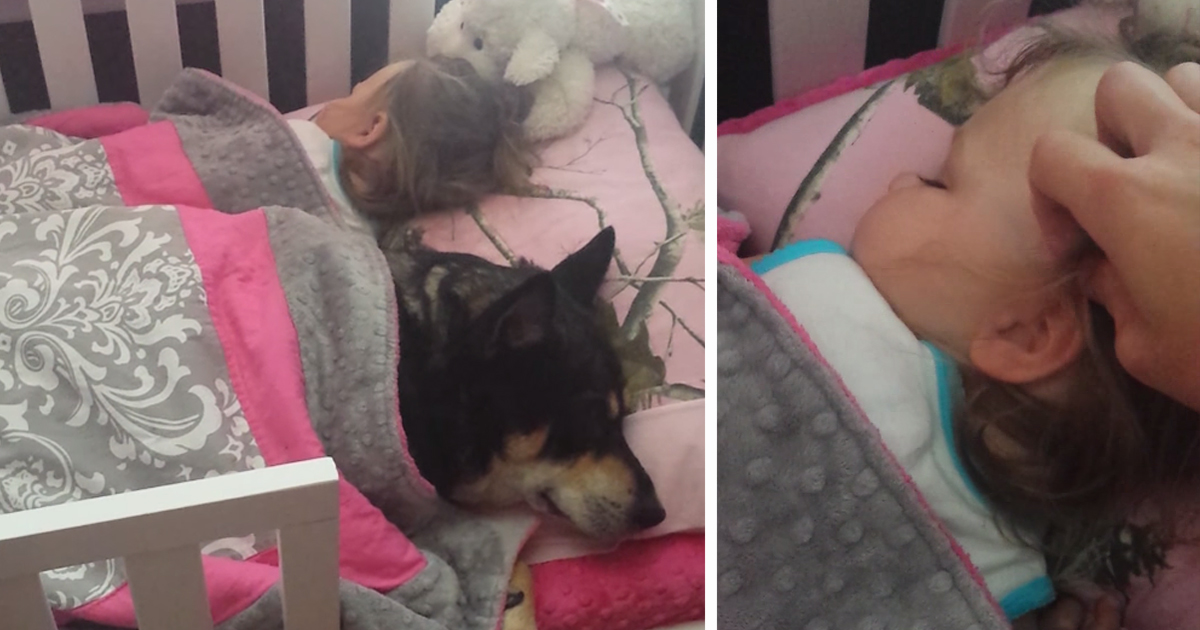
Some family stories arrive quietly. No marching band, no dramatic soundtrack, no slow-motion movie moment. Just a mother checking on her sleeping child, opening a bedroom door, and discovering the family rescue dog tucked in like he had paid rent, signed the bedtime agreement, and accepted full responsibility for nap supervision.
That is the heartwarming scene that made so many people smile when North Carolina mom Kristin Leigh Rhynehart went looking for her rescued dog, Raven. She had searched around the house and even outside, only to find him exactly where his heart wanted to be: curled up under the covers beside her young daughter, Addison. The image was simple, sweet, and almost suspiciously perfectas if Raven had been waiting for someone to open the door and say, “Yes, this is adorable. Carry on.”
The story spread because it touches something familiar to many pet-loving families. Rescue dogs are often described as grateful, loyal, and emotionally intuitive. While every dog has a different personality, Raven’s quiet nap beside Addison became a tiny symbol of what adoption can bring into a home: companionship, trust, comedy, comfort, and the occasional surprise guest in the toddler bed.
The Viral Moment: Raven, Addison, and the Nap That Melted the Internet
According to reports about the video, Kristin could not find Raven and began checking the usual places. Anyone who has ever lived with a dog knows this routine. You call the name. You check the couch. You look near the food bowl. You briefly wonder whether the dog has developed teleportation skills. Then you open one more door and find the answer.
In this case, the answer was Raven sleeping beside Addison under the covers. Not beside the bed. Not at the foot of the bed. Not standing guard like a noble statue in a pet food commercial. He was fully committed to the nap, tucked in and relaxed, as if he and Addison had formed a secret committee called “Mandatory Afternoon Rest.”
Kristin’s reaction helped make the moment feel even more meaningful. She has shared that she adopted Raven years earlier and sometimes wonders who rescued whom. That phrase is popular among rescue families for a reason. Adoption may begin as a human act of kindness, but over time many families discover that the animal gives back in ways that are difficult to measure: loyalty after long days, joy in ordinary routines, and a steady presence that turns a house into a softer place to land.
Why Rescue Dog Stories Hit Us Right in the Feelings
Stories like Raven and Addison’s do well online because they combine three irresistible ingredients: a child, a dog, and a moment that seems completely unplanned. It is not a polished advertisement. It is not a staged family portrait where everyone is wearing matching sweaters and pretending the dog did not just eat a bow tie. It feels real.
Rescue dog stories also remind readers that animals have histories before they enter our homes. Some dogs come from shelters, foster homes, difficult beginnings, or uncertain circumstances. When they finally settle into a family and show affection in their own quirky ways, people see more than cuteness. They see healing.
That emotional arc is powerful. A rescued dog who once needed safety becomes a source of comfort. A pet who may have arrived nervous or unsure becomes part of the family rhythm. One day he is learning where the water bowl is; years later he is sneaking into a child’s room for a nap like a furry little grandpa with strong opinions about sleep schedules.
The Human-Animal Bond: More Than a Cute Photo
The bond between people and dogs has been studied, celebrated, and experienced in everyday homes across the country. Dogs often become woven into family routines: morning walks, school drop-offs, dinner crumbs, movie nights, and the sacred household tradition of standing directly in the way while someone carries laundry.
For children, growing up with a calm, well-supervised pet can teach empathy, patience, responsibility, and respect for living beings. A child learns that a dog is not a toy, not a pillow, and not a snack-sharing machineeven if the dog strongly supports the snack-sharing part. They learn that animals have feelings, boundaries, fears, and preferences.
For parents, a trusted family dog can feel like a source of warmth in the home. That does not mean a dog should be treated as a babysitter. Dogs are animals, and babies are unpredictable little humans with grabby hands and surprising sound effects. Still, the emotional comfort a beloved pet brings is real. Raven’s nap with Addison became memorable because it looked like friendship in its simplest form: two small souls resting peacefully together.
A Sweet Scene, With an Important Safety Reminder
As adorable as the story is, it is important to discuss the safety side with care. Experts commonly advise that babies and young children should always be supervised around dogs, including familiar family pets. That point does not make the story less sweet. It makes the conversation more responsible.
Even gentle dogs can become startled. Even loving children can pull ears, grab fur, crawl unexpectedly, or make sudden noises. A dog may not understand that a baby is still learning how the world works. Meanwhile, a baby does not understand dog body language, personal space, or the sacred rule that tails are not handles.
Parents can enjoy the magic of a dog-child bond while still setting smart boundaries. That may mean keeping the dog out of the nursery unless invited, using baby gates, creating a dog-only safe space, and never leaving a baby or toddler alone with a dog. The best family memories happen when love and common sense share the same room.
How Families Can Introduce a Dog to a New Baby
When a baby joins a household with a dog, preparation matters. Dogs thrive on routine, and babies are basically tiny adorable routine grenades. Suddenly there are new smells, new sounds, new objects, new schedules, and adults walking around like sleep-deprived zombies holding bottles.
Start Before the Baby Comes Home
Families can help by gradually introducing baby-related changes before the baby arrives. Set up nursery items, practice walking with a stroller, play baby sounds softly, and reward calm behavior. If certain rooms will be off-limits, begin that rule early so the dog does not associate the change with the baby’s arrival.
Make the First Meeting Calm
When the baby comes home, the introduction should be calm and controlled. One adult can hold the baby while another manages the dog. The dog should not be forced to approach. Praise, treats, and relaxed energy can help the dog connect the baby with positive experiences.
Protect the Dog’s Space Too
A safe home is not only about protecting the child. Dogs also need quiet spaces where they can retreat without being followed. A crate, bed, gated room, or cozy corner can give the dog a place to decompress. This is especially useful once a baby becomes mobile and begins exploring the home like a tiny inspector with no clipboard but many opinions.
What Raven’s Story Says About Rescue Pets
Raven’s story is not just about one cute nap. It also highlights the emotional rewards of pet adoption. Many families who adopt from shelters or rescue groups describe the experience as life-changing. They begin with the goal of giving an animal a home, but over time the pet becomes part of birthdays, holidays, lazy Sundays, family photos, and those random Tuesday evenings when everyone needs a little comfort.
Adoption is also a practical way to help animals in need. Shelters and rescue organizations across the United States care for dogs of many ages, sizes, breeds, and personalities. Some are energetic goofballs. Some are gentle seniors. Some are puppies with feet too big for their bodies. Some are mysterious couch potatoes who appear to have been born knowing exactly where the softest blanket is.
The key is finding the right match. A family with young children should work with reputable shelters, rescues, veterinarians, or trainers to understand a dog’s temperament and needs. Not every dog is suited for every home, and that is perfectly okay. Good adoption is not about picking the cutest face in the room, although the cutest face will absolutely lobby for the position. It is about choosing responsibly.
Why Dogs Sometimes Gravitate Toward Children
Many dogs are curious about babies and children because they are new, interesting, and central to family attention. Babies smell different. They sound different. They move differently. To a dog, a baby may seem like a fascinating new family member who drops crumbs in the future. That last part is not scientific, but dogs have their hopes.
Some dogs become protective or affectionate. Others prefer distance. Both reactions can be normal, depending on the dog. The goal is not to force a close bond. The goal is to create a safe environment where trust can grow naturally. Raven’s nap with Addison appeared peaceful because it reflected comfort, familiarity, and a long-standing family relationship.
Parents should watch for dog body language. Relaxed posture, soft eyes, loose movement, and voluntary approach can suggest comfort. Stiffness, lip licking, yawning, turning away, whale eye, growling, or trying to leave may signal stress. Respecting these signals prevents problems and teaches children that love includes listeningeven when the listener has four paws and no interest in algebra.
The Internet Loves a Gentle Guardian
Part of the appeal of Raven and Addison’s story is the “gentle guardian” idea. People love imagining a dog watching over a child like a loyal character in a storybook. The image is comforting. It suggests innocence, devotion, and a bond that does not require words.
Still, the best way to honor that bond is not to turn dogs into mythical babysitters. It is to appreciate them as living companions with instincts, emotions, and limits. A dog can be loving without being responsible for child care. A dog can be affectionate without being placed in situations that create stress. The safest family dog is not the one expected to tolerate everything; it is the one whose humans guide interactions wisely.
That balance makes the story even better. Raven was not just a cute dog in a viral clip. He was a rescued family member who had earned trust over many years. His peaceful nap beside Addison became a snapshot of belonging.
Lessons Families Can Take From This Heartwarming Story
Adoption Can Change a Family
Raven’s story shows how deeply a rescue dog can become part of family life. Adoption is not only about saving an animal; it can also bring laughter, companionship, and emotional richness into a home.
Supervision Is Love in Action
Responsible pet parenting means enjoying sweet moments while keeping everyone safe. Supervision, training, and clear boundaries protect both children and dogs.
Trust Takes Time
The strongest dog-child relationships usually grow gradually. Families should give dogs time to adjust, reward calm behavior, and avoid forcing interactions.
Rescue Dogs Are Individuals
Some rescue dogs are cuddly. Some are shy. Some are energetic. Some believe every cardboard box is a suspicious object that must be barked at immediately. Understanding the individual dog matters more than relying on stereotypes.
Experience-Based Reflections: Living With a Rescue Dog and a Baby
For families who have lived with both a young child and a rescue dog, Raven and Addison’s story feels familiar in spirit, even if the exact scene never happens. The relationship often begins with careful management. Parents may spend the first weeks moving slowly, watching reactions, and narrating life like sports commentators: “The baby has entered the living room. The dog has noticed the sock. The sock may not survive.”
One common experience is discovering that dogs notice routines faster than adults do. A baby cries before feeding, and the dog may walk toward the kitchen. The stroller comes out, and the dog may bounce with excitement. The bedtime routine begins, and the dog may settle nearby because the whole house has shifted into quiet mode. Dogs are excellent observers. They may not understand pediatric sleep schedules, but to be fair, many adults do not either.
Another experience is learning that affection looks different from dog to dog. Some dogs want to curl up close, like Raven. Others prefer to lie across the room where they can watch without being touched. Some become gentle shadows, following the parent from nursery to kitchen. Others decide the baby is interesting mainly because snacks eventually appear under the high chair. Each version can be sweet when handled safely.
Parents often discover that boundaries make the bond better, not colder. Teaching a dog to rest on a mat during feeding time, wait outside the nursery door, or move away when asked gives the dog clear expectations. It also gives parents confidence. Instead of chaos, the home develops a rhythm. The baby plays. The dog rests. The adults drink coffee that has been reheated three times and pretend that counts as a wellness routine.
There is also emotional comfort in watching a rescue dog become secure. A dog who once seemed uncertain may begin to relax into family life. The sound of baby toys, the shuffle of tiny feet, and the daily household noise become normal. Over time, the dog may choose to be near the childnot because anyone forced it, but because the child is part of the dog’s world.
Families should remember that cute moments are best enjoyed with adult awareness. A photo of a dog beside a child can be precious, but the priority is always safety. Parents can stay nearby, read the dog’s body language, and gently redirect either the child or the pet when needed. This approach protects the relationship from becoming stressful.
One of the best experiences is seeing a child grow into kindness. With guidance, children learn to offer an open hand, use gentle touch, give the dog space during meals, and respect rest time. These lessons can shape how a child treats animals for life. A rescue dog, in this way, becomes more than a pet. He becomes a quiet teacher of empathy.
Raven and Addison’s nap became famous because it captured one peaceful second. But behind that second is a bigger idea: the best family bonds are built through trust, patience, and care. A rescued dog may arrive needing a home, but once loved, he can become part of the family story in ways nobody expects. Sometimes he becomes the walking buddy. Sometimes he becomes the couch companion. And sometimes, when a mom goes to check on her baby, he is already theresnuggled under the covers, looking like he has been assigned to the dream patrol.
Conclusion: A Small Nap With a Big Message
The story of Kristin, Addison, and Raven continues to charm readers because it is simple and sincere. A mother looked for her rescue dog and found him resting beside her child. No grand speech was needed. The image said enough: this dog belonged, this child was loved, and this family had gained something beautiful through adoption.
At the same time, the story offers a useful reminder. The bond between dogs and children can be wonderful, but it should always be supported by supervision, training, and respect for boundaries. When families combine affection with safety, they create the best possible environment for both kids and pets.
Raven’s nap with Addison may have lasted only a short time, but the message still stretches far beyond that bedroom: rescue animals can bring extraordinary love into ordinary days. And occasionally, they may also steal the blanket.