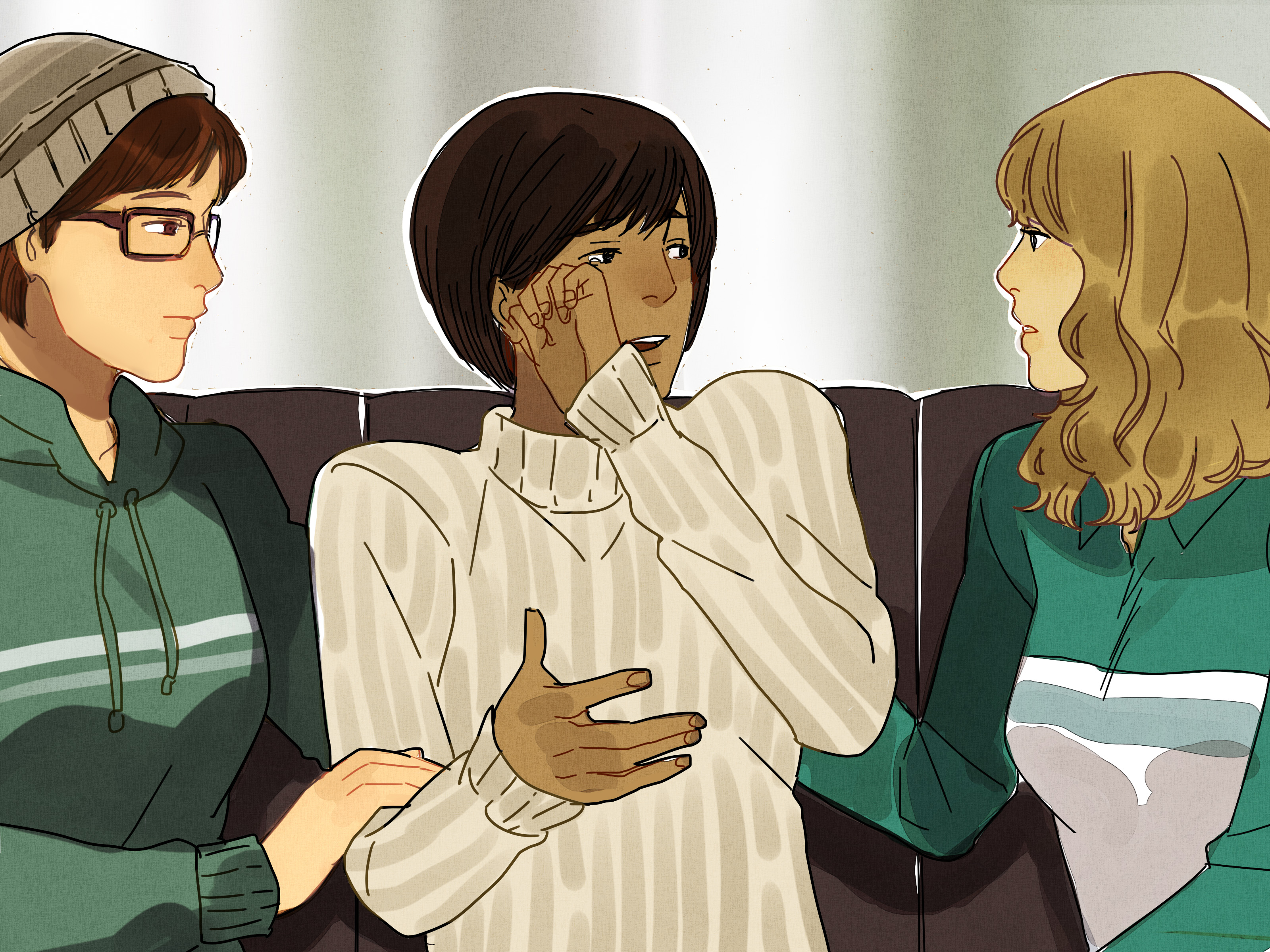
Coming out to your parents can feel a little like standing on a diving board while your brain shouts, “Maybe let’s just become a mysterious traveler and disappear into the fog instead.” It is emotional, personal, and often complicated. For some people, an in-person conversation feels right. For others, writing an email or letter is the better move because it creates space to think clearly, say exactly what you mean, and avoid getting knocked off course by nerves, tears, or someone interrupting you with, “Wait, what?” before you even reach the important part.
If you are thinking about coming out by email or letter, that does not make your message less real, less brave, or less meaningful. In many families, writing is actually the kindest format. It gives you room to be honest and gives your parents a moment to absorb what you are saying before they respond. A well-written message can lower the emotional temperature, help you keep control of your story, and make it easier to express both your identity and your needs.
This guide breaks down three practical ways to come out to your parents by email or letter, plus what to include, what to avoid, and how to protect your peace before and after you hit send. Whether you are lesbian, gay, bisexual, transgender, nonbinary, queer, questioning, or simply trying to explain your truth in words that feel right, the goal is the same: communicate clearly, stay safe, and give yourself credit for doing something deeply human and deeply brave.
Why Coming Out by Email or Letter Can Work So Well
There is a reason so many people choose writing over a live conversation. A letter or email lets you slow the moment down. You can edit, breathe, delete the dramatic paragraph where you compared your identity to a phoenix rising from glitter, and keep only what matters most.
Writing can help you:
- Say exactly what you want without getting interrupted
- Explain your identity in your own words
- Set boundaries about privacy, timing, and next steps
- Reduce the pressure of an immediate face-to-face reaction
- Give your parents time to process before responding
That last point matters. Some parents respond with instant love. Some need time. Some say something clumsy even when they care. Some react from shock, confusion, fear, religion, culture, or old assumptions. A written message cannot guarantee the perfect reaction, but it can give the conversation a calmer starting point.
Before You Write: Think About Safety, Support, and Timing
Before getting into the three methods, pause and think through the practical side. Coming out is your choice, and timing matters. If you believe your parents may react in a way that could affect your housing, finances, schooling, privacy, phone access, or emotional safety, it is okay to make a support plan first. That could mean talking to a trusted adult, sibling, relative, counselor, teacher, or friend before you send anything.
Ask yourself a few honest questions:
- Do I feel physically and emotionally safe sharing this right now?
- If the reaction is difficult, who can I contact afterward?
- Do I want to tell both parents at once, or one first?
- Would an email be better than a handwritten letter, or vice versa?
- What do I want from them right now: support, patience, privacy, or simply understanding?
You do not need to answer every future question in your first message. Your job is not to deliver a TED Talk with citations and a Q&A appendix. Your job is to tell the truth in a way that feels manageable.
Way #1: Write a Direct and Simple Email
The first approach is the most straightforward: clear, calm, and honest. This works best if your parents usually respond well to direct communication or if you do not want your message to get lost in too many side stories.
When this method works best
Use a direct email when you want to say what is true without building a long runway first. This style is especially helpful if you have already dropped hints, your parents are not likely to be shocked, or you are emotionally tired of circling the topic.
What to include
- A clear statement of your identity
- Reassurance that you are still the same person
- A simple request for love, respect, or patience
- Any boundary you want to set right away
Example structure
Subject line: Something important I want to share
Opening: “I’m writing this because I want to be honest with you, and it felt easier for me to put it into words first.”
Main point: “I’m gay,” “I’m bisexual,” “I’m transgender,” or “I’m nonbinary,” depending on what feels right for you.
Reassurance: “I’m still me, and this doesn’t change how much I love you.”
Request: “I’m asking you to read this fully and give me space to talk when you’re ready.”
This format is powerful because it avoids confusion. It also helps if you are worried that nerves might make you over-explain. Simple does not mean cold. It means grounded.
Pro tip: keep the tone warm but firm. You are sharing yourself, not apologizing for existing. There is a big difference.
Way #2: Write a Story-First Letter
The second method is softer and more personal. Instead of opening with one direct sentence, you begin with your experience: how long you have been thinking about this, what it has felt like, and why you are choosing to tell them now. This works well if your parents are more emotionally responsive than fact-responsive, or if you want them to understand your heart before they react to the label.
When this method works best
Choose a story-first letter if your parents care deeply about your feelings but may not understand LGBTQ identity right away. This method helps them see your honesty, vulnerability, and thoughtfulness before they jump to assumptions.
What to include
- How long you have been sorting through your feelings
- What writing this letter means to you
- Why you trust them enough to tell them now
- What kind of response would help most
Example angle
You might begin like this: “I’ve spent a long time trying to figure out how to say this because it matters so much to me, and because you matter so much to me. I didn’t want to rush it or say it badly. I wanted to tell you in a way that was honest.”
From there, you can explain your experience in simple terms. Maybe you have known for years. Maybe you are still exploring. Maybe you are certain about your identity but nervous about your parents’ reaction. A story-first letter allows nuance. It says, “This is not random. This is part of my life, and I want you to understand how I got here.”
This approach also creates empathy. Parents may not immediately understand terminology, but many understand a child saying, “I’ve been carrying this quietly, and I want to stop hiding from the people I love.” That lands.
Way #3: Send a Boundary-Setting Email or Letter
The third approach is especially useful when love and tension are both in the room. Maybe your parents are strict. Maybe your family avoids emotional conversations like they are coupons that expired in 2009. Maybe you are worried that the first reaction will be dramatic, overly personal, or shared with other relatives before you are ready. In that case, a boundary-setting message can be the smartest choice.
When this method works best
Use this style if you need to control not just the message, but the aftermath. It is also helpful if you anticipate difficult questions, pressure, denial, or an urge from your parents to immediately involve siblings, pastors, grandparents, or the entire group chat.
What to include
- Your identity or what you are ready to share
- A clear statement about what you need right now
- Limits around privacy and who can be told
- The format you want for the next conversation
Examples of healthy boundaries
- “Please don’t share this with anyone else yet.”
- “I’m open to talking, but not tonight.”
- “I need you to listen before asking a lot of questions.”
- “I’m telling you because I want honesty, not a debate.”
Boundary-setting is not rude. It is respectful clarity. You are making it easier for the conversation to happen without turning into chaos. Think of it as putting bumpers on the bowling lane. The ball may still wobble, but it has a better chance of reaching something useful.
What to Say in Your Message
No matter which of the three methods you choose, the strongest messages usually include five ingredients:
1. Honesty
Say what is true in words that sound like you. Not internet-you. Not perfect-poetry-you. Just you.
2. Clarity
Avoid making your parents guess what the message is about. If the point is buried under six paragraphs of suspense, they may miss it.
3. Reassurance
You do not need to comfort your parents through every feeling, but it can help to remind them that your message is about trust, not rejection. You are inviting them in.
4. Patience
Some parents respond well immediately. Others need a beat. Sometimes their first reaction is not their final understanding. Leave room for growth without accepting disrespect.
5. Boundaries
You are allowed to decide what happens next. You can ask for a reply by text, a talk tomorrow, or a few days of space. This is your story, not a family press release.
What Not to Do
There is no perfect script, but there are a few traps worth avoiding:
- Do not apologize for your identity. You can be gentle without acting like you have done something wrong.
- Do not overload the message. Your first letter does not need to explain every memory, every label, and every future plan.
- Do not send it in a panic. Draft it, step away, reread it, then decide.
- Do not hand your peace to their first reaction. A messy first response does not define your worth.
- Do not force yourself into a timeline that is not safe. Coming out later is still coming out. Coming out differently is still valid.
After You Send It: What Happens Next
After you send the email or leave the letter where your parents will find it, you may feel relief, dread, shakiness, hunger, nausea, or a sudden desire to reorganize your sock drawer at 1 a.m. All of that is normal. Big truth-telling tends to create big feelings.
Make a post-send plan. Text a trusted friend. Stay near someone supportive. Take a walk. Watch something familiar. Put your phone on silent for twenty minutes if you need to breathe before reading a response. This is not being dramatic. This is basic emotional first aid.
If your parents respond well, wonderful. Let that support in. If they respond awkwardly, you can guide the next step. If they respond badly, remember this: their reaction is information, not a verdict on your identity. You still deserve dignity, support, and care.
Real-Life Experiences: What Coming Out by Email or Letter Often Feels Like
One of the strangest parts of coming out by email or letter is that it can feel both deeply private and strangely cinematic. You write a few paragraphs in your room, on your phone, at a library table, or in the notes app while pretending to study, and somehow that quiet act can change the emotional weather of an entire family.
For many people, the hardest part is not writing the message. It is the final minute before sending it. That is the moment when your brain becomes an overpaid chaos intern. Suddenly it asks whether your subject line is too dramatic, whether “love you” sounds too casual, whether you should wait until Friday, next month, or the year 2047. This is common. So is reading the message twelve times and changing one comma like it holds the fate of civilization.
Some people describe a surprising sense of relief after sending the email. Not because everything is instantly solved, but because the secret is no longer sitting on their chest like a concrete backpack. The truth is out. The waiting shifts. Instead of wondering, “How do I say this?” they move into, “Okay, now we see what happens.” Even that change can feel lighter.
Others say the experience is emotionally mixed. They feel proud and terrified at the same time. They may love their parents and still be scared of them. They may know their family cares, but also know their family has beliefs, habits, or blind spots that make this conversation hard. That emotional contradiction is real. Love and fear can absolutely show up in the same envelope.
A common experience is that parents do not always react in the polished, movie-perfect way people hope for. Sometimes they say the wrong thing first and the better thing later. Sometimes they focus on themselves because they are shocked. Sometimes they ask clumsy questions. Sometimes they need time to catch up to information you have been living with for months or years. None of that makes a poor reaction okay, but it does explain why many written coming-out stories include a second chapter, where understanding grows after the first uncomfortable reply.
There are also beautiful stories. Parents who write back immediately with love. A mom who says, “Thank you for trusting me.” A dad who needs a few hours, then knocks on the door and asks, awkwardly but sincerely, “Do you want to talk?” A parent who rereads the letter later and realizes their child was not drifting away from them at all. They were trying to come closer, honestly.
And sometimes the experience teaches something powerful even when the reaction is imperfect: writing gives people a voice they did not know they had. It turns fear into language. It turns tangled feelings into sentences. It reminds you that your identity is not a confession of failure. It is a statement of truth. That alone can be life-changing.
Final Thoughts
There is no single best way to come out to your parents by email or letter. The best way is the one that fits your safety, your family dynamic, and your emotional bandwidth. A direct email can be clean and clear. A story-first letter can build empathy. A boundary-setting message can protect your peace. All three are valid. All three are brave.
If you remember only one thing, let it be this: you do not have to perform your identity perfectly to deserve respect. You are allowed to write a short message. You are allowed to ask for time. You are allowed to be honest without having every answer. Coming out is not a test you pass by being flawless. It is a deeply personal step toward living more truthfully.
Write the version that sounds like you. Keep it honest. Keep it grounded. Keep it kind to yourself. Then, when you are ready, hit send or fold the letter and let the truth do what truth does best: make room for a more real relationship.