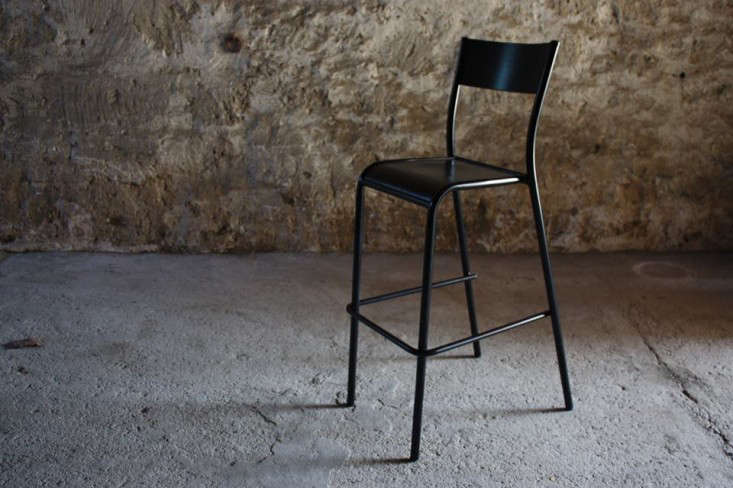
Le Tabouret Haut, 510 Originale is what happens when a French school chair grows up, moves to a beautiful kitchen island, and somehow keeps all of its classroom charm. Inspired by the legendary Mullca 510 school chair, this high stool carries the clean lines, sturdy metal frame, and warm wood details that made the original a quiet hero of French design. It is not loud. It does not beg for attention. It simply stands there looking useful, elegant, and slightly amused by all the overdesigned furniture around it.
At first glance, the 510 Originale high stool looks simple: a tubular steel frame, a shaped wooden seat, a curved back, and a footrest. But that simplicity is exactly the point. This is furniture with good manners. It knows how to fit into a kitchen, café, studio, breakfast bar, or creative workspace without stealing the room’s personality. Instead, it adds a note of vintage French character, the kind that says, “Yes, I understand design history, but I also need somewhere to drink coffee.”
What Is Le Tabouret Haut, 510 Originale?
Le Tabouret Haut, 510 Originale is the high stool version of the famous 510 Originale family, a modern reissue connected to the Mullca 510 chair designed by Gaston Cavaillon. The original Mullca became one of France’s best-known school chairs, loved for its practicality, durability, and unmistakable silhouette. Label Edition brought the design language back into contemporary interiors while preserving the spirit of the original: honest materials, functional proportions, and timeless industrial beauty.
The high stool keeps the recognizable 510 DNA but lifts it to counter and bar height. Official product details describe a welded structure made from round 25 mm steel tube with an epoxy-painted finish. The seat and back are made from veneered beech plywood, either painted or stained, and held in place by strips of sheet metal. It is delivered assembled and made in France, which is a refreshing detail in a world where many furniture boxes arrive with 47 screws, one tiny wrench, and a vague threat to your weekend.
A Short History of the 510 Originale Design
The story begins in postwar France, when schools needed practical, sturdy furniture that could survive daily use by generations of energetic children. The Mullca company was founded by Robert Muller and Gaston Cavaillon in 1947, and the school-chair lineage eventually produced the Mullca 510. The chair became familiar across French classrooms, admired for its steel tube frame, efficient construction, and friendly curved shape.
Unlike decorative furniture created only to look pretty in a showroom, the 510 was designed for real life. It needed to be strong, economical, stackable in some versions, easy to maintain, and comfortable enough for long school days. That background matters because Le Tabouret Haut, 510 Originale is not just “retro-looking.” It comes from a practical design tradition where every curve and joint had a job to do.
Today, the high stool brings that same schoolroom intelligence into adult spaces. It feels nostalgic without being dusty, industrial without being cold, and minimal without being boring. In other words, it has learned the rare art of being useful and charming at the same time.
Design Details That Make It Special
1. The Tubular Steel Frame
The frame is one of the stool’s strongest visual features. Made from round steel tube, it gives the stool a light but stable profile. The tubular construction echoes mid-century school and workshop furniture, but the proportions feel modern enough for today’s interiors. The frame is not trying to be sculptural in a dramatic museum-piece way. It is more like a perfectly drawn line: simple, confident, and difficult to improve.
The epoxy-painted finish also matters. Powder-style coatings and epoxy finishes are valued for durability, color consistency, and resistance to wear. For a high stool, that is practical magic. Kitchen stools get kicked, dragged, leaned on, wiped down, and occasionally used as temporary shelves for grocery bags. A strong painted metal frame helps the stool stay handsome through the daily chaos.
2. Veneered Beech Plywood Seat and Back
The seat and back use veneered plywood, a smart material choice for furniture that needs both structure and warmth. Plywood offers stability, while the beech veneer adds natural texture and a classic school-furniture feeling. Compared with a thick solid slab of wood, plywood can be lighter and less prone to movement, which is helpful for seating that needs to keep its shape over time.
The slightly curved seat and back are also important. They soften the industrial frame and make the stool more inviting. The result is a balanced mix: metal for strength, wood for warmth, and curves for comfort. It is the furniture equivalent of a good croissant: structured, layered, and somehow better than it needs to be.
3. Two Seat Heights for Different Uses
Le Tabouret Haut, 510 Originale is commonly offered with seat heights of 60 cm or 80 cm. In American terms, 60 cm is close to 24 inches, making it suitable for many counter-height surfaces. The 80 cm version is close to 31 inches, which works better with bar-height surfaces. This distinction is essential. A stool that is too low makes you feel like a child asking for cereal. A stool that is too high makes your knees negotiate with the countertop. Neither is chic.
For standard kitchen counters, a seat height around 24 to 27 inches is usually comfortable. For bar-height counters, a seat height around 28 to 33 inches is more appropriate. Before choosing, measure from the floor to the underside of your counter or bar and allow comfortable legroom. The right stool height is not glamorous, but it is the difference between “beautiful breakfast nook” and “why are my thighs trapped?”
Why Designers Love the 510 Originale High Stool
Designers are often drawn to pieces that solve several problems at once. The 510 Originale high stool does exactly that. It brings history, function, color, and shape into a room without requiring a complete design theme. You do not need a French apartment, a vintage chalkboard, or a suspiciously photogenic baguette to make it work. It can sit comfortably in a modern loft, a farmhouse kitchen, a small café, or a minimalist studio.
Its industrial character pairs well with concrete, marble, butcher block, tile, and painted cabinetry. The wood seat keeps it from feeling too cold, while the metal frame makes it sharper than an ordinary wooden stool. It can look playful in bright colors, serious in black, soft in neutral tones, or graphic when the frame and seat contrast.
That flexibility is one reason the 510 family continues to appeal to design lovers. It does not belong to one trend. It is not “coastal grandmother,” “industrial farmhouse,” or “minimalist beige universe.” It is simply well-designed furniture with enough personality to travel between styles.
Best Places to Use Le Tabouret Haut, 510 Originale
Kitchen Islands
The most obvious home for this stool is a kitchen island. The 60 cm version can work beautifully with counter-height islands, while the 80 cm version is better for taller bar counters. In a kitchen, the stool adds character without visually crowding the room. The open metal frame allows light to pass through, which is especially useful in smaller spaces.
Breakfast Bars
A breakfast bar needs seating that feels casual but not careless. Le Tabouret Haut, 510 Originale fits that mood perfectly. It is comfortable enough for coffee, toast, laptop work, or late-night leftovers eaten with the confidence of someone who refuses to dirty a plate.
Cafés and Restaurants
Commercial interiors benefit from furniture that is durable, recognizable, and easy to style. This high stool brings a European café feeling without becoming a cliché. Its sturdy frame and clean surfaces make it practical for daily use, while the design heritage gives it more soul than a generic contract stool.
Creative Studios and Workspaces
High tables, drafting areas, and collaborative workstations often need stools that are light in appearance but strong in construction. The 510 Originale high stool works well in these settings because it feels informal, mobile, and visually clear. It encourages a perch-and-work posture rather than the deep slump of an overstuffed chair.
How to Style the 510 Originale High Stool
For a modern kitchen, pair black or dark-framed stools with white counters, stainless appliances, and simple pendant lights. The look is crisp, architectural, and easy to live with. For a warmer interior, choose natural or stained wood seats with a softer frame color. This combination works well with oak cabinets, terracotta tile, linen curtains, and other natural textures.
If you want the stool to become a playful focal point, consider a brighter color. The 510 design can handle color beautifully because its shape is so restrained. A red, blue, yellow, or green frame can energize a neutral room without making it look like a preschool exploded. The secret is balance: let the stool have the personality, then keep the surrounding finishes calmer.
In restaurants or cafés, mix the high stool with bistro tables, open shelving, globe lights, or vintage posters. In a home office or studio, place it near a standing-height desk or tall worktable. Add a small cushion only if needed, but do not hide the shape too much. The stool’s charm lives in its clean outline.
Comfort and Practical Considerations
Le Tabouret Haut, 510 Originale is a high stool with a back, which already gives it an advantage over backless stools for longer sitting. The back support makes it more suitable for meals, conversation, and casual working sessions. The footrest is another essential feature because high seating without a footrest is basically a polite form of dangling.
Still, buyers should be realistic. This is not a padded lounge chair. It is a wood-and-metal stool inspired by school furniture. Its comfort comes from proportion, posture, and support rather than foam. If you plan to sit for many hours every day, you may want to test it first or add a thin seat pad. If you need seating for meals, coffee, short work sessions, or social spaces, it should feel right at home.
Maintenance Tips
Maintenance is refreshingly simple. Wipe the metal frame with a soft damp cloth and avoid harsh abrasive cleaners. For the wooden seat and back, use gentle cleaning products suitable for finished wood. Clean spills quickly, especially on stained or painted surfaces. If the stool is used in a busy kitchen or café, inspect the feet occasionally to make sure floor protectors are intact. Your floors will thank you, though probably not out loud.
Because the stool is delivered assembled, it avoids one common weakness of flat-pack furniture: poor assembly. There are no mystery bolts slowly loosening because someone, somewhere, decided the diagram did not need words. That said, regular care will help preserve the finish and keep the stool looking sharp for years.
Buying Advice: Is It Worth It?
Le Tabouret Haut, 510 Originale is best for buyers who appreciate design history, French manufacturing, durable materials, and a clean vintage-modern look. It is not the cheapest stool on the market, but it offers more character and authenticity than many mass-produced alternatives. You are not just buying a place to sit; you are buying a design lineage that connects postwar French practicality with contemporary living.
Before purchasing, confirm the seat height, overall dimensions, color options, lead time, and return policy. If buying multiple stools, measure spacing carefully. A comfortable layout usually allows enough room between stools for elbows, bags, and the occasional dramatic coffee gesture. Also consider your countertop depth. A stool with a back may need more clearance than a backless design.
Experience Notes: Living With Le Tabouret Haut, 510 Originale
Using Le Tabouret Haut, 510 Originale in a real interior is a reminder that good design does not have to shout. The stool has a quiet presence. In the morning, it feels like the perfect perch for coffee while the kitchen is still half asleep. At lunch, it becomes casual seating for quick meals. In the evening, it turns into the unofficial gathering spot where people lean, talk, snack, and somehow solve the world’s problems over a cutting board.
One of the best experiences with this stool is how easily it changes the mood of a space. Place a pair at a plain white island, and suddenly the kitchen feels more designed. Add three in a café-style row, and the room picks up a hint of French schoolhouse nostalgia without becoming theatrical. The stool has enough personality to be noticed, but not so much that it demands a matching costume from the rest of the room.
The tactile experience is also part of the appeal. The metal frame feels slim and sturdy. The wooden seat has a familiar warmth, especially in natural or stained finishes. Sitting on it feels upright and alert, which makes sense given its school-chair heritage. This is not the seat for sinking into while watching a three-hour movie. It is the seat for breakfast, sketching, chatting, emailing, tasting sauce, or supervising someone else’s cooking with great confidence and minimal actual help.
In everyday use, the footrest becomes surprisingly important. A good footrest makes high seating feel grounded. Without one, a stool can feel awkward, especially for shorter users. Here, the structure gives your feet a natural place to land, making the stool more comfortable for conversation and meals. The backrest helps too, giving the body a point of support without making the silhouette heavy.
The 510 Originale high stool also performs well as a styling anchor. In a minimalist kitchen, it prevents the room from becoming too sterile. In a rustic kitchen, it adds a clean industrial edge. In a colorful space, it can either calm things down or join the party, depending on the finish. That versatility is valuable because interiors change. Paint colors change, countertops change, trends change, and somehow everyone eventually buys a new lamp. A stool with timeless bones can survive those updates.
There is also an emotional quality to the design. Many iconic school chairs carry memory: classrooms, notebooks, sharpened pencils, the squeak of furniture on floors, and the universal experience of pretending to understand math. Le Tabouret Haut, 510 Originale borrows that emotional familiarity but makes it grown-up. It belongs near espresso machines, laptops, wine glasses, and kitchen islands rather than chalk dust and report cards.
The main lesson from living with a stool like this is simple: choose furniture that can work hard and still make you smile. The 510 Originale high stool is practical, but it is not anonymous. It is historic, but not fragile. It is stylish, but not fussy. That combination is rare. Many stools are either beautiful and impractical, or practical and about as exciting as a waiting-room clipboard. This one lands in the sweet spot.
For anyone designing a kitchen, café, or creative corner, Le Tabouret Haut, 510 Originale offers a smart blend of charm and usefulness. It proves that a high stool can be more than a tall chair with commitment issues. It can be a piece of design history, a daily tool, and a visual signature all at once.
Conclusion
Le Tabouret Haut, 510 Originale is a beautiful example of functional French design adapted for modern living. With its welded tubular steel frame, epoxy-painted finish, veneered beech plywood seat and back, and two practical seat-height options, it offers both style and substance. Its connection to the Mullca 510 gives it historical depth, while its clean proportions make it easy to use in kitchens, cafés, studios, and workspaces today.
For buyers who want a stool with character, durability, and a story worth telling, this piece is an excellent choice. It is not trendy furniture pretending to be timeless. It is timeless furniture that happens to look very good next to your coffee.