Spring has a talent for drama. One minute the sky is blue, the birds are singing, and you are mentally booking patio brunch. Ten minutes later, the clouds roll in like they have unfinished business, and suddenly your cute outfit is negotiating with drizzle. This is exactly why transitional coats deserve a permanent spot in every practical-but-stylish wardrobe.
A good transitional coat is the outerwear equivalent of a calm friend with snacks in their bag. It keeps you comfortable when the temperature cannot make up its mind, looks polished enough for work or weekend plans, and does not make you feel like you are wearing a sleeping bag to buy iced coffee. The best high street transitional coats balance lightweight fabric, weather-friendly finishes, easy layering, and enough style to carry an outfit even when the forecast is being emotionally complicated.
For spring showers to sunshine, the strongest options are not limited to one silhouette. Classic trench coats, cropped trenches, hooded raincoats, field jackets, barn jackets, denim jackets, lightweight quilted coats, sporty parkas, and relaxed utility jackets all have their moment. The goal is not to buy every coat in sight, although fashion math can be dangerously persuasive. The goal is to choose the layer that fits your daily rhythm, your climate, and your closet.
Why Transitional Coats Matter in Spring
Spring outerwear has to do more than look nice on a hanger. It needs to handle real life: cool mornings, warm afternoons, misty commutes, surprise wind, over-air-conditioned offices, and that strange five-minute rain cloud that seems personally assigned to you. A winter coat is usually too heavy. A cardigan is often too fragile. A transitional coat lands in the sweet spot.
Think of it as a bridge between seasons. It should be light enough to carry over your arm when the sun comes out, roomy enough to layer over a sweater, and polished enough to make jeans and a T-shirt look intentional. The best versions are also forgiving. They do not wrinkle dramatically after being folded into a tote, and they do not instantly show every raindrop like a confession.
What to Look for in a Spring Transitional Coat
Water Resistance Without the Camping Trip Energy
For spring, water-resistant fabric is often enough for everyday use. You are not necessarily hiking through a thunderstorm; you are probably walking from the parking lot to lunch while the sky sprinkles theatrically. Look for descriptions such as water-repellent, water-resistant, windproof, showerproof, or coated cotton blend. These finishes help handle light rain and drizzle while keeping the coat wearable in normal city life.
Lightweight Layers That Still Feel Structured
A transitional coat should have enough shape to feel polished but not so much weight that it becomes a burden. Cotton blends, nylon shells, recycled polyester, lightweight twill, ripstop fabric, and soft technical materials are all smart choices. A lined trench feels more polished, while an unlined raincoat or anorak usually feels more casual and packable.
A Hood, a Collar, or Both
Spring weather rewards smart details. A removable hood, rollaway hood, funnel neck, storm flap, or adjustable collar can make a major difference. If you dislike carrying an umbrella, a hooded rain jacket or parka will earn its keep quickly. If you prefer a dressier look, a trench with a high collar or storm flap offers coverage without looking too sporty.
Pockets That Actually Do Something
Pockets are not decorative philosophy. They should hold keys, a phone, lip balm, sunglasses, and possibly the receipt you swear you are going to deal with later. Utility jackets, barn jackets, parkas, and anoraks usually win here. Trench coats can also be practical if the pockets are deep and well-placed.
12 High Street Transitional Coats Worth Considering
1. The Classic Cotton Trench Coat
The classic trench coat remains the queen of transitional dressing because it works with almost everything. Wear it over jeans and sneakers for school-run chic, over office trousers for weekday polish, or over a slip dress when you want to look like you casually understand Paris. Beige, stone, khaki, navy, and black are the easiest colors to style.
High street retailers continue to offer trench coats with traditional details such as double-breasted fronts, belts, storm flaps, lapels, and button-tab cuffs. H&M, Mango, Banana Republic Factory, Everlane, J.Crew, and Zara are all strong places to look for approachable versions. Choose a mid-length or long trench if you want maximum outfit versatility. Choose a slimmer fit for polish or an oversized fit for modern layering.
2. The Water-Repellent Trench
If your spring calendar involves public transportation, walking commutes, or school pickup in weather that refuses to behave, a water-repellent trench is a smarter buy than a purely decorative one. These coats keep the elegant trench silhouette but add practical fabric finishes that help repel drizzle.
Zara has leaned into water-repellent trench styles, including short and long belted versions. Banana Republic Factory also offers trench coats with water-resistant fabric and classic styling. This is the sweet spot for anyone who wants to look polished but still arrive dry enough to be socially functional.
3. The Cropped Trench Jacket
The cropped trench is spring’s flirtier little sister: same DNA, less fabric, more attitude. It works beautifully with high-waisted jeans, wide-leg trousers, midi skirts, and casual dresses. Because it stops around the waist or hip, it feels lighter than a traditional trench and is excellent for warmer spring days.
Look for cropped trench jackets with wide lapels, a storm flap, tabbed cuffs, or a subtle belt. Neutral colors are easiest, but soft butter yellow, pale gray, and olive can feel fresh without being difficult. If you are petite, cropped trench coats can be especially useful because they add structure without overwhelming your frame.
4. The Packable Raincoat
A packable raincoat is the coat you keep in your tote and forget about until it saves your outfit. It is not always the most dramatic fashion piece, but it is deeply satisfying when the weather changes. Look for lightweight rain jackets with adjustable hoods, secure zippers, snap closures, and practical pockets.
H&M, Old Navy, Target, Lands’ End, and Uniqlo all offer accessible rain-ready pieces in different lengths and colors. For daily errands, a hip-length jacket is easy to throw on. For commuting, a longer raincoat gives better coverage. If you travel frequently, choose something that folds down neatly and does not sound like a crinkly snack bag every time you move.
5. The Hooded Parka
A hooded parka is ideal for anyone who values function but still wants a clean, modern look. The best spring parkas are lightweight, breathable, and wind-resistant, with enough coverage for breezy mornings. They are especially useful in coastal cities, rainy neighborhoods, or anywhere spring arrives with an attitude.
Uniqlo’s Blocktech-style outerwear is a good example of the practical direction this category has taken: water-repellent finishes, wind protection, breathable fabric, and streamlined design. A neutral parka in black, navy, olive, beige, or cream can work with athleisure, denim, leggings, casual trousers, and weekend travel outfits.
6. The Utility or Field Jacket
The utility jacket is the coat for people who like pockets, structure, and the faint suggestion that they could organize an outdoor market trip with military efficiency. Usually cut in cotton twill, nylon, or lightweight canvas, field jackets are relaxed but not sloppy.
Everlane, Madewell, Gap, Old Navy, and J.Crew often carry utility-inspired jackets that work well for spring layering. Olive green is the classic choice, but sand, stone, navy, and washed black are equally wearable. Pair one with straight-leg jeans, a striped tee, and loafers for an easy weekend uniform.
7. The Barn Jacket
The barn jacket has become a favorite because it feels casual, practical, and slightly heritage without requiring you to own a barn. Typically designed with a boxier fit, roomy pockets, and sometimes a contrast collar, it adds texture and character to simple outfits.
Wear it over a white tee and denim, a cotton sweater and trousers, or a floral dress to ground the sweetness. Barn jackets are especially useful for early spring because they offer more structure than a denim jacket but less formality than a trench. Look for cotton, waxed cotton, quilted lining, or lightweight canvas versions depending on your climate.
8. The Denim Jacket
A denim jacket is not the most rain-ready coat on this list, but on sunny spring days it is unbeatable. It adds casual polish, works with dresses and trousers, and can make even a simple outfit feel styled. The trick is choosing the right fit.
A slightly oversized denim jacket feels current and easy to layer over lightweight sweaters. A cropped denim jacket works beautifully with skirts and wide-leg pants. A dark wash feels polished, while a light wash feels relaxed and summery. Just do not rely on denim for wet days unless you enjoy the sensation of wearing a damp cardboard envelope.
9. The Lightweight Quilted Jacket
For chilly mornings and mild afternoons, a lightweight quilted jacket offers just enough warmth without winter-level bulk. It is also a great choice if your personal style leans classic, outdoorsy, or cozy. Choose a slim quilted jacket for a polished look or a boxier cut for a more relaxed feel.
Quilted jackets work well over button-down shirts, fine knits, striped tops, and casual dresses. They are particularly good for travel because they are soft, easy to layer, and comfortable during long days. Look for lighter colors in spring, such as cream, sage, tan, pale blue, or soft olive.
10. The Sporty Bomber
The bomber jacket is perfect when you want a transitional layer that feels youthful but not overly trendy. Modern bombers come in satin, nylon, cotton blends, lightweight technical fabrics, and even elevated leather or faux leather finishes. For spring, avoid heavy padding and focus on clean lines.
A neutral bomber pairs well with jeans, cargo pants, relaxed trousers, midi skirts, and casual dresses. It is especially useful for weekend outfits when a trench feels too formal and a hoodie feels too casual. The best versions have ribbed cuffs, a smooth zipper, and a fit that hits around the hip.
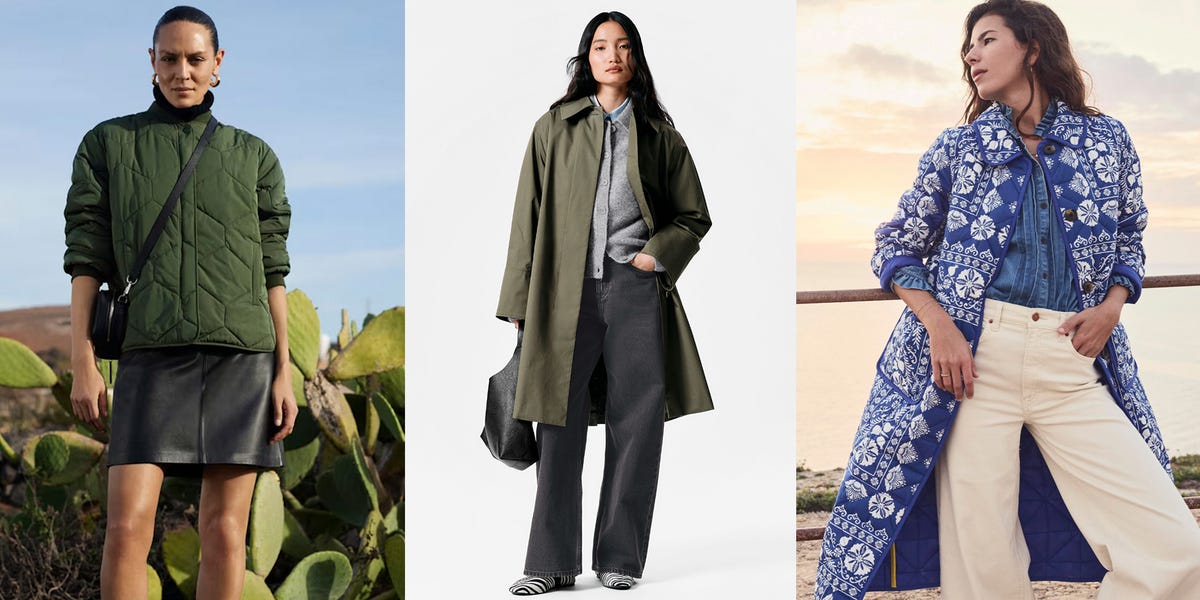
11. The Longline Mac Coat
A mac coat is a minimalist cousin of the trench. It is usually cleaner, simpler, and less detailed, which makes it excellent for people who prefer quiet style. A longline mac in beige, navy, black, or stone can look elegant with almost no effort.
Choose this style if your wardrobe leans modern and streamlined. It works well over office outfits, travel looks, monochrome basics, and tailored trousers. A water-resistant finish makes it even more useful during spring showers. Because it has fewer bells and whistles than a trench, fabric quality and fit matter a lot.
12. The Light Chore Jacket
The chore jacket is relaxed, practical, and easy to wear. It usually has a straight cut, visible buttons, and patch pockets. In spring, it functions like a casual blazer with better pocket energy. Cotton canvas, denim, linen blends, and twill are all common options.
Wear it open over a tee, button it over a tank, or layer it under a roomier trench on colder days. A cream chore jacket looks fresh for spring, while navy or olive feels timeless. It is not the coat for heavy rain, but for sunshine with a breeze, it is a small wardrobe hero.
How to Choose the Right Transitional Coat for Your Lifestyle
For Commuters
Choose a water-repellent trench, hooded raincoat, or lightweight parka. Prioritize a secure front closure, pockets, wind protection, and enough length to cover your outfit. A two-way zipper or snap-front placket can be helpful if you sit on trains, buses, or office chairs for long periods.
For Weekend Errands
A utility jacket, barn jacket, chore jacket, or denim jacket will probably get the most wear. These styles are easy, comfortable, and low-maintenance. They make leggings look more intentional and jeans look less like you got dressed during a calendar reminder.
For Office Outfits
A classic trench, longline mac, or polished cropped trench is the strongest choice. These coats work over trousers, midi skirts, sheath dresses, and blouses without competing with the rest of your outfit. Neutral colors are safest, but deep navy, olive, gray, and chocolate brown can look just as professional.
For Travel
Look for lightweight, packable, wrinkle-resistant coats with pockets and weather protection. A hooded parka, rain jacket, or soft trench is ideal. Avoid coats that require fussy steaming or delicate care unless your vacation plan includes bonding with a hotel iron, which sounds like a cry for help.
Best Colors for Spring Transitional Coats
Neutrals are popular for a reason. Beige, stone, camel, navy, olive, black, and cream work across seasons and pair with most wardrobes. If you already own a neutral trench, consider a lighter spring shade such as soft blue, butter yellow, pale gray, sage green, or warm taupe.
For trend-forward dressers, prints and checks can add personality without sacrificing practicality. Plaid trenches, gingham coats, contrast-collar jackets, and color-blocked raincoats all bring interest to simple basics. The key is to keep the rest of the outfit simple so the coat can do the talking without turning the whole look into a group project.
Styling Ideas for Spring Showers and Sunshine
The Rainy Coffee Run
Wear a hooded raincoat with straight-leg jeans, waterproof sneakers, a striped tee, and a crossbody bag. Add sunglasses even if the sky looks suspicious; spring likes to change the plot.
The Office-to-Dinner Day
Layer a beige trench over tailored trousers, a fine knit top, loafers, and simple jewelry. After work, swap the tote for a smaller bag and let the coat make you look like you planned everything.
The Sunny Weekend Walk
Try a denim jacket or chore jacket with a cotton dress and sneakers. It is easy, cheerful, and comfortable enough for errands, brunch, or pretending you are just “popping into” a store and not leaving with three candles.
The Breezy Travel Outfit
Choose a lightweight parka with relaxed trousers, a soft tee, and comfortable walking shoes. The hood and pockets will carry you through airports, train platforms, and that inevitable moment when your weather app lies.
Care Tips to Make Your Transitional Coat Last
Always check the care label before washing or treating a coat. Water-repellent finishes can fade over time, especially with frequent washing, so avoid unnecessary laundering. Spot clean when possible, hang coats to dry fully before storing, and use a proper hanger to protect the shoulders.
For trench coats, button or tie the belt neatly when hanging so it does not disappear into the laundry-room void. For raincoats, avoid high heat unless the label specifically allows it. For denim and chore jackets, wash sparingly to preserve shape and color. For quilted jackets, make sure they are fully dry before storing to prevent musty smells. Nobody wants a coat that smells like a basement with opinions.
Experience Notes: What Wearing Transitional Coats in Real Spring Weather Teaches You
After living through enough spring days that begin with fog, move into sunshine, and end with rain tapping on the windows like a tiny impatient drummer, one thing becomes obvious: the best transitional coat is the one you actually reach for. Not the one that looks perfect in a product photo. Not the one that requires a very specific outfit and an emotionally stable forecast. The real winner is the coat that works on a normal Tuesday when you are half-ready, slightly late, and trying to remember whether you left your umbrella in the car.
A classic trench is the coat I trust when I need to look pulled together quickly. It has a magical way of making basic clothes look styled. Jeans, a white T-shirt, sneakers, and a trench suddenly become an outfit instead of laundry math. The belt helps define the waist, the collar adds polish, and the length gives coverage when the weather is damp. On the other hand, a trench without a water-resistant finish can be less useful during actual rain, so it pays to check the fabric description before buying.
A hooded raincoat is the practical hero. It may not always feel as elegant as a trench, but when the clouds open while you are carrying groceries, elegance becomes a flexible concept. The best raincoats have adjustable hoods, cuffs, secure pockets, and enough room for a sweater underneath. I prefer a coat that falls at least to the upper thigh because short jackets can leave the rest of the outfit exposed. A packable version is especially helpful for travel because it can live in a tote until the weather gets dramatic.
Utility jackets and barn jackets are the ones that quietly become everyday favorites. They are easy to throw on, they work with sneakers and boots, and they carry the bits and pieces of daily life. A utility jacket with deep pockets can hold keys, a phone, a cardholder, and emergency lip balm, which is basically modern survival equipment. A barn jacket adds slightly more structure and looks especially good with denim, cotton dresses, and relaxed trousers.
The denim jacket has a different role. It is the sunshine coat. It belongs to warm afternoons, patio lunches, Saturday markets, and casual evenings when the air cools after sunset. It will not save you from rain, but it will make floral dresses, wide-leg pants, and simple basics feel relaxed and fresh. The trick is not to ask denim to do a raincoat’s job. That is unfair to everyone involved.
The biggest lesson is that one transitional coat may not cover every situation. A smart spring wardrobe often has two reliable layers: one weather-ready option, such as a raincoat or water-repellent trench, and one casual dry-weather option, such as denim, utility, or chore jacket. With those two, you can handle most spring moods without overbuying. Choose colors that match what you already wear, focus on fit through the shoulders, and make sure you can move comfortably. A coat should support your day, not require a personal assistant.
Final Thoughts
Transitional coats are the quiet champions of spring style. They protect against showers, soften chilly mornings, and help your outfits look intentional even when the forecast has chosen chaos. Whether you prefer a classic trench, a hooded parka, a cropped rain jacket, a relaxed barn coat, or a denim layer for sunny days, the high street offers plenty of smart options that blend fashion and function.
The best choice depends on your life, not just the trend cycle. Commuters need coverage and weather protection. Weekend dressers need comfort and pockets. Office wardrobes benefit from a trench or mac coat. Travelers should prioritize packability and low-maintenance fabric. Get those details right, and your spring coat will not just see you through showers to sunshine. It might become the piece you miss when summer finally arrives.