Editorial note: This article is written for web publishing and focuses on practical, real-world ways to use vintage items for stylish home organization without turning your living room into a museum gift shop.
Modern home organization often arrives in the form of clear plastic bins, matching labels, and storage systems so perfect they make your junk drawer feel personally attacked. But here is the charming truth: some of the best organizing tools were made decades ago, long before anyone used the phrase “drop zone” without referring to a military operation.
Vintage items can do more than look pretty on a shelf. They are often durable, flexible, and full of built-in storage potential. A wooden crate can hold blankets. A mason jar can tame office supplies. A metal toolbox can become a portable craft station. An old card catalog can organize everything from tea bags to charging cables, which is probably not what its original librarian intended, but she would likely approve.
The beauty of organizing with vintage pieces is that it solves two problems at once: clutter and character. Instead of hiding everything in anonymous containers, you create storage that feels collected, personal, and warm. The goal is not to buy every dusty object at the flea market. The goal is to choose pieces that earn their square footage.
Why Vintage Organization Works So Well
Good organization is not only about having more containers. It is about making items easy to find, easy to return, and pleasant enough to maintain. Vintage storage pieces often work because they were originally designed for real tasks: carrying tools, sorting mail, storing food, organizing hardware, or keeping household goods protected.
Unlike flimsy organizers that crack after one dramatic encounter with a closet shelf, many vintage items were built from wood, metal, glass, ceramic, wicker, or heavy canvas. These materials age well, and they bring texture into a room. That matters because visible storage should not look like punishment. If a basket, tray, or cabinet is going to sit in plain sight, it should contribute to the room instead of apologizing for existing.
Here are ten vintage items that can make your home more organized while adding the kind of personality no big-box bin aisle can mass-produce.
1. Mason Jars for Small Supplies
Mason jars are the overachievers of vintage organization. They can hold pencils, paintbrushes, buttons, cotton swabs, sewing notions, pantry staples, dried flowers, spare change, and the mystery screws left over after furniture assembly. Because they are transparent, they reduce the classic organizing problem of “I stored it so well I never found it again.”
Best places to use them
Use mason jars in the kitchen for dry goods, in the bathroom for cotton rounds, in the laundry room for clothespins, or in a home office for clips and rubber bands. For craft rooms, group several jars on a vintage tray or shallow wooden box so small supplies stay together.
The trick is to avoid turning every surface into a jar parade. Choose matching sizes for a cleaner look, or vary heights intentionally for a collected display. Add simple labels if the contents are not obvious. A jar of buttons is charming. A jar of unidentified beige powder in the pantry is how family rumors begin.
2. Vintage Serving Trays for Everyday Drop Zones
A tray is one of the simplest organizing tools in the world. It creates boundaries. Without a tray, keys, sunglasses, lip balm, receipts, earbuds, and random coins spread across a surface like they have formed a tiny civilization. With a tray, the same objects suddenly look intentional.
How to style and use trays
Place a vintage brass, silverplate, enamel, wicker, or wooden tray near the entryway for keys and wallets. Use one on a dresser for perfume, watches, and jewelry. Add a small tray to a coffee table to corral remotes and coasters. In the kitchen, a tray can gather oils, salt, pepper, and frequently used spices so the counter looks styled instead of crowded.
Trays work especially well for renters and small-space living because they are portable. You can move an entire group of items in one lift. That is organization with a handle, even when the tray technically has no handles.
3. Wooden Crates for Open Storage
Vintage wooden crates are practical, sturdy, and surprisingly versatile. They can become shelves, toy bins, shoe storage, plant stands, magazine holders, or pantry organizers. Their rough texture adds warmth, especially in rooms filled with smooth modern finishes.
Smart ways to use crates
Stack crates vertically to create a casual bookshelf. Slide one under a bench for shoes. Use a crate beside the sofa for throw blankets or magazines. In a pantry, crates can group onions, potatoes, paper goods, or snacks. In a mudroom, assign one crate per family member for hats, gloves, and outdoor gear.
Before bringing a crate indoors, check for splinters, odors, stains, and structural weakness. Clean it thoroughly and add felt pads if it will sit on hardwood floors. A vintage crate should say “warm farmhouse character,” not “possible tetanus side quest.”
4. Woven Baskets for Soft, Flexible Clutter Control
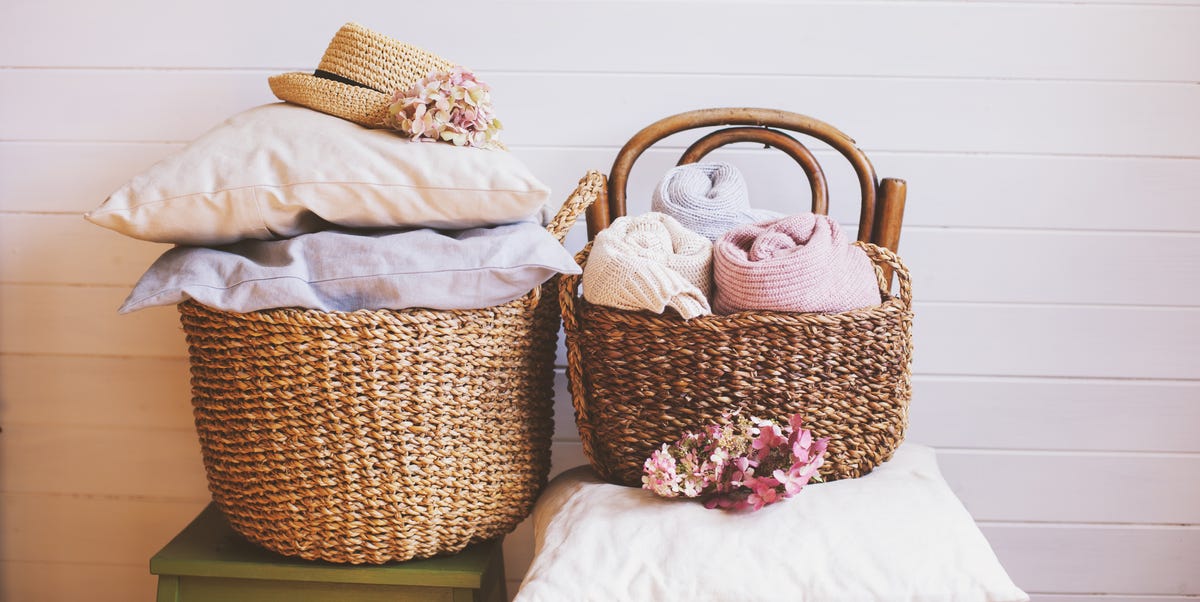
Vintage baskets are ideal for items that need to be accessible but do not need to be admired individually. Think blankets, toys, towels, magazines, pet supplies, scarves, and extra pillows. They soften shelves and corners while hiding visual noise.
Where baskets shine
Use a large basket in the living room for throws, a handled basket near the stairs for items that need to go up or down, and small baskets inside cabinets to divide categories. In bathrooms, baskets can hold rolled towels or extra toilet paper. In closets, they can group seasonal accessories.
The best baskets are strong enough to keep their shape. If the sides collapse when you look at them sternly, skip it. Also check for loose fibers that may snag delicate fabrics. Vintage baskets are beautiful, but sweaters deserve a peaceful life.
5. Metal Locker Baskets for Closets and Mudrooms
Old metal locker baskets are excellent for organizing closets, laundry areas, garages, and entryways. They are breathable, durable, and easy to see through. That makes them especially useful for items that should not be trapped in a sealed bin, such as gym gear, garden gloves, cleaning cloths, or sports accessories.
Practical uses for locker baskets
Line several baskets on a shelf and assign them categories: winter gear, reusable bags, dog-walking supplies, cleaning refills, or laundry products. In a mudroom, label each basket with a name so everyone has a landing spot. In a closet, use them for jeans, handbags, or folded sweatshirts.
If the metal is rusty, decide whether the patina is charming or hazardous. A little age can look great; sharp edges and flaking rust should be repaired, sealed, or avoided.
6. Apothecary Cabinets and Card Catalogs for Tiny Categories
Few vintage storage pieces are as satisfying as an apothecary cabinet or card catalog. All those tiny drawers practically whisper, “Let me organize your chaos.” These pieces were made for sorting, which makes them perfect for modern households with too many small things.
What to store inside
Use the drawers for tea, spices, batteries, chargers, craft supplies, sewing tools, jewelry, hardware, stationery, seed packets, or office essentials. In a dining room, a card catalog can hold napkin rings, candles, place cards, and bottle openers. In a home office, it can manage stamps, cables, memory cards, and all the tiny items that usually vanish into desk drawers.
The key is labeling. Tiny drawers become frustrating if you must open twelve of them to find one paper clip. Use small tags, label holders, or discreet handwritten labels. The goal is charming efficiency, not a scavenger hunt hosted by a retired pharmacist.
7. Vintage Toolboxes as Portable Caddies
A vintage metal or wooden toolbox is one of the most useful organizing pieces you can bring home. It already has a handle, compartments, and a durable structure. Better yet, it looks good sitting out, which means you are more likely to use it.
Ideas beyond actual tools
Turn a toolbox into a gardening caddy with gloves, pruners, seed packets, and plant labels. Use one for art supplies, sewing materials, cleaning essentials, picnic items, or gift-wrapping tools. A smaller toolbox can hold nail polish, makeup brushes, first-aid basics, or office supplies.
Portable storage is powerful because it supports how people actually live. You do not always work in one fixed spot. A caddy lets supplies travel with you and return home together, instead of leaving a trail of scissors and tape across the house like evidence in a craft-related investigation.
8. Steamer Trunks and Blanket Chests for Hidden Storage
Vintage trunks and blanket chests are the dramatic actors of home organization. They provide generous hidden storage while doubling as coffee tables, entry benches, bedside tables, or end-of-bed storage. They are especially helpful in small homes where furniture needs to perform more than one job.
Best items to store in trunks
Use trunks for extra blankets, seasonal pillows, board games, photo albums, holiday decor, guest linens, or off-season clothing. At the foot of a bed, a trunk can hold bedding. In a living room, it can hide games and throws. In an entryway, a sturdy chest can store shoes or outdoor accessories while offering a place to sit.
Check that the lid opens safely and does not slam shut. If children are in the home, avoid locking trunks or use safety hardware. Vintage storage should make life easier, not create a suspense scene every time someone reaches for a quilt.
9. Printer Drawers and Typesetter Trays for Display Organization
Old printer drawers and typesetter trays are shallow wooden organizers divided into many small compartments. They are excellent for displaying and storing tiny collections without letting them scatter across shelves.
What they organize best
Use them for jewelry, mini craft supplies, small toys, thimbles, matchbooks, crystals, hardware, buttons, or travel keepsakes. Hung on a wall, they become vertical storage and decor at the same time. Placed flat in a drawer, they can divide small items beautifully.
These trays work best when you are intentional. Not every tiny object deserves its own stage. Group similar items by color, material, or use. When done well, a printer drawer turns small clutter into a collection. When done poorly, it looks like a drawer sneezed.
10. Vintage Hooks, Doorknobs, and Rake Heads for Wall Storage
Wall storage is one of the fastest ways to make a home more organized. Vintage hooks, ceramic doorknobs, old peg rails, and even the metal head of an old garden rake can become clever hanging storage for everyday items.
Where to install them
Use vintage hooks near the door for bags, hats, and jackets. Install ceramic knobs in a bathroom for towels or robes. Mount a rake head in a potting area for garden tools or in a kitchen for mugs and utensils, as long as it is cleaned and safely secured. A vintage peg rail in a hallway can manage backpacks, dog leashes, umbrellas, and reusable shopping bags.
The organizing advantage is simple: when items have a visible home, they are more likely to return to it. Hooks beat piles. Piles are where good intentions go to nap.
How to Choose Vintage Storage That Actually Works
Not every vintage item is a smart organizing solution. Some pieces are adorable but useless, which is how people end up with a charming wire basket that holds exactly one lemon and a grudge. Before buying, ask three questions: What will this store? Where will it live? Can I easily clean and maintain it?
Measure before you shop, especially for shelves, closets, and entryways. Check for odors, mold, unstable legs, peeling paint, sharp metal, and drawers that stick. If a piece needs a small repair, that can be worthwhile. If it needs a full emotional support team, leave it behind.
Also consider visual consistency. Vintage organization looks best when there is a loose theme: similar wood tones, repeated metals, a shared color palette, or a mix of natural textures. You do not need everything to match. In fact, too much matching can make vintage pieces lose their charm. Aim for collected, not chaotic.
Room-by-Room Vintage Organization Ideas
Kitchen
Use mason jars for dry goods, crocks for utensils, trays for oils and spices, wooden crates for pantry categories, and apothecary drawers for tea or baking supplies. Vintage items work especially well in kitchens because they add warmth to functional zones.
Entryway
Create a practical landing zone with a tray for keys, hooks for bags, a trunk for shoes, and a basket for returns or mail. This is where organization has to be easy. If the system requires a five-step ritual, people will drop everything on the nearest chair and call it furniture.
Bathroom
Try glass jars for cotton swabs, small baskets for toiletries, a metal caddy for skincare, and hooks for towels. Because bathrooms are humid, avoid fragile paper-lined items or untreated wood that may warp.
Living Room
Use trunks as coffee tables, baskets for throws, trays for remotes, and crates for books or records. The best living room storage hides clutter while keeping the space comfortable and lived-in.
Home Office
Card catalogs, mason jars, toolboxes, and printer drawers are excellent for office supplies. They make small categories visible and reachable, which is especially helpful if your desk tends to attract paper clips, receipts, and cables like a magnet with Wi-Fi.
Experience Section: What Living With Vintage Organization Teaches You
After using vintage pieces for home organization, one lesson becomes clear: the best systems are the ones you enjoy looking at. A plastic bin may be practical, but if it makes a room feel like a supply closet, you will probably hide it. A vintage basket, tray, or cabinet can sit in the open and quietly do its job. That visibility changes how you use your home.
For example, a tray by the front door can become the most valuable square foot in the house. At first, it may seem too simple to matter. Then you realize your keys are no longer migrating to coat pockets, kitchen counters, and alternate dimensions. A small vintage tray gives everyday clutter a polite parking space. It does not demand perfection; it simply catches the things you already put down.
Mason jars offer a similar lesson. They are not revolutionary, but they are honest. You can see what is inside, which prevents duplicate purchases and forgotten supplies. In a craft area, jars make buttons, brushes, markers, and twine feel manageable. In a pantry, they make ingredients look calm and accessible. The secret is not the jar itself; it is the habit it supports. You are more likely to return something to a container when the container is visible, attractive, and easy to open.
Vintage toolboxes and caddies teach another useful habit: organize by activity, not just by category. A gardening toolbox can hold gloves, pruners, ties, and seed packets. A gift-wrapping caddy can hold scissors, tape, tags, ribbon, and pens. Instead of storing items in five different places because they technically belong to different categories, you store them together because you use them together. That is how real life works.
Large vintage pieces, such as trunks and cabinets, also remind you to respect limits. A trunk can hide a lot, but it should not become a decorative black hole. The best approach is to assign it one clear purpose: guest bedding, board games, seasonal throws, or holiday decor. When a storage piece has a job description, it stays useful. When it becomes “miscellaneous,” it starts collecting objects with no known relatives.
The most satisfying part of organizing with vintage items is that it creates a home that feels personal. Every piece has a little history, even if you do not know the full story. A crate may have carried fruit. A card catalog may have helped someone find a book. A toolbox may have belonged to someone who fixed things instead of adding them to an online cart at midnight. Repurposing those pieces gives them another chapter.
Vintage organization is not about rejecting modern storage. Clear bins, drawer dividers, and modular systems still have their place. But vintage pieces bring soul to the visible parts of organization. They make tidiness feel less like a chore and more like design. And when your organizing system looks good enough to keep out in the open, you are far more likely to maintain it.
Conclusion
Vintage items can make your home more organized because they combine function with character. Mason jars, trays, crates, baskets, locker bins, card catalogs, toolboxes, trunks, printer drawers, and wall hooks all solve everyday clutter problems without making your rooms feel sterile. They create places for small things, hidden homes for bulky items, and attractive boundaries for the objects you use most.
The smartest approach is to shop with purpose. Look for pieces that fit your space, match your habits, and improve daily routines. A beautiful item that does not solve a problem is decor. A beautiful item that controls clutter is organization with better lighting.
In a world full of disposable storage, vintage pieces offer durability, charm, and a little wit. They remind us that a well-organized home does not have to look brand-new. Sometimes the best solution has a few scratches, a good story, and just enough room for all the things you used to lose.