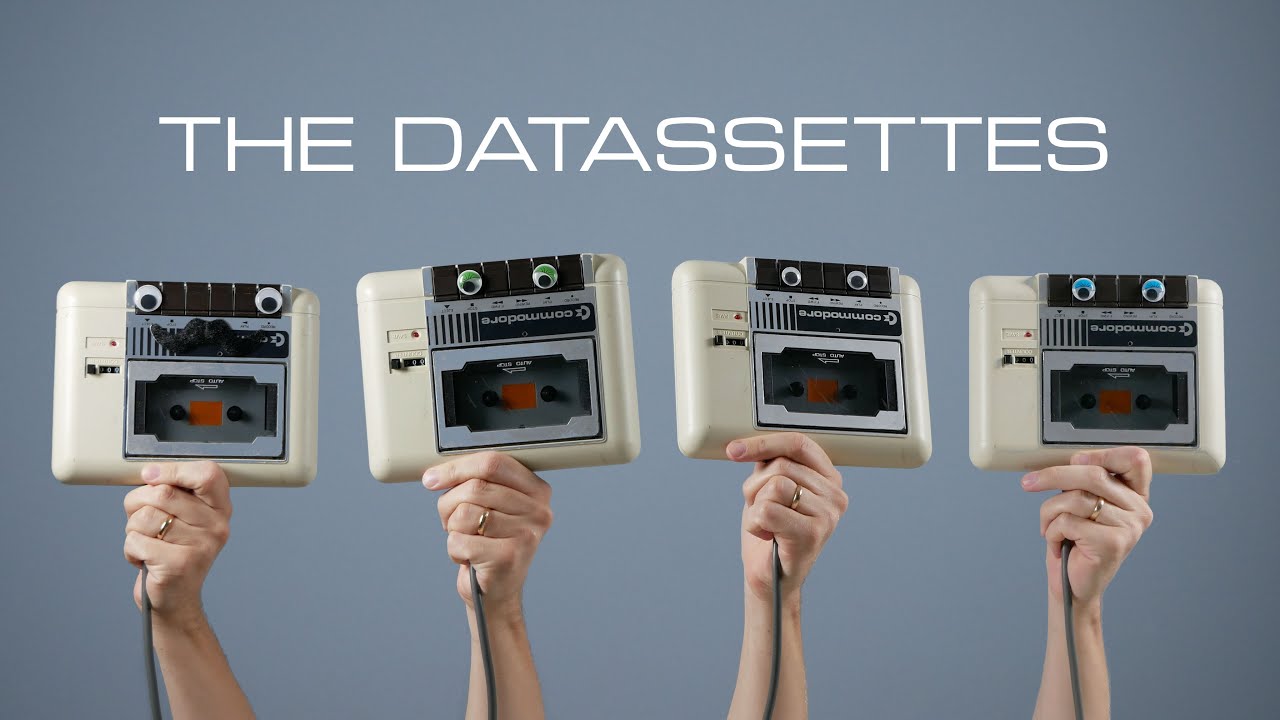
Every so often, the internet produces a project so charmingly unnecessary that it becomes, in its own tiny way, essential. A Commodore Datassette singing barbershop quartet is exactly that kind of marvel. It is part retrocomputing, part musical comedy, part hardware hacking, and part “because I had four old tape drives and a dream.”
The project, created by Swedish musician and hardware tinkerer Linus Åkesson, turns four Commodore 1530 Datassette units into a mechanical vocal group. Instead of simply loading programs from cassette tapes into a Commodore 64, these humble plastic bricks open their lids like little mouths and sing a barbershop-style tune called “Sweet End of Line,” a playful nod to the classic “Sweet Adeline.” The result is nerd theater at its finest: old storage hardware harmonizing like it has been waiting forty years for its big stage debut.
To understand why this is so delightful, you need to know what a Datassette was, how cassette data worked, why the Commodore 64 mattered, and why barbershop harmony is such a perfect musical format for four retired tape machines with attitude.
What Is a Commodore Datassette?
The Commodore Datassette, often written as Datasette or Datassette, was Commodore’s dedicated cassette tape storage device for its 8-bit home computers, including the PET, VIC-20, and Commodore 64. In the early home computer era, not everyone could afford a floppy disk drive. Disk drives were faster and more convenient, but they could be expensive enough to make a family budget cough politely and leave the room.
The Datassette offered a cheaper path. It used ordinary compact cassette tapes as storage media, turning music-era technology into a digital filing cabinet. A user could type a BASIC program, press record, save it to tape, and later load it again. The experience was slow, dramatic, and occasionally heartbreaking. Loading a game could take several minutes, and if the process failed near the end, the machine gave you the emotional equivalent of a shrug.
Still, the Datassette was important because it made computing more accessible. The Commodore 64, introduced in 1982, became one of the most successful home computers of all time thanks to its relatively low price, strong graphics, memorable SID sound chip, and huge software library. For many users, especially outside the United States, cassette storage was part of the everyday C64 experience. The soundtrack of early computing was not always futuristic beeps; sometimes it was the soft clunk of a tape button and several minutes of suspense.
Why the Datassette Was Different from a Normal Tape Recorder
A common mistake is to imagine the Datassette as just a regular cassette player wearing a Commodore badge. It was more specialized than that. Many early computers stored data as audio tones, much like a modem translating digital information into sound. Commodore’s system used its own approach, with digital signals, pulse timing, and circuitry inside the Datassette to handle conversion between magnetic tape behavior and computer-readable data.
When recording, the tape head magnetized particles on the cassette tape in patterns. During playback, changes in magnetic orientation created tiny electrical signals. Those signals were amplified, shaped, and interpreted as timing information. In simplified terms, the computer cared less about “music” and more about when signal changes happened. Data became rhythm. Bytes became pulses. Your game became a carefully timed magnetic tap dance.
That relationship between signal, timing, and sound is what makes the barbershop project so clever. The same hardware path that could push changing current through a tape head could be redirected into something speaker-like. In other words, a device designed to write data could be persuaded to produce tones. It was not born to sing, but it had the lungs for it.
How the Barbershop Hack Works
Åkesson’s project used four Commodore 1530 Datassettes, each acting like a member of a quartet. The hack involved both sound generation and physical animation. The sound came from redirecting the signal that would normally drive the tape head. By soldering wires to the amplifier outputs, the Datassette could produce square-wave tones. A square wave is not exactly a velvet human voice, but in retrocomputing, square waves are practically opera.
The mouth movement came from modifying the cassette door. Normally, the Datassette lid opens through a mechanical button arrangement. Åkesson removed part of the original spring mechanism and installed a servo motor that could push the lid open from inside. A rubber band helped pull the door closed again. The result looked surprisingly expressive: four Datassettes opening and closing their lids as if singing in a tiny plastic choir.
On the software side, the Commodore 64 controlled pitch by toggling an output signal at different rates. Faster toggling created higher notes; slower toggling created lower notes. For the servo control, Åkesson repurposed the cassette sense line, normally used to detect whether buttons were pressed. This is the kind of engineering move that makes retro hardware fans grin: the machine did not have a “make tape deck sing barbershop” port, so one had to be politely invented.
Importantly, the modifications were described as reversible. That matters in vintage computing circles, where old hardware is both tool and artifact. There is always a balance between preserving history and letting history do something ridiculous at a party. This project manages both: it respects the Datassette while giving it a second career as a novelty vocalist.
Why Barbershop Quartet Was the Perfect Choice
Barbershop music is traditionally built around four parts: lead, tenor, baritone, and bass. The lead usually carries the melody, the bass supports the bottom, the tenor floats above, and the baritone fills in the harmonic middle. When the tuning locks in, barbershop harmony can create a bright “ringing” quality that feels bigger than four voices.
For a project involving four identical machines, barbershop is almost too perfect. Four Datassettes, four parts, four little mouths. It is visually understandable before you even hear a note. The comedy lands instantly because the hardware layout matches the musical idea.
The song choice adds another layer of charm. “Sweet End of Line” riffs on “Sweet Adeline,” a song strongly associated with barbershop tradition. The pun works especially well in computing culture because “end of line” is a familiar programming and text-processing concept. It is a joke for people who know old songs, old computers, or both. In other words, the target audience is anyone who has ever loved a machine with beige plastic and unreasonable startup rituals.
The Commodore 64 Connection
The Commodore 64 is central to the story because the Datassette was not just a standalone gadget. It was part of a home computing ecosystem. The C64 offered 64 KB of memory, colorful graphics, accessible BASIC programming, and the beloved SID sound chip. It also had enough cultural reach that decades later, people still write demos, restore machines, build new peripherals, and argue lovingly about loading times.
The Datassette represented the entry-level storage experience. Disk drives were faster, but tapes were cheaper and widely available. In many households, especially in Europe, software on cassette was normal. Users learned patience. They learned head alignment. They learned that the universe could be cruel at 97 percent loaded.
That history makes the singing Datassette more than a gag. It transforms an object associated with waiting into an object associated with performance. The same device that once made users sit quietly while a game loaded now takes the spotlight. It is a satisfying reversal: the slowest member of the setup finally gets applause.
Retrocomputing as Performance Art
Modern retrocomputing is not only about preservation. It is also about reinterpretation. Some people restore machines to factory condition. Others build SD card adapters, FPGA recreations, replacement keyboards, diagnostic cartridges, or modern video outputs. Then there are projects like this one, where the point is not practicality but personality.
A Commodore Datassette barbershop quartet sits beautifully in the tradition of musical hardware hacks. Makers have turned floppy drives into orchestras, stepper motors into percussion, hard drives into instruments, and dot-matrix printers into rhythm sections. These projects reveal something delightful about electronics: almost anything that moves, vibrates, switches, pulses, or spins can be made musical if you are patient enough and slightly unreasonable in the best possible way.
The Datassette project is especially appealing because it adds character. The cassette doors do not merely open; they perform. The lids become mouths. The machines become singers. Suddenly, storage peripherals have stage presence. Somewhere, a box of old floppy disks is feeling jealous.
Technical Elegance Behind the Joke
The funniest projects often hide serious skill. This one may look like four tape decks goofing around, but it depends on careful understanding of electronics, mechanical motion, timing, and musical arrangement. Generating recognizable pitch from digital toggling requires accurate timing. Coordinating four units means managing separate parts. Moving the lids in sync with the music requires servo control and physical tuning.
There is also restraint in the design. Instead of overbuilding the project with modern microcontrollers hidden everywhere, the hack leans into the Commodore ecosystem. It uses the C64’s own lines and timing behavior where possible. That makes the result feel authentic rather than merely decorative. The old computer is not just a prop in the background; it is the conductor.
This is a key reason the project resonates with retro fans. Anyone can place a vintage object next to a modern speaker and call it nostalgic. It takes a deeper kind of care to make the vintage object participate in the joke using its own hardware language.
Why This Project Went Viral in the Maker World
The appeal is immediate because the project crosses several communities at once. Retrocomputing fans recognize the Datassette. Musicians recognize barbershop harmony. Hardware hackers appreciate the repurposed signal lines and servo mechanism. Casual viewers simply see four old cassette drives singing together and think, “Yes, the internet may continue existing for another day.”
It also has the magic ingredient of great maker content: the idea is easy to explain but hard to execute well. “Four cassette drives sing barbershop” is a perfect headline because it sounds impossible and obvious at the same time. Once you see it, you wonder why every retired storage device does not have a vocal ensemble.
The humor is gentle, too. Nothing about the project mocks the technology. Instead, it celebrates it. The Datassette was slow, yes. Sometimes frustrating, absolutely. But it was also part of millions of early computing experiences. Letting it sing is a tribute disguised as a joke.
What It Teaches About Old Technology
The singing Datassette reminds us that old technology is rarely as simple as it looks. A beige cassette peripheral may seem primitive next to modern solid-state storage, but inside it is a chain of assumptions, clever compromises, and engineering decisions. It solved a real problem for real users: how to store programs cheaply when home computing was still young.
It also teaches that “obsolete” does not mean “useless.” A Datassette may no longer be the best way to store data, unless your hobby includes waiting with spiritual commitment. But as an educational object, a restoration challenge, a signal-processing case study, or a musical puppet, it still has plenty to offer.
That is the heart of retrocomputing culture. Old machines become laboratories. Their limitations become creative prompts. Their quirks become personality. The Datassette’s slowness, once a drawback, now makes it funnier and more lovable. The fact that it was never meant to sing is exactly why the song works.
Experience: Living With the Idea of a Singing Datassette
There is something strangely emotional about watching a piece of old computer hardware perform music. Many people who grew up with cassette-based computing remember the ritual: insert tape, press play, type LOAD, wait, hope, and maybe whisper a small prayer to the alignment gods. The Datassette was not glamorous. It was the patient mule of the Commodore world. It carried programs slowly, stubbornly, and with a plastic dignity that deserves recognition.
Seeing that same object become a barbershop singer changes how you remember it. The lid that once opened only for practical reasons now looks like a cartoon mouth. The device that once communicated through invisible data pulses now communicates through visible timing and audible harmony. It becomes funny because the transformation is so complete, yet so faithful to the original hardware.
For modern readers, the project is also a reminder that computing used to be physical in a very direct way. Saving a program was not an abstract cloud operation. It involved tape reels, magnetic particles, motor control, head alignment, and the possibility that your afternoon could be ruined by a bad cassette. Today, files silently sync across devices. Back then, your data made noises. It had weight. It had smell. Sometimes it had a handwritten label that said “Space Game Final FINAL maybe.”
The barbershop Datassette takes that physicality and turns it into theater. The servo-powered doors make the machines feel alive, but not in a sleek science-fiction way. They feel alive like a school talent show, where four shy robots finally worked up the courage to sing. That awkwardness is part of the charm. The voices are synthetic. The mouths are cassette doors. The harmony is earnest. The whole thing is beautifully unnecessary.
Projects like this can also inspire beginners. You do not have to start by building a singing quartet of vintage peripherals. Please do not immediately attack four collectible tape drives with a soldering iron unless you know what you are doing. But the mindset is valuable: look closely at what a device already does, then ask what else those behaviors could become. A motor can be motion. A signal can be sound. A sensor line can become control. A forgotten object can become a performer.
For writers, educators, and makers, the project is a perfect example of playful explanation. It teaches magnetic storage, signal timing, pulse control, servo motion, computer history, and harmony arrangement without feeling like homework. Nobody clicks on a singing Datassette expecting a lecture, yet they leave knowing more about how cassette data worked. That is the sneaky genius of delightful engineering: the joke opens the door, and the lesson walks in wearing a straw hat.
In the end, “Commodore Datassette Does Barbershop Quartet” is not just a novelty headline. It is a celebration of making old technology expressive again. It proves that retro hardware does not need to remain frozen behind glass. Sometimes it can be restored. Sometimes it can be studied. And sometimes, if treated with enough curiosity and just enough mischief, it can open its little cassette mouth and sing.
Conclusion
The Commodore Datassette barbershop quartet is a tiny masterpiece of retrocomputing humor. It combines real technical skill with musical wit, turning a slow cassette storage device into a four-part vocal group. The project works because it respects both sides of its inspiration: the engineering legacy of Commodore hardware and the tight harmony tradition of barbershop singing.
It is also a reminder that technology history does not have to be dusty. Old machines can still surprise us. They can teach, entertain, and occasionally harmonize. The Datassette may have reached the end of its original working life, but in this project, it gets one more glorious moment: not as storage, not as a relic, but as a tiny beige rock star with a rubber-band jaw.
Note: This article is written as original, publish-ready HTML content based on real retrocomputing and music-history information, with no inserted source-link blocks or citation placeholders inside the article body.