There are many ways to survive a royal documentary. You can stand solemnly beside priceless robes, nod respectfully at ancient traditions, and pretend that every buckle, clasp, crown, and ceremonial sleeve knows exactly what it is doing. Or, if you are King Charles III, you can look at a tricky little fastening, watch your son struggle with it, and casually roast your own famous “sausage fingers” before the internet gets the chance.
That is exactly the moment that grabbed viewers’ attention in the BBC documentary Charles III: The Coronation Year. The 90-minute film followed King Charles and Queen Camilla through the first year of their reign, with special behind-the-scenes access to the preparation and emotion surrounding the coronation. Yet amid the gold, the history, the abbey rehearsals, and the weight of monarchy itself, one small joke proved surprisingly powerful.
During a coronation rehearsal, Prince William practiced fastening a ceremonial robe around his father. The clasp appeared fiddly, because apparently even royal clothing has a sense of drama. William joked that on the day, the fastening might not go in. Charles smiled and replied that William did not have “sausage fingers” like his. Just like that, the King turned a long-running internet joke into a moment of self-deprecating humor.
The result was a clip that felt less like palace choreography and more like a family moment accidentally caught between history and a wardrobe malfunction. For a royal family often wrapped in protocol, the King’s quick joke landed because it was warm, human, and refreshingly unpolished. In other words: the crown was heavy, the robe was elaborate, and the punchline had thumbs.
What Happened In The BBC Documentary?
Charles III: The Coronation Year offered viewers a rare look at the private preparation behind King Charles III’s coronation. The documentary included footage from rehearsals, palace rooms, Westminster Abbey, and the emotional return to Buckingham Palace after the ceremony. It was not just about the public event watched by millions; it was about the nerves, practical details, family exchanges, and occasional laughter that happened before the grand doors opened.
The “sausage fingers” joke happened while Prince William was helping with a ceremonial robe. The Prince of Wales was shown attempting to secure a small clasp, a tiny piece of metal suddenly expected to behave under the pressure of national history. When William suggested the fastening might be difficult on the actual day, Charles answered with his now-viral comment about his fingers.
It was not a long scene. It did not need dramatic music. It did not require palace analysis from five historians and one man in a velvet jacket. It worked because the King acknowledged a public joke about himself without bitterness. That tiny flash of humor made the moment feel spontaneous, and spontaneous royal moments are rare enough to be treated like endangered butterflies.
Why Are People So Interested In King Charles’ Fingers?
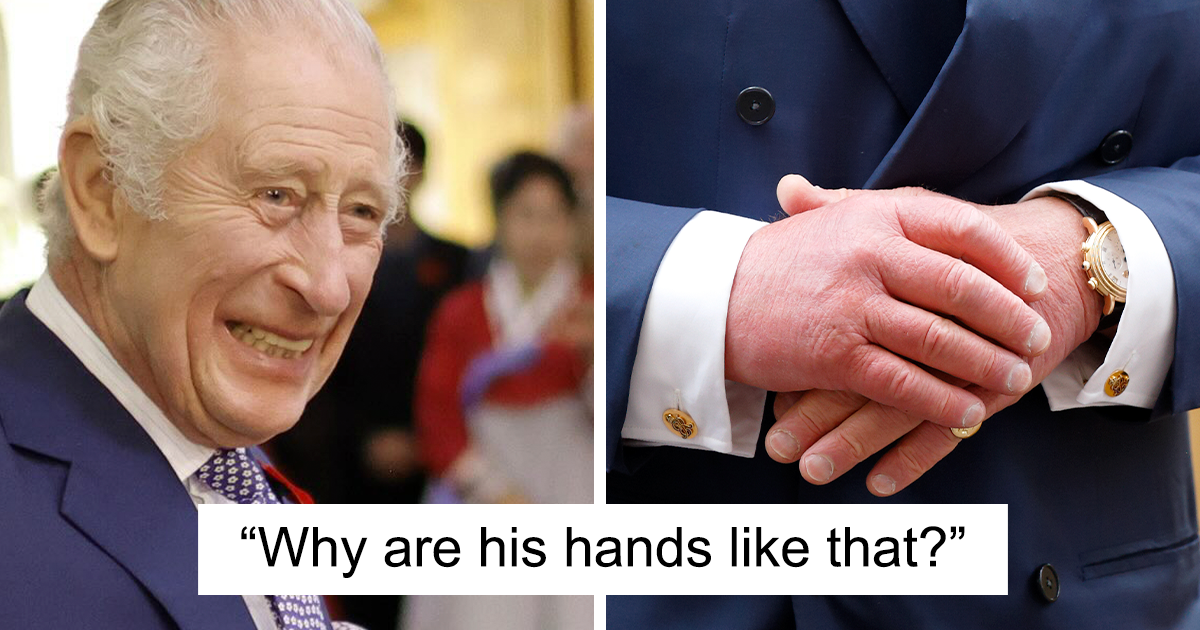
King Charles’ fingers have been a subject of public curiosity for years. Photos of his hands have inspired memes, headlines, and plenty of online jokes. The phrase “sausage fingers” became attached to him so firmly that it practically arrived with its own luggage. Royal watchers, tabloids, and social media users have repeatedly noticed the appearance of his hands in public photos, especially during high-profile events.
However, it is important to be careful here. While swollen fingers can be linked to many possible causes, no official medical explanation has been publicly confirmed by the King or Buckingham Palace. Responsible coverage should not diagnose a public figure from a photograph. That is not journalism; that is playing doctor with a zoom button.
Medical sources generally note that swelling in hands or fingers can happen for many reasons, including fluid retention, heat, injury, arthritis, medications, or underlying health conditions. Another medical term often associated with whole-digit swelling is dactylitis, sometimes nicknamed “sausage fingers.” But again, that does not mean any particular explanation applies to King Charles. The only confirmed fact in the documentary is that the King joked about the nickname himself.
Why The Joke Worked So Well
Self-deprecating humor can be a powerful tool, especially for someone in a position as formal as a monarch. The British royal family is surrounded by ceremony: crowns, robes, balcony appearances, processions, carefully timed waves, and enough etiquette to make a dinner fork nervous. A joke about fingers cuts through all of that.
Charles did not try to deny the meme. He did not appear irritated. He simply took the joke and made it his own. That is usually the fastest way to remove the sting from public teasing. When someone can laugh at themselves, the conversation often changes from “Look at that person” to “They are in on it.”
For viewers, the moment also highlighted the relationship between Charles and William. The scene was not a formal father-son exchange performed for a balcony crowd. It showed William fussing with a robe, Charles laughing, and both men navigating an absurdly grand situation with ordinary family energy. The whole thing had the charming awkwardness of a dad getting ready for a wedding, except the wedding venue was Westminster Abbey and the outfit came with constitutional significance.
The Documentary Showed More Than One Funny Moment
The finger joke may have gone viral, but it was not the only lighter scene in the documentary. Other rehearsal footage showed Charles and Camilla appearing relaxed and joking during preparations. Charles was reportedly seen holding up his robes like wings and joking that he could fly. Queen Camilla also offered dry humor while surrounded by attendants managing the train of her dress.
These moments mattered because coronations are designed to look effortless. The public sees the polished version: the music begins, the procession moves, the crown is placed, and everyone knows where to stand. Behind the scenes, though, there are rehearsals, forgotten lines, robe adjustments, and the universal human terror of “What if this clasp refuses to cooperate on live television?”
The BBC documentary leaned into that contrast. It showed the monarchy as both ancient and practical. Yes, the ceremony involved centuries-old symbols. Yes, there were sacred objects, formal prayers, and state rituals. But there were also people trying to make sure fabric did not trip anyone at the worst possible moment.
Why Audiences Love Royal Behind-The-Scenes Footage
Royal documentaries work best when they reveal something audiences do not normally see. The public side of monarchy is highly managed. Every movement appears choreographed, every public statement is polished, and every major ceremony has the smoothness of a museum exhibit that learned how to walk.
Behind-the-scenes footage changes the angle. It allows viewers to see the preparation behind the performance. That kind of access gives royal coverage a different texture. Instead of only presenting the crown, it shows the person trying not to let the crown wobble. Instead of only showing the robe, it shows the tiny fastening that may or may not be plotting rebellion.
This is why the King Charles finger joke spread so easily. It was simple, visual, and relatable. Most people have never been crowned. Most people have never worn a ceremonial robe while senior clergy and camera crews hovered nearby. But plenty of people know what it feels like to struggle with a button, a zipper, a clasp, or a sleeve at exactly the moment when everyone is watching.
The Internet Reaction: “Glad He Has A Sense Of Humor”
Online reaction to the clip was largely amused. Many viewers appreciated that King Charles could joke about something that had been the subject of repeated memes. Comments along the lines of “glad he has a sense of humor” captured the general mood. Even people who are not serious royal watchers could understand the appeal of a public figure lightly roasting himself.
The humor also helped soften the distance between monarchy and modern audiences. In the age of social media, people often respond more strongly to small candid moments than to grand official statements. A polished speech can be important, but a funny aside can travel faster. It feels shareable because it feels human.
That does not mean the documentary escaped criticism. Some viewers and commentators felt the film was too flattering toward the monarchy. Others saw it as a carefully controlled public-relations exercise. Those critiques are part of the wider debate around royal media access. But even critics could recognize that the finger joke was a memorable piece of television: brief, funny, and unusually unguarded.
Humor As A Royal Survival Skill
King Charles has spent his entire life in the public eye. That kind of visibility comes with ceremony, privilege, responsibility, and endless commentary about everything from speeches to suits to facial expressions. In such a position, humor can act as a pressure valve.
Self-deprecating jokes are especially useful because they show awareness. They tell the audience, “Yes, I know what people say.” That can be more effective than silence, especially when the subject is harmless and already widely discussed. By making the joke himself, Charles took control of the punchline.
There is also something very British about the whole exchange. A monarch preparing for a once-in-a-generation coronation pauses to make a joke about his own hands. The scene practically arrives with a cup of tea, a raised eyebrow, and someone muttering, “Well, that could have gone worse.”
The Father-Son Dynamic Made The Scene Warmer
The moment also stood out because of Prince William’s role. The Prince of Wales was not just a background figure; he was physically helping his father prepare. That created a sense of closeness. Viewers were not watching a monarch and an heir in formal arrangement. They were watching a son help his father with clothing before a huge public moment.
That dynamic added emotional weight to the joke. It suggested trust and familiarity. William could tease gently. Charles could respond lightly. The robe clasp became a tiny stage for family rhythm. In royal terms, that is practically a sitcom episode.
The documentary also included other family moments, such as younger royals practicing bows and curtsies and relatives adjusting to the new reign. These details helped frame the coronation not only as a state event but also as a family transition after Queen Elizabeth II’s long reign.
Why This Moment Became A Headline
So why did one joke about fingers become such a headline? Because it combined several ingredients that digital audiences love: royalty, humor, vulnerability, a recognizable meme, and a short quote that practically writes its own caption. It was easy to understand without deep knowledge of royal protocol. It also contrasted sharply with the grandeur of the event.
In SEO terms, the story also sits at the intersection of several high-interest keywords: King Charles, BBC documentary, Prince William, coronation rehearsal, sausage fingers, royal family humor, and behind-the-scenes footage. More importantly, it answers a question readers naturally have: what did the King actually say, and why is everyone laughing about it?
The answer is simple. He made a joke that felt natural. He acknowledged a public nickname. He shared a laugh with his son. And in a documentary filled with historic symbolism, the most clickable moment came from a tiny clasp and a royal hand.
What The Joke Reveals About Modern Royal Image
Modern monarchy is a balancing act. It must preserve tradition while remaining understandable to a public that consumes news through clips, memes, and social feeds. A coronation is built on continuity, but public affection often grows from personality. The King’s joke helped bridge those worlds.
It did not transform the monarchy or settle debates about its future. A finger joke cannot do all that heavy lifting; it is a joke, not a constitutional reform package. But it did offer a small reminder that public figures can benefit from showing humor, especially when the humor is aimed at themselves rather than someone else.
The best royal moments often work because they combine grandeur with ordinary humanity. A crown may symbolize authority, but a laugh signals approachability. Charles’ “sausage fingers” comment landed because it did not feel scripted. It felt like something a father might say to his son while getting ready for an important day, even if most fathers are not about to be crowned king.
Experience-Based Reflection: What We Can Learn From King Charles Roasting His Own Fingers
There is a surprisingly practical life lesson tucked inside this royal moment: when people are already joking about something harmless, sometimes the smartest move is to beat them to the punchline. Not in a bitter way. Not in a “please clap” way. Just with a relaxed, well-timed comment that shows you are not terrified of being human.
Most of us will never have our hands analyzed by newspapers, social media accounts, and royal commentators. Thank goodness. Imagine trying to open a jar while the internet debates your knuckle strategy. But nearly everyone knows what it feels like to have one physical feature, habit, mistake, or awkward moment become the thing other people notice. Maybe it is a laugh that comes out too loud. Maybe it is a tendency to trip on flat floors. Maybe it is hair that refuses to cooperate unless threatened with weather reports.
In those moments, humor can help. When used kindly, self-deprecating humor says, “I know, and I’m okay.” It can lower tension in a room. It can stop embarrassment from growing into a monster. It can also make people feel more comfortable around you because perfection is exhausting. Nobody wants to spend time with a person who behaves like a museum statue with Wi-Fi.
The King Charles clip is also a reminder that confidence does not always look serious. Sometimes confidence looks like laughing at yourself while someone struggles with your robe. It is the ability to stay relaxed when small things go wrong. That kind of humor is not weakness. It is social flexibility. It tells people that a tiny mishap will not ruin the moment.
There is another lesson here for leaders, teachers, parents, public speakers, and anyone who has to stand in front of others: warmth often travels farther than polish. A flawless performance may impress people, but a sincere laugh can make them remember you. Charles had all the ceremonial power in the room, yet the most replayed detail was not the robe itself. It was the human reaction to the robe not cooperating.
Of course, there is a limit. Self-deprecating humor should not become self-insult. The goal is not to invite people to tear you down. The goal is to show that you can hold your dignity without taking every little thing too seriously. The best version of this humor has a light touch. It smiles, moves on, and does not turn one joke into a full press conference.
That is why this moment worked. Charles did not over-explain. He did not lecture the room on hand-related media coverage. He simply made a quick joke, laughed with William, and returned to the rehearsal. The internet did the rest, because the internet is basically a giant echo chamber with snacks.
For everyday life, the takeaway is simple: if you can laugh at a small imperfection without letting it define you, you take away its power. Whether you are dealing with a presentation glitch, a wardrobe issue, a bad photo, or a nickname you did not request from the committee of public opinion, humor can help you stay in charge of your own story.
And if a future king can survive a robe clasp, a camera crew, and the world’s obsession with his fingers, the rest of us can probably survive one awkward Monday.
Conclusion
King Charles’ “sausage fingers” joke in Charles III: The Coronation Year became a viral moment because it was short, funny, and unexpectedly relatable. In a documentary filled with royal tradition, the scene gave viewers something refreshingly ordinary: a father, a son, a stubborn clasp, and a quick bit of self-mockery.
The clip also showed how humor can soften public image without feeling forced. Charles did not need to make a grand statement. He simply laughed at a familiar joke before anyone else could. That small act made the King appear more relaxed, more self-aware, and more human. For a monarchy often defined by distance and ceremony, that is no small thing.
In the end, the moment worked because it balanced history with humanity. The coronation may have been built on ancient ritual, but the detail people shared online was wonderfully simple: King Charles has heard the jokes, he can laugh at himself, and yes, even royal fingers can become the star of the show.
Editorial note: This article is based on publicly reported information about the BBC documentary Charles III: The Coronation Year. It avoids making any medical claim about King Charles’ hands because no official diagnosis has been publicly confirmed.