Note: This article is based on real historical information about Jim Henson, Saturday Night Live, The Land of Gorch, and the 2024 film Saturday Night. It is written for publication in standard American English without source links in the body.
Why Are Muppets Fans So Fired Up?
Few fandoms are as cheerful, loyal, and unexpectedly ready for battle as Muppets fans. These are people who can quote Kermit’s banjo philosophy, defend Gonzo’s artistic integrity, and still have enough emotional energy left to explain why Fozzie Bear is underrated. So when Jason Reitman’s 2024 film Saturday Night portrayed Jim Henson as an awkward outsider hovering around the chaos of the first Saturday Night Live broadcast, the reaction was immediate: not the frog, not the felt, and absolutely not Jim.
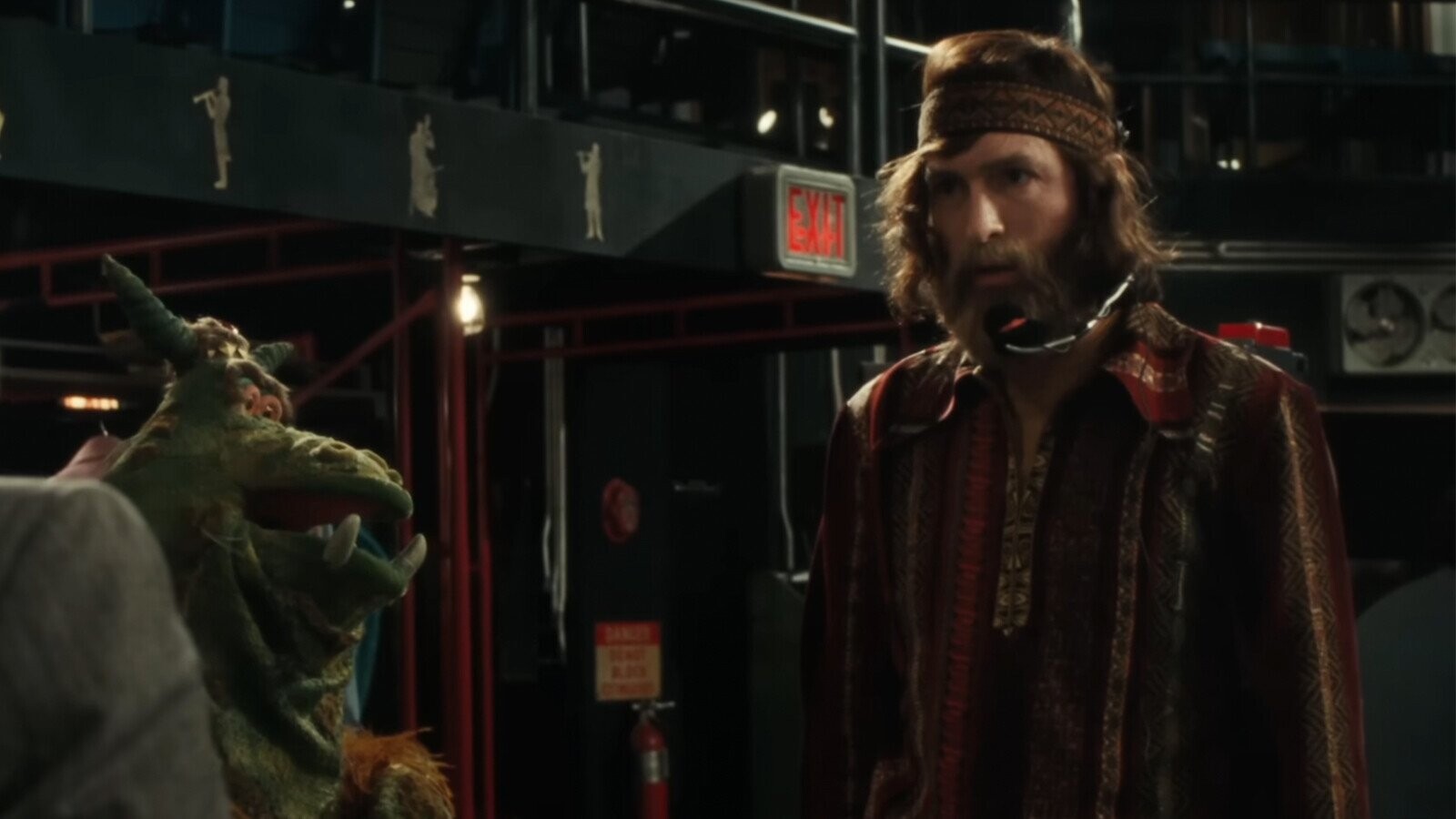
The controversy centers on a simple question: why does Saturday Night seem so dismissive of Jim Henson? In the movie, Henson, played by Nicholas Braun, appears as a gentle but somewhat clueless figure struggling to get his Muppet sketch into the show. The tone suggests that Henson and his puppet team were a strange little problem that the cool kids at NBC had to tolerate. Muppets fans saw that and collectively performed the emotional equivalent of Miss Piggy karate-chopping a studio executive through a snack table.
But the real story is more complicated, more interesting, and honestly much funnier than a simple “SNL hated Jim Henson” headline. The tension between Henson and the early Saturday Night Live writers was real. The fit was awkward. The sketches often struggled. Yet Henson was not some innocent children’s entertainer who wandered into Studio 8H by mistake while looking for alphabet soup. He was an ambitious, experimental television artist trying to prove that puppetry could be smart, adult, strange, and commercially powerful.
The Real Jim Henson Was Not Just “The Sesame Street Guy”
By 1975, Jim Henson was already famous because of Sesame Street. Characters such as Bert, Ernie, Cookie Monster, Oscar the Grouch, and Big Bird had helped make educational television feel lively instead of like homework wearing sensible shoes. However, Henson never wanted puppets to be locked inside the children’s programming box forever.
That point matters because it changes the entire way we should understand his Saturday Night Live experiment. Henson was not being dragged into adult comedy against his will. He wanted to reach older audiences. He believed the Muppets could exist beyond nursery rhymes, counting games, and lessons about sharing. Long before today’s entertainment industry discovered that adults enjoy animation, puppets, superheroes, and talking raccoons, Henson understood that a “childlike” medium could deliver grown-up humor, satire, weirdness, and emotional sophistication.
He had already played with that idea in earlier projects and pilots, including material that leaned toward variety-show comedy for mature viewers. His problem was not a lack of imagination. His problem was convincing television gatekeepers that puppets were not automatically for kids. In the mid-1970s, that was a harder pitch than selling a vegan hot dog at a monster truck rally.
Enter Saturday Night Live, Before It Was Fully Saturday Night Live
When NBC’s new late-night sketch show premiered on October 11, 1975, it was not yet the polished institution now known as Saturday Night Live. It was young, chaotic, experimental, and overloaded with competing ideas. The first episode featured George Carlin as host, musical performances by Billy Preston and Janis Ian, Andy Kaufman’s oddball performance art, films by Albert Brooks, stand-up, sketches, and a Muppet segment called The Land of Gorch.
In other words, the first episode was less like the modern SNL format and more like someone dumped a nightclub, a college improv troupe, a music festival, and a puppet swamp into a blender and yelled, “We’re live in five!”
The Land of Gorch introduced a set of original Henson characters created specifically for the show. They were not Kermit, Miss Piggy, or Fozzie. They were grungier, weirder, and designed for adult late-night comedy. Characters such as King Ploobis, Queen Peuta, Scred, Wisss, Vazh, and the Mighty Favog lived in a strange fantasy world that looked less like Sesame Street and more like a damp planet where everyone needed therapy and possibly a better air filter.
What Was The Land of Gorch?
The Land of Gorch was Henson’s attempt to make puppets work in the edgy new world of 1970s late-night sketch comedy. The characters were deliberately unattractive compared with the cuddly Muppets audiences already knew. They had rougher features, stranger eyes, and personalities that could be selfish, moody, vain, or gross. They talked about adult topics, behaved badly, and lived in a fantasy setting that felt closer to underground comedy than public television.
On paper, that sounds fascinating. In practice, it was a difficult weekly assignment for everyone involved. The SNL writers were building a new comedy language based on speed, irony, counterculture attitude, and live sketch energy. Henson’s team worked through character, design, rhythm, and a carefully controlled puppet-performance style. Both groups were creative. Both groups were smart. Unfortunately, creativity plus creativity does not always equal harmony. Sometimes it equals six writers staring at a puppet king and wondering who drew the short straw.
The biggest issue was writing control. Henson’s own team understood the characters, but the show’s staff writers were responsible for the scripts. That created friction. The writers often did not want to write for puppets, and Henson was protective of what his characters would or would not say. To the SNL writers, that could feel precious. To Henson, it was basic character integrity. To the audience, it often felt like everyone had agreed to meet at the same restaurant but nobody had agreed on the cuisine.
Did SNL Really Hate the Muppets?
The word “hate” makes for a spicy headline, but the truth is more textured. Some early SNL writers and performers clearly disliked dealing with the Muppet segments. The puppets took up time. They required technical planning. They operated by different rules. They also came with the enormous cultural shadow of Sesame Street, which made it hard for some young comedy rebels to see them as dangerous, cool, or adult.
There were also personality and taste clashes. The early SNL team was trying to smash old television conventions. Henson was also trying to innovate, but he was doing it with craft, patience, and a deep belief in the inner life of felt creatures. Those values did not always look radical to writers who wanted comedy to feel like a brick through a window.
So yes, there was resentment. Yes, the Muppet sketches were sometimes treated like an unwanted obligation. Yes, the collaboration became a legendary bad fit. But reducing the story to “SNL hated Jim Henson” misses the real irony: both Henson and SNL were trying to push television forward. They were just pushing in directions that kept bumping elbows.
Why Fans Objected to Saturday Night’s Jim Henson
The 2024 film Saturday Night dramatizes the frantic 90 minutes before the first broadcast of what would become Saturday Night Live. As a movie, it naturally compresses events, sharpens personalities, and turns messy history into quick dramatic beats. That is what biographical entertainment does. Real life rambles. Movies need scenes.
The problem, for many Muppets fans, is that the film’s version of Jim Henson seems to flatten him. Instead of showing a visionary artist trying to escape typecasting, it presents him mostly as a meek, slightly out-of-place figure. The portrayal makes the Muppets feel like a nuisance in the birth story of SNL, rather than a strange but important part of the show’s early experimental identity.
Fans are not arguing that The Land of Gorch was secretly perfect. Many Muppets devotees admit the sketches were uneven. Some are slow. Some jokes land with the soft thud of a foam-rubber brick. The defense of Henson is not about pretending every Gorch sketch was comedy gold. It is about resisting the idea that Jim Henson himself was artistically clueless.
That distinction is crucial. A project can fail without its creator being foolish. In fact, many great creative careers include noble misfires. Henson’s SNL work did not become a beloved weekly institution, but it helped clarify what his characters needed: their own world, their own writers, and their own format.
The Failure That Helped Build The Muppet Show
The timing is almost poetic. After the awkward SNL experiment, Henson soon found the right home for his broader Muppet ambitions with The Muppet Show, which launched in 1976. That series took the variety-show format, added backstage chaos, mixed celebrity guests with puppet madness, and gave Henson’s characters room to breathe.
Suddenly, the Muppets did not have to squeeze into someone else’s comedy machine. They had their own theater. Kermit could be the exhausted producer. Miss Piggy could become a glamorous wrecking ball. Fozzie could bomb on stage with the confidence of a man whose jokes had legal immunity. Gonzo could turn artistic failure into a lifestyle brand.
The brilliance of The Muppet Show was that it understood something The Land of Gorch never fully solved: Muppet comedy works best when sincerity and absurdity hold hands. The characters may be ridiculous, but they believe in what they are doing. That belief is what makes the chaos funny instead of merely noisy.
In that sense, SNL did not destroy Henson’s adult-comedy dream. It helped redirect it. The rejection, awkwardness, and creative mismatch pushed Henson toward a format where his ideas could flourish. Sometimes the wrong room teaches you how to build the right house.
Why Jim Henson’s Legacy Still Inspires Such Loyalty
Muppets fans defend Jim Henson so intensely because his work does not feel disposable. For many viewers, the Muppets are tied to childhood, humor, kindness, creativity, and the strange comfort of seeing misfits perform badly and keep going anyway. Henson’s characters are funny, but they are also emotionally generous. Even when they are chaotic, they rarely feel cruel.
That is one reason the “Henson as helpless dork” portrayal rubs fans the wrong way. Jim Henson’s public image was gentle, yes, but gentleness is not the same thing as weakness. He was a builder, producer, director, performer, entrepreneur, and technological innovator. He helped change how puppetry was filmed for television. He understood framing, movement, voice, design, timing, and the intimate connection between camera and character.
Calling him merely “the puppet guy” is like calling Walt Disney “the mouse doodle man.” Technically, you are near the subject. Spiritually, you have missed the entire parade.
Specific Examples of the Creative Clash
1. Different Ideas About Adult Humor
The SNL writers often favored topical, abrasive, and anti-establishment comedy. Henson wanted adult puppetry, but not necessarily the same kind of snarky sketch comedy the writers were developing. His humor could be absurd, surreal, musical, or character-based. The clash was not simply “clean versus dirty.” It was about rhythm, tone, and worldview.
2. Puppets Required Different Production Logic
A live sketch can be rewritten, blocked, and performed with relative speed. Puppetry is more technical. The camera angle matters. The set height matters. The performers may be below frame, crouched, hidden, or coordinating multiple movements at once. A sketch that seems simple on paper can become a tiny engineering project once foam, rods, monitors, and timing enter the room.
3. The Characters Were New and Hard to Define
Unlike Kermit or Bert and Ernie, the Gorch characters did not arrive with years of audience affection. Viewers had to learn them instantly inside an already crowded show. That is a brutal assignment. Even human comedians struggle to introduce recurring characters that fast. Puppets with strange names and swamp royalty politics had an even steeper hill to climb.
4. The Show Already Had Too Much Going On
The first season of SNL was finding itself in public. It was part sketch show, part music showcase, part counterculture experiment, part live television panic attack. The Muppets were one more ingredient in a recipe that was still being invented. If the dish tasted odd, it was not because one ingredient was bad. It was because the kitchen was on fire and everyone was pretending that was part of the concept.
What Modern Creators Can Learn from Henson’s SNL Misfire
The Henson-and-SNL story is not just television trivia. It is a useful creative lesson. Even brilliant artists can end up in the wrong format. Even talented teams can fail to collaborate. Even a bad fit can lead to a breakthrough.
For writers, filmmakers, performers, and content creators, the lesson is simple: protect the core of your idea, but be honest about the container it needs. Henson’s adult Muppet concept was not wrong. The weekly SNL sketch slot was wrong for it. Once the Muppets had a theater, a backstage structure, recurring emotional relationships, musical numbers, and room for celebrity interaction, the same basic beliefthat puppets could entertain more than childrenbecame a global success.
That is why fans get defensive. They are not merely protecting nostalgia. They are protecting the reputation of a creator whose so-called failures often contained the seeds of later genius.
Experience Section: Watching the Controversy as a Muppets Fan
For anyone who has spent real time with the Muppets, the reaction to Saturday Night feels deeply familiar. Muppets fans are usually playful people, but they have a strong radar for tone. They can handle jokes at the Muppets’ expense. After all, Statler and Waldorf built an entire retirement plan out of heckling. What fans resist is the suggestion that the heart behind the Muppets was somehow naïve or artistically unserious.
Watching the debate unfold feels like sitting in the balcony with Statler and Waldorf while the internet performs below. One side says, “The Gorch sketches were bad.” The other side says, “Jim Henson was a genius.” Both statements can be true. That is the part online arguments often flatten. A genius can make something awkward. A failed sketch can still matter. A bad collaboration can still be historically valuable.
The most relatable part of the whole story is that Henson tried something risky in a room that did not quite understand him. Almost everyone has lived a smaller version of that. Maybe you pitched an idea at school or work and people stared like you had just introduced a swamp king named Ploobis. Maybe you joined a group project where your style did not match the team’s energy. Maybe you had a creative idea that needed encouragement but instead got treated like an inconvenience. That is why the Henson story still stings.
There is also something inspiring about the way the failure did not define him. Henson did not respond to the SNL mismatch by abandoning puppetry for adults. He kept refining the idea. He found a better format. He built The Muppet Show, and suddenly the same industry that doubted puppet variety comedy had to make room for Kermit, Miss Piggy, Fozzie, Gonzo, and a chicken or twelve.
That is the experience many fans bring to this topic: affection mixed with protectiveness. Jim Henson’s work taught viewers that weirdness could be warm, that failure could be funny, and that sincerity did not have to be boring. So when a modern movie seems to reduce him to a punchline, fans hear the record scratch. They are not demanding worship. They are asking for context.
And honestly, context makes the story better. The real Jim Henson does not need to be airbrushed into perfection. His career is more compelling because he experimented, stumbled, adapted, and kept building. The Land of Gorch may not be the crown jewel of Muppet history, but it is a fascinating bridge between Sesame Street and The Muppet Show. It shows Henson reaching for something television was not ready to understand.
In the end, Muppets fans are not confused because they think every puppet sketch deserves a standing ovation. They are confused because the “SNL hated Jim Henson” version of the story is too small for the artist involved. Henson was not a helpless outsider. He was a visionary in the wrong comedy laboratory, holding a strange creature made of felt, ambition, and bad timing. The experiment fizzled. The legacy did not.
Conclusion: The Felt Was Not the Problem
The renewed debate around Saturday Night, Jim Henson, and the Muppets proves how powerful Henson’s legacy remains. Nearly half a century after The Land of Gorch shuffled awkwardly through SNL’s first season, fans are still willing to argue about what it meant. That is not a sign of failure. That is a sign that the work still matters.
The early SNL team and Henson’s Muppet crew were not natural partners. Their comedy languages were different, their production needs clashed, and the sketches often struggled to find a pulse. But Henson’s ambition was real. His desire to push puppetry beyond children’s television was real. And the lessons from that uneasy collaboration helped point the way toward The Muppet Show, one of the most beloved variety programs in television history.
So did Saturday Night Live hate Jim Henson? Some people involved certainly hated writing for the puppets. Some disliked the segments. Some saw the Muppets as an awkward burden. But history is kinder and wiser than backstage gossip. The better conclusion is that Jim Henson walked into the wrong room, learned from it, and then built a bigger, stranger, warmer room of his own.
And that room had singing pigs, exploding acts, heckling old men, a frog with a banjo, and more heart than most shows could manage with actual humans.