“`
There are ordinary before-and-after pictures, and then there are the ones that make you stare at your phone while pretending you have “something in your eye.” Charlie’s transformation belongs firmly in the second category.
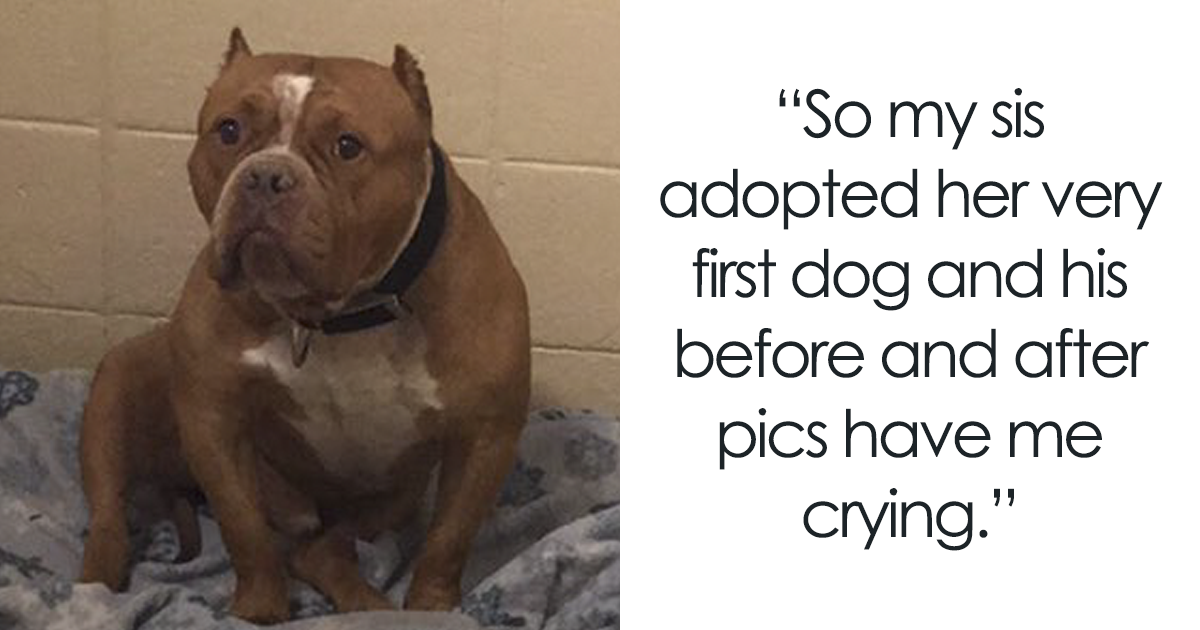
In the first images, the sheltered pit bull looked uncertain and emotionally exhausted. His posture appeared guarded, his expression subdued, and his body seemed to be waiting for the next unpleasant surprise. In the later pictures, he looked like someone had switched the lights back on. His face was softer, his body more relaxed, and his enthusiasm appeared to have returned at full tail-wagging volume.
The change began when a woman adopted Charlie as her very first dog. Her sister, Meriah Jae, was so moved by the transformation that she shared his dog adoption before-and-after pictures online. The post spread rapidly, turning one rescued dog into a memorable example of what patience, stability, and a safe home can accomplish.
Charlie’s story is undeniably adorable. It is also more complicatedand more usefulthan a simple message that love fixes everything overnight. A successful rescue dog transformation usually requires preparation, realistic expectations, veterinary care, routine, training, and enough patience to make a saint check the clock.
“`
Meet Charlie, the Shelter Dog Behind the Viral Transformation
“`
Charlie was a sheltered pit bull in need of a permanent home. After Meriah Jae’s sister adopted him, the family documented the visible change in his appearance and behavior. Meriah combined the pictures with an adoption message, and the resulting post attracted hundreds of thousands of reactions and shares.
The internet did what it occasionally does best: it collectively became emotional over a dog.
People responded with encouragement, adoption stories, practical advice, and pictures of their own rescued pets. Charlie was no longer simply one family’s new companion. He had become a recognizable symbol of shelter dog adoption and second chances.
What made the photographs so powerful was their simplicity. There was no complicated argument or ten-slide presentation titled “Why Dogs Deserve Sofas.” Viewers could see the contrast for themselves. One image showed uncertainty. The other showed comfort, engagement, and a dog who appeared increasingly confident that dinner would arrive on schedule.
A Photograph Can Reveal Safety Without Telling the Whole Story
Before-and-after rescue dog pictures frequently show changes in posture, facial tension, coat condition, body weight, eye contact, and willingness to play. A dog who initially crouches, freezes, hides, or avoids interaction may later stretch out across a bed as though personally responsible for the mortgage.
These visual differences matter, but photographs should not be treated as medical tests or complete behavioral evaluations. Lighting, camera angle, fatigue, and the particular moment can influence how a dog looks. The real transformation is better measured through patterns: regular eating, restful sleep, curiosity, healthy movement, relaxed body language, social engagement, and the ability to recover from unfamiliar experiences.
Why an Adopted Dog May Look Completely Different at Home
A shelter can be stressful even when its staff members and volunteers provide excellent care. Dogs may encounter unfamiliar people, barking, disrupted sleep, new smells, limited privacy, and repeated changes in routine. Some arrive after neglect, abandonment, injury, or unstable living arrangements. Others have simply lost the environment and people they understood.
Stress does not always look dramatic. A dog may become unusually quiet, refuse treats, pace, pant, sleep excessively, avoid eye contact, or remain frozen in one place. Another dog may respond by jumping, barking, chewing, or moving around like a furry pinball. Both dogs may be overwhelmed; they are merely expressing it differently.
Once adopted, several changes can affect the dog’s appearance and behavior.
Rest Becomes Possible
A predictable home may offer longer periods of uninterrupted sleep. Rest supports physical recovery, emotional regulation, and learning. A tired shelter dog may not immediately celebrate the new home. Sometimes the first sign of trust is not a joyful sprintit is a very long nap.
Meals Become Predictable
Consistent feeding can support healthy weight, digestion, energy, and coat condition. New owners should avoid rapidly changing food or overfeeding in an attempt to compensate for a difficult past. A veterinarian can recommend an appropriate diet based on the dog’s age, size, health, activity level, and body condition.
The Dog Gains Control Over Everyday Choices
Being able to move away from attention, select a sleeping spot, explore at a comfortable pace, or approach a person voluntarily can help an adopted dog build confidence. Trust grows more reliably when interaction is invited rather than forced.
Play Returns
Some rescue dogs do not play during their first few days. Toys may be unfamiliar, or the dog may feel too uncertain to relax. As security increases, the dog might begin carrying toys, performing play bows, zooming through the hallway, or developing a passionate relationship with one squeaky object that everyone else in the house quickly learns to resent.
The 3-3-3 Guideline for Rescue Dog Adjustment
Animal-welfare professionals often use the 3-3-3 guideline to explain how an adopted pet may adjust during the first three days, three weeks, and three months. It is a flexible framework, not a deadline. Dogs do not receive tiny calendars at the shelter and promise to reveal their full personalities on day 90.
The First Three Days: Decompression
During the first few days, a newly adopted dog may feel overwhelmed. The dog might hide, eat very little, sleep frequently, have house-training accidents, or watch family members from a cautious distance.
The best response is usually calm simplicity. Provide a quiet resting area, fresh water, scheduled meals, frequent bathroom opportunities, and short walks in low-pressure surroundings. Avoid a welcome parade involving every relative, neighbor, coworker, and child who has ever said the word “puppy.”
Let the dog observe. Speak gently. Allow voluntary contact. The objective is not to manufacture instant affection but to show the dog that the new environment is predictable and safe.
The First Three Weeks: Routine and Personality
As the dog begins learning household patterns, more of the individual personality may appear. A quiet dog may become playful. A seemingly perfect dog may begin testing boundaries. Minor problems such as chewing, barking, jumping, leash pulling, or bathroom accidents can emerge.
This does not mean the adoption has failed. It may mean the dog is comfortable enough to behave more naturally.
Owners can begin gentle training with short sessions, clear cues, and positive reinforcement. Rewarding desirable behavior helps the dog understand what works. Consistency among family members is essential. A rule that applies on Monday but disappears whenever Grandpa visits is not a rule; it is canine legal ambiguity.
The First Three Months: Deeper Trust
Many dogs become noticeably more secure over several months. They understand the routine, recognize familiar people, and begin treating the home as their own territory. Bonds strengthen through repeated positive experiences rather than one cinematic moment.
Some dogs need less time, while fearful or previously traumatized dogs may require much longer. Progress should be evaluated according to the individual dog, not an online countdown.
What First-Time Dog Owners Should Do Before Adoption Day
Charlie’s new owner was adopting her first dog, which makes the transformation especially meaningful. First-time adoption can be wonderful, but enthusiasm should arrive with a plan.
Prepare a Quiet Landing Zone
Create a comfortable area with a bed, water, and enough space for the dog to rest without being cornered. A properly introduced crate can function as a retreat for some dogs, but it should never be used as punishment. The dog should be able to enter it voluntarily and associate it with calm experiences.
Dog-Proof the Home and Yard
Check fences, gates, windows, trash cans, electrical cords, medications, cleaning products, toxic foods, and objects small enough to swallow. Newly adopted dogs can be escape risks because they do not yet understand where they live or who will bring them home.
Use secure identification from the first trip home. Confirm that the collar or harness fits correctly, attach an identification tag, and update the dog’s microchip registration. A dog who slips out on day one cannot provide the helpful clarification, “I live in the blue house now.”
Collect Medical Records
Ask the shelter or rescue for vaccination records, parasite-prevention history, medications, known allergies, previous test results, microchip details, and information about spaying or neutering.
Schedule a veterinary examination soon after adoption. The veterinarian can assess weight, skin, ears, teeth, mobility, vaccination needs, parasite prevention, nutrition, and any signs that require additional testing. This appointment also establishes a baseline for future care.
Keep the Original Diet Temporarily
Sudden food changes can cause digestive trouble. Unless a veterinarian recommends otherwise, continue feeding the dog’s current food during the initial transition and make any later change gradually.
Plan for Real Expenses
The adoption fee is only the opening scene. A dog also needs food, preventative healthcare, routine veterinary visits, emergency planning, training supplies, identification, grooming, and replacements for the occasional household object that mysteriously loses a corner.
Build Trust Without Overwhelming the Dog
Humans often express affection through hugging, leaning close, direct eye contact, and excited voices. A nervous dog may interpret some of those actions as pressure rather than kindness.
Sit or stand at an angle instead of looming overhead. Let the dog approach. Pet briefly, pause, and observe whether the dog asks for more. Respecting a dog’s decision to move away can build more trust than attempting to prove how friendly you are.
Watch the Entire Body
A wagging tail does not automatically mean a dog is comfortable. Consider posture, muscle tension, ear position, mouth, eyes, movement, and the situation. Turning away, lip licking, yawning, freezing, lowering the body, showing the whites of the eyes, or repeatedly attempting to leave may indicate discomfort.
When these signals appear, reduce pressure and increase distance. Punishing a warning can make future behavior less predictable because the dog may learn that communicating discomfort is unsafe.
Use Positive Reinforcement
Reward behaviors you want repeated. Treats, praise, toys, sniffing opportunities, and access to favorite activities can all function as rewards. Start with useful skills such as responding to a name, coming when called, waiting at doors, walking with a loose leash, and settling on a mat.
Training should help the dog understand the household, not frighten the dog into temporary compliance. For serious fear, aggression, separation distress, or persistent behavior concerns, consult the shelter, a veterinarian, or a qualified behavior professional who uses humane, evidence-informed methods.
Adoption Shock Can Affect the Human, Too
Much of the discussion focuses on the dog’s adjustment, but new adopters can also experience an emotional crash. Before adoption, people imagine peaceful walks, couch cuddles, and a tasteful collection of dog bandanas. Then the dog has an accident, barks at the vacuum, refuses to sleep, and attempts to eat an object that has never looked edible to any other species.
Feeling overwhelmed does not make someone a bad owner. It means the imagined dog and the real individual are still getting acquainted.
First-time owners should expect a learning period. Contact the adoption organization early when concerns appear. Many shelters provide behavior advice, training referrals, medical information, or post-adoption support. Asking for help before frustration becomes a crisis can protect both the dog and the family.
It is also helpful to measure small victories. The dog ate breakfast. The dog rested while someone moved through the room. The dog recovered more quickly after hearing a strange noise. The dog chose to sit nearby. These moments may not produce viral photographs, but they are often the true building blocks of a permanent home.
Why Charlie’s Before-and-After Pictures Matter
Charlie’s photos reached people because they turned an abstract issue into a visible relationship. “Shelter dogs need homes” is an important statement, but one relaxed face can communicate the idea instantly.
Before-and-after pictures can encourage adoption, volunteering, fostering, donating, and sharing available animals. They can also challenge assumptions about dogs who look frightened, withdrawn, or unpolished in shelter photographs.
A stressed dog in a kennel is not necessarily showing the personality that will emerge in a stable home. Likewise, breed labels should not replace individual assessment. Adopters should focus on the dog’s observed behavior, needs, energy level, health, background, and compatibility with the household.
However, emotional pictures should not pressure someone into an impulsive adoption. The most compassionate decision is the one that can be sustained. A person who cannot currently provide time, housing, finances, or appropriate care can still support shelter animals through fostering, volunteering, donations, transportation, or responsible advocacy.
Love Started Charlie’s Story, but Consistency Changed His Life
It is tempting to describe Charlie’s transformation as the result of love alone. Love certainly motivated the adoption, but daily care gave that love a practical form.
Love looked like meals arriving at predictable times. It looked like a secure leash, a veterinary appointment, a quiet place to sleep, patient bathroom trips, and people who did not demand immediate perfection. It looked like repeating the same training cue without turning the living room into a courtroom drama.
That is the less glamorous truth behind many rescue dog transformations. Safety is built through repetition. The dog learns that hands bring good things, doors do not always lead to abandonment, rest will not be interrupted, and mistakes do not end the relationship.
The “after” picture is not a finish line. It is one frame from an ongoing life.
Extended Experience: What a First Dog Teaches the Whole Family
Bringing home a first dog often begins with unreasonable confidence. The family buys a bed, two bowls, a leash, and approximately 47 toys. Everyone assumes the dog will immediately understand the household schedule, recognize expensive furniture, and feel grateful enough to ignore the unattended sandwich on the coffee table.
The dog has other plans.
The first evening may be quieter than expected. Instead of exploring every room, the dog might remain near the door or settle in a corner. Someone will wonder whether the dog dislikes the family. Another person will search online for “Why won’t my rescue dog cuddle me after four hours?” The answer is usually that the dog has just experienced an enormous transition and is still gathering information.
The most valuable early experience is learning not to take the dog’s uncertainty personally. A hesitant dog is not rejecting the adopter. The dog may be processing unfamiliar flooring, appliances, voices, smells, and expectations. Even the refrigerator can become a suspicious machine that growls before producing cheese.
Families also learn that routine is a language. When breakfast, walks, rest, and bathroom breaks happen consistently, the dog begins predicting what comes next. Predictability reduces uncertainty. The first relaxed sigh on the dog’s bed may feel more significant than a dramatic display of affection because it suggests the dog no longer believes constant vigilance is necessary.
Progress rarely follows a straight line. A dog may confidently explore the kitchen on Tuesday and become nervous about the hallway on Wednesday. A calm week may be followed by barking at a delivery person. These fluctuations do not erase previous improvement. Stress, fatigue, unfamiliar visitors, weather, pain, and changes in routine can affect behavior.
Another lesson involves communication. First-time owners often focus on commands, but listening is equally important. They begin noticing when the dog turns away from petting, chooses a quieter room, hesitates near a noisy street, or becomes energized by a particular toy. The dog’s preferences slowly become part of family knowledge.
“He likes his blanket folded.” “She feels safer walking beside the fence.” “He needs a minute before greeting visitors.” “She will perform advanced mathematics for chicken.”
These details transform the dog from an adoption profile into an individual.
The family changes, too. Morning schedules adjust. Shoes are placed farther from the floor. Conversations include the quality of someone else’s bathroom habits with a seriousness previously reserved for financial planning. People walk more, laugh more, and discover that a dog can occupy three-quarters of a couch despite technically using only two square feet.
There may also be difficult experiences. The dog could need medical treatment, structured training, or professional behavioral support. Progress might be slower than expected. The owner may occasionally feel tired or discouraged. Responsible adoption does not require pretending every day is magical. It requires responding to problems with honesty, patience, and appropriate help.
Then the small moments begin accumulating. The dog sleeps with an exposed belly. A tail starts wagging when the owner enters the room. A toy appears beside someone’s foot as an invitation. The dog checks in during a walk or chooses to rest near the family instead of hiding.
Eventually, someone finds the first photograph and compares it with a recent one. The physical contrast may be striking, but the family sees details the camera cannot capture: the routines learned, the fears managed, the mistakes forgiven, and the hundreds of ordinary interactions that created trust.
That is why Charlie’s before-and-after pictures make people cry. They are not merely pictures of a dog looking happier. They represent the moment survival begins turning into belonging.
Conclusion: Every “After” Begins With a Patient First Day
Charlie’s story shows why rescue dog before-and-after pictures have such emotional force. They allow people to witness safety becoming visible. His transformation also reminds future adopters that a joyful second chance is built through preparation, veterinary care, secure routines, humane training, and respect for the dog’s pace.
A newly adopted dog does not owe anyone an immediate performance of gratitude. The dog may need days, weeks, months, or longer to understand that the new home is permanent. When people offer consistency instead of pressure, they give trust room to grow.
One day, the cautious shelter picture becomes difficult to recognize. In its place is a dog stretched across the furniture, surrounded by toys, confidently requesting dinner several hours early.
That is not just a makeover. That is a life changing direction.
“`