Glass looks simple. It sits quietly in windows, bottles, phone screens, oven doors, light bulbs, mirrors, and that one drinking cup you swear you did not chip. But behind its clear, smooth personality is a surprisingly clever mix of earth, chemistry, fire, and timing. So, what is glass made of? In most everyday cases, glass is made from silica sand, soda ash, limestone, and recycled glass called cullet. Heat those ingredients until they become a molten liquid, shape them carefully, cool them under control, and suddenly you have one of the most useful materials humans have ever made.
The short answer is charmingly humble: glass starts with sand. The longer answer is more interesting. Not just any beach sand will do. Glass needs silica-rich sand, usually made mostly of silicon dioxide. By itself, silica can form glass, but it melts at such a high temperature that manufacturing it would be slow, expensive, and about as practical as baking cookies on the surface of Mercury. That is why glassmakers add soda ash to lower the melting temperature and limestone to make the final glass more durable. Add other minerals, metal oxides, or boron compounds, and the recipe can become window glass, bottle glass, lab glass, heat-resistant cookware, optical glass, fiberglass, or tough cover glass for electronic screens.
Glass is not just “melted sand.” It is a carefully engineered material with a structure that refuses to behave like ordinary crystal. That refusal is exactly what makes it special.
What Is Glass, Scientifically Speaking?
In scientific terms, glass is an amorphous solid. “Amorphous” means it does not have the neat, repeating crystal structure found in materials like salt, quartz, or diamonds. Its atoms are arranged in a disordered network, more like a frozen crowd leaving a concert than soldiers standing in perfect rows.
This is why glass can be transparent, hard, smooth, and shapeable while still being chemically different from a crystal. When molten glass cools, its atoms slow down before they can organize into a regular crystal lattice. The result is a rigid solid with a random internal structure. Glass is not a liquid slowly flowing down your grandma’s old windows. That old myth is persistent, but old window panes look uneven mainly because early manufacturing methods produced uneven sheets. Glass is solid; it is simply a solid with an unusual atomic arrangement.
The Main Ingredients in Everyday Glass
Most common glass is called soda-lime-silica glass, or simply soda-lime glass. It is the glass used in many windows, jars, bottles, and basic tableware. The name gives away the recipe: silica, soda, and lime.
1. Silica Sand: The Backbone of Glass
Silica sand is the main ingredient in glass. It is rich in silicon dioxide, often written as SiO2. In soda-lime glass, silica usually makes up the majority of the composition. Think of silica as the skeleton of the glass network. Without it, you do not really have ordinary glass; you have a pile of ingredients looking for a career change.
High-quality silica sand for glassmaking must be clean and low in unwanted impurities, especially iron. Iron can tint glass green, brown, or yellowish. That is useful for beer bottles and wine bottles, but less ideal for clear windows or fancy glassware. For clear glass, manufacturers want sand that is as pure as possible.
2. Soda Ash: The Ingredient That Makes Melting Easier
Soda ash, also known as sodium carbonate, is added because pure silica melts at an extremely high temperature. Soda ash acts as a flux, which means it helps lower the melting point of the mixture. In plain English, it tells silica, “Relax, we do not need to make this furnace work overtime.”
There is one problem: sodium compounds can make glass less resistant to water. If glass contained only silica and soda, it would not be durable enough for many everyday uses. That is where limestone enters the story.
3. Limestone: The Durability Helper
Limestone provides calcium oxide, often called lime. Lime helps stabilize the glass and improves chemical durability. It makes the final product less likely to dissolve, weather, or become damaged by ordinary contact with moisture. In a glass recipe, lime is like the practical friend who checks the budget, brings sunscreen, and reminds everyone to drink water.
With silica forming the network, soda making it easier to melt, and lime strengthening the finished structure, soda-lime glass becomes affordable, clear, durable, and easy to manufacture at scale.
4. Cullet: Recycled Glass With a Second Act
Cullet is crushed recycled glass. It may come from manufacturing scraps or post-consumer glass containers. Adding cullet to a glass batch helps the mixture melt more efficiently because glass that has already been made melts more easily than raw minerals. It can also reduce the need for virgin raw materials and support recycling systems.
Cullet must be clean and properly sorted by color. A little green glass mixed into a batch of clear glass can cause color problems. Glass recycling is wonderful, but it is not magic; it still appreciates organization.
How Glass Is Made From These Ingredients
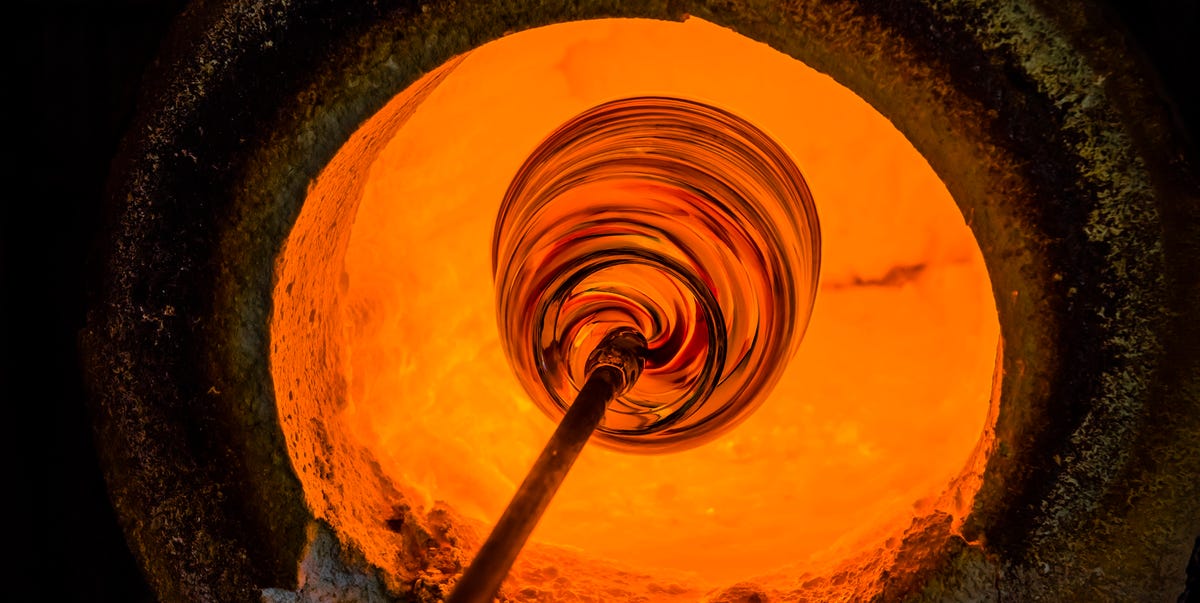
The glassmaking process begins with batching. Manufacturers measure raw materials carefully, because small changes can affect color, melting behavior, strength, clarity, and thermal performance. The batch is sent into a furnace and heated until it becomes molten glass.
For soda-lime glass, furnace temperatures are extremely high. Inside the furnace, the ingredients react, gases escape, bubbles rise, and the mixture becomes more uniform. The molten glass is then shaped depending on its final purpose. Containers may be blown or pressed into molds. Flat glass for windows is often made by floating molten glass on a bath of molten tin, creating a smooth, even sheet. Fiberglass is drawn into fine strands. Specialty glass may be formed through more precise methods.
After shaping, glass must be cooled carefully in a process called annealing. If it cools too quickly, internal stress can build up, making the glass more likely to crack or break. Annealing lets the glass settle into a stable condition. Basically, glass needs a cool-down period, just like people after reading internet comments.
Why Is Glass Transparent?
Glass is transparent because visible light can pass through its structure without being strongly absorbed or scattered. Pure silica-based glass does not contain many electrons that absorb visible light, so light travels through it. That is why a clean window can seem almost invisible until a bird, a toddler, or your own forehead proves otherwise.
Impurities change transparency and color. Iron can create green or brown tones. Cobalt can make deep blue glass. Chromium can produce green shades. Selenium, sulfur, nickel, copper, manganese, and other elements can create different colors depending on the recipe and furnace conditions. Colored glass is not painted from the inside; it is often colored by chemistry built directly into the material.
Different Types of Glass and What They Are Made Of
Not all glass is the same. Different uses require different formulas. A jam jar, a lab beaker, a smartphone screen, and a telescope lens all belong to the glass family, but they do not share the same personality.
Soda-Lime Glass
Soda-lime glass is the most common type. It is made mainly from silica, soda, and lime, with smaller amounts of other oxides. It is used for windows, bottles, jars, and many everyday glass products. It is affordable and easy to shape, but it does not handle sudden temperature changes as well as some specialty glasses.
Borosilicate Glass
Borosilicate glass includes boron oxide in its composition. This gives it a lower thermal expansion, meaning it expands less when heated. That makes it useful for laboratory glassware, some cookware, and applications where heat resistance matters. When a glass measuring cup survives hot liquid without complaining, borosilicate chemistry may be doing the heavy lifting.
Aluminosilicate Glass
Aluminosilicate glass contains aluminum oxide along with silica and other components. It can be chemically strengthened through ion exchange, making it useful for thin, tough cover glass in phones, tablets, and other electronics. This type of glass is designed to resist scratches and cracks better than ordinary soda-lime glass, although it is still not immune to the classic “phone meets sidewalk” tragedy.
Lead Glass and Crystal Glass
Traditional lead glass contains lead oxide, which increases brilliance, density, and refractive index. That sparkle is why lead crystal became popular for decorative glassware. Modern glassware may use alternative oxides for safety and regulatory reasons, but the goal remains similar: create glass with extra shine, clarity, and visual depth.
Fused Silica Glass
Fused silica is made from very pure silicon dioxide. It has excellent thermal and optical properties, but it is more expensive and harder to manufacture because of silica’s high melting temperature. It is used in demanding applications such as optics, semiconductor manufacturing, and scientific equipment.
What Gives Glass Its Strength?
Glass is strong in compression but weaker in tension. That means it can handle squeezing forces better than pulling or bending forces. Cracks usually begin at tiny surface flaws. Once tension finds one of those flaws, the crack can grow quickly.
Manufacturers improve strength in several ways. Tempered glass is heated and cooled rapidly under controlled conditions, creating compressive stress on the surface. When it breaks, it tends to crumble into small chunks rather than long, sharp shards. Laminated glass sandwiches a plastic layer between glass sheets, helping it stay together after impact. Chemically strengthened glass swaps smaller ions in the surface for larger ones, creating compression that makes cracks harder to start.
Strength is not just about thickness. Composition, surface quality, cooling method, edge finishing, and treatment all matter. That is why a thin phone screen can survive daily use while a thick, poorly handled glass shelf may fail if its edge is damaged.
What Makes Glass Green, Brown, Blue, or Clear?
Color in glass comes from trace elements and metal oxides. Clear glass requires careful control of impurities, especially iron. Green glass often contains iron compounds. Brown or amber glass can be made with sulfur, carbon, and iron chemistry, and it is useful for protecting beverages or medicines from light. Cobalt creates rich blue glass, while copper can create blue-green or red tones depending on conditions.
Color is not just decorative. Amber bottles help protect light-sensitive contents. Green glass can hide minor color variations in recycled content. Dark glass can reduce light exposure. In other words, glass color can be both beautiful and practical. It is fashion with a job.
Is Glass Natural or Man-Made?
Both. Humans manufacture glass, but glass can also occur naturally. Obsidian is volcanic glass formed when lava cools quickly. Lightning can fuse sand into glassy tubes called fulgurites. Meteorite impacts can create natural glass as well. Humans did not invent the idea of glass; we learned how to make it on purpose and then proceeded to put pickles, windows, microscopes, and smartphones in it.
Is Glass Environmentally Friendly?
Glass has environmental advantages and challenges. On the plus side, glass is inert, long-lasting, and recyclable. It can be recycled into new glass containers repeatedly when collected, cleaned, and sorted properly. Using cullet can reduce raw material demand and help glass melt more efficiently.
On the challenge side, glassmaking requires high-temperature furnaces, which consume significant energy. Glass is also heavier than many packaging alternatives, which can increase transportation energy. Whether glass is the best environmental choice depends on recycling systems, transportation distance, reuse options, product type, and local infrastructure.
The cleanest answer is not “glass is perfect” or “glass is bad.” The better answer is that glass performs very well when it is reused, recycled efficiently, and chosen for the right purpose.
Common Myths About What Glass Is Made Of
Myth 1: Glass Is Just Sand
Glass begins with silica sand, but everyday glass also needs soda ash, limestone, and often other ingredients. Calling glass “just sand” is like calling pizza “just flour.” Technically adjacent, emotionally insufficient.
Myth 2: Glass Is a Liquid
Glass is an amorphous solid, not a liquid slowly sliding toward the floor. Its atoms are disordered, but the material is rigid at room temperature.
Myth 3: All Glass Can Be Recycled Together
Container glass is commonly recyclable, but not all glass products belong in the same recycling stream. Window glass, mirrors, ceramics, heat-resistant cookware, and light bulbs may have different compositions or coatings that can contaminate container glass recycling.
Myth 4: Thicker Glass Is Always Stronger
Thickness helps, but strength also depends on composition, treatment, surface flaws, edges, and how the glass is used. A tiny chip can turn strong glass into a dramatic surprise.
Everyday Examples of Glass Chemistry
A clear soda bottle is typically soda-lime glass designed for container production, durability, and food contact. A window pane is also commonly soda-lime glass, but its composition and manufacturing process are tuned for flatness and clarity. A laboratory beaker may be borosilicate glass because it needs better resistance to thermal shock. A phone screen may use chemically strengthened aluminosilicate glass because it needs to be thin, clear, and tough. A decorative blue vase may contain cobalt compounds to create its color.
These examples show the real answer to “what is glass made of?” It depends on what the glass needs to do. Glass is less like one recipe and more like a cookbook. The basic chapter starts with silica, soda, and lime. The advanced chapters add boron, aluminum, potassium, magnesium, lead alternatives, colorants, coatings, and strengthening processes.
Experience-Based Reflections: Seeing Glass Differently in Daily Life
Once you understand what glass is made of, ordinary objects become more interesting. A kitchen jar is no longer just a jar. It is a little transparent fortress made from sand, soda ash, limestone, and possibly yesterday’s recycled bottle. A window is not just a square of “clear stuff.” It is a carefully flattened sheet of engineered material that lets sunlight in while keeping wind, dust, and suspiciously ambitious insects outside.
One of the most relatable experiences with glass is noticing how different types behave in the kitchen. Pour hot tea into a thin, ordinary glass that is not designed for heat, and you may hear the tiny sound nobody wants to hear: a crack. That happens because sudden temperature changes create stress. Heat-resistant glass is made differently, often with ingredients that reduce expansion when temperatures change. This is why choosing the right glass for hot liquids, baking, or laboratory use matters. Glass is beautiful, but it has boundaries. Respect the boundaries, and your countertop will thank you.
Another everyday lesson comes from recycling. Many people assume all glass can go into the same bin. Then comes the confusing moment: bottles are accepted, but window glass, mirrors, or cookware may not be. The reason is composition. Different glass formulas melt at different temperatures and may contain coatings, additives, or treatments that interfere with container glass production. Recycling glass is not just about being virtuous; it is about giving manufacturers material they can actually use.
Glass also teaches patience. Anyone who has tried to clean a window on a sunny day knows the comedy of streaks. You wipe, admire your work, step sideways, and suddenly the glass reveals a smear shaped like a confused jellyfish. The same transparency that makes glass useful also makes every fingerprint, mineral spot, and cleaning mistake visible. In a way, glass is the honest friend of materials. It hides very little.
Smartphones offer another modern glass experience. Many screens use strengthened glass, but strengthened does not mean indestructible. A phone can survive dozens of small bumps, then crack from one unlucky fall at the perfect bad angle. That is because glass often fails from tiny flaws and concentrated stress. The lesson is simple: chemistry can make glass tougher, but gravity still has excellent customer service.
There is also something satisfying about the history behind glass. Humans learned to make it thousands of years ago, long before modern chemistry explained the atomic network inside it. Ancient makers discovered that sand, mineral salts, heat, and skill could produce beads, vessels, and decorative objects. Today, the same basic idea supports skyscrapers, fiber optics, medical equipment, solar panels, car windshields, and touchscreens. Few materials have traveled so far from ancient craft to high technology without losing their original charm.
Understanding glass changes the way you look at the built world. The storefront window, the car windshield, the brown medicine bottle, the clear baking dish, the microscope slide, and the phone in your hand are all cousins. Some are close cousins; some only meet at scientific family reunions. But they all share the same central idea: a cooled, non-crystalline material made by controlling chemistry and heat.
So the next time someone asks, “What is glass made of?” the best answer is not just “sand.” The better answer is: glass is made from silica-rich materials combined with ingredients that help it melt, stabilize, strengthen, color, or perform a special job. It is earth transformed by fire and refined by human patience. Also, it is the reason your peanut butter jar can be see-through, your shower door can judge your cleaning habits, and your phone screen can survive almost everything except the one drop you really needed it to survive.
Conclusion
Glass is made mainly from silica sand, soda ash, limestone, and recycled glass, but that simple recipe opens the door to a huge family of materials. Silica forms the backbone, soda ash lowers the melting temperature, limestone improves durability, and cullet gives old glass a useful second life. From there, glassmakers adjust the formula with boron, aluminum, metal oxides, and special treatments to create glass for windows, bottles, cookware, laboratories, electronics, art, and advanced technology.
The magic of glass is not that it is mysterious. The magic is that ordinary minerals can become something transparent, strong, reusable, colorful, and endlessly useful. It begins as sand and stone, meets a furnace, avoids becoming a crystal, and ends up helping humans see, store, protect, cook, communicate, and build. Not bad for melted geology.