Some weddings arrive with a marching band, a ten-tier cake, and enough floral installations to make a botanical garden feel underdressed. Then there are weddings that simply exhale. A simple, soulful wedding at Té Company, a tearoom in NYC, belongs to that second category: intimate, fragrant with oolong, quietly stylish, and deeply personal without trying to win the Olympics of matrimony.
Tucked into the West Village at 163 West 10th Street, Té Company is not the kind of place that shouts for attention. Its charm is quieter: a discreet storefront, a golden teapot sign, small tables, careful tea service, and snacks that make guests suddenly very emotional about cookies. The tearoom specializes in Taiwanese teas and handmade tea snacks, sourcing tea directly from small farmers in Taiwan. That alone makes it memorable. But as a wedding setting, it becomes something even rarer: a place where the ceremony feels less like a production and more like a shared breath.
This article explores what makes a Té Company wedding so special, how couples can borrow its spirit for their own intimate celebration, and why a tiny tearoom may hold more romance than a ballroom with chandeliers the size of compact cars.
Why Té Company Feels Made for an Intimate Wedding
Té Company is small, serene, and intentionally unhurried. That matters. In a city famous for sirens, scaffolding, and people power-walking as if chased by invisible deadlines, a quiet tearoom feels almost rebellious. The West Village location has long been admired for its Taiwanese oolongs, thoughtful service, and elegant food pairings. It is the sort of place where a pot of tea becomes a conversation, not a beverage transaction.
For a wedding, that intimacy is gold. A small room removes the awkward social choreography of a large reception. Nobody has to wave across a ballroom at a cousin they last saw during the flip-phone era. Guests sit close, hear the vows, notice the trembling hands, pass tissues, and later remember the steam rising from the teapot as clearly as the rings.
The beauty of a meaningful first-date venue
One of the most romantic reasons to marry at a tearoom like Té Company is personal history. A venue becomes powerful when it already belongs to the couple’s story. If a first date happened over tea, if a relationship grew through slow conversations, or if the couple simply loves food, design, and quiet places, the tearoom becomes more than a backdrop. It becomes a witness.
That is the secret behind the best small weddings: the location answers the question, “Why here?” without needing a 14-slide presentation. Té Company says: we like warmth, intention, flavor, and good company. Honestly, that is a better wedding thesis than “we chose this banquet hall because it had uplighting and parking.”
The Rise of Micro Weddings in NYC
Micro weddings are no longer a compromise. They are a deliberate choice. Modern couples increasingly want celebrations that feel personal, flexible, and emotionally present. A micro wedding typically includes fewer than 50 guests, though some are much smaller. The Té Company style fits beautifully into this movement because it values closeness over spectacle.
In New York City, the appeal is obvious. Space is precious. Time is expensive. Everyone has opinions. A small wedding slices through the chaos with one elegant sentence: “We are inviting only the people we cannot imagine the day without.” This is not rude. This is boundaries wearing nice shoes.
Small guest list, bigger feeling
A dozen guests in a tearoom can create more emotional volume than 200 people in a hotel ballroom. With fewer attendees, the couple can focus on details that genuinely matter: handwritten notes, meaningful readings, a favorite dessert, a family heirloom, or a tea pairing that nods to heritage. Instead of spending the day managing a crowd, the couple can actually be present. Revolutionary, I know.
Small weddings also allow the budget to stretch in more meaningful ways. Rather than paying for 150 average meals, couples can invest in exquisite food, a talented photographer, beautiful tableware, thoughtful flowers, or a relaxed post-ceremony lunch. The celebration becomes less about abundance and more about precision.
Designing a Simple, Soulful Té Company Wedding
The best design approach for a tearoom wedding is restraint. Té Company already has atmosphere: warm wood, teaware, soft light, and the hush of a place built for conversation. The goal is not to transform it into something else. The goal is to listen to the room and add only what deepens the mood.
Flowers that feel gathered, not manufactured
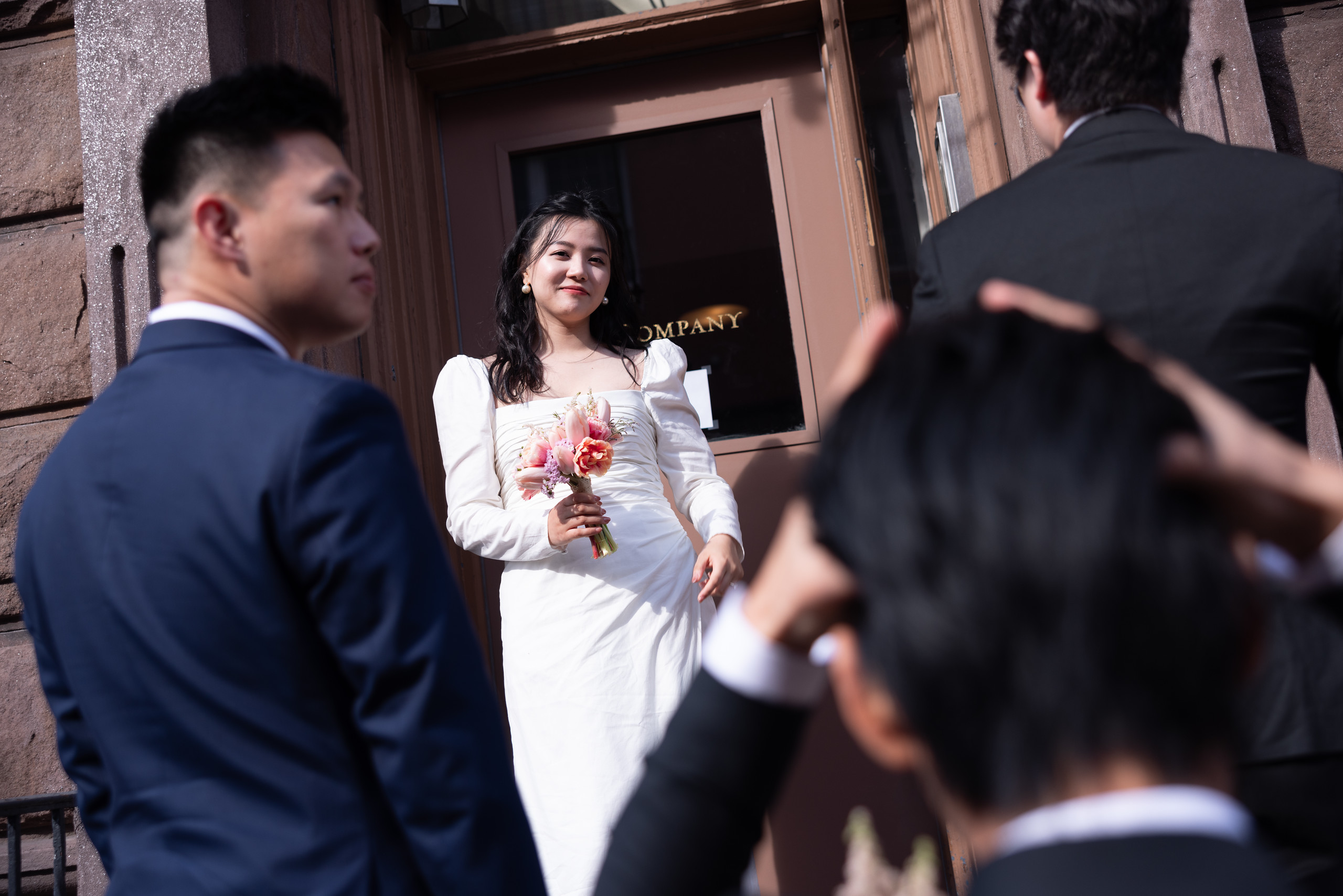
For a simple wedding at Té Company, flowers should look like they arrived with a friend, not a corporate invoice. Think small bud vases, seasonal stems, loose greenery, and a handmade bouquet. A few arrangements near the ceremony area can create a focal point without overwhelming the tearoom. If a florist is involved, ask for pieces that feel organic, asymmetrical, and intimate.
And if friends help arrange flowers the morning of the wedding? Even better. Nothing says “community” like loved ones trimming stems while trying not to panic. The trick is to keep the plan simple enough that a helpful friend can execute it without needing a floral design certification and emotional support snacks.
A ceremony setup with a tiny stage
In a small tearoom, the ceremony does not need an aisle worthy of a cathedral. A cleared corner, a small rug, or a simple crescent-shaped arrangement can mark the vow space. Guests can gather around in a semi-circle, making the moment feel like a family ritual rather than a performance.
This setup also creates better photographs. Close spaces capture expressions: the officiant smiling, a parent tearing up, the couple laughing mid-vow, someone’s hand reaching for another hand. These are the images that age well because they reveal the feeling of the room.
What to Wear for a Tearoom Wedding
A Té Company wedding calls for clothes that feel elegant but not over-armored. This is not the place for a 20-foot train unless the bride also wants to personally clear every teacup off the tables. A simple silk dress, a vintage suit, a tailored jumpsuit, a tea-length gown, or a chic off-the-rack look can feel perfectly right.
The guiding principle is ease. The couple should be able to sit, hug, drink tea, move through the room, and walk the West Village streets afterward without needing a logistics crew. Borrowed suits, family jewelry, vintage shoes, and re-wearable dresses fit the spirit beautifully. The fashion should say, “We are getting married,” not “We are being shrink-wrapped by tradition.”
Style details that make the day personal
Small weddings reward small details. A ribbon from a grandmother’s sewing box. A lapel pin from Taiwan. Earrings found on a trip. A bouquet wrapped in fabric from an old shirt. A handwritten vow booklet. These choices do not need to be expensive; they need to be specific.
That specificity is what makes the wedding soulful. Guests may not remember the exact shade of the napkins, but they will remember that the groom borrowed a suit from a friend, the bride carried a handmade bouquet, or the couple walked into the tearoom laughing because the day already felt like them.
Food, Tea, and the Joy of a Wedding That Tastes Like a Story
Food is central to the Té Company experience. The tearoom is known not only for Taiwanese tea but also for handmade snacks and tea-friendly dishes. A wedding inspired by this setting should treat food and drink as emotional storytelling.
Tea brings a different rhythm to a wedding. Champagne sparkles and shouts. Tea steams and invites. It asks guests to slow down. It encourages conversation. It gives the celebration a sense of ceremony even before the vows begin.
Tea pairings as a wedding ritual
Imagine welcoming guests with a bright oolong, serving a comforting roasted tea after the ceremony, or sending guests home with loose-leaf tea as a favor. Tea can also become part of the vows: the couple pours for parents, shares a first cup together, or chooses a tea that reflects their families’ histories.
For couples with Taiwanese, Chinese, Asian American, or multicultural backgrounds, tea can hold layers of meaning. It can honor elders, mark hospitality, and connect the wedding to a longer tradition of gathering around a cup. Even for couples without that heritage, a tea-centered wedding offers a gentler alternative to the standard cocktail-hour stampede.
Dessert that does not need to be a skyscraper
A small wedding does not require a towering cake. In fact, a tearoom wedding may be better served by a favorite cookie, pineapple cake, a petite celebration cake, or a tray of handmade sweets. Té Company’s pineapple linzer cookie has earned a devoted following for good reason: it is playful, refined, and just unusual enough to make people talk about dessert with suspicious intensity.
A dessert table can be modest but memorable. Add tea, fruit, small pastries, and perhaps one symbolic cake for cutting. The result feels like an intimate afternoon celebration rather than a banquet finale.
Legal Details for Getting Married in NYC
Romance is wonderful, but paperwork is the uninvited guest who must still be seated. Couples marrying in New York City need a marriage license. NYC offers appointments through Project Cupid, and couples must wait 24 hours after receiving the license before the ceremony unless a judicial waiver applies. A marriage license is generally valid for 60 days, and the ceremony can take place anywhere in New York State.
After the ceremony, the officiant, spouses, and witness or witnesses sign the license. In NYC, the officiant must return the completed marriage license within the required timeframe. This is not the part to improvise. Improvisation is charming for vows; it is less charming for municipal paperwork.
Choose the right officiant
For a small wedding, the officiant matters enormously. There is no giant crowd to absorb a flat ceremony. The officiant sets the tone, guides the vows, and helps make the legal side smooth. Couples can hire a professional officiant or ask a registered friend or family member, depending on New York requirements and the couple’s comfort level.
The best officiant for a tearoom wedding understands intimacy. They speak clearly but gently. They do not perform the ceremony as if auditioning for Broadway. They know when to pause, when to smile, and when to let the couple’s story take center stage.
Photography for a Tiny Tearoom Wedding
Photographing a small wedding requires sensitivity. The photographer should be comfortable working in tight spaces, natural light, and emotional proximity. A tearoom wedding does not need hundreds of posed images. It needs atmosphere: hands around cups, flowers on tables, the couple entering the room, guests leaning in, the first married glance after the vows.
West Village streets also offer a beautiful post-ceremony portrait setting. Brownstones, old doors, quiet corners, and tree-lined blocks create a romantic NYC backdrop without requiring a dramatic commute. The couple can step outside for portraits while guests linger over tea, which is far more civilized than making everyone wait in a hotel hallway under fluorescent lighting.
How to Make the Day Feel Soulful, Not Sparse
The danger of a small wedding is not that it will feel too simple. The danger is that couples may overcompensate and stuff it with unnecessary extras. Soulful does not mean empty. It means intentional.
Start with three priorities. Perhaps the couple cares most about vows, food, and photography. Or family, tea, and music. Or fashion, flowers, and a long lunch. Once the priorities are clear, every decision becomes easier. If it supports the feeling, keep it. If it exists only because wedding blogs said so in 2014, release it gently into the internet swamp.
Meaningful ideas for a Té Company-inspired wedding
- Write short personal vows that can be heard clearly by every guest.
- Serve a welcome tea before the ceremony to settle the room.
- Use one long table or small clustered tables for a dinner-party feeling.
- Offer handwritten notes at each place setting.
- Choose a dessert that reflects the couple’s favorite shared food memory.
- Let guests participate with a reading, toast, ring blessing, or group photo.
- Send guests home with tea, cookies, or a small card explaining the meaning of the venue.
A Simple Wedding Budget Philosophy
A simple wedding is not automatically cheap, and an expensive wedding is not automatically meaningful. The goal is alignment. Spend where the day gains emotional depth. Save where the spending only creates noise.
For a tearoom-style wedding, couples might spend on photography, excellent food, floral touches, attire that feels special, and a polished officiant. They might save on a large bridal party, elaborate rentals, massive centerpieces, transportation fleets, printed programs, and entertainment that would overwhelm the room.
Small weddings also reduce decision fatigue. There are fewer meals to select, fewer seating politics, fewer favors to assemble, and fewer opportunities for someone’s uncle to ask whether he can bring “just one extra person” who somehow turns out to be a full family of five.
The West Village as a Wedding Mood
The West Village contributes its own quiet romance. Unlike the monumental drama of Midtown or the grand civic mood of City Hall, the Village feels lived-in and literary. It has crooked streets, brick facades, small shops, and corners that seem designed for hand-holding. A wedding at Té Company can become part of a larger neighborhood experience: ceremony, tea, portraits, a stroll, maybe a celebratory dinner nearby.
That is one of the gifts of marrying in NYC. The city becomes a guest. It may honk occasionally, but it also gives you stoops, streetlight, history, and the feeling that your tiny ceremony belongs to something huge.
Experience Notes: What a Té Company-Inspired Wedding Feels Like
The experience of a simple, soulful wedding at Té Company begins before anyone says “I do.” It begins on the sidewalk, where guests slow down and look for the discreet sign. There is a tiny thrill in finding the place, as if the couple has invited everyone into a secret. Inside, the air feels warmer. The room is small enough that people instinctively lower their voices, which immediately makes the event feel sacred without needing stained glass, organ music, or a dramatic aisle runner that refuses to lie flat.
Friends arrive carrying flowers, garment bags, cameras, and the slightly chaotic energy of people who want everything to be perfect but are pretending to be relaxed. Someone adjusts a vase. Someone else asks where to put the rings. A parent sits quietly, watching the room transform. The couple may be getting ready nearby, or walking through the Village, or laughing because one tiny thing has already gone wrong and somehow made the day better.
When the ceremony starts, there is no distance between the couple and their people. Everyone can see the expressions. Everyone can hear the little catch in a voice. The officiant does not need a microphone or a dramatic pause borrowed from reality television. The room itself does half the work. Tea waits nearby. Flowers lean casually from their vases. The city continues outside, but inside the tearoom, time narrows to two people making a promise.
After the vows, the celebration unfolds naturally. There is no stampede to cocktail hour, no frantic room flip, no DJ announcing table numbers as if hosting a game show. Guests hug the couple, reach for tea, taste something sweet, and begin talking. The food feels personal because it is not trying to feed a crowd the size of a small airport terminal. The tea becomes part of the memory: floral, roasted, honeyed, earthy, or bright. People notice it. They discuss it. Someone who usually drinks coffee may suddenly develop a personality based on oolong.
The photographs from this kind of wedding tend to feel intimate rather than staged. A hand on a shoulder. A bouquet on a table. A cup being poured. The couple stepping outside into West Village light. These are not images of scale; they are images of closeness. Years later, that closeness is what matters.
The best part is that a Té Company-inspired wedding proves simplicity is not a lack of imagination. It is a form of confidence. It says the marriage is the event. The guests are the atmosphere. The tea is the toast. The room is enough. And really, when two people can gather their closest loved ones, speak honest vows, share something delicious, and leave married, what else is the wedding industry trying to sell us besides more chairs?
Conclusion
A simple, soulful wedding at Té Company, a tearoom in NYC, is a reminder that intimacy can be luxurious. Not loud. Not overbuilt. Luxurious in the way that careful tea is luxurious: patient, thoughtful, warm, and made to be shared. For couples who want a wedding with meaning rather than machinery, the tearoom model offers a beautiful blueprint.
Choose a place with history. Invite only the people who belong in the room. Let food and tea tell part of the story. Keep the design honest. Handle the paperwork like responsible adults, then celebrate like people who have discovered the secret: a wedding does not need to be enormous to be unforgettable. Sometimes all it needs is love, a few flowers, a good officiant, and a cookie people will talk about for years.