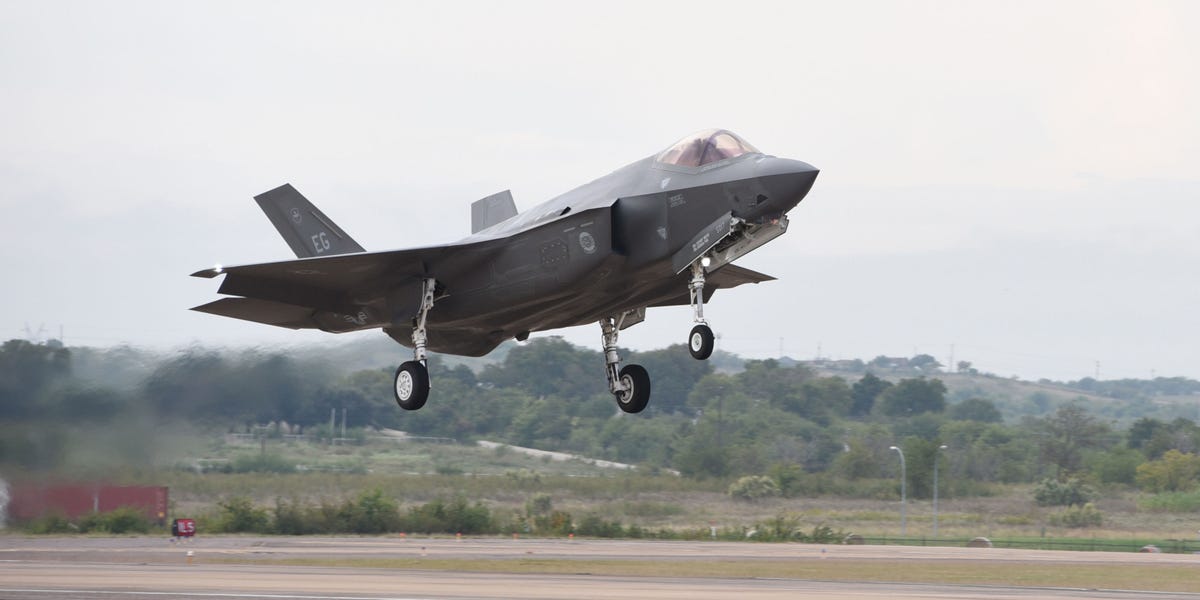
The F-35 Lightning II has always been a jet with two price tags. One is the attention-grabbing sticker price: the cost of buying an individual aircraft. The other is the monster hiding behind the hangar door: the total cost of developing, upgrading, maintaining, repairing, fueling, and supporting the fleet for decades. The first number has improved. The second one keeps behaving like it found the Pentagon’s credit card and refuses to give it back.
That is the strange truth behind the F-35 program cost debate. In several production lots, the flyaway cost of the most common F-35A has become more competitive than many people expect from a stealth fighter. Lockheed Martin has reported average flyaway costs for recent lots of about $82.5 million for the F-35A, with higher prices for the short-takeoff F-35B and carrier-capable F-35C. Meanwhile, large production deals and record delivery numbers suggest the manufacturing line is maturing. More jets are being built, more allies are buying in, and the program has moved from “expensive experiment” to “global military infrastructure.”
But cheaper aircraft do not automatically mean a cheaper program. The F-35 is not a laptop you buy once and forget until the screen cracks. It is a flying networked weapons system that needs software updates, spare parts, depot maintenance, engines, training, logistics, classified support systems, modernization packages, and enough cooling capacity to keep its electronics from getting too hot under the collar. And that is where the long-term bill keeps growing.
Why the F-35 Unit Cost Has Come Down
To understand the “getting cheaper” part, start with production scale. Aircraft usually become less expensive per unit as manufacturing stabilizes. Early models absorb development learning, tooling changes, supplier problems, redesigns, and the classic engineering phrase “we found a thing.” Later models benefit from repetition. Workers know the process, suppliers improve timing, and the production line stops behaving like a science fair project with a security clearance.
The F-35 has also benefited from international participation. The United States is not the only buyer. Allied and partner nations have joined the fleet, spreading production demand across a larger customer base. A bigger production run helps reduce average unit costs, especially for the conventional F-35A, the variant used by the U.S. Air Force and many international customers.
Large production lots help too. When the government and contractor negotiate batches of aircraft, the program can plan materials, labor, and supplier capacity more efficiently. Recent agreements covering hundreds of aircraft show how massive the production base has become. In theory, that is exactly how a program lowers the price of each jet: build more of them, build them regularly, and avoid surprises.
Flyaway Cost Is Not the Same as Full Cost
Here is where the math gets slippery. The flyaway cost usually refers to the price of the aircraft itself in a specific configuration. It may not fully capture engines, support equipment, weapons integration, future upgrades, construction, training systems, spare parts, or the long tail of maintenance. Saying “the F-35 costs around $80 million” can be technically true in one accounting frame and wildly incomplete in another.
Think of it like buying a printer. The printer is cheap. The ink cartridges, however, appear to have been priced by a dragon guarding a cave of gold. The F-35 version of “ink” includes sustainment contracts, engine work, software maintenance, replacement parts, depot capacity, and modernization programs that keep arriving like calendar invites you cannot decline.
Why the F-35 Program Is Still So Expensive
The F-35 program is expensive because it is huge, long-lived, and technically complex. The Joint Program Office has explained that the commonly cited multitrillion-dollar estimate covers a lifecycle stretching from the 1990s to 2088. That estimate includes development, procurement, modernization, sustainment, personnel, fuel, repairs, software, and inflation. In other words, it is not just the cost of buying jets. It is the cost of keeping a global fleet alive for nearly a century.
Scale is the first driver. The United States plans to operate thousands of F-35s across the Air Force, Marine Corps, and Navy. Each service uses the aircraft differently, and each variant has unique maintenance demands. The F-35A is the conventional runway model. The F-35B can perform short takeoffs and vertical landings. The F-35C is built for aircraft carrier operations. Sharing one aircraft family across three services sounds efficient, but it also means one program must support three very different operating worlds.
Duration is the second driver. A program that runs for decades has to pay for inflation, changing threats, aging parts, and technology that becomes obsolete faster than a teenager’s favorite app. A fighter designed in one era must remain useful in another. That requires upgrades, and upgrades cost money.
Concurrency is the third driver. The F-35 was developed, produced, tested, upgraded, and fielded with overlapping timelines. This approach can get aircraft into service earlier, but it also creates expensive consequences when problems are discovered after jets are already rolling off the line. Fixing aircraft after production is rarely cheap. It is like remodeling a kitchen after you have already hosted Thanksgiving dinner in it.
Sustainment: The Real Budget Battlefield
The largest cost concern is sustainment. Sustainment means everything needed to keep the aircraft ready after purchase: maintenance, spare parts, repairs, software support, depot work, engine servicing, technical data, supply chains, and contractor support. Government oversight reports have repeatedly shown that F-35 sustainment costs are rising even as the services plan to fly the aircraft less than originally expected.
This is the core contradiction. If a fleet flies less, taxpayers might expect costs to fall. But F-35 sustainment estimates have climbed sharply over time. One reason is that the planned service life has been extended. Another is that advanced aircraft become more maintenance-intensive as they age. Parts wear out. Supply chains strain. Software needs attention. Engines face stress. Even stealth coatings and specialized components require careful upkeep.
Availability is also a major issue. A cheaper jet is not a bargain if it spends too much time unavailable. Oversight findings have pointed to readiness challenges, late deliveries, repair delays, and contractor performance concerns. The F-35 is intended to be a central pillar of U.S. and allied air power, but readiness rates have not always matched the program’s ambitions. When aircraft are not available, commanders need workarounds, and workarounds are rarely free.
Parts, Repairs, and the Contractor Dependency Problem
One of the program’s recurring headaches is the supply of spare parts. A modern fighter is not maintained with duct tape and optimism. It needs certified components, repair pipelines, diagnostic tools, technical data, and trained personnel. If a canopy, engine part, sensor component, or electronic module is delayed, an aircraft can sit idle.
There is also the question of how much maintenance the government can perform on its own. When contractors control important data, software, or repair processes, the military may depend heavily on private companies to keep aircraft flying. Contractor support is not automatically bad; these systems are incredibly complex. But heavy dependency can limit flexibility, reduce competition, and make costs harder to control.
Modernization Keeps Moving the Goalposts
The F-35 was never meant to be frozen in time. Its value depends partly on upgrades that improve computing power, sensors, weapons integration, electronic warfare, and networked operations. That is why Technology Refresh 3, known as TR-3, and the broader Block 4 modernization effort matter so much. They are designed to keep the aircraft relevant against evolving threats.
But modernization has not been smooth. Government reviewers have reported delays, cost growth, and reduced scope in the Block 4 effort. The program has had to rethink schedules and manage new modernization work more carefully. In plain English: the upgrade plan became more complicated and expensive than originally expected. Shocking, yes, in the same way water is wet and government software projects enjoy dramatic plot twists.
Modernization also interacts with engine and cooling demands. New electronics require power and thermal management. If systems generate more heat than expected, the aircraft may need improvements to handle it. Those improvements can be necessary, but they add cost. A fighter jet is not just metal with wings; it is an airborne data center that also happens to move very fast.
Late Deliveries Make Cheap Jets Less Cheap
Another cost pressure is delivery performance. Recent oversight reports have found that aircraft and engine deliveries have been late, with Technology Refresh 3 issues playing a major role in delaying aircraft acceptance. Late deliveries matter because schedules are money. When aircraft arrive late, training plans shift, units wait, contracts get adjusted, and the government may accept aircraft that still require later fixes.
Incentive fees have also drawn scrutiny. If contracts reward performance that does not fully align with military needs, taxpayers can end up paying bonuses without receiving the readiness or timeliness they expected. Incentives are supposed to motivate better outcomes. If they instead become participation trophies with invoices attached, Congress and the Pentagon have a problem.
The F-35’s Supporters Have a Point
A fair analysis should not pretend the F-35 is only a budget villain wearing a stealth coating. The aircraft has strong supporters because it offers capabilities that older fighters cannot easily match. It combines stealth, sensors, data fusion, and network connectivity in a way that makes it central to U.S. and allied air strategy. Many partner nations continue to buy it, and Lockheed Martin has reported record deliveries and a growing global fleet.
The program also has a major economic footprint. Lockheed Martin says the F-35 supports a large supply chain across the United States and allied countries. For communities tied to aerospace manufacturing, maintenance, and engineering, the program represents jobs, investment, and industrial capacity. Defense budgeting is never just about machines; it is also about factories, workers, suppliers, and political geography.
Supporters also argue that lifecycle cost estimates can sound scarier than they are because they cover many decades and include inflation. A 94-year estimate will naturally look enormous. If someone estimated the lifetime cost of owning a car through the year 2088, including fuel, insurance, repairs, tires, garage space, and inflation, even a humble sedan might start looking like a naval program.
Critics Also Have a Point
Still, the critics are not just yelling at clouds shaped like fighter jets. Their main argument is simple: the F-35 may be cheaper to buy than before, but the government still struggles to control the full cost of owning it. Sustainment estimates have risen. Readiness goals have been missed. Modernization has taken longer and cost more. Contractor oversight has been questioned. Those are not small footnotes; they are the financial engine room of the program.
The F-35’s central role makes these problems more serious, not less. If the Pentagon plans to rely on the aircraft for decades, affordability and availability must improve. A fleet that is too expensive to maintain can crowd out other priorities. A fleet that is not available enough can weaken deterrence. A fleet that needs constant modernization but cannot manage upgrades predictably becomes a budget puzzle with wings.
What Would Make the Program Truly Cheaper?
Lowering the unit price is good, but it is not enough. To make the F-35 program truly cheaper, the Pentagon needs sustained progress in four areas.
1. Better Sustainment Competition and Data Access
The government needs enough technical data, repair rights, and internal capacity to avoid unnecessary dependence on a single contractor. More competition in sustainment can pressure prices and improve performance. Without it, the Pentagon may keep paying premium prices for routine support.
2. Clearer Modernization Management
Modernization must be broken into realistic pieces with measurable goals. If Block 4 or future upgrades become wish lists with flexible deadlines, costs will keep expanding. Smaller, testable, incremental improvements are less glamorous but often more manageable.
3. Stronger Contractor Incentives
Incentive fees should reward outcomes the services actually need: on-time delivery, mission-capable aircraft, reliable parts, and repair speed. Paying incentives while readiness goals are missed makes the government look like the world’s most generous disappointed customer.
4. Honest Lifecycle Budgeting
Congress and the public need apples-to-apples cost comparisons. Flyaway cost, procurement cost, operating cost, and lifecycle cost are different numbers. Mixing them creates confusion. Clear accounting will not magically lower the bill, but it can reduce the fog around it.
Experience-Based Takeaways: Reading the F-35 Cost Debate Without Getting Lost
Anyone who follows the F-35 program for more than five minutes quickly learns that the debate is not really about one number. It is about which number someone chooses to emphasize. A manufacturer may highlight flyaway cost because that number shows production efficiency. A watchdog agency may emphasize sustainment because that is where long-term taxpayer exposure lives. A military leader may focus on capability because the aircraft fills operational needs. A budget hawk may focus on cost growth because every extra billion has an opportunity cost. All of these perspectives can be true at the same time, which is inconvenient for anyone hoping for a simple headline.
A useful habit is to ask, “What is included in this price?” If the answer is only the aircraft, the number is incomplete. If it includes engines, spares, support equipment, and modifications, it is more complete. If it includes development, procurement, modernization, operations, sustainment, personnel, fuel, inflation, and decades of use, it becomes a lifecycle estimate. The same F-35 can look affordable, expensive, or historically massive depending on the accounting frame. That does not mean someone is lying. It means defense cost language is a swamp, and the mosquitoes have calculators.
Another experience-based lesson is that readiness is where cost debates become real. A jet sitting on the ground because of parts shortages or maintenance delays is not just a readiness issue; it is a financial issue. Every unavailable aircraft represents sunk procurement money that is not producing full military value. This is why availability rates, depot backlogs, and spare-parts pipelines matter as much as production contracts. A lower sticker price is nice, but a reliable fleet is better.
It is also important to separate the aircraft from the program. The F-35 can be technologically impressive while the program remains difficult to manage. Those statements do not cancel each other out. A smartphone can be brilliant and still have a terrible customer service plan. Likewise, the F-35 can offer advanced capabilities while its sustainment model, contractor incentives, and modernization schedule deserve tough oversight.
Finally, the F-35 story is a reminder that “cheap” in defense rarely means cheap in normal life. A lower unit cost for a stealth fighter is still tens of millions of dollars. A savings initiative that reduces lifetime sustainment estimates by billions may still leave a trillion-dollar support burden. The best way to read the F-35 debate is not to ask whether the aircraft is simply good or bad. The better question is whether the United States can buy, upgrade, and sustain it at a cost that matches the military value it promises. That is the real test, and it will last long after today’s production headlines fade.
Conclusion: Cheaper Jets, Bigger Questions
The F-35 is getting cheaper in the narrow sense that production maturity, larger lots, and global demand have helped bring down or stabilize the price of individual aircraft. That is real progress. It shows the manufacturing side of the program is no longer trapped in its most chaotic early years.
But the F-35 program is not getting cheaper in the broader sense that matters to taxpayers and defense planners. Sustainment costs remain enormous. Modernization continues to add complexity. Readiness challenges persist. Engine, software, and supply-chain issues still affect the fleet. The sticker price may be less frightening than before, but the ownership cost remains one of the biggest budget commitments in U.S. defense history.
So yes, the F-35 is getting cheaper. But the F-35 program is not. That is not a contradiction. It is the difference between buying a jet and owning an airpower ecosystem for nearly a century.