Learning acoustic guitar by yourself can feel like trying to tame a wooden box with six angry wires attached to it. One day your fingers are heroic. The next day they sound like a shopping cart falling down stairs. The good news? You do not need a music degree, a private instructor, or mysterious “natural talent” to make real progress. You need the right guitar, a smart practice routine, a few beginner-friendly chords, and a plan that keeps your brain from wandering into snack territory every five minutes.
This guide explains how to rapidly learn to play the acoustic guitar yourself using practical, proven methods: tuning correctly, building finger comfort, mastering essential chords, improving rhythm, learning songs early, and avoiding the common beginner traps that make people quit too soon. The goal is not to become a campfire legend overnight. The goal is better: to build skills quickly enough that practicing feels rewarding instead of like homework wearing cowboy boots.
Start With a Guitar That Is Easy to Play
The fastest way to learn acoustic guitar is to remove unnecessary friction. Literally. A guitar with high action, heavy strings, or a body shape that feels awkward can make every chord feel like finger push-ups. Beginners often blame themselves when the real villain is a guitar that needs adjustment.
Choose an acoustic guitar that feels comfortable in your lap, has strings you can press without extreme effort, and stays in tune reasonably well. A steel-string acoustic is great for pop, country, folk, worship, rock, and singer-songwriter styles. A nylon-string guitar may feel softer on the fingertips and can be a friendly choice for classical, Latin, or mellow fingerstyle playing. Neither option is “better” for everyone. The best beginner acoustic guitar is the one that makes you want to pick it up daily.
Check the Action, Strings, and Fit
Action means the distance between the strings and the fretboard. If the strings sit too high, you will need extra force to make notes ring clearly. That slows progress and may cause hand fatigue. A basic setup from a qualified guitar technician can make a budget guitar feel much more playable. Lighter-gauge strings can also help beginners press notes and chords more comfortably, especially during the first few weeks.
Do not ignore body size. A large dreadnought can sound rich and powerful, but a smaller concert or grand auditorium body may feel easier to hold. If your strumming arm feels like it is climbing a fence, try a smaller guitar.
Learn the Parts of the Guitar Without Turning It Into a Science Fair
You do not need to memorize every technical detail before playing your first song. Still, knowing the basics helps you follow lessons and fix problems faster. Learn these terms first: headstock, tuning pegs, nut, frets, fretboard, neck, sound hole, bridge, saddle, body, and strings.
Also memorize the string names from thickest to thinnest: E, A, D, G, B, E. A simple phrase helps: Eddie Ate Dynamite, Good Bye Eddie. Is it silly? Absolutely. Does it work? Also absolutely.
Tune Every Time Before You Practice
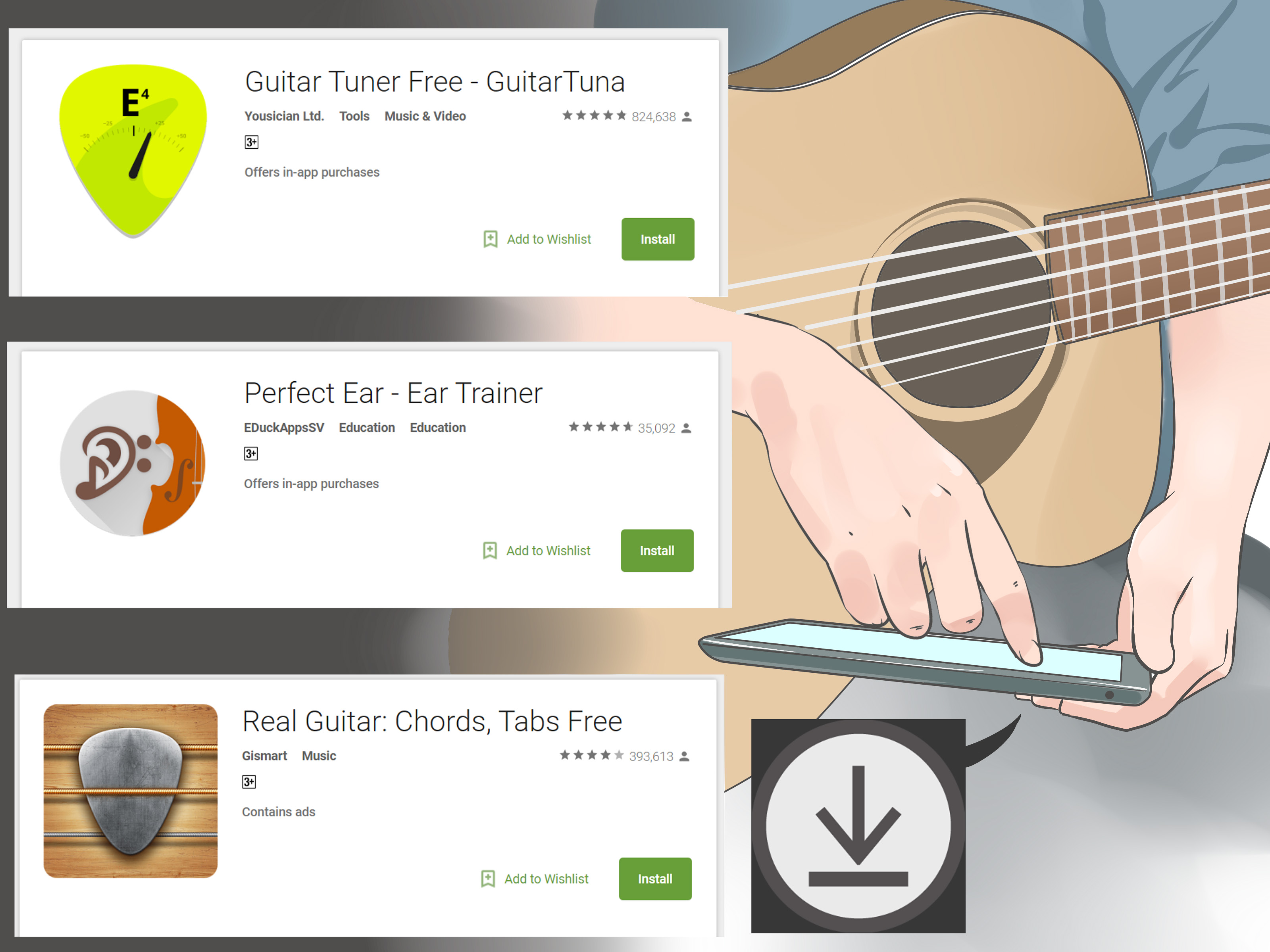
An out-of-tune guitar can make correct playing sound wrong. That is unfair to your ears and your confidence. Before every practice session, tune your guitar using a clip-on tuner, phone tuner app, pedal tuner, or online tuner. Standard tuning from thickest to thinnest is E-A-D-G-B-E.
At first, tuning may feel slow. After a week or two, it becomes automatic. This tiny habit trains your ear and makes practice more enjoyable. Think of tuning as brushing your teeth before a date with music. Technically optional, but please do it.
Build a Simple 30-Minute Daily Practice Routine
Rapid progress comes from consistency, not marathon sessions once every full moon. A focused 30-minute practice routine five or six days per week beats a random three-hour session followed by a week of silence.
The 30-Minute Beginner Acoustic Guitar Routine
Minutes 1–5: Tune and warm up. Play each string slowly. Then place your fingers near the frets and practice pressing notes cleanly. Keep your shoulders relaxed.
Minutes 6–12: Chord practice. Work on two or three chords. Press close to the fret, curve your fingers, and check that each string rings clearly.
Minutes 13–18: Chord changes. Move between chords slowly. For example, switch between G and D, C and G, or Em and C. Accuracy comes before speed.
Minutes 19–24: Strumming and rhythm. Practice downstrokes first. Then add simple down-up patterns using a metronome.
Minutes 25–30: Play a real song. Choose an easy song using the chords you are learning. This is the dessert portion of practice, except it also makes you better.
Master the Most Useful Beginner Guitar Chords First
You do not need to learn 47 chords before playing music. Start with a small set of open chords that appear in thousands of songs. The most useful beginner acoustic guitar chords include G, C, D, Em, Am, A, E, and Dm.
These chords unlock folk songs, pop songs, worship songs, country classics, and campfire favorites. Learn them in pairs before trying to juggle all of them at once. For example, practice G to D until the change feels smoother. Then try G to C. After that, add Em. Suddenly, you are not just practicing chords; you are building the engine of real songs.
Use the “One-Minute Chord Change” Drill
Pick two chords, set a timer for one minute, and count how many clean changes you can make. Do not rush so much that every chord sounds like a dropped toolbox. Start slow, record your number, and try to beat it tomorrow. This turns practice into a small game, and small games are powerful because your brain likes winning.
Practice Finger Placement the Smart Way
Clean sound comes from good finger placement. Press the string just behind the fret, not directly on top of it and not too far away. Use the tips of your fingers, keep your thumb behind the neck, and avoid collapsing your knuckles. If a chord buzzes, do not panic. Check one string at a time until you find the problem.
Beginners often squeeze too hard. Use only enough pressure to make the note ring. Extra force creates tension, slows chord changes, and makes your hand tired. The acoustic guitar rewards relaxed precision more than brute strength. Your fingers are not trying to win a wrestling match.
Learn Strumming Before Fancy Solos
Most self-taught acoustic guitar players want to play songs, and songs depend heavily on rhythm. A simple chord played with steady rhythm sounds musical. A complex chord played with shaky timing sounds like a chair arguing with gravity.
Start with steady downstrokes. Count “1, 2, 3, 4” and strum once on each beat. Then try down-up strumming: “down, down-up, up-down-up.” Use a metronome at a slow tempo. If the metronome feels annoying, congratulations: it is doing its job. It exposes timing issues so you can fix them.
Keep the Strumming Hand Moving
One key rhythm habit is to keep your strumming hand moving even when you miss a chord change. Beginners often stop the entire song to fix the fretting hand. Instead, keep the rhythm going and jump back in. In real music, rhythm is the train. Chords are passengers. Do not stop the train because one passenger dropped a sandwich.
Use Easy Songs as Your Main Learning Tool
The best way to learn acoustic guitar yourself is to connect every skill to a song. Chord drills matter, but songs give those drills a reason to exist. Choose songs with three or four chords, a slow or moderate tempo, and repetitive structure.
Look for beginner songs using G, C, D, and Em. These chords appear everywhere. Start by playing only one strum per chord. Then add a basic pattern. Once that feels stable, sing or hum along if you want. Singing is optional, but it helps you understand song structure and timing.
Learn Guitar Tabs, But Do Not Ignore Your Ears
Guitar tablature, or tabs, shows you where to place your fingers on the fretboard. It is one of the fastest ways to learn riffs, melodies, and simple song parts. Tabs are beginner-friendly because you do not need to read traditional sheet music to use them.
However, tabs are not magic scrolls from the mountain of perfect accuracy. Use your ears too. Listen to the song. Notice the rhythm, pauses, accents, and feel. A tab may show where the notes are, but your ears teach you how the music breathes.
Record Yourself Once a Week
Recording yourself may feel awkward at first. Nobody enjoys discovering that their “smooth strumming” sounds like a raccoon sorting silverware. But recording is one of the fastest self-teaching tools available.
Make a short video once per week. Play a chord progression or a song section. Then watch it back and look for one improvement: cleaner chords, steadier rhythm, relaxed posture, quieter chord changes, or better timing. Do not criticize everything. Pick one target and fix it.
Use Online Lessons, But Follow One Main Path
Online guitar lessons are incredibly useful, but too many tabs, videos, apps, and tutorials can create “learning buffet syndrome.” You take a little blues lick, a little fingerstyle, a random metal riff, three chord hacks, and suddenly you have a plate full of confusion.
Choose one main beginner course, app, book, or lesson path and stick with it for at least 30 days. Use other resources only as supplements. A structured path helps you learn in the right order: tuning, posture, open chords, strumming, chord changes, easy songs, rhythm, basic theory, and simple techniques.
Understand Just Enough Music Theory to Move Faster
Music theory is not a punishment invented by piano teachers in tiny glasses. It is a shortcut. For beginner acoustic guitar, start with three ideas: chords, keys, and rhythm.
A chord is a group of notes played together. A key is the musical home base of a song. Rhythm is how music moves through time. If a song is in the key of G, common chords may include G, C, D, and Em. That is why the same chord groups appear again and again in popular music.
Learning this basic pattern helps you recognize songs faster. Instead of seeing every song as brand-new, you start noticing familiar chord families. That is when guitar learning accelerates.
Protect Your Fingers and Hands
Some fingertip soreness is normal for beginners. Your fingers are adapting to pressing metal strings. Over time, calluses form and playing becomes more comfortable. But sharp pain, numbness, or wrist discomfort is not something to “push through.” Stop, rest, and check your technique.
Keep practice sessions manageable. Use lighter strings if needed. Warm up slowly. Relax your shoulders and wrists. Do not practice for hours on day one just because motivation showed up wearing a superhero cape. Motivation is wonderful, but tendons prefer reasonable scheduling.
Create a 30-Day Self-Taught Acoustic Guitar Plan
A clear plan prevents you from wondering what to practice each day. Here is a simple 30-day roadmap for rapid beginner progress.
Week 1: Comfort, Tuning, and First Chords
Learn the string names, tune daily, practice posture, and work on Em, G, C, and D. Focus on clean sound. Do not worry about speed yet. Play one downstroke per chord and listen carefully.
Week 2: Chord Changes and Basic Strumming
Practice switching between G, C, D, and Em. Add Am and A if your first four chords are improving. Use a metronome slowly. Start with downstrokes, then try basic down-up patterns.
Week 3: Easy Songs and Rhythm Control
Choose two beginner songs. Play through them daily, even slowly. Keep your strumming hand moving. Record yourself once and identify one improvement target.
Week 4: Add Tabs, Fingerpicking, and Confidence
Learn one simple riff using tabs. Try a basic fingerpicking pattern with thumb and two fingers. Review all chords from the month. Play three songs from beginning to end, even if they are simplified versions.
Common Mistakes That Slow Beginners Down
The first mistake is practicing too fast. Speed hides problems until they become habits. Slow practice is not boring; it is precision training. The second mistake is switching lessons constantly. Pick a path and stay with it. The third mistake is avoiding rhythm. Guitar is not just finger shapes. It is timing, groove, and movement.
The fourth mistake is expecting instant greatness. You can make rapid progress in weeks, but the guitar still requires repetition. The trick is to make repetition enjoyable by using songs, short goals, and visible progress.
Experience-Based Tips for Learning Acoustic Guitar Yourself
Here is the honest experience most beginners need to hear: the first two weeks are usually the weirdest. Your fingers feel clumsy, your wrist wonders what contract it accidentally signed, and even easy chords may sound suspicious. This is normal. The fastest learners are not the ones who avoid frustration. They are the ones who practice through small frustrations without turning every mistake into a dramatic personal documentary.
One useful experience is to keep your guitar visible. Do not hide it in a case under the bed like a secret wooden submarine. Put it on a stand in a safe place where you see it often. When the guitar is easy to grab, you will naturally play more. Five minutes before dinner, three minutes while waiting for a download, ten minutes after school or workthese tiny sessions add up.
Another important lesson: make your practice space comfortable. Keep a tuner, picks, capo, notebook, and phone stand nearby. If you spend ten minutes hunting for a pick, your motivation may escape through the window. A simple setup removes excuses.
Beginners also learn faster when they separate “practice mode” from “play mode.” Practice mode is where you fix one thing: a chord change, a buzzing note, a strumming pattern, or a timing issue. Play mode is where you enjoy music without stopping every three seconds. Both matter. If you only practice, guitar feels like a chore. If you only play, mistakes stay forever and start paying rent.
It also helps to choose songs you genuinely like, not just songs labeled “easy.” An easy song you hate will not keep you motivated. A slightly harder song you love may pull you forward. Simplify it. Use fewer chords. Slow it down. Play only the chorus. Learning guitar is more fun when the music means something to you.
One of the best self-teaching habits is writing down small wins. For example: “Changed from G to D ten times without stopping,” “Played verse slowly,” or “Finally made C chord sound clean.” These notes prove progress on days when your brain insists nothing is improving. Your brain can be dramatic. Receipts help.
Expect plateaus. A plateau does not mean you are failing. It means your hands and brain are processing repeated movements. Keep practicing slowly, sleep on it, and try again tomorrow. Many guitar skills improve between sessions because your nervous system is quietly organizing the work.
Finally, play for someone sooner than feels comfortable. It can be a friend, sibling, parent, or the family pet. The dog may not understand chord theory, but the dog will probably be supportive. Performing a simple song teaches focus, recovery, and confidence. The goal is not perfection. The goal is to keep going.
Conclusion
You can rapidly learn to play the acoustic guitar yourself if you follow a focused plan. Start with a playable guitar, tune every session, practice daily in short blocks, learn essential open chords, build steady rhythm, and use easy songs as your main training ground. Add tabs, basic theory, recordings, and a 30-day roadmap, and you will progress much faster than random practice can deliver.
The acoustic guitar rewards patience, but it also rewards smart shortcuts. Keep your routine simple. Make practice visible and enjoyable. Celebrate small wins. Before long, the same fingers that once panicked during a C chord will be moving through songs with confidence. And yes, you may eventually become that person who says, “Anyway, here’s a song,” at gatherings. Use this power responsibly.
Note: This article is written as original, publish-ready web content based on real acoustic guitar learning principles, beginner education guidance, and practical playing experience. It contains no source-link artifacts or citation placeholders.