Note: This web article is based on documented invention histories, patent records, museum profiles, and reputable U.S. educational sources. It is written in original language for publication and does not include source-link clutter.
History has a funny habit of putting a spotlight on the loudest person in the room and leaving the person with the brilliant idea standing somewhere near the coat rack. When it comes to inventions by women, that pattern shows up again and again. Women designed safer cars, cleaner kitchens, better medical tools, modern computer concepts, stronger materials, and even the cookie that has rescued countless bad days. Yet many of their names are still missing from everyday conversations.
This list of 20 things you might not know were invented by women is not just a trivia buffet. It is a reminder that innovation often begins with a practical irritation: dishes are breaking, diapers are leaking, typewriter errors are ruining the day, or the driver cannot see through sleet. Women inventors looked at those problems and said, politely but firmly, “Absolutely not. We can do better.”
From household inventions to life-saving technology, these examples prove that women’s innovations are not side notes in history. They are built into the way we travel, communicate, eat, work, heal, and survive.
Why Women Inventors Were Often Overlooked
For much of history, women faced legal, educational, financial, and social barriers that made inventing harder than it should have been. In the 19th century, many women had limited property rights, limited access to engineering education, and very little support from manufacturers. Some could not easily fund prototypes. Others had their ideas dismissed because they were “too domestic,” “too strange,” or “not commercially useful.” Spoiler alert: many of those ideas later became extremely commercially useful.
That is why the phrase women inventors matters. It gives credit back to the people who solved real problems but were often denied the microphone, the contract, or the royalty check.
20 Things Invented by Women That Changed Everyday Life
1. Windshield Wipers Mary Anderson
Mary Anderson invented an early practical windshield wiper after noticing that streetcar drivers had to open windows or stop to clear rain and snow from the glass. Her 1903 patent described a device operated from inside the vehicle, allowing the driver to sweep a blade across the windshield without stepping into the weather. At the time, some people thought the invention was unnecessary. Today, try driving through a thunderstorm without wipers and see how long that opinion survives.
2. The Mechanical Dishwasher Josephine Cochrane
Josephine Cochrane wanted her fine china cleaned without being chipped by hand washing. Instead of simply complaining into the sink like the rest of us, she designed a mechanical dishwasher and received a patent in 1886. Her machine used water pressure and racks to hold dishes securely. Hotels and restaurants were early customers because they needed speed, sanitation, and fewer broken plates. The modern dishwasher owes a major debt to her determination.
3. Kevlar Stephanie Kwolek
Chemist Stephanie Kwolek invented Kevlar while working at DuPont in the 1960s. The material is light, incredibly strong, and best known for its use in bullet-resistant vests. Kevlar is also used in helmets, tires, cables, spacecraft components, and protective equipment. Kwolek’s discovery is one of the clearest examples of how laboratory curiosity can become life-saving technology.
4. The Home Security System Marie Van Brittan Brown
Marie Van Brittan Brown, a nurse from Queens, New York, co-invented an early home security system with her husband, Albert Brown. Their 1960s design included peepholes, a camera, monitors, a two-way microphone, and a remote-controlled door lock. In other words, long before video doorbells became a suburban personality trait, Brown imagined a way for people to see and speak to visitors safely from inside the home.
5. The Flat-Bottom Paper Bag Machine Margaret E. Knight
Margaret E. Knight invented a machine that produced flat-bottom paper bags, the kind that could stand upright and hold groceries more effectively than flimsy envelope-style bags. Her invention helped transform retail packaging. Knight also had to defend her invention when a man tried to claim the idea as his own. She fought back, proved the design was hers, and secured her patent. Grocery bags have rarely had such dramatic origin stories.
6. Liquid Paper Bette Nesmith Graham
Before the backspace key, a typing mistake could ruin an entire page. Bette Nesmith Graham, a secretary and single mother, noticed that painters corrected mistakes by covering them rather than erasing them. She applied that idea to typing errors and created the correction fluid later known as Liquid Paper. Her invention became a must-have office supply and eventually grew into a major business.
7. The Chocolate Chip Cookie Ruth Graves Wakefield
Ruth Graves Wakefield created the Toll House chocolate chip cookie in the 1930s. She was not just tossing ingredients around in blind panic; she was a trained dietitian and skilled restaurant owner who understood recipe development. Her cookie became one of America’s favorite desserts. If happiness had a smell, it would probably be warm chocolate chip cookies cooling on a rack.
8. The Board Game That Inspired Monopoly Elizabeth Magie
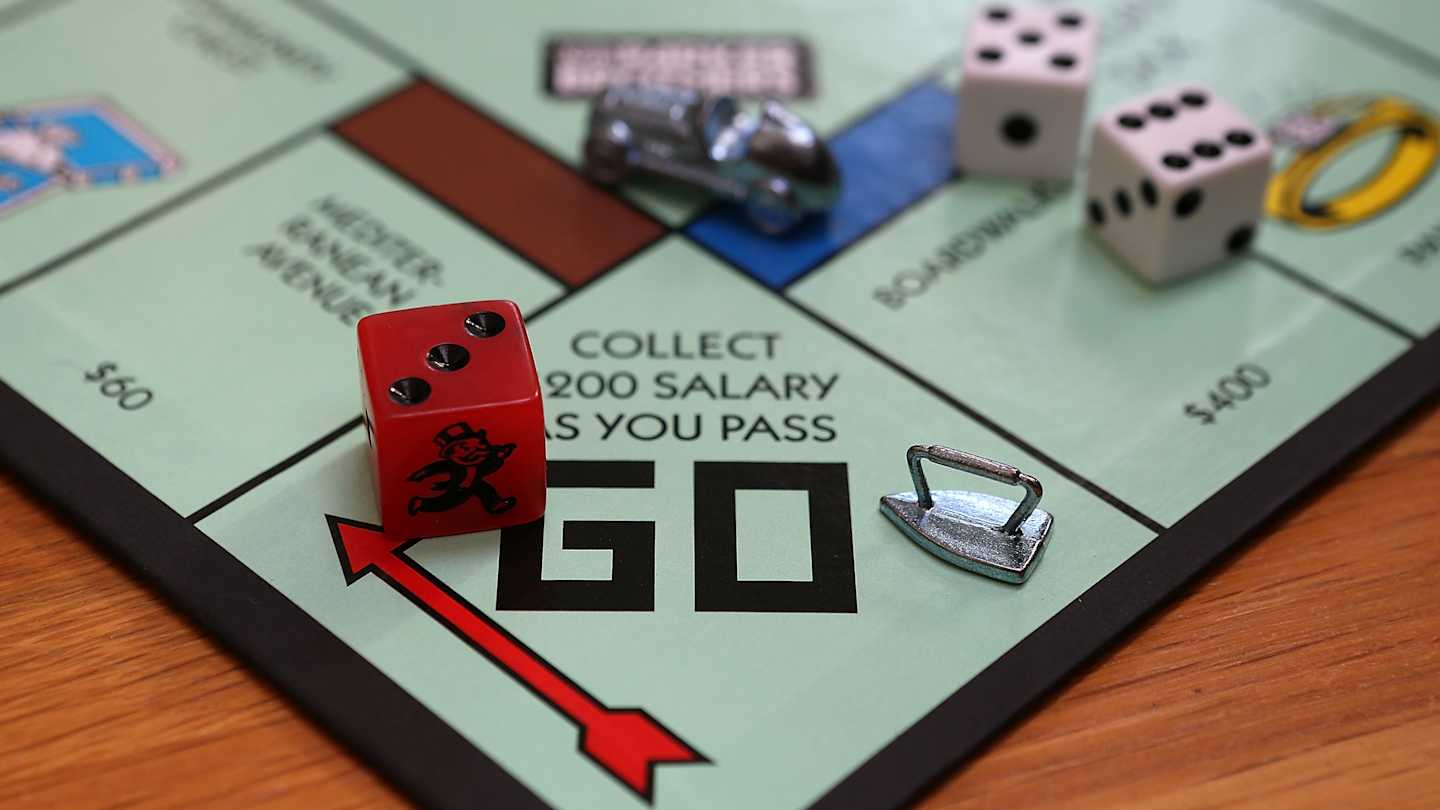
Elizabeth “Lizzie” Magie created The Landlord’s Game, a board game designed to teach players about land ownership, rent, inequality, and economic systems. Her game later influenced what became Monopoly. The twist is deliciously ironic: a game intended to criticize monopolistic wealth eventually became a family-night celebration of bankrupting your loved ones with hotels on Boardwalk.
9. The Waterproof Diaper Cover Marion Donovan
Marion Donovan invented the “Boater,” a waterproof diaper cover made to reduce leaks and endless laundry. Her design used practical materials and a smarter closure system, helping pave the way for later disposable diaper development. Donovan’s invention came from a familiar parenting reality: when the baby leaks, nobody in the house is having a glamorous evening.
10. The Sanitary Belt Mary Beatrice Davidson Kenner
Mary Beatrice Davidson Kenner invented an adjustable sanitary belt to help hold menstrual pads in place before adhesive pads became common. Although she developed the idea earlier, she could not afford to patent it right away and later faced racial discrimination when companies learned she was Black. Her work improved menstrual hygiene products and deserves far more recognition in the history of personal care inventions.
11. Improved Life Rafts Maria E. Beasley
Maria E. Beasley patented improvements to life rafts in the 1880s, including designs that made rafts more practical, stable, and easier to store. She also invented barrel-making machinery and held multiple patents. Her work reminds us that women inventors were not limited to “home” items; they were active in transportation, manufacturing, safety, and industrial design.
12. The Hand-Cranked Ice Cream Freezer Nancy Johnson
Nancy Johnson patented a hand-cranked ice cream freezer in 1843. Her design used a crank, a rotating dasher, and an ice-and-salt cooling method to make smoother ice cream with less labor. Before that, ice cream was harder and more expensive to produce. Johnson helped move ice cream from elite luxury to more accessible treat, which is basically public service with sprinkles.
13. The Paper Coffee Filter Melitta Bentz
Melitta Bentz invented the paper coffee filter in 1908 after becoming frustrated with bitter, gritty coffee. She used blotting paper from her son’s school notebook and a perforated container to create a cleaner brew. Her invention changed home coffee making and helped shape modern pour-over culture. Every smooth morning cup owes her a quiet thank-you.
14. Frequency-Hopping Communication Hedy Lamarr
Hedy Lamarr is remembered as a Hollywood star, but she was also a serious inventor. Working with composer George Antheil during World War II, she co-invented a frequency-hopping communication system intended to help radio-controlled torpedoes avoid jamming. The idea became an important stepping stone in wireless communication history. No, she did not single-handedly invent Wi-Fi, but her work helped shape the technological path that led toward modern wireless systems.
15. The First Published Computer Algorithm Ada Lovelace
Ada Lovelace wrote what is widely recognized as the first published computer algorithm for Charles Babbage’s Analytical Engine in the 1840s. Even more impressively, she understood that such machines could manipulate symbols, not just numbers. That insight foreshadowed modern computing. Long before laptops and apps, Lovelace was already thinking beyond calculation and into the future of software.
16. The Computer Compiler Grace Hopper
Grace Hopper helped transform programming by developing early compiler technology, including A-0, often considered the first compiler. A compiler translates human-readable instructions into machine code, which makes programming more practical and scalable. Hopper also helped influence business programming languages such as COBOL. Without her work, coding might have remained even more mysterious than it already looks to someone staring at an error message at 2 a.m.
17. Laser Cataract Surgery Technology Dr. Patricia Bath
Dr. Patricia Bath invented Laserphaco, a device and method for removing cataracts with laser technology. Her invention improved precision in eye surgery and made her the first Black woman physician to receive a medical patent in the United States. Bath’s work combined medicine, engineering, and humanitarian purpose: restoring sight and expanding access to eye care.
18. Invisible Glass Katharine Burr Blodgett
Katharine Burr Blodgett, a physicist and chemist at General Electric, developed anti-reflective coatings that produced what was called “invisible glass.” By applying molecularly thin layers to glass, she reduced glare and reflection. Her work influenced lenses, cameras, microscopes, eyeglasses, and other optical technologies. In simple terms, she helped the world see more clearly.
19. Scotchgard Patsy O’Connell Sherman
Patsy O’Connell Sherman, working with Samuel Smith at 3M, co-invented Scotchgard, the stain-repellent treatment used on fabrics and materials. The discovery began with a lab accident involving a spilled chemical that refused to wash out of a shoe. Sherman recognized the potential and helped turn a stubborn stain into a protective product. Sometimes innovation starts with a mess; sometimes the mess gets a patent.
20. The One-Handed Medical Syringe Letitia Mumford Geer
Letitia Mumford Geer patented a syringe design in 1899 that could be operated with one hand. Her invention made it easier for medical professionals and patients to control injections. While syringes existed before her, Geer’s design improved usability and helped shape the development of modern medical injection tools.
What These Women Inventors Have in Common
The inventions above may seem wildly different. A cookie and a cataract laser do not usually sit in the same mental folder. Yet these women inventors shared several traits: sharp observation, practical imagination, persistence, and the courage to challenge dismissal. They did not wait for perfect conditions. They worked with what they had: a sewing machine, a chemistry lab, a kitchen, a patent application, a notebook, or one deeply annoying problem.
Another pattern is that many of these inventions were created in response to real-world friction. Mary Anderson noticed unsafe driving conditions. Josephine Cochrane wanted dishes cleaned without damage. Bette Nesmith Graham wanted to fix typing mistakes efficiently. Marion Donovan wanted to stop diaper leaks. These were not abstract problems. They were daily problems, and daily problems can be powerful engines of innovation.
Why Credit Matters in the History of Inventions by Women
Credit is not just a ceremonial ribbon tied around the past. It affects who gets funded, who gets hired, who gets taught in classrooms, and who grows up believing they belong in science, engineering, design, business, and technology. When we tell the stories of things invented by women, we expand the picture of what an inventor looks like.
That matters for young readers, future engineers, entrepreneurs, and anyone who has ever had a useful idea but wondered whether it was “important enough.” Many of these inventions began as solutions to ordinary frustrations. The lesson is not that every inconvenience will become a patent. The lesson is that noticing matters.
Experiences and Reflections: What We Can Learn from Women’s Inventions
One of the most interesting experiences related to women inventors is how their stories change the way we look at ordinary objects. Once you know Mary Anderson’s story, windshield wipers stop being background equipment. They become a reminder that road safety came from someone paying attention. Once you know Bette Nesmith Graham’s story, correction fluid is no longer just an office supply; it becomes a symbol of turning a workplace headache into a business empire.
That shift is powerful because it makes innovation feel closer. Many people imagine inventors as isolated geniuses surrounded by blinking machines and dramatic lightning. In reality, invention often begins in places that look very normal: a kitchen, a nursery, a restaurant, a lab bench, an office desk, or a streetcar on a snowy day. The everyday setting does not make the idea smaller. It makes the inventor more observant.
These stories are especially useful for students, writers, entrepreneurs, and creators because they show that expertise can come from lived experience. Marion Donovan understood the diaper problem because she lived with it. Josephine Cochrane understood dishwashing damage because she saw the consequences. Ruth Wakefield understood baking because she had culinary training and ran a real restaurant. Their inventions were not random luck; they were responses to repeated patterns.
Another lesson is that rejection is not always a sign that an idea is bad. Mary Anderson’s windshield wiper was dismissed before cars became common enough for people to understand its value. Marion Donovan’s diaper ideas were rejected by manufacturers before the market caught up. Mary Kenner faced both financial barriers and racism. Hedy Lamarr’s wartime communication invention was ahead of its practical adoption. The marketplace is not always wise on the first try. Sometimes it needs time to develop taste, like a very slow sourdough starter.
For modern readers, the most inspiring experience is realizing that innovation does not require permission from tradition. If something is inefficient, uncomfortable, unsafe, wasteful, or needlessly complicated, that problem may be an invitation. The solution might be a product, a process, a piece of software, a better design, or simply a new way to organize information. Women inventors across history prove that curiosity plus persistence can reshape entire industries.
It is also worth noticing how many of these inventions improved care: safer homes, cleaner medical tools, better menstrual products, easier infant care, clearer vision, and stronger protective materials. That does not mean women only invent in caregiving fields. Far from it. Women have made major contributions to computing, chemistry, defense technology, optics, transportation, and industrial machinery. But it does show that inventions connected to care and daily life deserve serious respect. Comfort, safety, hygiene, and convenience are not small achievements. They are the infrastructure of a livable world.
The next time you make coffee, buckle into a car, use a laptop, clean dishes, protect a couch from stains, or eat a chocolate chip cookie with the seriousness of a philosopher, remember this: women’s inventions are everywhere. Some are visible. Some are hidden inside systems. Some were credited late. Some still need louder applause. But they all prove that history is much more interesting when everyone who helped build it finally gets named.
Conclusion
The story of 20 things you might not know were invented by women is bigger than a list of clever products. It is a story about persistence, problem-solving, and recognition. Women inventors have shaped kitchens, cars, hospitals, computers, communication systems, safety equipment, and dessert plates. Their inventions remind us that progress does not always arrive with a parade. Sometimes it arrives as a better paper bag, a cleaner cup of coffee, a safer doorway, or a cookie that makes the whole room go quiet for a second.
Recognizing these women is not only about correcting the past. It is about improving the future. When more people see themselves as potential inventors, more problems get solved. And the next world-changing idea might already be hiding in someone’s everyday frustration, waiting for the right person to say, “There has to be a better way.”